A pro-installed premium ceramic coating on a garaged car can realistically hold up for several years, a prosumer 9H product lasts a moderate number of years. DIY kits commonly fade within a couple of years, and spray boosters last only a few months. Prep quality, climate, and your wash routine decide where in that range you end up, far more than the product label does. We have seen identical products deliver very different results depending on how well the car was prepped before coating.
TL;DR:
- Residual polish oils, wax, or contamination weaken a coating’s bond, and tunnel brush washes accelerate wear even after a proper installation.
- A SiO2 booster every three to four months can extend usable coating life by roughly 20% to 40%, while pH neutral hand washing limits wear.
- When water stops beading, a booster may restore performance if gloss remains; persistent dullness and clinging dirt point to stripping and recoating.
- A label promising five years reflects accelerated testing, not a calendar guarantee; warranties commonly require documented maintenance records and periodic inspections.
Table of Contents
- 1. Typical Lifespan Ranges by Product Tier
- 2. Factors That Most Affect Ceramic Coating Durability
- 3. How Coating Chemistry and Installation Method Change the Outcome
- 4. Signs Your Ceramic Coating Needs Attention
- 5. A Maintenance Routine That Stretches Lifespan
- 6. What Manufacturer “Year” Claims Actually Mean
- 7. What We See in the Shop: Common Failure Modes
- When a Ceramic Coating Is Actually Worth It
- Ceramic Coating Services and How to Book With Us
- FAQ
- Sources
1. Typical Lifespan Ranges by Product Tier
Not all ceramic coatings are built the same, and the gap between a professional application and a bottle from an auto parts store shows up fast once the car hits real roads. A pro-installed, multi-layer coating on a vehicle that spends most of its time garaged can reach the upper end of its rating. A daily driver parked on the street, washed at a drive-through brush wash, rarely gets there even with the same chemistry.
- Pro-installed premium coating, garaged car: several years of hydrophobic performance.
- Prosumer 9H coating, mixed garage and street parking: a few years before noticeable fading.
- DIY 9H kit, outdoor daily driver: about a couple of years, less with brush washes.
- Spray-on hybrid booster alone: a few months, meant to top off an existing coating rather than replace one.
Parking matters almost as much as the product. A car that sleeps indoors avoids the UV exposure and bird droppings that eat into hydrophobic performance, while a car parked under trees or near the coast takes a faster hit from sap, salt, and acid rain.
2. Factors That Most Affect Ceramic Coating Durability
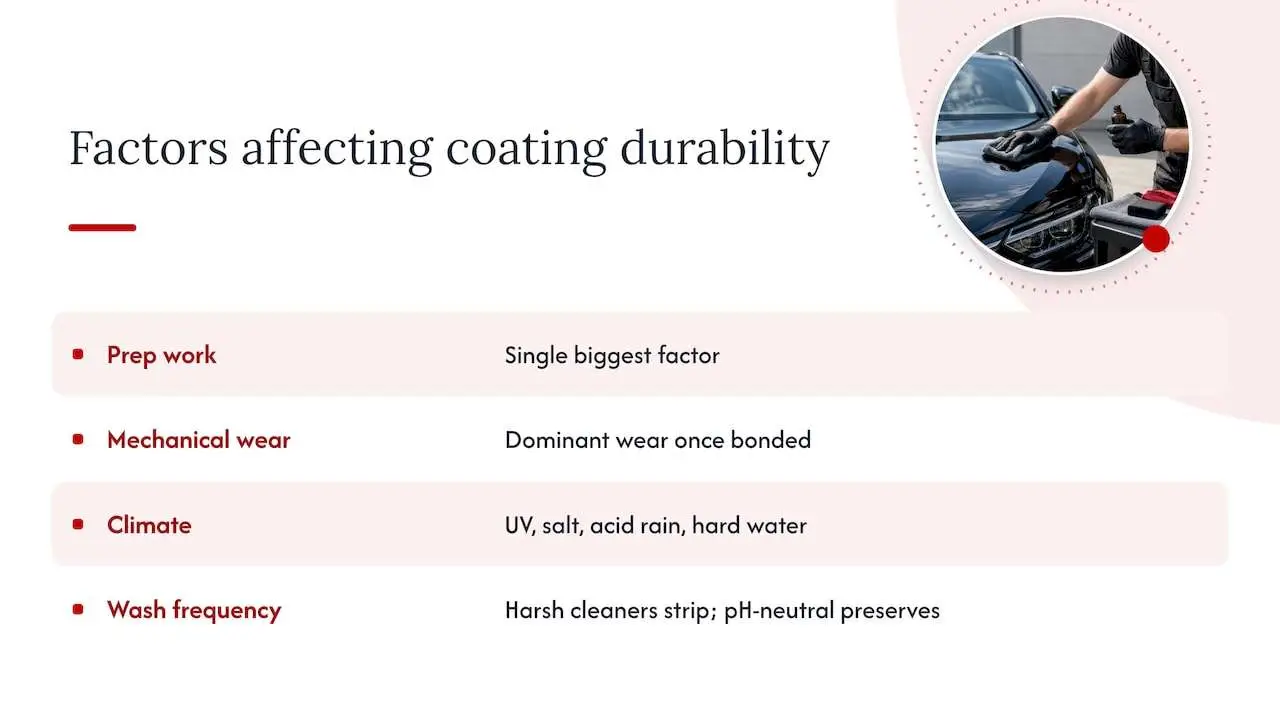
Prep work is the single biggest factor in how long a coating holds. A coating bonds to the clear coat, not to leftover polish oils, wax residue, or microscopic contamination, and any of those left behind creates a weak bond that fails early regardless of how good the chemistry is.
Mechanical wear from washing is the dominant way coatings actually wear out once they are properly bonded. Brush washes at tunnel car washes strip hydrophobic protection far faster than hand washing, and mechanical washing is considered the largest single wear factor in how quickly a coating ages.
Climate adds its own toll. Intense UV exposure breaks down the coating’s molecular structure over time, road salt and acid rain etch into weakened spots, and hard water full of minerals leaves spots that accelerate breakdown when left to bake in the sun. Wash frequency and chemistry matter too: harsh degreasers and dish soap strip hydrophobic layers, while pH-neutral shampoos preserve them.
3. How Coating Chemistry and Installation Method Change the Outcome
Most consumer and DIY products rely on SiO2 or TEOS-based formulas that cure into a thin, glossy layer. They are easy to apply and forgiving of minor mistakes, but they tend to be thinner and less chemically dense than professional-grade coatings.
Professional-level coatings often use polysilazane or more advanced silica chemistry, applied in multiple thin layers with controlled cure time between each pass. That layering builds a denser, more chemically resistant film than a single DIY coat can achieve, and it is a major reason pro installs outperform DIY kits even when both claim similar “years” on the label.
The practical effect shows up in maintenance cadence. A dense, multi-layer pro coating tolerates more wash cycles and sun exposure before hydrophobic performance drops. A thin single-coat DIY application starts losing beading sooner, which means more frequent boosters just to keep pace with a coating that was never as robust to begin with.
4. Signs Your Ceramic Coating Needs Attention
Water behavior is the clearest signal. Fresh coatings bead water into tight, fast-sheeting droplets; as the coating ages, water starts sheeting flatter and sitting longer, which signals a falling contact angle and a weakening hydrophobic layer. A fresh coating typically reads 100 to 115 degrees on a contact angle meter, and once that number drifts toward 80 degrees, the coating is functionally bare.
Dulling gloss, dirt that clings instead of rinsing off, and watermarks that will not wipe clean are other practical signs the top layer has worn thin.
A quick decision rule: if beading has slowed but the surface still looks glossy, a booster usually restores performance. If gloss has faded and dirt sticks persistently, a full strip and recoat is the better move.
5. A Maintenance Routine That Stretches Lifespan
A consistent routine is what pushes real-world results toward the lab-rated ceiling instead of the low end of the range.
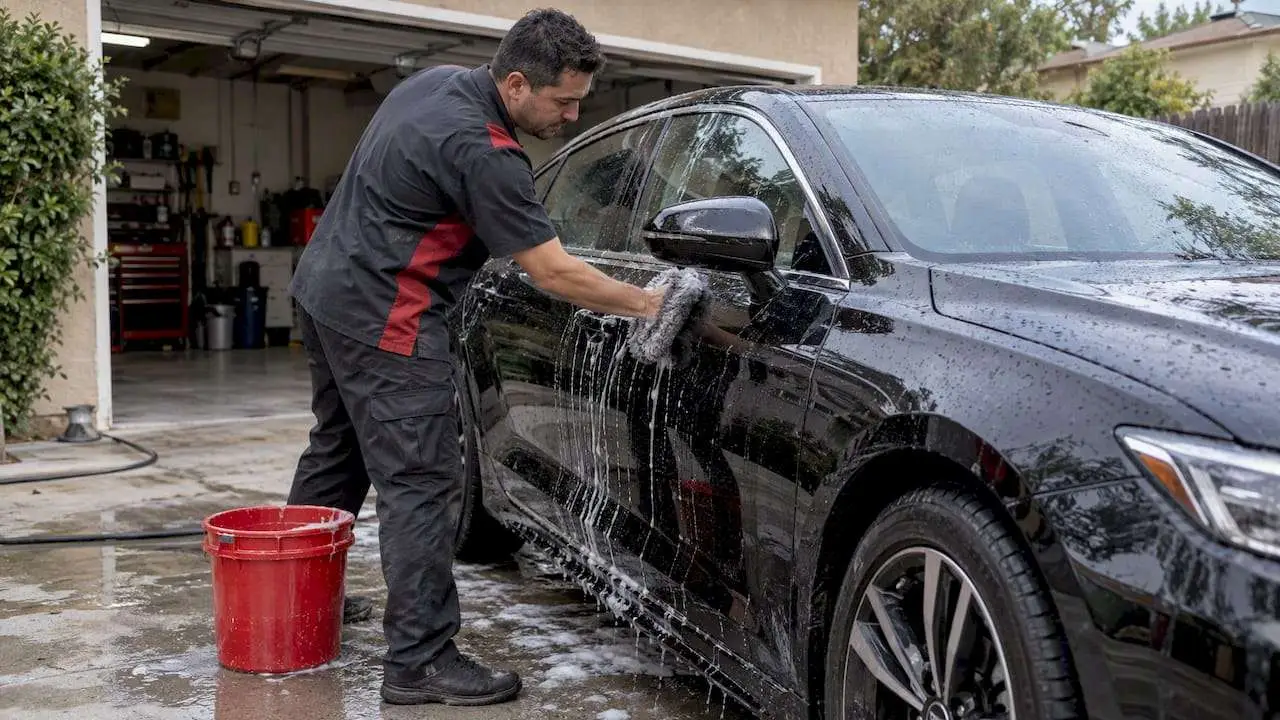
- Wash with the two-bucket method using a pH-neutral shampoo, a microfiber mitt, and hand-drying with a clean towel, ideally every one to two weeks.
- Apply a SiO2 booster every three to four months to refresh the top hydrophobic layer; this typically extends usable lifespan by roughly 20 to 40 percent without touching the structural coating underneath.
- Schedule a professional decontamination wash once or twice a year, including iron decon, clay treatment, and a panel wipe, to strip embedded contaminants a home wash cannot remove.
- Watch for the warning signs covered above and act on them rather than waiting for the coating to fail completely.
Boosters cost far less than a full recoat and, applied consistently over three to five years, can meaningfully delay the need to strip and reapply. A detailed maintenance guide for ceramic coatings covers specific product choices for shampoos and boosters if you want to build out a home routine.
Pro Tip: Keep a simple log of wash dates and booster applications; it makes it obvious when performance starts dropping rather than relying on memory.
6. What Manufacturer “Year” Claims Actually Mean
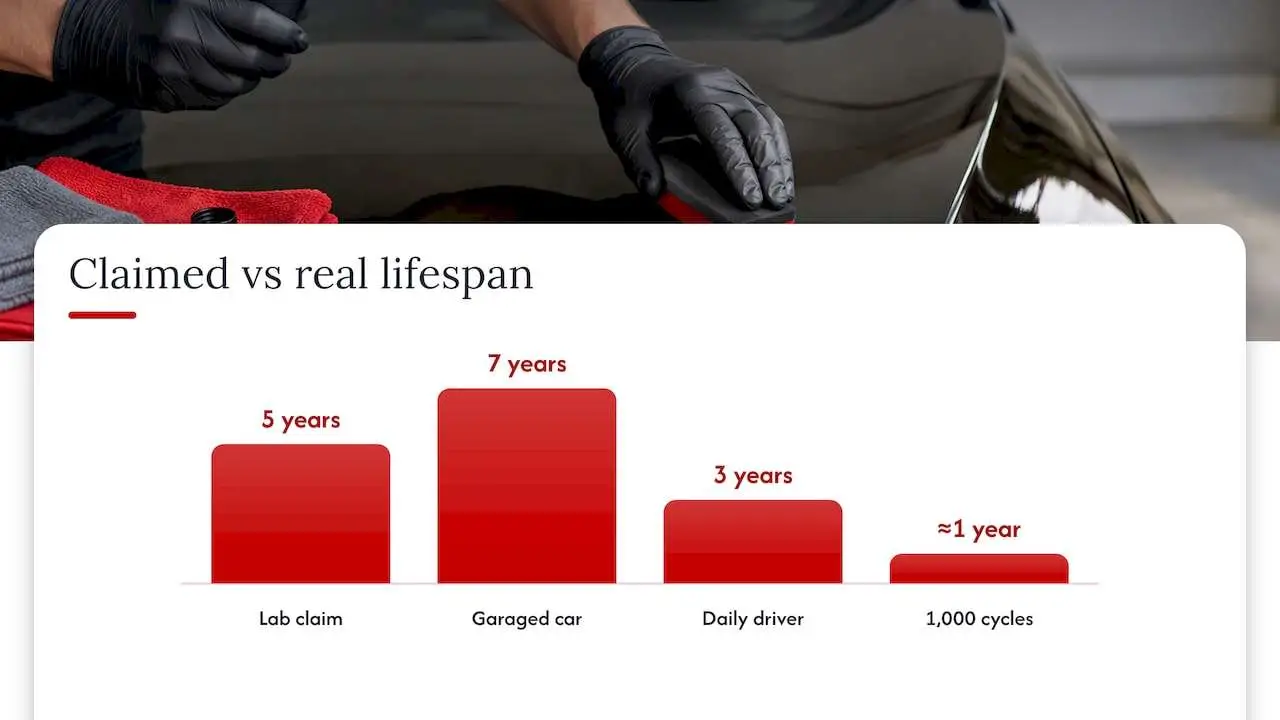
A “5-year” or “10-year” claim on a coating label comes from accelerated lab testing, not a calendar guarantee. Labs run scrub-cycle machines and UV chambers to simulate wear, and a common industry approximation treats 1,000 scrub cycles as roughly equivalent to one year of average use.
That conversion depends heavily on assumptions about climate and wash habits, so a lab-rated 5 years can become 7 years on a garaged car with gentle hand washing, or 3 years on a daily driver that sees brush washes and intense sun. Warranties typically require documented maintenance and periodic inspections, and most exclude damage from improper washing, chemical exposure, or neglect.
7. What We See in the Shop: Common Failure Modes
In our own installs, the coatings that fail early almost always trace back to prep, not chemistry. Residual polish oils, rushed decontamination, or skipping a proper panel wipe before coating creates a weak bond that breaks down within months. Customers who switch to repeated brush washes after a pro install also see faster fading than those who hand wash.
A proper professional install includes thorough paint decontamination, polish where needed, an isopropanol-based panel wipe, and multi-layer application with controlled cure time between coats. That combination is why identical chemistry performs so differently depending on who applies it.
When a Ceramic Coating Is Actually Worth It
Ceramic coating earns its cost for owners who keep their car mostly garaged, wash by hand, and want to protect resale value over several years. If you park on the street daily and rely on brush car washes, a thinner DIY coating or a paint protection film pairing will hold up better than expecting lab-rated years from a one-coat spray job.
Match the product tier to how you actually use the car, then book a decontamination inspection before committing to a full coating.
— Jake
Ceramic Coating Services and How to Book With Us
Our ceramic coating is applied as a multi-layer, professionally prepped system, a type of install that tends to hold up closer to the upper end of typical lifespan ranges rather than fading within a year. Pairing it with paint protection film gives both chemical and physical protection in one package.
- Ceramic coating, installed with full decontamination and panel prep before application.
- Ultimate Armor package, bundling PPF with ceramic coating for owners who want both impact and chemical protection.
- Decontamination and inspection visits, useful before a recoat or as part of routine maintenance.
If you want a straightforward quote on our ceramic coating services, reach out to us and we will walk you through options based on how and where you park and drive.
FAQ
How long does ceramic coating actually last on a daily driver?
A daily driver parked outdoors typically sees two to four years from a prosumer coating and one to two years from a DIY kit, mainly because of UV exposure and frequent washing. A professional multi-layer install tends to outlast both, even under the same conditions.
Is a 5-year ceramic coating claim realistic?
A 5-year claim comes from accelerated lab testing, not a guarantee for every climate or wash habit. On a garaged, hand-washed car it can hold true or even extend beyond five years; on a street-parked car with brush washes, expect less.
What is the biggest factor in how long ceramic coating lasts?
Application quality and prep work matter more than the product itself, since a coating only bonds well to a fully decontaminated, polish-free surface. After that, wash method and frequency are the next biggest factor in real-world durability.
How often should I apply a ceramic coating booster?
A SiO2 booster every three to four months restores the hydrophobic top layer and extends usable performance by roughly 20 to 40 percent without replacing the underlying structural coating. It is a low-cost way to delay a full recoat.
How do I know when my ceramic coating needs to be reapplied?
Watch for water sheeting flat instead of beading, duller gloss, and dirt that clings rather than rinsing off. If a booster no longer restores beading and the surface looks consistently dull, a full strip and recoat is the better option.
Sources
- How Long Does Ceramic Coating Actually Last · CarCareTruth
- What do 3-year, 5-year, and 10-year durability claims on nano ceramic coatings actually mean? — Nasiol NanoBlog