Yes, you can put ceramic coating on a wrap, but only when the coating’s technical data sheet (TDS) explicitly lists vinyl or film as an approved surface. A compatible coating adds water beading and easier washing, though it does not stop rock chips or edge lift. Before you buy anything, read the TDS and get the wrap maker’s or your installer’s warranty position in writing.
TL;DR:
- Wait at least 72 hours after installation before coating, and follow any longer settling or cure period required by the product’s technical data sheet.
- Get written warranty guidance from the film maker or installer; 3M may exclude aftermarket coatings unless tested and approved, with responsibility falling to the owner.
- If you plan to wrap a coated car, remove the coating mechanically and retest the surface; residue near edges can cause lifting.
- Repair lifting corners, bubbles, or nicks before coating, and test matte or satin film on a hidden panel because coatings can change its sheen.
Table of Contents
- 1. What a coating adds to a wrapped car
- 2. How to verify a coating is safe for vinyl film
- 3. How to prepare and apply a coating on a vinyl wrap
- 4. Coating over a wrap versus wrapping over a coating
- 5. Keeping a coated wrap performing well
- 6. Professional installation or DIY?
- 7. Trust signals to verify before anyone coats your wrap
- 8. Why “9H” should not drive your decision
- 9. How we coat wrapped cars at our shop
- FAQ
- Sources
1. What a coating adds to a wrapped car
A coating changes how the surface behaves, not how tough it is. Water beads on the surface, dirt may rinse away with less effort, and you spend less time scrubbing a film that does not like scrubbing. Here is what you can realistically expect:
- Hydrophobic behavior: Water beads and slides, which cuts down on water spots and shortens wash time.
- Contamination resistance: A coating can make bird droppings, road film and bug residue easier to remove from the surface.
- Visual change: A wrap-specific coating can add depth to gloss films and enrich the color of matte and satin finishes. Test first, because a coating can shift the sheen of a matte film.
- A cleaner feel: Smooth, slick film is easier to wipe down between washes.
3M’s data sheet for its ceramic coating states the product is designed for automotive paint, trim, film, vinyl wraps and wheels, and describes durability of up to five years with proper care and maintenance. That figure belongs to that specific product, not to ceramic coatings as a category. Mothers makes a similar product-level statement: its Ceramic Spray Coating FAQ says the spray can be used on wraps and paint protection film.
3M states its ceramic coating is designed for film and vinyl wraps, with up to five years of durability when properly maintained (3M technical data sheet). Treat that as a claim about one product that names wraps, not a promise from every bottle labeled “ceramic.”
Now the limit. A coating is a thin chemical layer. It does not absorb a flying pebble, it does not close a lifting corner, and it does not stop a key scratch. If impact protection is your goal, that is a job for paint protection film, not coating.
2. How to verify a coating is safe for vinyl film
The word “ceramic” tells you nothing about whether a product is safe on your wrap. Compatibility is a document question, and the document is the TDS. Run through these checks in order:
- Read the TDS for the words “vinyl wrap” or “film.” If the sheet lists only paint, clearcoat or glass, the product has not been approved for your wrap.
- Check that your finish is covered. Gloss, satin, matte and textured films behave differently, and a sheet that names flexible film is a far better sign than a generic label.
- Note the prep and cure requirements. A manufacturer that has tested on film will specify cleaning steps, application conditions and a no-water window.
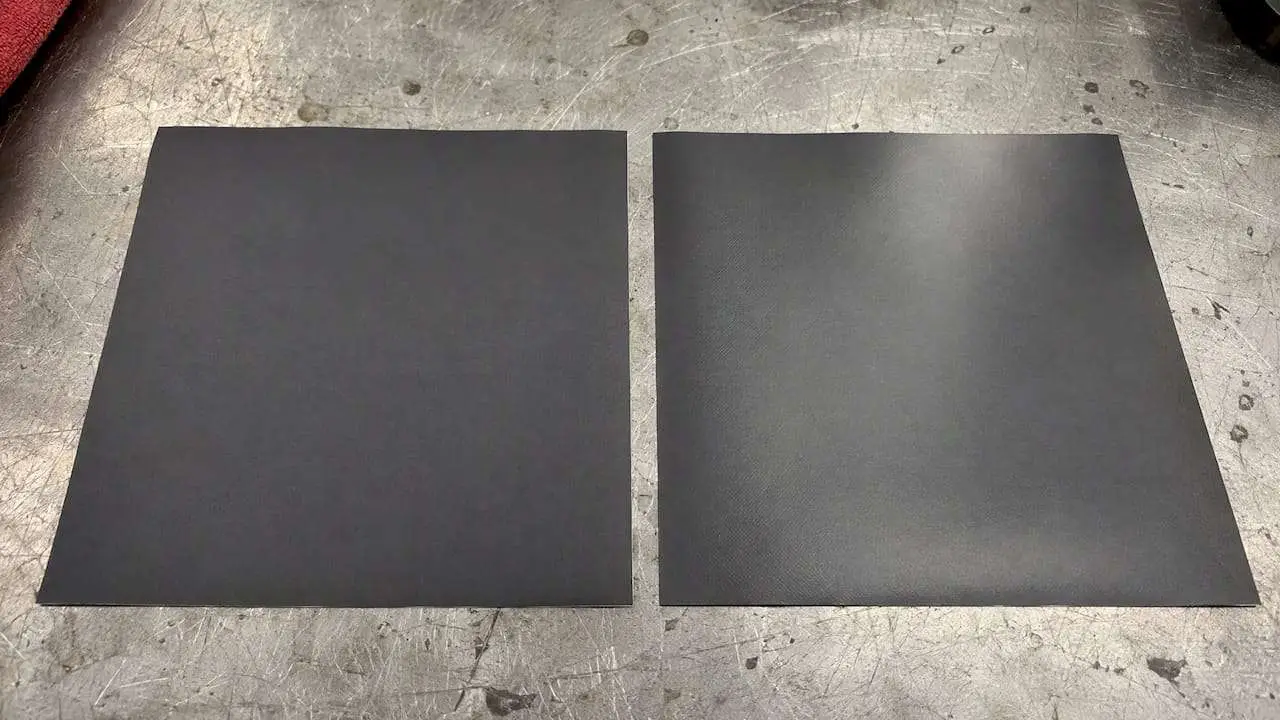
- Test a small panel when the sheet is vague. Pick a spot nobody will see, such as a lower rocker area, and watch for sheen change, tackiness or any change in how the film feels.
- Get warranty answers in writing. Ask your installer or the film maker whether an aftermarket coating changes your coverage.
Danny Deets of IGL says that vinyl wraps can be coated, but that preparation differs from paint and that coatings built for paint may adhere less effectively than products intended for wrapped surfaces. His guidance is to treat the wrap as a flexible film, not as painted clearcoat, and to choose by substrate compatibility instead of by headline claims like “9H” or graphene.
The warranty step is the one people skip. 3M’s 2080 maintenance FAQ says coatings and other aftermarket additions are excluded from its warranty unless used on a user test-and-approve basis, and that the end user takes responsibility when using a coating on that film. Other film makers have their own wording, so ask yours.
Pro Tip: Photograph the test panel before and after, in the same light. A slight sheen shift is easy to miss in memory and obvious in two side-by-side photos.
3. How to prepare and apply a coating on a vinyl wrap
This is the checklist we follow, built around what manufacturer data sheets ask for. Your product’s TDS always overrides any generic list, ours included.
Preparation
- Inspect the wrap first. Look at every edge, seam and recess. Lifting corners, bubbles or nicks should be repaired before anything goes on top, because a coating will seal in a problem instead of fixing it.
- Confirm the wrap has had time to settle. 3M recommends avoiding washing for at least 72 hours after wrap installation. Do not coat a fresh wrap inside that window, and follow any additional wait the coating’s sheet adds.
- Wash with a non-abrasive method. Use a pH-neutral shampoo and a clean mitt. Skip brushes and anything that drags grit across the film.
- Decontaminate gently. Remove tar, sap and bonded fallout with products approved for vinyl, soaking first so you are not rubbing hard.
- Avoid polish and heavy abrasion. Most films are not meant to be machine polished the way clearcoat is, and abrasion can burnish matte or satin surfaces into patchy shine.
- Make sure the surface is fully clean and dry. Water trapped in seams or behind edges will show up later as streaks or interfere with bonding.
Application
- Work in a clean, dust-free space away from wash bays, overspray and other vehicles. 3M’s product directions call for exactly this kind of controlled setting.
- Wear gloves and eye or face protection, as the sheet instructs.
- Apply in small sections using the pattern the TDS describes. Many coatings call for a cross-hatch pass, a measured number of drops per panel and a short dwell before leveling.
- Level or buff within the window the sheet allows. Waiting too long is how high spots happen.
- Change applicator cloths as recommended so you are not dragging saturated, dirty fabric across the film.
- Keep the vehicle dry and protected for the stated cure period. The no-water window is not a suggestion, because early water contact can mar the surface.
Pro Tip: Check every edge and recess with a flashlight held at a low angle right after leveling. High spots and streaks that are invisible head-on show up immediately in raking light, and they are easier to fix soon after application than later.
If anything about your coating or film is uncertain, stop and run the test patch from the previous section. A few extra days cost less than stripping a coating off a wrap.
4. Coating over a wrap versus wrapping over a coating
Order matters more than most people expect, and the two directions are not mirror images.
- Coating over an installed wrap: This is generally workable when the product is approved for film. Let the wrap settle first, follow the 72-hour no-wash guidance, then apply the coating according to its sheet.
- Wrapping over an existing coating: This is the risky direction. Graphics Pro explains that the low surface energy that makes a coating repel water also prevents adhesive from bonding. A coated panel has to have the coating mechanically removed and the surface retested before any film goes on.
- Missed spots: The same source warns that one overlooked coated area at an edge or recess can lead to lifting and a costly redo. Edges and recesses are exactly where residue hides.
- Pre-wrap paint prep: If a car has been coated and a wrap is planned, tell the wrap shop on day one so they can plan removal and a surface-energy check.
- Fresh wrap, coating planned: Book the coating after the settling window, not the same afternoon, so the adhesive is not disturbed and the film has finished gassing out.
A third-party reference on timing is useful here. Diamondbrite’s guidance on waiting 48 to 72 hours and checking film compatibility before coating over film lines up with the same cautious approach: let new film settle, confirm the product suits the substrate, then coat.
Our own write-up on whether you can ceramic coat vinyl wrap covers more of the pros and cons from the shop floor.
5. Keeping a coated wrap performing well
A coating reduces maintenance, it does not eliminate it. The routine is simple, and most of it is about avoiding the things that dull or lift film.
- Hand wash when you can. A two-bucket wash with a clean mitt is gentlest on film. Our guide on how to wash a car with ceramic coating walks through the steps.
- Choose touchless over brush washes. 3M’s care guidance says to prefer touchless washing and hand washing over brush-based systems, which can dull the surface and catch edges.
- Remove contaminants promptly. Bird droppings, bug splatter and tree sap are acidic or sticky and get harder to remove the longer they sit. Soak tar and sap, rinse, then wipe gently with a product approved for vinyl.
- Use ceramic-safe shampoos. Soaps with heavy waxes or strong degreasers can mask or strip the coating’s slick behavior. A shampoo designed for coated surfaces keeps beading consistent.
- Add a booster when beading fades. Many coating makers sell a maintenance spray. Use only one your coating’s manufacturer names or that is rated safe for vinyl.
- Limit UV and heat exposure. Garage or shade parking slows film aging, which protects both the wrap and the coating over it.
- Mind the pressure washer. Keep the nozzle back and never aim straight at an edge or seam, since a hard blast can start lifting.
Wrap-specific care has its own details, and our installer notes on wait 72 hours, then wash cover them. If your car is a complex shape, the BMW vinyl wrap washing guide shows safe technique around curves and tight seams.
Pro Tip: Wash on the same schedule every time and rinse the car thoroughly before you touch it with a mitt. Most wrap damage we see comes from dragging dried grit across the film, not from the soap.
6. Professional installation or DIY?
Both routes exist, but they are not equal in risk. The question is how much you can afford to get wrong.
Hire a professional when:
- The wrap is valuable, matte, textured or recently installed.
- The vehicle has complex curves, deep recesses or lots of edges.
- You want someone to take responsibility for compatibility and results.
- You do not have a clean, dust-free space and the time to respect cure windows.
A professional controls the environment, inspects edges before and after, verifies the product against the film, and avoids the high spots and uneven residue that trip up first-timers. 3M’s directions for its own coating call for a clean setting away from wash bays and overspray, plus gloves and eye or face protection, which is simply how a shop already works.
DIY can be acceptable when:
- The coating’s TDS explicitly permits use on wraps or film, as Mothers’ FAQ says for its ceramic spray.
- You can meet the prep, cure and safety requirements to the letter.
- You test a hidden panel first and accept the warranty position.
If you hire a shop, ask for:
- The coating’s TDS, so you can see for yourself that it lists film.
- A written compatibility check against your specific wrap.
- Clear aftercare instructions, including the no-wash window and approved products.
- Their position on warranty, in writing.
A shop that cannot show you the TDS is a shop to question.
7. Trust signals to verify before anyone coats your wrap
Good installers leave a paper trail, and you should look for it. These are the signals that matter, in rough order of weight:
- A manufacturer TDS that names your substrate. This is the baseline. IGL’s guidance and 3M’s data sheet both make the point that compatibility has to be stated, not assumed.
- Written confirmation from the film maker or installer. Warranty language varies, and the 3M 2080 FAQ shows how coatings can fall outside coverage unless handled on a test-and-approve basis.
- A surface-energy and test-panel habit. Graphics Pro’s explanation of why low surface energy blocks adhesion is the reason experienced shops test before committing, especially when a wrap and a coating are both in play.
- Shop proof points. We are a North Hollywood shop offering XPEL-authorized paint protection film, vinyl wraps and ceramic coating, and we have customer reviews. Check any shop’s reviews, its services and the exact products it uses.
Ask your installer what they would do if the TDS did not mention film. The right answer is a test panel and a call to the manufacturer, not a shrug.
8. Why “9H” should not drive your decision
My view after seeing how this topic gets sold: the industry spends far too much energy on hardness ratings and lifespan numbers, and far too little on the unglamorous question of whether the product is approved for the film in front of you. A coating that boasts “9H” on the label can still be the wrong chemistry for a matte wrap, and a quieter product with a data sheet that names vinyl is usually the better buy. IGL’s guidance points the same direction: substrate compatibility beats headline claims.
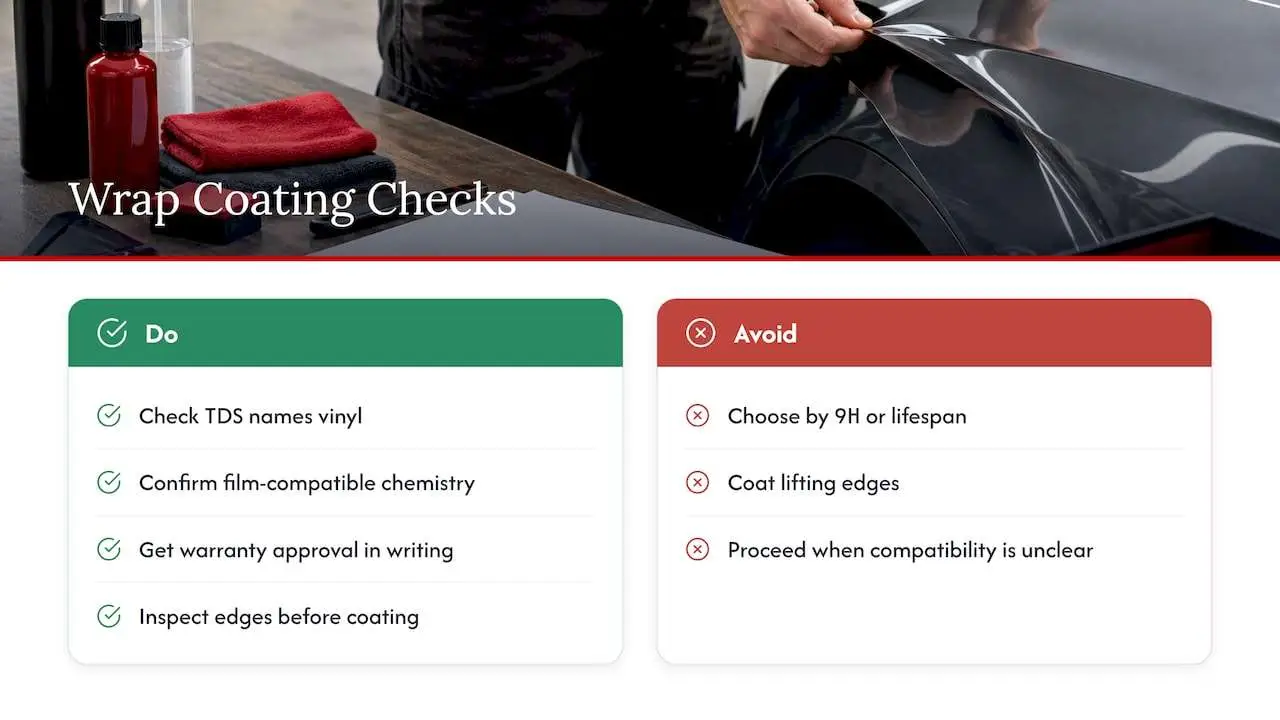
The second thing owners underrate is the warranty. A wrap can last for years, and a costly mistake can involve risking coverage over a cosmetic benefit that may not matter much. Ask first, in writing.
The third is edges. Coating does nothing for a lifting corner, and a careless application can make an existing edge problem worse. Inspect before you coat, every time.
What should you do first? Read the TDS, email your film maker or installer, and test a small panel. If all three come back clean, coating a wrap is a sensible, low-drama upgrade. If any of them comes back unclear, wait. A hydrophobic finish is nice to have, and a lifting wrap is not.
— Jake
9. How we coat wrapped cars at our shop
If you would rather not manage compatibility, prep and cure windows yourself, we handle it for you. We offer ceramic coating for your vehicle. Our team works on vehicle finishes.
Here is how we work with you:
- Inspection first: We check your wrap’s edges, seams and condition before recommending anything.
- Written compatibility check: We review the coating’s TDS against your film and tell you in plain terms whether it is a fit.
- Clean-environment application: We apply in a controlled space and follow the cure and no-water windows exactly.
- Clear aftercare: You leave with instructions for washing and maintaining your coated wrap.
Ready to move forward? Book an inspection or send us your wrap details for a TDS review and a quote through our ceramic coating service page.
FAQ
Can you put ceramic coating on a vinyl wrap?
Yes, when the coating’s technical data sheet explicitly lists vinyl or film as an approved surface. 3M’s data sheet, for example, names vinyl wraps among its approved uses. A coating that lists only paint is not a safe assumption.
Is ceramic coating worth it on a wrap?
It is worth it if you value easier washing, water beading and a more even look, and if you accept that it adds no impact protection. It does not replace wrap aftercare, so you still need gentle washing and prompt contaminant removal. Check the warranty position before you commit.
Can I use ceramic spray on vinyl wrap?
Only a spray whose instructions explicitly allow wraps. Mothers states that its Ceramic Spray Coating can be used on wraps, but that statement applies to that product alone. Test a hidden panel first.
What is the best ceramic coating for vinyl wrapped cars?
The best choice is the one whose data sheet names vinyl wrap or flexible film and confirms your finish, not the one with the biggest hardness or lifespan claim. IGL’s guidance advises choosing by substrate compatibility instead of labels like “9H.” Confirm warranty effects with your film maker.
Sources
- Ceramic Coating
- Danny Deets’ Expert Guidance for Applying Ceramic Coating Over Vinyl Wraps – IGL Coatings Blog