A car wash is routine surface cleaning that rinses off dirt, dust, and grime in minutes. Detailing is deep cleaning, paint restoration, and protective treatment that addresses what a quick rinse can’t touch. Wash your vehicle every 1 to 3 weeks for upkeep, and schedule a full detail seasonally or twice a year for protection and restoration.
TL;DR:
- A routine wash every one to three weeks maintains surface cleanliness, but only a professional detail can correct deep scratches, oxidation, or embedded contaminants.
- Automatic and touchless washes risk leaving residues or causing fine scratches, especially if brushes trap grit or harsh soaps are used.
- Full detailing involves multi-stage processes such as decontamination, polishing, and applying protective coatings, taking several hours to a full day depending on the package.
- Regular washing keeps dirt at bay, but seasonal or biannual detailing enhances protection, removes swirl marks, and can significantly improve resale value.
- Ceramic coatings extend protection but do not replace proper cleaning or correction; they require a clean, properly prepped surface to maximize durability.
Table of Contents
- What a car wash includes: types, scope, time and cost
- What professional detailing includes: exterior, interior, and protection services
- Scope, cost, and timing: car wash vs detailing side by side
- When to book a wash and when to schedule a detail
- Safe DIY washing and the mistakes that cause damage
- Maintenance schedule and what to budget for
- How professional shops extend what detailing can do
- What I’d tell a friend shopping for either service
- PPF Pros: protection that builds on a good detail
- FAQ
- Sources
What a car wash includes: types, scope, time and cost
A car wash covers the basics: soap, rinse, and dry, sometimes with a wheel spray or underbody rinse added in. What you get depends heavily on the format.
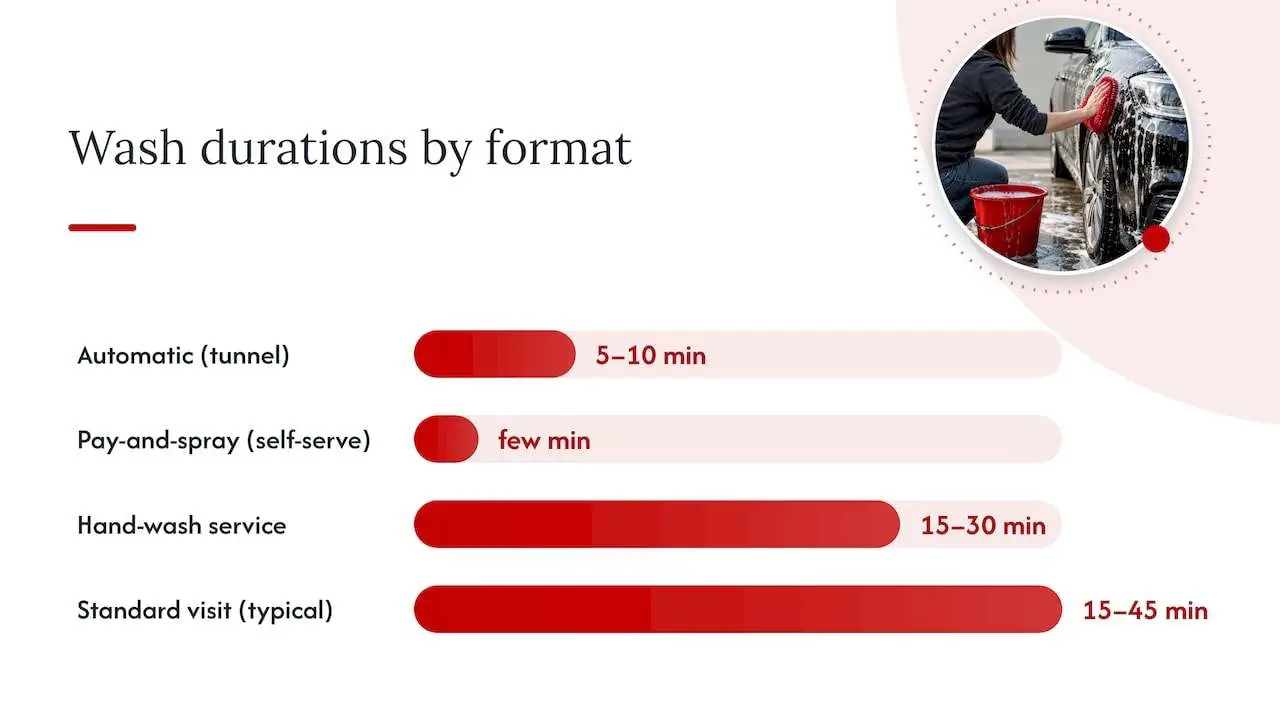
- Automatic (tunnel) washes use rotating brushes or cloth strips to scrub the exterior as your car moves through, finishing in about 5 to 10 minutes.
- Touchless washes rely on high-pressure water and chemical cleaners instead of brushes, trading some cleaning power for less contact with the paint.
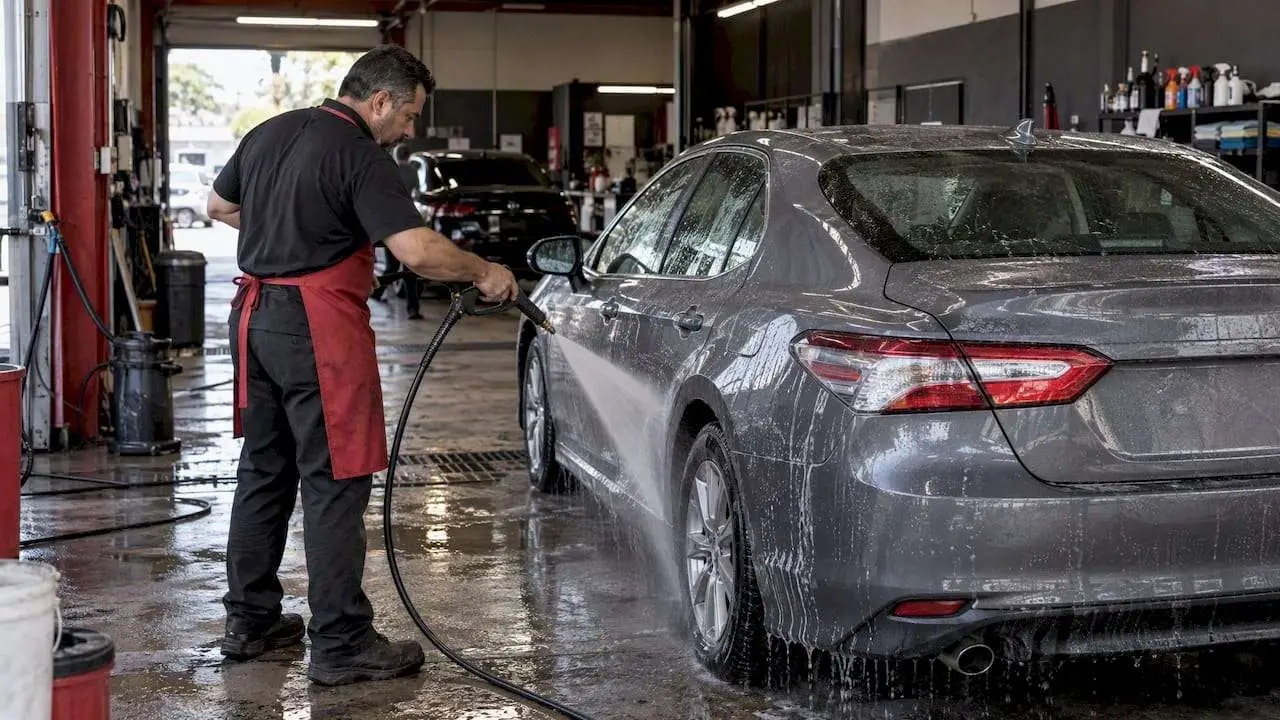
- Hand-wash services have a person wash the car with mitts and hoses, usually taking 15 to 30 minutes and offering more attention to trouble spots.
- Pay-and-spray (self-serve) bays let you control the wand and soap yourself, typically for a few minutes per cycle.
- Mobile washes bring water and supplies to your driveway or office lot, often scheduled for a specific window.
None of these formats include clay-bar decontamination, polishing, or paint correction. They clean what sits on the surface, not what’s bonded to it. A standard visit runs 15 to 45 minutes depending on format and add-ons, and the convenience is real: you can keep a car looking decent with almost no planning.
The tradeoff shows up in the details. Consumer Reports notes that touchless washes sometimes leave more residue behind than brush washes, even though they’re gentler on paint. Brush-based automatics carry their own risk: when brushes trap grit from previous vehicles, they can drag it across your paint and cause fine scratches. Harsh dish soaps or degreasers used at some self-serve bays can also strip wax faster than a car-specific soap would.
What professional detailing includes: exterior, interior, and protection services
Detailing is a multi-stage process built around restoring and protecting the vehicle, not just cleaning it. On the exterior, a typical sequence runs through prewash, clay-bar decontamination to pull embedded contaminants out of the clear coat, polishing or paint correction to reduce swirl marks and oxidation, and a final protective layer such as wax, sealant, or a ceramic coating.
Interior work is just as involved. Detailers vacuum every surface, shampoo carpets and upholstery, steam-clean vents and crevices, condition leather and trim, and treat persistent odors at the source rather than masking them.
- Exterior stages: prewash, decontamination, polish or paint correction, protective coating.
- Interior stages: vacuuming, shampoo or steam cleaning, trim conditioning, odor treatment.
- Add-on protection: paint protection film and ceramic coatings go further than a standard detail, bonding a physical or chemical layer to the paint rather than just polishing it.
A basic exterior-only detail might take two to three hours. A full interior-and-exterior detail with paint correction can take a full day, and pricing reflects that range, from an entry-level package up to premium correction-and-protection packages. Consumer Reports points out that trained detailers can remove scuffs and light scratches that the average owner can’t reach, simply because they have the tools and the practiced technique to do it safely.
Pro Tip: Ask any detailer whether their “ceramic coating” is a spray-on topper or a cured, multi-layer system. The two are priced and named similarly but perform very differently.
Scope, cost, and timing: car wash vs detailing side by side
The fastest way to see the difference is to line the two up across what matters most: what gets done, how long it takes, and what it protects.
- Scope: a car wash removes surface dirt; detailing decontaminates, corrects, and protects both paint and interior.
- Time: a wash takes 15 to 45 minutes; a detail runs from a few hours to a full day depending on condition and package.
- Tools: washes use soap, water, and sometimes brushes or wands; detailing adds clay bars, polishers, steamers, and coating applicators.
- Protection level: a wash offers none beyond what residual wax survives; detailing applies new wax, sealant, or ceramic protection.
- Resale impact: a clean exterior helps first impressions, but corrected paint and a deep-cleaned interior carry more weight at appraisal time.
A daily commuter who just needs the car presentable is well served by a weekly or biweekly wash. A weekend enthusiast chasing a sharper finish benefits from seasonal paint correction and a fresh coat of protection. Someone prepping a car to sell gets the most return from a full detail, since buyers notice stains, odors, and dull paint more than they notice a clean dashboard.
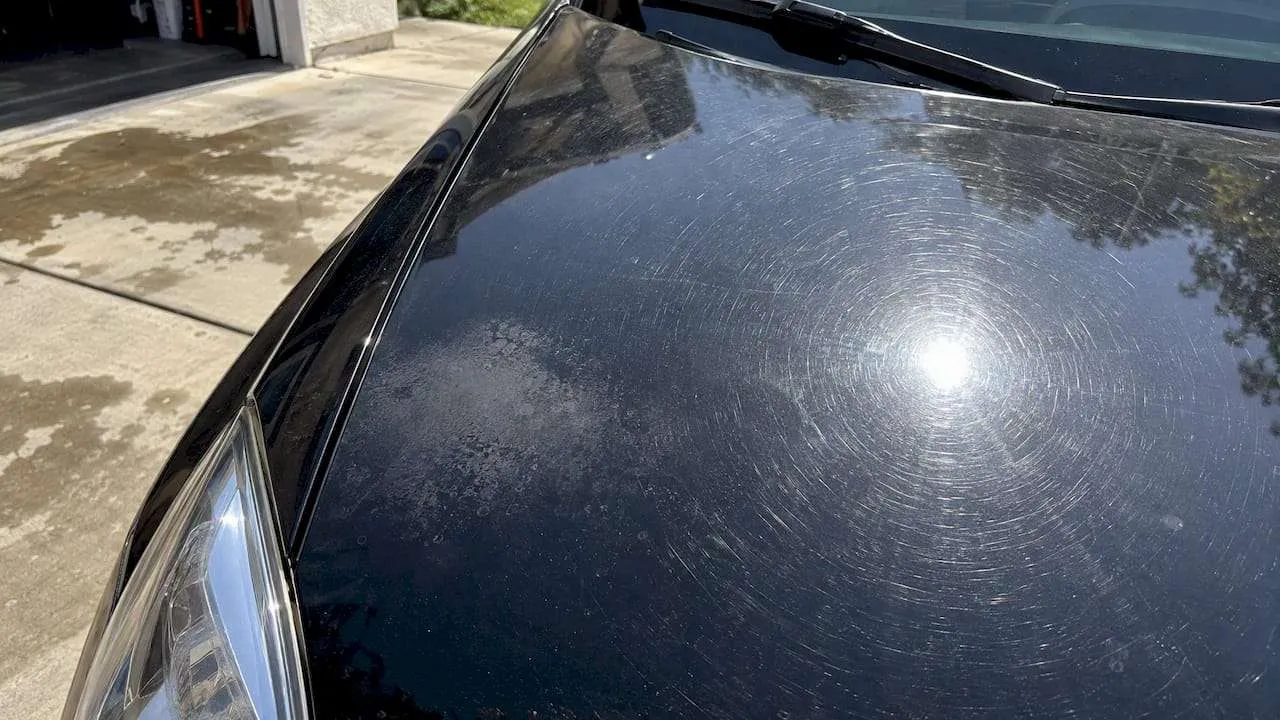
Washing won’t fix everything, though. Swirl marks, oxidized paint, hardened sap, or deep-set interior stains need the clay, polish, and chemical treatments that only a detail provides. Running a damaged finish through another automatic wash just adds more fine scratches on top of the ones already there.
When to book a wash and when to schedule a detail
Most of the decision comes down to two numbers: wash every 1 to 3 weeks, and detail seasonally or at least twice a year, a cadence AAA recommends for keeping both finish and resale value intact. Outside that routine, a few warning signs mean it’s time to book a detail instead of another quick wash:
- Hardened tree sap, bird droppings, or tar spots that a rinse won’t lift.
- Fine swirl marks or a dull, hazy finish under direct sunlight.
- Visible oxidation, especially on darker paint colors.
- Lingering interior stains or odors that air fresheners can’t mask.
- Preparing the car for sale, trade-in, or a major trip.
Treating detailing as occasional maintenance rather than a luxury pays off. A coat of protection applied before sap or oxidation sets in costs far less than correcting damaged paint later, and it keeps resale value higher than a car that’s only ever seen a quick rinse.
Safe DIY washing and the mistakes that cause damage
Hand-washing at home can be just as safe as a professional wash if you follow a few habits. Use the two-bucket method, one for soapy water and one for rinsing your mitt, so you’re not dragging grit back onto the paint. Stick to a car-specific soap, a microfiber mitt, and back-and-forth strokes rather than circles, and wash in the shade so soap doesn’t dry and streak before you rinse it off.
- Skip dish soap and household cleaners, which strip wax and dry out rubber trim.
- Avoid circular scrubbing motions, which tend to create swirl marks over time.
- Use a separate tool and bucket for wheels, since brake dust is abrasive and shouldn’t touch your paint mitt.
- Don’t reuse one towel for the whole car; dirt picked up early gets dragged across clean panels later.
AAA specifically flags brush-based automatics and circular hand-wash motions as common sources of avoidable swirl marks. A detailer-backed guide to automatic wash risks covers the same ground with added tips on choosing safer wash formats.
Pro Tip: If swirl marks are already visible under sunlight, DIY polish won’t fully remove them. That’s a job for machine correction, not another hand wash.
Maintenance schedule and what to budget for
A simple calendar keeps most of this on autopilot. Wash weekly to every three weeks, wax two to four times a year, and book a full detail seasonally or at least twice annually, in line with AAA’s maintenance guidance.
- Basic automatic or self-serve wash: a few dollars per visit, fastest and least protective option.
- Hand-wash service: a modest step up in cost for more attention to detail.
- Exterior-only detail: covers decontamination, correction, and a protective layer.
- Full interior-and-exterior detail: the most thorough and time-intensive option.
- Ceramic coating or PPF application: a larger upfront cost that extends the interval between details.
Removing tree sap, bird droppings, or tar quickly matters more than people assume: left on the paint too long, these contaminants can etch the clear coat, turning a wipe-down job into a correction job.
A ceramic coating doesn’t replace washing, but it changes what washing has to do. Instead of fighting oxidation and fading protection, you’re mostly rinsing off dirt that beads and slides off a sealed surface, which stretches the time between full details.
How professional shops extend what detailing can do
A standard detail resets the surface. Paint protection film and ceramic coatings go further by changing what the surface has to deal with going forward. Trained installers bring precision that a weekend DIY job or a standard wash and wax simply can’t replicate: careful paint correction before any coating goes on, wrapped-edge PPF installs that don’t lift at the seams, and multi-layer ceramic applications with proper cure time built in.
As an XPEL authorized dealer, our team at PPF Pros applies this level of precision daily, and it shows up most in cases where the stakes are highest: a new car still in its first year, a daily driver racking up highway miles and rock chips, or a vehicle headed for sale where paint condition directly affects offers. In those situations, paying for trained installation tends to cost less over time than repeated paint correction.
What I’d tell a friend shopping for either service
Washing and detailing aren’t competing services, they’re different intervals on the same maintenance timeline. Wash often enough to keep dirt and grime from building up, and treat a seasonal detail as the point where you actually protect what you’re keeping clean.
If you only remember one rule, make it this: match the product to the job, car-specific soap for washing, a real decontamination and correction process for detailing, and don’t let hardened contaminants sit on the paint waiting for your next wash. When a swirl mark, stain, or odor won’t budge with soap and water, that’s your sign to call a professional rather than keep scrubbing.
— Jake
PPF Pros: protection that builds on a good detail
A detail gets your paint clean and corrected. What happens next determines how long that work lasts, and that’s where we come in. At PPF Pros, we apply XPEL authorized paint protection film, System X ceramic coatings, custom vinyl wraps, and chrome deletes to daily drivers, Teslas, and luxury or exotic vehicles across Los Angeles, with 4.9-star ratings reflecting the precision installs we’re known for.
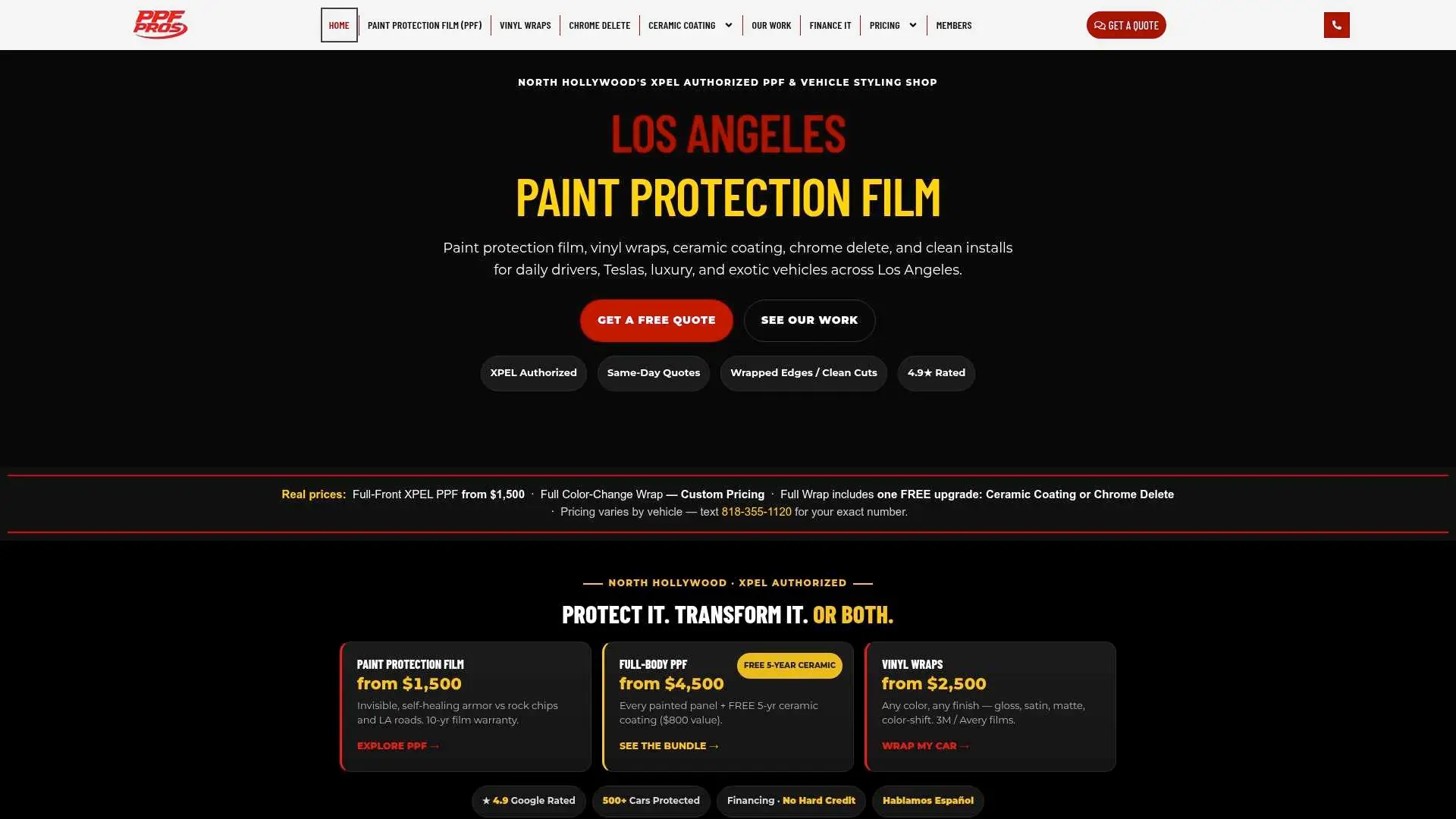
Our Full Front PPF package has a set price, and Full Vehicle coverage pricing varies depending on your car’s size and trim. Ceramic coating and chrome delete pricing is available on request once we’ve seen your vehicle, since coverage and prep time vary. Every quote includes wrapped-edge installation and the same straightforward communication we’d want if it were our own car.
If a recent detail left your paint looking its best, lock that finish in. Request a quote from PPF Pros and we’ll walk you through which protection option fits your car and your budget.
FAQ
Is detailing worth it compared to a regular car wash?
Detailing is worth it when your car needs more than surface cleaning, such as removing embedded contaminants, correcting swirl marks, or applying long-term protection. A regular wash keeps dirt off between details, but it can’t replace the decontamination and correction steps a full detail provides.
How often should you wash versus detail your car?
Wash your car every 1 to 3 weeks for routine upkeep, and schedule a full detail seasonally or at least twice a year to maintain protection and resale value. Waxing falls in between, recommended two to four times annually.
Can a car wash damage my paint?
Yes, certain car wash formats can cause damage if they use worn brushes or harsh soaps. AAA warns that automatic washes with trapped dirt in their brushes and circular hand-wash motions are common causes of swirl marks and clear-coat wear.
Does ceramic coating replace the need for detailing?
No, a ceramic coating protects the paint after it’s been corrected, but it doesn’t replace the cleaning or correction steps of a detail. We apply System X ceramic coatings at PPF Pros as a protective layer that extends the results of a completed detail rather than a substitute for one.
What’s the difference between paint protection film and a standard detail?
A standard detail cleans, corrects, and temporarily protects paint with wax or sealant, while paint protection film is a physical layer installed to guard against rock chips, UV exposure, and daily wear over years rather than months. Our XPEL authorized PPF installs at PPF Pros are designed to work alongside regular detailing, not replace it.
Sources
- Tips for keeping your vehicle spotless inside and out | AAA Club Alliance
- Should you pay more for a car wash? | Consumer Reports
- How to remove tree sap from your car | AAA via