
Paint protection film (PPF) is the most effective way to keep an exotic car’s paint looking like it did on the showroom floor. It is a clear, self-healing urethane layer that takes the rock chips, road grit and light scratches instead of your clear coat. For a supercar or luxury car, the real decisions are how much of the body to cover, which finish to choose, and who handles the edges around the carbon, vents and active aero. This guide walks through each one, with the pricing we publish at PPF Pros in North Hollywood.
TL;DR
- Exotic paint is expensive to fix and often impossible to match, so film on the high-impact areas pays for itself the first time it stops a chip.
- Coverage runs from a partial or full front to a track pack to a full vehicle. At PPF Pros, a Full Front is $2,199 and a Full Vehicle starts from $4,500.
- Installer skill matters more than the label on the roll: wrapped edges, clean alignment and proper prep decide how the film looks in year three.
- Matte, satin and gloss films are all possible, but each changes how you wash and care for the car.
- Hand wash, wait for the cure, and bring special-order paint, carbon and custom-wrapped cars to the quote conversation first.
Table of Contents
- Why exotic cars need PPF more than most
- How PPF actually protects supercar paint
- Choosing your coverage level
- Finishes: gloss, satin and matte
- What makes an exotic install different
- PPF, ceramic coating or both?
- A Los Angeles reality check
- Our perspective: install quality beats sticker price
- How to prepare for your appointment
- Aftercare: keeping film looking new
- Get a quote for your exotic
- FAQ
- Sources
Why exotic cars need PPF more than most
Every car on the road takes small hits. What changes with an exotic is the cost of those hits and how hard they are to undo.
Low ride height means the nose, rocker panels and lower doors sit right in the line of fire from tire spray and gravel. Wide, aggressive bumpers and large front intakes present a lot of flat surface to the road. Many exotics also wear specialty paint: tri-coats, factory custom colors and thin, soft finishes that do not forgive polishing the way a mainstream car’s paint does.
Then there is the repair side. Industry professionals point out that PPF is far cheaper than repairing paint damage, and that a showroom-quality repaint can run from $2,500 to $20,000 and often lowers resale value because the car no longer wears its original factory finish. On a car where originality is part of the value, that last point is the one buyers and appraisers care about.
Some consumer surveys go further and suggest a 10 to 20% resale premium for cars with well-kept paint over cars with visible chips and swirl marks. Treat that as a directional estimate, not a promise: what a car is worth at sale depends on its model, mileage, history and market. We cover the trade-in math in more detail in our breakdown of PPF as a resale investment.
How PPF actually protects supercar paint
PPF is a transparent film built on a thermoplastic polyurethane (TPU) layer. According to THE SHOP, TPU is the key ingredient that determines film performance, and manufacturers can tune its chemistry to make film tougher, more flexible or more stretchable. That stretch matters on exotics, because the film has to follow deep compound curves without lifting.
The film does three jobs:
- Impact absorption. Gravel, sand and small debris hit the film, not the clear coat.
- Self-healing. Fine swirls and light scratches in the top layer close up with heat from the sun, warm water or a heat gun. XPEL describes this self-healing behavior on its Ultimate Plus film, which is the line we install as an XPEL authorized shop.
- Chemical and environmental defense. Bird droppings, bug acids, road tar and UV exposure act on the film surface rather than your paint.
No film is bulletproof. A hard enough strike, a sharp object or a poorly maintained surface can still cut or stain it. What PPF does is move the damage from your paint to a layer that can be replaced. For more on what stops chips and what does not, see our guide to rock chip protection.
Choosing your coverage level
The right package depends on how you use the car. A weekend canyon car that lives in a garage has different exposure from a daily-driven Urus or a track-day 911.
| Coverage | What it generally includes | Best for |
|---|---|---|
| Partial Front | Leading edge of the hood, fenders and bumper, plus mirrors | Garage-kept cars, owners on a tighter budget |
| Full Front | Full hood, fenders, bumper, mirrors | Most exotic owners who drive regularly |
| Track Pack | High-impact zones beyond the front end, for fast and hard use | Track-day and spirited-driving cars |
| Full Vehicle | Every painted panel | Keepers, collectors, and anyone who wants uniform protection and appearance |
Exact panel lists vary by car, so we confirm them in the quote. Here is the published pricing:
- Full Front: $2,199
- Full Vehicle: from $4,500
- Partial Front and Track Pack: quoted per vehicle on the PPF services page
For a broader view of what drives price, including vehicle size and complexity, read how much paint protection film usually costs.
Why a full-body wrap is not always overkill
Owners often ask whether a full-front package is enough. For many, it is. The argument for full coverage is mostly about two things. First, panels like doors, quarter panels and the roof collect door dings, parking lot scuffs and wash marring over years. Second, a partially filmed car can show a visible difference between filmed and unfilmed paint when the car is older, especially with a matte or satin finish. If you plan to keep the car long term or sell it as a collector piece, full coverage keeps the whole body consistent.
Finishes: gloss, satin and matte
Most exotic owners choose clear gloss film, because it disappears and lets the factory paint do the talking. But finish is a real choice now.
- Gloss clear keeps the original look and is the lowest-maintenance option.
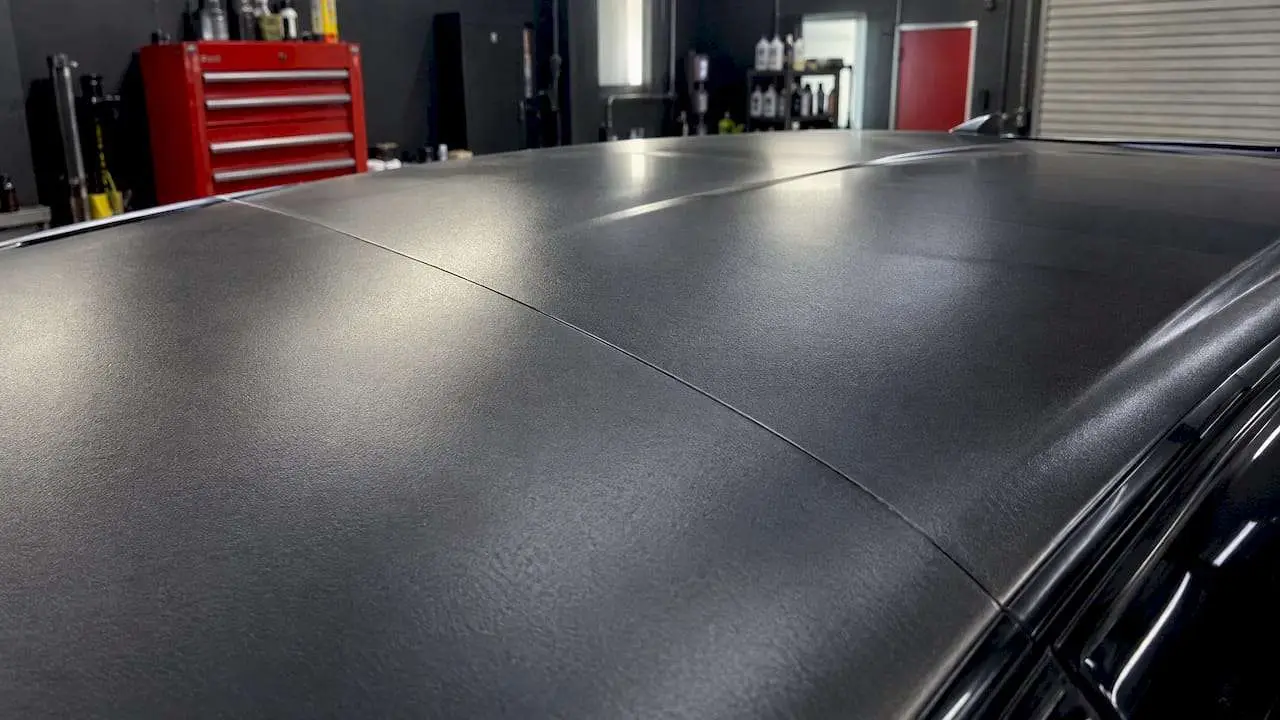
- Satin or matte clear changes how the paint looks without changing the color underneath. Even automakers have taken notice: Range Rover offers a satin PPF as a factory option and notes that the finish needs appropriate care to maintain it.
- Stealth or colored film goes further and changes the car’s appearance. If a full change of color is the goal, a vinyl color change wrap starts from $2,800 at our shop, and it is a different product with different goals than PPF.
A practical note on satin and matte: you cannot polish out a mark the way you can on gloss, and wax or sealants that add shine will spoil the look. Plan your wash routine around the finish before you choose it.
What makes an exotic install different
A good exotic install is mostly about the details that rarely show up in a price list.
Edges, seams and tight corners
The cleanest installs wrap film around panel edges and tuck it out of sight, so you see paint-colored lines instead of film edges. Where wrapping is not possible, the cut line should sit along a natural body line with consistent gaps. Ask to see a finished car up close, especially hood edges, door jambs and bumper corners. Our own approach is built around precise, wrapped edges and clean alignment, because that is what you notice in daylight.
Carbon fiber, vents and active aero
Many supercars have carbon fiber splitters, mirror caps, lips and aero elements, and flaps that move. Film around those parts should be cut so airflow paths and moving parts work as designed. If your car has factory aero, tell the installer at the quote stage so templates and cut lines are planned around it.
Paint correction before film
Film locks in whatever is under it. A swirl, haze or sand-through you leave on the paint is a swirl, haze or sand-through under the film for years. That is why prep matters, and why we explain what paint correction before PPF involves and what to ask a shop about it. On a new car, the work may be a wash, decontamination and light refinement. On a used exotic, it can be more.
Special paint and prior repairs
Tell the shop about any respray, touch-up, paint-to-sample finish, or aftermarket wrap. Repainted panels can lift film differently from factory paint, and some wraps need to come off first. If your car has a wrap to remove, our guides on wrap removal cost and removing a wrap safely cover what to expect.
PPF, ceramic coating or both?
These are not substitutes. PPF is physical impact protection. A ceramic coating is a thin chemical layer that adds gloss, makes washing easier and resists water spotting and light contamination. It will not stop a rock chip.

Many exotic owners pair them: film on the high-impact areas or the full body, with a coating on top of the film and on exposed paint, glass and wheels. We offer a 5-year System X ceramic coating, and we sometimes run bundles that add a coating to a film package. Check the current PPF and ceramic coating bundle for what is included right now.
A Los Angeles reality check
In Southern California, UV, heat and freeway debris are the daily enemies. Sun exposure fades and oxidizes paint over time, and a drive up the 405 or the 5 can put gravel and road tar on the nose of a low car in a single commute. Those conditions are the reason many local exotic owners film the front end on delivery and add the rest later.
If you drive a Tesla in addition to, or instead of, a supercar, our Tesla PPF guide explains why factory paint alone does not hold up.
Our perspective: install quality beats sticker price
We see the same pattern with exotic and luxury owners. They start by asking what a full car costs and end up asking who is going to cut around the carbon and make the edges invisible. Those are the right questions in the opposite order.

Our view is simple. First, pick coverage based on how the car lives, not on the biggest package. A garage-kept car that sees the canyons on weekends can be well served by a full front. A car that gets driven hard or kept for a decade earns full coverage. Second, treat prep as part of the job, not an upsell. Film over uncorrected paint is a mistake you pay for twice. Third, judge a shop by finished cars: edges, alignment, how it handles seams on curved bumpers. We use premium materials from trusted brands such as XPEL, and we put our effort into precision, which is why we answer quote requests the same day and explain in plain words what each package covers.
And if you are not sure whether your car needs film at all, we would rather tell you that than sell you coverage you will not use.
— Jake
How to prepare for your appointment
- Gather the car’s history. Note any repaints, touch-ups, existing film or wraps.
- Decide your finish. Gloss, satin or matte, and whether you want a coating on top.
- Pick a coverage tier. Start from how often you drive and where you park, then ask for the panel list.
- Ask about the details. Edges, seams, aero parts, correction and what happens if a panel needs redoing.
- Plan downtime. Film needs time at the shop and a cure period afterward. Ask for a realistic timeline.
Aftercare: keeping film looking new
Proper care protects your investment. 3M’s maintenance guidance for its protection film is a good general reference: wipe off fuel spills right away, since they can degrade film and adhesive, and then hand wash and dry the film. Our shop-level advice follows the same lines.
- Hand wash with a pH-neutral soap and clean microfiber. Avoid brush-style automatic washes.
- Do not pressure wash close to edges, and keep the nozzle at a distance.
- Remove bird droppings, bug residue and fuel quickly.
- Skip abrasive polishes and waxes on matte or satin film.
- Follow your installer’s cure instructions for the first days, especially around washing.
For product-specific rules, such as washing intervals, always follow what your installer and film manufacturer give you for your exact film.
Get a quote for your exotic
If you are in Los Angeles and want film on a Ferrari, Lamborghini, McLaren, Porsche or any other special car, we can walk through coverage, finish and prep with you. The Full Front is $2,199 and the Full Vehicle starts from $4,500. See the PPF packages or contact PPF Pros to book a quote.
FAQ
Is PPF worth it on an exotic car?
For most exotics, yes. Paint is costly to repair and hard to match, and a respray can reduce value because the car loses its original finish. Film puts a replaceable layer between the road and that paint. How much you cover should match how much you drive.
How much does PPF cost for a luxury or exotic car in Los Angeles?
At PPF Pros, a Full Front is $2,199 and a Full Vehicle starts from $4,500. Partial Front and Track Pack are quoted per car. Final pricing depends on vehicle size, body complexity and any prep needed, so we confirm it in the quote.
Can I take a car with PPF through a car wash?
Hand washing is the safest choice, and it is what we recommend for exotics. Brush-style automatic washes can scratch film and catch edges. If you use a touchless wash, follow your installer’s cure guidance first.
What is the downside of PPF?
It costs more up front than wax or a coating, and a poor install can show visible edges, lifting or trapped debris. Satin and matte films also need more careful care. Choosing an experienced installer and doing the prep correctly removes most of the risk.
Sources
- THE SHOP: Building a Case for Offering Paint Protection Film Installations
- THE SHOP: PPF versus repaint costs
- WifiTalents: PPF industry statistics
- XPEL: Ultimate Plus paint protection film
- Range Rover: Satin finish PPF
- 3M: Protection Wrap Film vehicle maintenance FAQ