For most car owners, satin is the easier finish to live with day to day, while gloss delivers the deeper shine and factory-like reflections that some drivers want more than low maintenance. The real trade-off comes down to reflectivity versus forgiveness: gloss looks sharper under direct light but shows swirls and water spots more readily, while satin hides minor imperfections at the cost of some shine. The sections below cover maintenance, scratch behavior, pricing, and which finish suits which car.
TL;DR:
- A 2026 price guide puts gloss solid color wraps at $3,000 to $5,500 and satin or matte at $3,500 to $6,000, before specialty finishes.
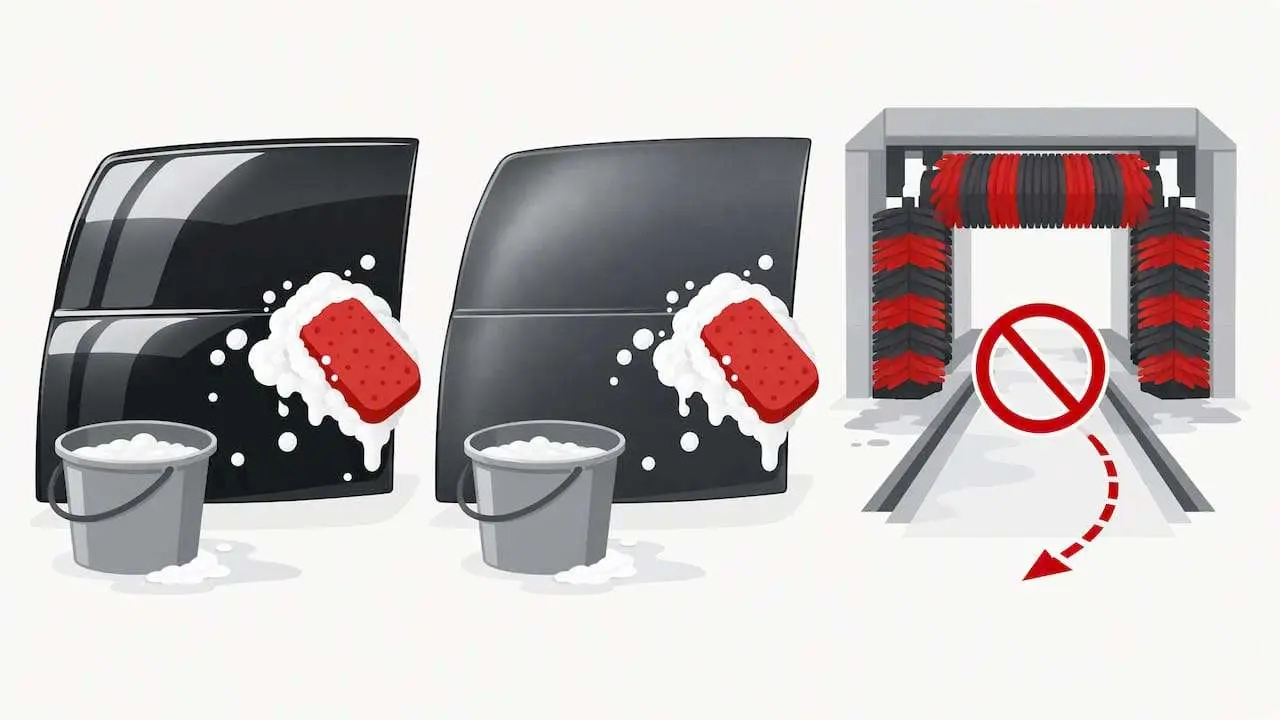
- Wash either finish by hand with mild, pH neutral soap, avoid automatic brush washes, and wait until the installer approves the first wash.
- Satin requires products made for satin because ordinary wax or polish can leave shiny patches, while vinyl finishing polish can reduce light swirls on gloss.
- Match the finish to the trim: satin blends with unpainted plastic, while gloss echoes piano black; inspect physical samples under the car’s usual lighting before committing.
Table of Contents
- How gloss and satin finishes look different
- How to clean and maintain gloss vs satin wraps
- How scratches, swirls, and water spots show up on each finish
- What gloss and satin wraps typically cost
- Matching the finish to your car and style goals
- What installers check before recommending a finish
- Why the “which finish is better” debate misses the point
- Getting your finish installed right
- FAQ
- Sources
How gloss and satin finishes look different
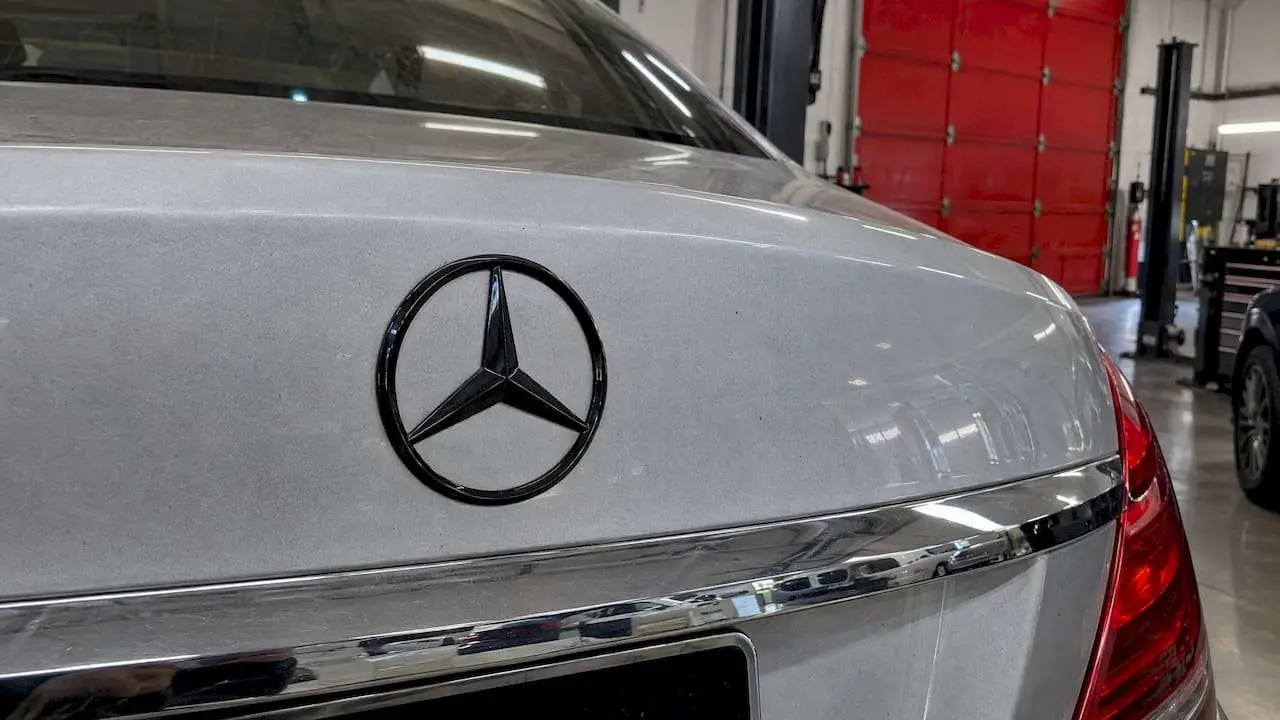
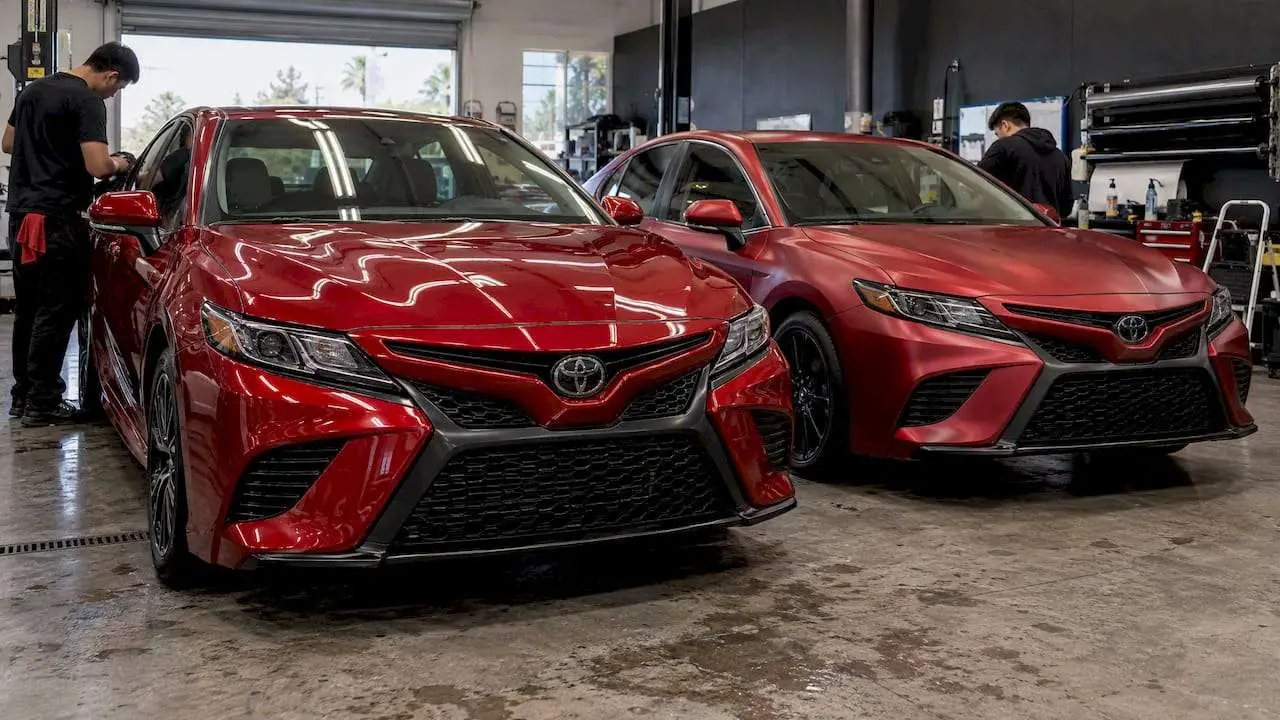
Gloss vinyl has a high-reflectivity, mirror-smooth surface that bounces light cleanly, producing sharp highlights and a deep, almost wet-looking shine. It reads as a factory paint job from a distance, which is why it’s a popular choice for full color changes meant to look OEM.
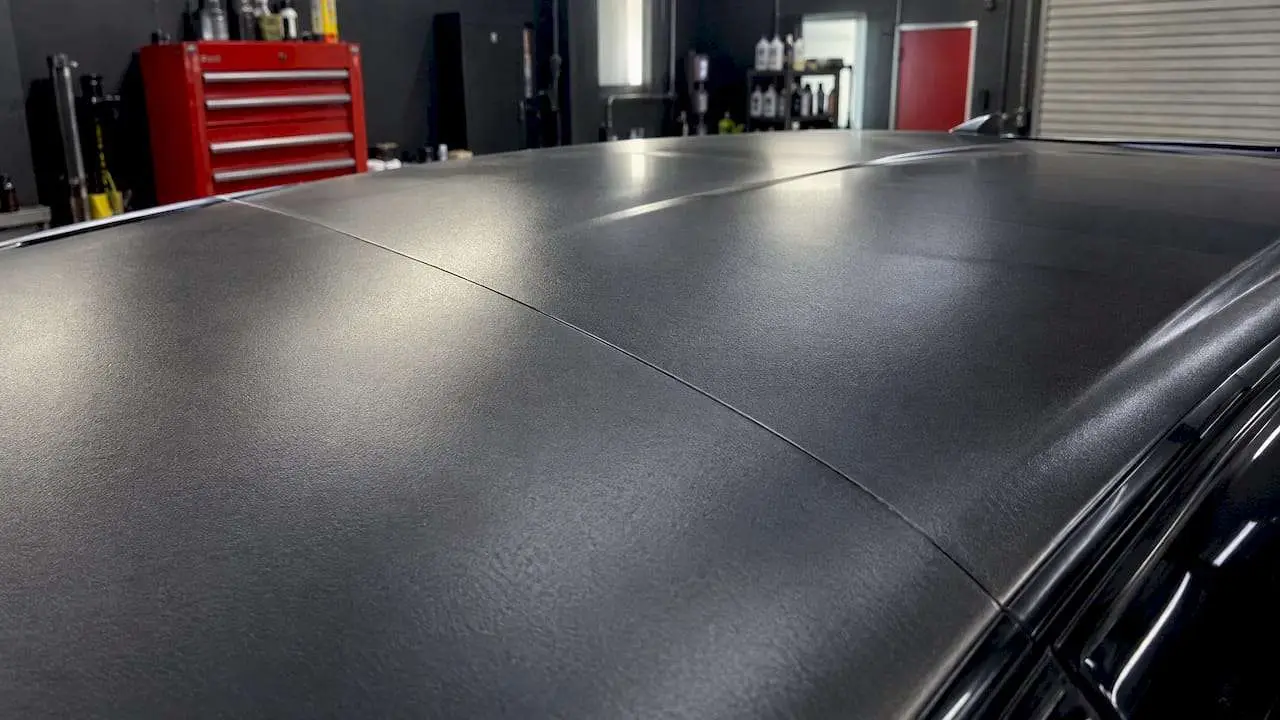
Satin sits in the low-to-medium sheen range. Its surface has a slight texture that scatters light instead of reflecting it directly, so highlights look softer and more diffused. That texture also means satin tends to look more uniform from different angles and under mixed lighting.
Common applications split along these lines:
- Gloss: full color changes meant to mimic a factory finish, accent panels like hoods or roofs, and chrome delete work where the goal is a piano-black look.
- Satin: full-body wraps on modern EVs and luxury cars, mirror caps and trim accents, and chrome delete jobs meant to blend with unpainted plastic trim.
- Both: color-matched sections paired with painted body panels for a seamless transition.
How to clean and maintain gloss vs satin wraps
Whichever finish you choose, the washing rules are largely the same. Avery Dennison’s maintenance guidance recommends hand washing with a mild, pH-neutral detergent and specifically warns against automatic brush car washes, since the brushes can scratch film and lift edges over time.
For light upkeep, Avery Dennison’s Supreme Wrapping Film care instructions suggest a waterless wash and sealant when the car isn’t heavily soiled. For dirtier vehicles, the recommended sequence is:
- Pre-rinse to loosen dirt and grit before contact.
- Hand wash gently with a pH-neutral soap and a soft mitt.
- Rinse thoroughly to remove all soap residue.
- Dry with a clean microfiber towel to avoid water spots.
Our vinyl wrap maintenance guide covers first-wash timing in more detail, but the general rule is to wait until the wrap manufacturer or installer says it is ready before the first wash, then stick to a regular gentle-wash schedule rather than letting grime build up.
Pro Tip: Test any new cleaner or sealant in an inconspicuous spot first, and skip waxes containing petroleum distillates on satin or matte finishes since they can affect the texture.
How scratches, swirls, and water spots show up on each finish
Gloss and satin wear differently, and knowing which marks bother you most helps guide the decision.
- Gloss reflects light directly, so fine scratches and water spots stand out clearly against the smooth surface, though the same reflectivity can also mask shallow swirls depending on the angle.
- Satin’s texture diffuses light, which tends to hide light surface marks and water spots better than gloss.
- 3M’s maintenance FAQ notes that satin films can develop uneven, shiny patches if the wrong wax or polish fills in the texture, so satin-safe products matter more than they do on gloss.
- For gloss films, 3M recommends careful rinsing before washing to remove abrasive grit, along with specific finishing polishes designed for high-gloss surfaces rather than generic automotive polish.
If a gloss wrap picks up light swirling, a gentle finishing polish made for film can often restore clarity. Satin finishes generally need satin-specific products or a professional’s hand, since the wrong treatment can leave permanent sheen inconsistencies.
What gloss and satin wraps typically cost
Full color-change wraps vary by finish, and that difference shows up directly in the quote. A 2026 price guide lists gloss solid colors at roughly $3,000 to $5,500, while satin and matte finishes run about $3,500 to $6,000. Specialty finishes like chrome or color-shift wraps typically cost more than either.
A few reasons satin and specialty films cost more:
- Material differences: premium cast vinyl conforms better to curves than calendered vinyl, and it’s commonly used for satin and specialty finishes.
- Install time: satin and textured films can be less forgiving to stretch and align around complex body panels, adding labor hours.
- Seam work: matching satin’s texture across panel seams takes more care than blending a uniform gloss surface.
When comparing quotes, ask whether the price reflects premium cast vinyl, what prep work is included, and which film brand is being used. Ask the installer what materials and surface preparation the quote includes.
Matching the finish to your car and style goals
Satin tends to suit modern EVs and refined luxury builds where a subdued, factory-plus look is the goal, while gloss fits cars aiming for a sharper, performance-oriented shine. Neither is a universal answer. It depends on what look fits the car and trim already on it.
- For chrome delete work, satin often blends better with unpainted plastic trim pieces, while gloss mimics the look of piano-black trim found on many factory-finished cars.
- A hood, roof, or mirror cap accent in gloss or satin can complement a painted body without committing to a full wrap.
- Whole-car satin wraps are common on Tesla and other EVs where owners want a clean, non-reflective look, as covered in our Tesla vinyl wrap guide.
- Adding a ceramic coating after either finish can make day-to-day cleaning easier and help the wrap resist contamination between washes.
What installers check before recommending a finish
Experienced installers don’t just ask which finish looks better in photos. They walk through a short checklist before making a recommendation:
- Inspect the existing paint condition, since any damage or inconsistency can show through a wrap.
- Match the proposed finish to factory trim pieces like window surrounds, mirrors, and badges.
- Ask how the owner plans to maintain the car, since satin and gloss have different upkeep needs.
- Show physical finish samples under the shop’s actual lighting, since colors and sheens photograph differently than they look in person.
Seeing swatches in person, rather than relying on online photos, is the single biggest factor in avoiding buyer’s remorse over a finish choice. A short consultation where you touch the material and see it under real light answers most of the questions a spec sheet can’t.
Why the “which finish is better” debate misses the point
Most online debates frame gloss versus satin as a durability contest, with one finish declared the winner. That framing doesn’t hold up well in practice. Both finishes can hold up well when properly installed and maintained. The real differentiator isn’t the film, it’s how closely the owner follows basic care habits like hand washing and avoiding automatic brushes.
What gets underrated is how much the surrounding trim matters. A gloss wrap next to factory matte plastic can look mismatched in a way that has nothing to do with the film’s quality. Satin chosen to blend with unpainted trim, or gloss chosen to mirror painted panels, often makes a bigger visual difference than the finish itself.
If there’s one thing worth prioritizing over sheen level, it’s seeing a physical sample under the same light your car sits in most often, driveway, garage, or daylight. Photos and screens flatten the texture differences that matter most, and that’s exactly where buyer’s remorse tends to start.
— Jake
Getting your finish installed right
Choosing between gloss and satin matters less than getting it installed well. We handle full color change wraps in either finish, along with chrome delete work and ceramic coating add-ons for easier upkeep afterward.
A professional install affects edge sealing, panel alignment, and how uniform the finish looks once it’s on the car, details that are hard to fix after the fact. If you want to see gloss and satin side by side before deciding, our wrap options and color consultation page is the place to start, or request a quote directly for your vehicle.
FAQ
How much is a satin wrap for a car?
Full satin or matte color-change wraps typically run about $3,500 to $6,000, according to a 2026 price guide. The exact price depends on vehicle size, film brand, and how much surface prep the job requires.
Is glossy or matte vinyl better?
Neither finish is universally better: gloss gives a factory-shine look with sharper highlights, while matte and satin finishes hide light surface marks more easily. The right choice depends on the look you want and how much upkeep you’re willing to do.
Which is better, black satin or gloss?
Black gloss mimics a deep factory paint finish and shows reflections clearly, while black satin gives a more subdued look that tends to hide fine scratches and water spots better. Either works well in black, so the decision usually comes down to the finish you want on the rest of the car’s trim.
Does satin wrap scratch easily?
Satin film can scratch like any vinyl wrap, but its textured surface tends to mask light surface marks better than gloss. According to 3M’s maintenance guidance, using the wrong wax or polish on satin can create uneven shiny patches, so satin-safe products matter more than they do for gloss.
Sources
- IB1.50 Cleaning and Maintenance for Vehicle Wraps
- Caring for your Avery Dennison® Supreme Wrapping Film™
- 2080 FAQ Maintenance RA.pdf
- Car wrap cost in 2026: $2,500 to $6,000 for most cars