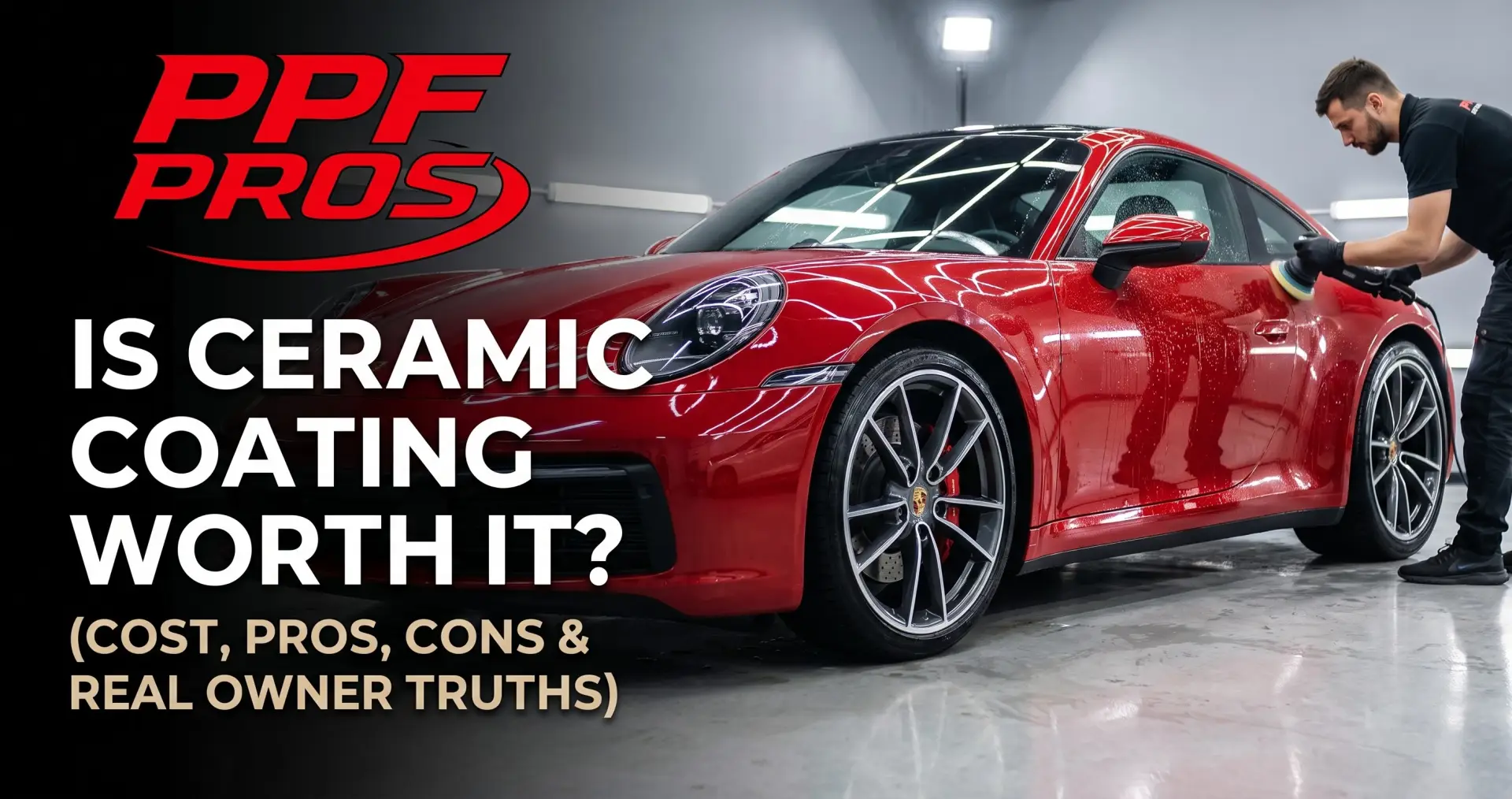
Is ceramic coating worth it, or is it just an overhyped auto detailing trend that wastes your hard-earned cash? With environmental threats like UV rays, bird droppings, and road grime constantly dulling paint, protecting your vehicle’s finish has never been more important. This complete guide breaks down the true costs, benefits, and hidden drawbacks of ceramic coatings so you can make the smartest decision for your car.
Key Takeaways: The Quick Answer
For most vehicle owners who plan to keep their car for more than two years, a professional ceramic coating is undeniably worth the investment. It provides long-term gloss, reduces washing time by up to 70%, and guards against chemical damage and sun oxidation.
However, it is not an invincible force field. If you are expecting protection from freeway rock chips or plan to drive through harsh automatic brush car washes, ceramic coating alone will leave you disappointed.
| Factor | DIY Ceramic Kits | Professional Ceramic Coating |
| Average Cost | $50 – $150 | $800 – $2,500+ |
| Lifespan | 1 – 2 years | 5 – 7+ years (or Lifetime) |
| Paint Correction Included | No (User must perform) | Yes (Multi-stage machine polishing) |
| Hydrophobic Rating | Moderate | Extreme (Self-cleaning effect) |
| Warranty Protection | None | Multi-year or Lifetime Warranty |
| Best For | Weekend hobbyists on a budget | Daily drivers, luxury cars, & Teslas |
What Is Ceramic Coating and How Does It Work?
A professional ceramic coating is a liquid polymer infused with nanometer-scale silica particles. Unlike traditional paste wax that simply rests on top of your clear coat, a ceramic coating chemically locks onto your paint.
The Science Behind Silica Dioxide (SiO_2) Chemical Bonding
At a microscopic level, your car’s factory paint is full of microscopic peaks and valleys. Dirt, brake dust, and moisture collect in these tiny pores, leading to oxidation and dullness over time.
When high-grade Silicon Dioxide ($\text{SiO}_2$) or Titanium Dioxide ($\text{TiO}_2$) coatings are applied, they cure to form a permanent, glass-like nanostructure over the clear coat. This fills in those microscopic pores, producing a slick, non-porous surface that resists heat, environmental acids, and UV degradation.
Hydrophobic Properties: Water, Dirt, and Contaminant Repellency
The defining feature of any quality ceramic coating is its extreme hydrophobicity. Water contact angles exceed 110 degrees, meaning water cannot flatten out or stick to the paint. Instead, water instantly forms tight beads that roll off the vehicle, carrying away surface dirt and road grime with it.
Top Benefits: Why Drivers Invest in Ceramic Coating
Long-Lasting Paint Defense Against UV, Acid Rain & Bird Droppings
Constant sun exposure breaks down clear coat resins, causing white, chalky paint oxidation. A professional ceramic coating acts like a permanent SPF 1000 sunscreen for your vehicle. It also neutralizes environmental acids found in bird droppings, bug splatter, and tree sap before they can etch into the factory paint.
Next-Level Deep Gloss and Factory Shine
A ceramic coating amplifies the reflective properties of your paint, creating a deep, wet-look gloss that far exceeds any car paste wax. Metallic flakes jump out, and solid paint colors look noticeably richer.
Effortless Maintenance & Self-Cleaning Effect
Because contaminants cannot bond tightly to the smooth nano-glass barrier, mud, brake dust, and grime slide off with minimal pressure. Weekly hand washes become quick, satisfying 15-minute rinses rather than hours of laborious scrubbing.
Preservation of Vehicle Resale Value
A documented ceramic coating service proves to future buyers or dealerships that the paint underneath is in showroom condition. When it comes time to sell or trade in your car, pristine factory paint directly translates to higher resale payouts.
The Realistic Disadvantages: What Ceramic Coating CANNOT Do
The Scratch Myth: Can Ceramic Coating Prevent Rock Chips and Scratches?
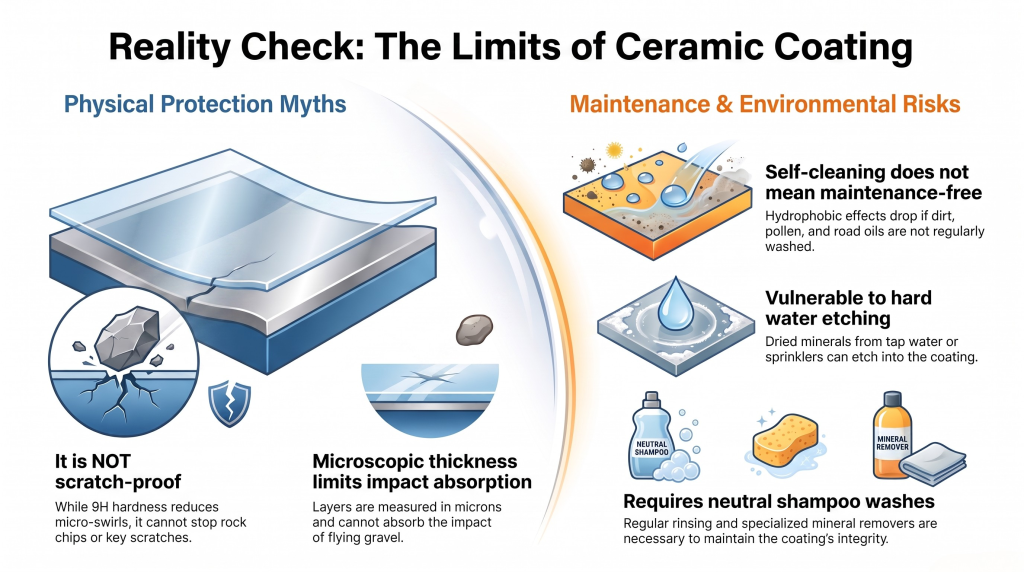
A widespread myth is that ceramic coatings make cars scratch-proof. This is false. While quality coatings add 9H level surface hardness—helping reduce faint swirl marks from micro-fiber towels—they are microscopic layers measured in microns. They cannot absorb physical impacts from freeway gravel, flying rocks, or sharp key scratches.
Why You Still Have to Wash Your Vehicle
A ceramic coating is self-cleaning, but it is not maintenance-free. Dust, pollen, and road oil will slowly accumulate on top of the coating. If you leave dirt sitting for weeks, the hydrophobic effect temporarily drops until you rinse and wash the surface with a neutral shampoo.
Environmental Hazards That Can Damage Coatings (Hard Water Spots)
If tap water or lawn sprinkler overspray dries on a hot ceramic-coated panel, the mineral deposits (calcium and magnesium) remain behind. Over time, these mineral spots can etch into the coating if left untreated, requiring specialized mineral remover washes.
The Financial Breakdown: How Much Does It Really Cost?
DIY Kits ($50 – $150) vs. Professional Installation ($800 – $2,500+)
DIY ceramic bottles cost under $100 on retail shelves, but they contain lower concentrations of active $\text{SiO}_2$ solids to prevent novice installers from permanently ruining their finish. They generally last 1 to 2 years at best.
Professional-grade coatings utilize high-solids chemical formulas available exclusively to certified shops. Professional application costs range between $800 and $2,500+ depending on car size, coating grade, and required paint correction.
The Hidden Cost Factor: Paint Correction & Surface Preparation
Up to 70% of the total cost in a professional ceramic coating job goes into surface preparation. A ceramic coating permanently locks in whatever state the paint is in. If your vehicle has swirl marks, light scratches, or water spots, those must be removed via machine polishing prior to installation.
Is Ceramic Coating Worth It on a Brand New Car?
Yes! In fact, a brand new car is the best candidate for ceramic coating. New vehicles require minimal paint correction prep, lowering your installation costs while preserving the factory paint before road damage occurs.
Ceramic Coating vs. Other Paint Protection Options
Ceramic Coating vs. Traditional Wax & Polymer Sealants
Car wax lasts 4 to 8 weeks before washing off in high heat or under detergent soap. Synthetic sealants last 4 to 6 months. Ceramic coatings bond semi-permanently, lasting 5 to 7 years or longer with minimal reapplication required.
Ceramic Coating vs. Paint Protection Film (PPF): Which Do You Need?
Paint Protection Film (PPF or “Clear Bra”) is a thick polyurethane shield designed specifically to absorb rock chips, scratches, and physical road debris. Ceramic coating provides chemical repellency and gloss, but no chip protection.
The Ultimate Defense: Industry leaders at PPF Pros often recommend the “Ultimate Armor” package: combining XPEL Paint Protection Film on high-impact front bumpers and hoods with a full body Ceramic Pro coating. PPF absorbs physical rock impacts while the ceramic coating makes the entire car slick and effortless to clean.
Ceramic Coating vs. Graphene Coating: Is Graphene Better?
Graphene coatings introduce carbon-based graphene oxide into $\text{SiO}_2$ formulations. While graphene offers slightly higher water spot resistance and anti-static properties, a proven, professional-grade ceramic coating installed by a certified shop remains the gold standard for reliable long-term vehicle defense.
DIY vs. Professional Ceramic Coating Application
Applying a high-end coating requires a controlled clean environment, specialized lighting, and trained technique.
Decontamination Wash and Chemical Clay Bar
The vehicle undergoes an iron-decontamination wash and clay bar treatment to remove imbedded industrial fallout, tree sap, and brake dust from the clear coat.
Paint Correction (Polishing Out Swirl Marks)
Using dual-action machine polishers and specialized cutting pads, detailers smooth out micro-scratches and swirl marks to achieve a mirror-like glass reflection.
IPA Panel Wipe & Precision Application
The surface is wiped down with an Isopropyl Alcohol (IPA) solvent to strip off polishing oils. The technician then applies the coating cross-hatch section by section, leveling out high spots before curing.
Curing Time and Environmental Controls
The car must cure in a dust-free, temperature-controlled environment away from moisture for 24 to 48 hours to ensure proper chemical bonding.
Why Professional Prep Work Dictates Coating Longevity
Rushing preparation steps or applying a coating outdoors causes premature peeling, high-spot hazing, and rapid coating failure within months. Choosing a certified studio ensures exact paint prep and full manufacturer warranty coverage.
How to Maintain Your Ceramic Coating So It Lasts
The Safe Two-Bucket Car Washing Method
To avoid dragging dirt across your coated finish, use the two-bucket method: one bucket for dirty soap rinse water, and one bucket for clean soapy wash water equipped with grit guards.
Cleaning Products to Avoid (pH-Balanced Soap vs. Harsh Degreasers)
Always wash with pH-balanced, wax-free car shampoo. Avoid harsh dish soaps, aggressive industrial degreasers, or automated drive-through car washes with spinning abrasive brushes that strip protective layers.
Annual Inspection & Top-Up Sprays
A brief annual professional inspection allows your detailer to perform a chemical de-mineralization wash and apply a silica booster spray, refreshing the top-layer hydrophobicity for years to come.
Who Is Ceramic Coating Actually For? (Buyer Segmentation)
Who Should Buy It
- New Car & Tesla Owners: Preserve factory paint before environmental damage sets in.
- Commuters & Daily Drivers: Keep vehicles clean with zero need for seasonal waxing.
- Luxury & Exotic Vehicle Enthusiasts: Maintain maximum depth, gloss, and resale value.
Who Should Skip It
- Lease Holders Returning Cars Soon: Short-term drivers who won’t benefit from long-term paint preservation.
- Automated Brush Wash Regulars: Drivers who insist on using harsh mechanical tunnel washes that scratch paint finishes.
Frequently Asked Questions (FAQs)
How long does a ceramic coating actually last on a vehicle?
A professional-grade ceramic coating installed by a certified detailer lasts 5 to 7 years or longer with basic care. DIY spray bottles generally breakdown after 6 to 18 months.
Can ceramic coating prevent rock chips on my car?
No. Ceramic coatings protect against chemical etching, bird droppings, UV rays, and water spots, but they are too thin to absorb physical impacts. To prevent rock chips on freeways, you need Paint Protection Film (PPF).
Can I still polish or wax my car after applying ceramic coating?
You should not wax or machine polish a ceramic coated car. Polishing will abrasive-strip the coating off the paint. Waxes won’t stick to the hydrophobic surface and will only attract dust and muddle your shine.
Can a ceramic coating be safely removed if needed?
Yes. Professional detailers can safely remove a ceramic coating using light machine compound polishing without damaging your underlying factory paint.
Will ceramic coating void my vehicle manufacturer warranty?
No. Ceramic coatings are non-invasive exterior clear coat treatments that do not affect or void factory vehicle warranties.
The Final Verdict: Is Ceramic Coating Worth Your Money?
If you value a pristine finish, easy weekly washes, and strong defense against sun oxidation and environmental etching, yes—ceramic coating is worth every penny.
However, maximum protection comes down to master installation and surface preparation. Settling for quick DIY kits or inexperienced handymen often leads to streaky high-spots, poor adhesion, and premature failure.
Protect Your Investment with PPF Pros
Don’t trust your vehicle’s finish to chance. At PPF Pros, Los Angeles County’s premier certified protection studio in North Hollywood, our certified technicians deliver flawless, gapless installations backed by multi-year and lifetime warranties. Whether you need custom paint correction, certified XPEL Paint Protection Film, or a high-solids Ceramic Pro coating, we tailor the perfect shield for your driving needs.
Ready to give your car an unbeatable, long-lasting shine? Contact PPF Pros Now!