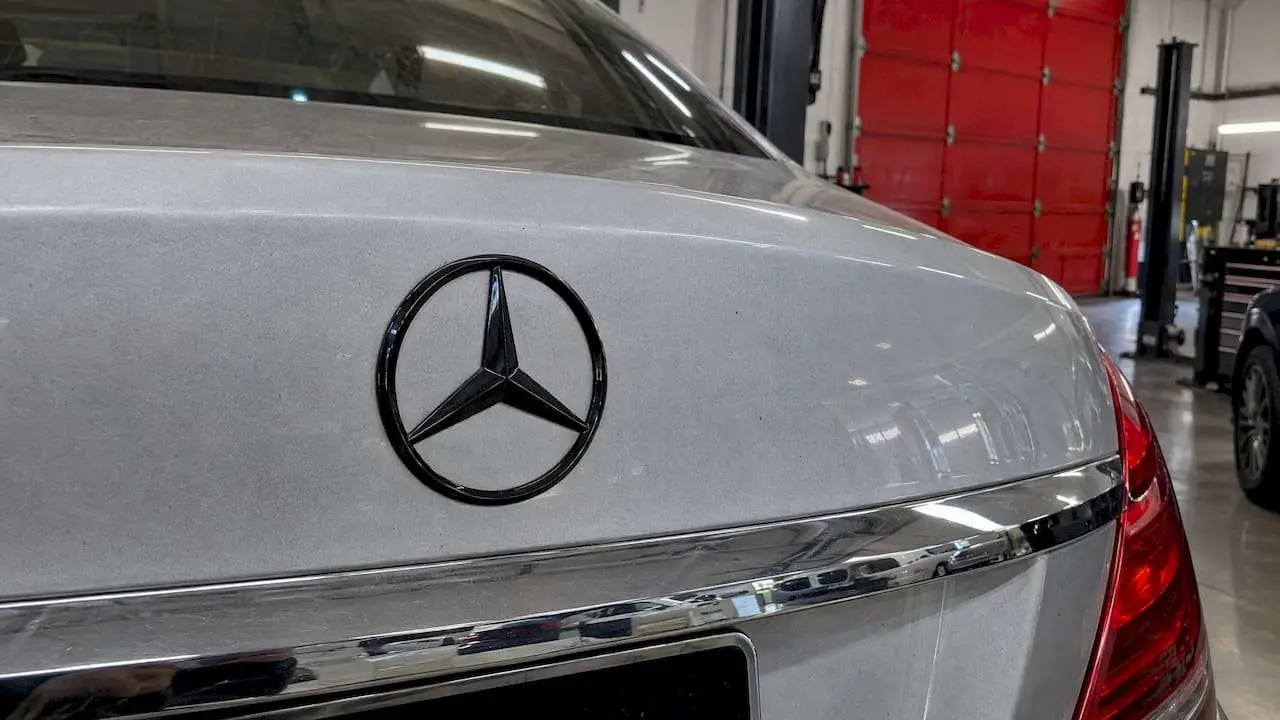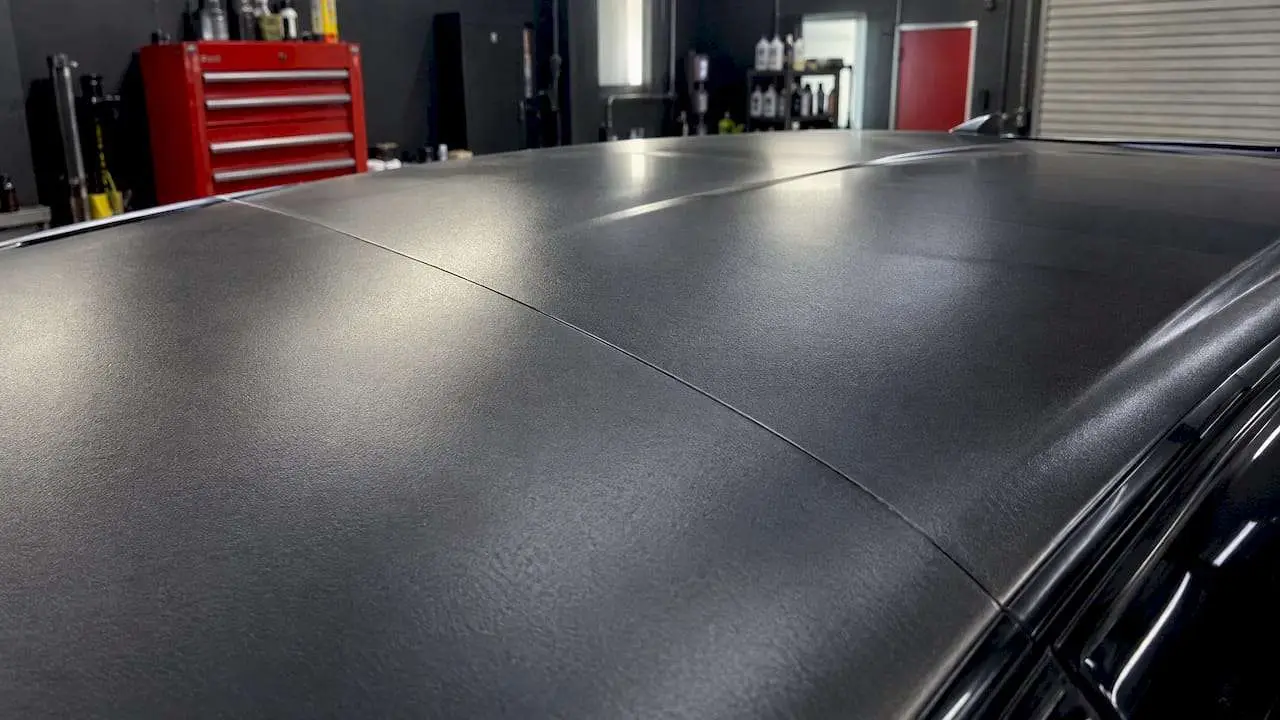

Matte paint is detailed differently from gloss because you can never polish it. The finish gets its flat look from a surface that scatters light, and anything that smooths that surface, such as buffing, wax, or hard rubbing, leaves a permanent shiny patch. So safe matte detailing comes down to four rules: wash by hand with matte-safe soap, dry with a damp microfiber towel using straight passes, lift contaminants with chemistry instead of friction, and protect only with products made for matte.
Below is the full routine, the products and habits to avoid, and how to decide between a matte-safe coating and a film. We install and protect finishes in North Hollywood every week, so we also say where a shop does the job better than a driveway.
TL;DR
- Hand wash only, with a two-bucket method and a soap labeled matte-safe. Skip automatic washes, especially ones with rotating brushes.
- Never polish, buff, clay, or wax matte paint. Scratches and scuffs cannot be buffed out, and the usual fix is repainting the panel.
- Dry with a clean, damp microfiber towel or chamois, pulled in one direction with light pressure. No circular wiping.
- Remove bird droppings, sap, and bugs quickly, by soaking them with a matte-safe cleaner rather than scrubbing.
- Protect with a coating or sealant made for matte finishes. A regular wax or sealant adds gloss.
Table of Contents
- Why matte paint needs its own routine
- What to keep away from matte paint
- How to wash matte paint, step by step
- Removing spots, bird droppings, sap and bugs
- Scratches, chips and shiny spots
- Protecting matte paint
- Matte detailing routine at a glance
- Our perspective on matte paint care
- Protecting your matte finish in Los Angeles
- Buying matte cleaning products: what to check
- FAQ
- Sources
Why matte paint needs its own routine
Gloss clear coat is smooth and hard, so a detailer can level small scratches by polishing a thin layer away. Matte clear coat is intentionally textured at a microscopic level. That texture is the look. Polishing, rubbing, or filling it with wax changes how light reflects, and the change is permanent.
One paint manufacturer’s matte finish care guide says to use only products developed for low-gloss paint and to avoid anything even mildly abrasive, such as rubbing compounds or glazes. Kia’s owner guidance for matte paint says that a damaged or worn finish loses its appearance, and shiny spots may require repainting. That is the real downside of matte: it is not fragile day to day, but it is unforgiving once marked.
The flip side is that matte paint is not something to fear. Done correctly, a wash takes about the same time as on a gloss car. The difference is what you leave out of the process.
What to keep away from matte paint
Before the routine, the short list of things that cause most of the damage we see:
- Automatic car washes. GM’s guidance says to avoid them, especially those with rotating brushes, which can cause light scratches that cannot be buffed out. Touchless washes still use strong soaps, so a hand wash is the safer default.
- Wax, glaze, and gloss sealants. Kia notes that non-matte waxes and sealers add gloss and can be very difficult or impossible to remove. “Spray wax” and “quick detailer” bottles are the most common culprits, because they feel harmless.
- Polishers and abrasive cloths. Mechanical cleaners, polishers, paper towels, and terry cloth can permanently alter the sheen.
- Household cleaners. A matte care guide from a detailing-product maker warns against dish detergent and window cleaner for washing, and notes that many ordinary wash soaps contain wax or polymers.
- Wheel and tire cleaners on the paint. GM says these should never touch matte panels, and if they do, rinse the paint immediately. Wash wheels first, with separate tools, and keep the spray low.
- Clay bars. The same product guide recommends chemical decontamination instead, because physical clay can leave bits embedded in a matte finish.
How to wash matte paint, step by step
Work in shade with the panels cool to the touch. Hot paint dries soap and water into spots, and spots are the thing matte shows most.
What you need
- Two buckets, ideally with grit guards
- A matte-specific car soap with no wax, gloss enhancers, or polymers
- A clean, soft wash mitt (microfiber or wool)
- Two or three clean microfiber drying towels or a chamois
- A hose or pressure washer with a wide fan tip
The steps
- Rinse first. Knock off loose dirt before anything touches the paint. If you use a pressure washer, GM recommends staying below 1,200 psi, with a wide fan tip at least 10 inches from the paint. A garden hose is plenty for most cars.
- Wheels and lower panels first, with separate tools. This keeps brake dust and tire dressing away from your paint mitt.
- Two-bucket wash. One bucket holds soapy water, the other clear rinse water. Load the mitt with soap, wash a panel, then rinse the mitt in the clear bucket before reloading. Go top to bottom. Use straight, light passes and let the soap do the work. The care guides advise avoiding circular motion and vigorous rubbing.
- Rinse thoroughly. Leftover soap is a common cause of streaks. Rinse until the water sheets off without foam.
- Dry right away. Kia’s instruction is to dry with a clean, damp chamois or microfiber towel, pulled across with light pressure and no circular motion. Damp is intentional: a damp towel glides, and a dry one can drag grit. Do not let the car air dry in the sun.
If you wash weekly or every other week, the car rarely needs more than this.
Removing spots, bird droppings, sap and bugs
Contaminants are the main reason matte owners worry, and the worry is justified. Bird droppings, sap, and bug remains are acidic or sticky, and left to bake they can etch or stain a textured surface. Owners in Los Angeles see this fast: strong sun, trees dropping sap, and long dry spells that let dust bond to paint.
The approach is the same for all of them: soften, then lift. Do not scrape.
- Lay a microfiber towel soaked in matte-safe cleaner over the spot for a minute or two so it softens.
- Lift the residue with a light pass, then rinse.
- For stubborn spots, the paint manufacturer’s guide describes using a non-vinegar, non-ammonia alcohol-based window cleaner, or a 50/50 mix of alcohol and deionized water. Test it on a hidden area first, such as a door jamb, and rinse afterward.
Do this as soon as you see the spot. A quick wipe with matte-safe detail spray on day one beats a chemical fight on day ten.
Deeper decontamination
If the paint feels rough or the finish looks blotchy even after a clean wash, you likely have bonded contaminants such as industrial fallout or iron particles. Without a clay bar, the matte-safe route is chemical: a decontamination step that dissolves them. A professional decontamination is worth it before any coating or film goes on, and we explain our approach on our inspection-first decontamination wash page.
Scratches, chips and shiny spots
This is where matte differs most from gloss, so be realistic.
- Scuffs and scratches cannot be buffed out. GM’s guidance says buffing acts as a polishing process that creates unwanted shiny spots, and damaged panels often need repainting.
- Small chips can be touched up with a matte paint touch-up pen, and GM says not to use an aerosol can.
- Shiny patches from rubbing are usually permanent. If one appears, stop and do not try to “even it out” by rubbing the surrounding paint.
Since repair options are so limited, prevention carries more weight on matte than on any other finish. That is the strongest argument for protecting it.
Protecting matte paint
There are three realistic levels of protection.
Matte-safe sealants and sprays
Low cost and easy at home. Use only products explicitly formulated for matte paint, and reapply on the schedule the maker gives. The trade-off is durability: sprays wear off, and each reapplication is another chance to make a mistake.
Matte-safe ceramic coating
A coating forms a harder, slicker layer that makes water and dirt release more easily, so washing is faster and contaminants are easier to lift. A matte care guide advises using ceramic coatings explicitly designed for matte finishes, on a thoroughly cleaned surface so the coating bonds properly. The same guide says that applying one as soon as possible helps resist permanent staining and makes upkeep simpler.
Standard gloss coatings can add shine, so the product choice matters more than the brand. If you are comparing coatings with waxes in general, our ceramic coating vs. wax comparison covers the durability gap, and our ceramic coating benefits guide explains what realistic lifespans look like.
Paint protection film
Coatings resist stains and water, but they do not stop a rock chip or a scratch, and on matte paint those are the problems you cannot fix. Film is the only option here that physically absorbs impact. Clear film is made to keep a gloss look, while satin-finish film is designed to turn glossy paint into a matte look, and a ceramic coating made for it will not make it shiny. Satin film is how many owners get a matte appearance on factory gloss paint without committing to a respray, and it can be removed later.

For factory matte paint, ask the installer what film and finish they recommend before booking, because a gloss film over matte changes the look. Tell us your paint type when you contact us and we will explain what is realistic for your car.
Matte detailing routine at a glance
| Task | How often | Matte-safe method |
|---|---|---|
| Hand wash | Every 1 to 2 weeks | Two buckets, matte soap, straight passes |
| Dry | Every wash | Damp microfiber or chamois, one direction |
| Bird droppings, sap, bugs | Same day if possible | Soak with matte-safe cleaner, lift, rinse |
| Stubborn spot | As needed | Alcohol-based cleaner or 50/50 alcohol and deionized water, test first |
| Protection top-up | Per product maker | Matte-specific sealant or coating maintenance |
| Deep decontamination | Before coating or film, or when paint feels rough | Chemical, not clay |
Our perspective on matte paint care
Most matte damage we see is not neglect. It is a well-meaning owner using the wrong thing: a spray wax at a gas station, a towel that was not clean, a brush wash on a busy day. The paint is fine for years when it is treated gently and wrong for about ten seconds when it is not.

So we tell owners the same thing every time. Keep the routine boring and consistent, deal with contaminants the day you spot them, and decide on protection before the first chip or etch, not after. On a gloss car, a mistake can be polished away. On matte, you pay for it with a repaint. That is why we prefer to put film on the high-impact areas, then add a matte-compatible coating where it fits, and let owners keep washing at home with a simple routine.
Be wary of anyone who promises that a product makes matte paint “maintenance-free”. Nothing does. What good protection does is move your risk from permanent to washable.
— Jake
Protecting your matte finish in Los Angeles
If you would rather not risk a shiny spot, we install XPEL authorized paint protection film at our North Hollywood shop. A Full Front package is $2,199, and a Full Vehicle package starts from $4,500. See the details on our Full Front page or our paint protection film services. We also offer ceramic coating, and our team can tell you which options suit your paint finish.
Send us your make, model, and finish, and we will reply with a clear quote. Our services page also lists chrome delete and detailing.
Buying matte cleaning products: what to check
Searches for matte cleaning products are far more common than searches for technique, so here is how to read a label.
- “Matte” or “satin” on the label, with no gloss claim. Anything promising “deep shine”, “wet look”, or “enhanced gloss” is wrong for this paint.
- No wax, carnauba, or polymers in the soap. The point of a matte soap is that it rinses clean and leaves nothing behind.
- No fillers or abrasives in cleaners. Anything described as a cleaner wax, polish, or compound is out.
- Compatibility with coatings or film. If you already have either, check that the product will not interfere. Our ceramic coating maintenance guide explains why a pro decontamination can be better than recoating when a surface seems to have lost performance.
- Test first. Even a matte-safe product should go on a hidden area before the hood.
For factory matte paint, check your owner’s manual, because brands publish their own care steps.
FAQ
Can a car with matte paint go through a car wash?
Avoid it. GM’s guidance says automatic washes, especially those with rotating brushes, can cause light scratches that cannot be buffed out. Hand washing with matte-safe soap is the safe method, and a touchless wash is the only automatic option that is even worth considering.
What are the downsides of having matte paint on a car?
It cannot be polished, so scuffs, scratches, and shiny spots are not fixable by buffing, and damaged panels often need repainting. It also needs hand washing and quick removal of contaminants. With a careful routine and protection, those downsides are manageable.
What is the best protective coating for matte paint?
Use a ceramic coating or sealant explicitly made for matte finishes, applied to a thoroughly cleaned surface. A standard gloss coating or wax can add shine, and that is hard or impossible to remove. For impact protection, paint protection film is a separate layer that coatings cannot replace.
Can I use a clay bar on matte paint?
No. Clay can leave bits embedded in the finish and can mar the surface. Chemical decontamination is the matte-safe alternative, and a professional can do it before a coating or film.
Sources
- Matte Finish Care Guide, PPG Refinish
- General Motors matte paint care information, 2024
- Kia matte paint care information, 2023
- Kia Matte Paint Care Guide, March 2022
- Matte Paint Care Guide, 2020
- XPEL Stealth satin paint protection film