If you want to preserve factory paint on a new car, install paint protection film before the first highway drive, and at minimum cover the front end and mirrors. Luxury, leased, high-mileage, and frequent highway drivers benefit most. The right next step is booking an authorized XPEL installer now, ideally around your delivery date, so the film goes on before road debris gets a chance at your clear coat.
TL;DR:
- Installing paint protection film within the first week of ownership protects fresh paint from highway debris and saves on potential paint correction costs.
- Partial front coverage on high-impact areas often provides sufficient protection for daily street driving at a lower cost than full-vehicle wraps.
- Proper post-installation care includes avoiding automatic car washes for at least 72 hours and inspecting the film annually with an authorized installer to maintain warranty coverage.
- Protecting a leased or high-value vehicle early offers the best return by preventing costly damage and preserving resale value over time.
Table of Contents
- What Paint Protection Film Is and How It Guards Your Paint
- Best Time to Install PPF on a New Car and Booking Tips
- Which Parts to Protect First: Partial, Full-Front, and Full-Vehicle Coverage
- Costs and Whether PPF Is Worth It for Your New Car
- Installation, Post-Install Care, and Warranty Basics
- Shop-Tested Tips for New Car Owners
- Why “Install It Eventually” Advice Falls Short
- Protect Your New Car With PPF Pros
- FAQ
- Sources
What Paint Protection Film Is and How It Guards Your Paint
Paint protection film, often called PPF or a clear bra, is a urethane or TPU layer applied directly to painted panels. It works as a sacrificial surface: impacts, chips, and light scratches hit the film instead of your paint, and Edmunds compares the effect to a smartphone screen protector that absorbs the damage a bare screen would take.
Good film handles several everyday threats:
- Rock chips from highway debris and gravel roads
- Light swirl marks and scratches from washing or brushing against branches
- Bug splatter and water stains that would otherwise etch into clear coat
- Minor surface marks on many self-healing films, which shrink back under heat
PPF is not invincible; if you want to learn about special care, especially for sensitive finishes, see our guidance on matte paint protection. Deep gouges from a key or a collision still penetrate it, and film has a slight texture that some owners notice up close. It also costs real money to install correctly, which is why coverage choices matter as much as the decision to get it at all.
Best Time to Install PPF on a New Car and Booking Tips
The window that matters most is the one between delivery and your first real drive. XPEL recommends installing film within the first week of ownership, ideally before any highway miles, since factory-fresh paint has no chips, swirls, or road grime that need correcting first.
Early installation saves money because installers do not have to polish out existing damage before applying film. Wait a few months and you may pay for paint correction on top of the install itself.
- Reserve your installer slot as soon as you order or schedule delivery.
- Inspect the car for transport scratches or dealer prep marks before the appointment.
- Hand the installer your delivery inspection notes so they know what damage is pre-existing versus new.
Pro Tip: Photograph every panel under bright light right after delivery. It gives your installer a clear baseline and protects you if a dispute ever comes up about when a mark appeared.
Which Parts to Protect First: Partial, Full-Front, and Full-Vehicle Coverage
Not every panel takes equal abuse. Highway speed and airflow concentrate debris on a predictable set of areas:
- The hood and front bumper absorb the bulk of rock chips at highway speed
- Front fenders catch kickback from your own tires and the car ahead
- Side mirrors take direct hits from debris and occasional scrapes in tight parking
- Rocker panels and door edges see lower-speed chips and curb contact
Coverage comes in tiers. A partial front package, sometimes marketed as a clear bra, covers the hood, bumper, fenders, and mirrors at the lowest cost. A full-front package extends further up the hood and fenders for better edge protection. Full-vehicle coverage wraps every painted panel, which matters most for leased cars facing return inspections, high-value vehicles, and owners who plan to keep the car a long time and protect resale value.
A daily commuter on mostly surface streets can often get by with partial front coverage. A frequent highway driver or anyone leasing a vehicle they want returned in pristine condition is better served by full-front or full-vehicle film.
Costs and Whether PPF Is Worth It for Your New Car
Price depends on coverage area, film grade and thickness, labor time, and regional rates. USA Today notes that partial front coverage runs far cheaper than full-vehicle wraps, while full-vehicle PPF can run into the thousands depending on the car’s size and the film used. For reference, our Full Front package is listed at $2,199, and our Full Vehicle package starts from $4,500, which illustrates the gap between partial and complete coverage.
A few things drive the final number:
- Film brand and thickness, since premium self-healing films cost more than basic kits
- Labor hours, which scale with vehicle size and panel complexity
- Local shop rates, which vary by market and installer experience
- Extras like a bundled ceramic coating or warranty registration
PPF tends to make financial sense on vehicles you plan to keep several years, lease-return cars, and anything with high resale value. If your budget is tight, front-end coverage protects the highest-risk panels without the full-vehicle price tag. Consumer Reports has flagged dealership paint protection add-ons as frequently overpriced, so comparing an independent authorized installer against a dealer quote is worth the extra phone call.
Installation, Post-Install Care, and Warranty Basics
A proper install runs through a few stages: the car gets washed and decontaminated, the installer patterns and trims film for each panel, the film is applied and squeegeed to remove air and adhesive, edges get wrapped or sealed, and a final inspection checks for lifting or debris under the film.
Care in the first few days matters more than people expect:
- Avoid washing the car for 48 to 72 hours after install, per XPEL’s post-installation guidance
- Skip automatic tunnel washes indefinitely, since brushes can lift film edges
- Wipe off bird droppings, bug splatter, or tree sap as soon as you notice them
- Give self-healing film a head start with warm water or light heat on fresh swirl marks
One documented guidance point is that XPEL recommends yearly inspections with an authorized dealer to catch lifting or edge wear early, which keeps warranty claims straightforward.
Warranty coverage typically protects against film defects such as yellowing, cracking, or delaminating, but it does not cover the paint underneath. Coverage generally requires professional installation by an authorized installer, which is one more reason to skip the lowest bidder on a job that touches your car’s resale value.
Shop-Tested Tips for New Car Owners
A few habits separate owners who get years out of their film from those who end up paying for touch-ups:
- Reserve your install slot before delivery so the car goes straight from the lot to the shop
- Inspect every panel in daylight before the appointment and flag anything unusual
- Choose coverage based on how you actually drive, not just what looks impressive
- Register your film warranty immediately after installation
- Book an annual inspection to catch lifting or contamination early
We install exclusively with XPEL materials because warranty eligibility and finish quality both depend on using authorized film and trained technicians rather than aftermarket kits applied without the same training.
Why “Install It Eventually” Advice Falls Short
Most general car care advice treats PPF as a nice-to-have you can schedule whenever convenience allows. That framing misses the actual cost at stake. Every week a new car drives around unprotected is a week it can pick up a chip that then needs correction before film can go on cleanly, which turns a protection job into a repair-plus-protection job.
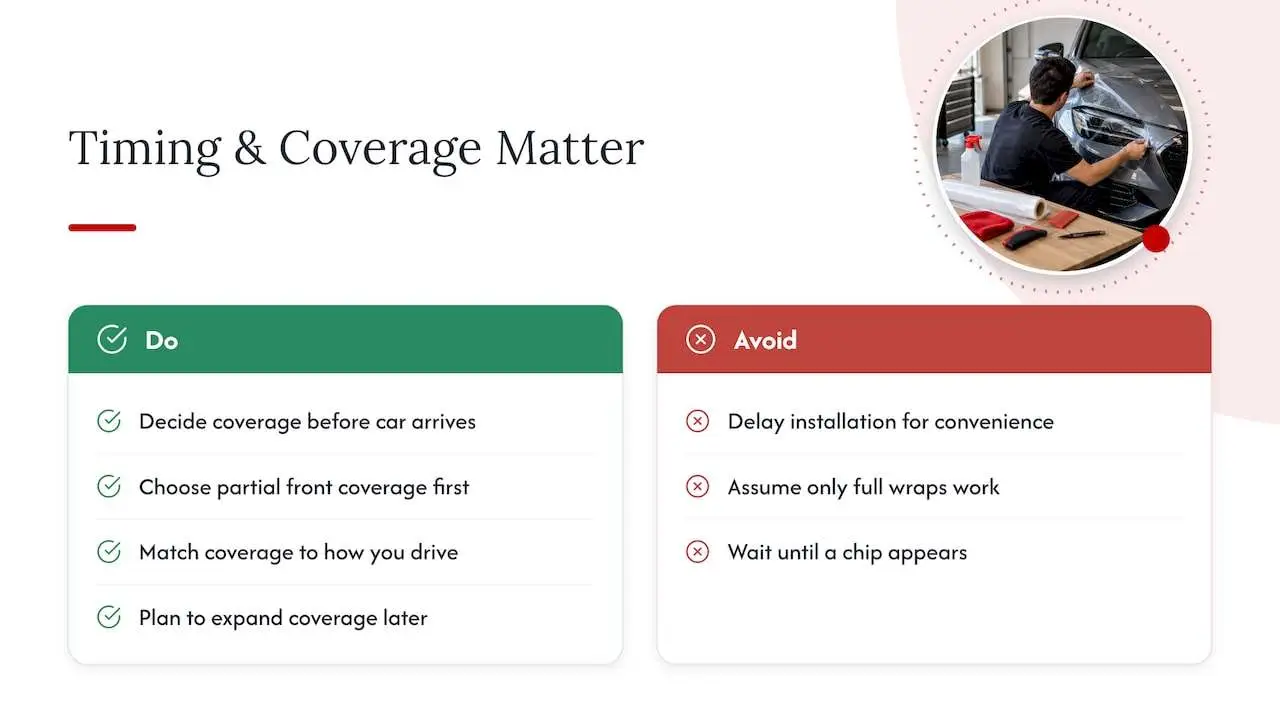
The bigger blind spot is coverage choice. Owners fixate on full-vehicle wraps as the “serious” option and skip protection entirely when the budget does not stretch that far. Partial front coverage on the hood, bumper, fenders, and mirrors stops the overwhelming majority of real-world damage for a fraction of the price. The right move is rarely all-or-nothing: it is matching coverage to how and where you actually drive, then expanding later if your situation changes.
If there is one thing worth fixing in how people approach this, it is timing discipline. Decide on coverage before the car arrives, not after the first chip shows up.
— Jake
Protect Your New Car With PPF Pros
We handle new-car protection the way it should be done: XPEL-authorized film, precise pattern-cut installs, and wrapped edges that hold up over years of driving. Whether you want Partial Front coverage on the highest-risk panels or a Full Vehicle wrap before your first drive home, we can match coverage to your budget and how you actually use the car.
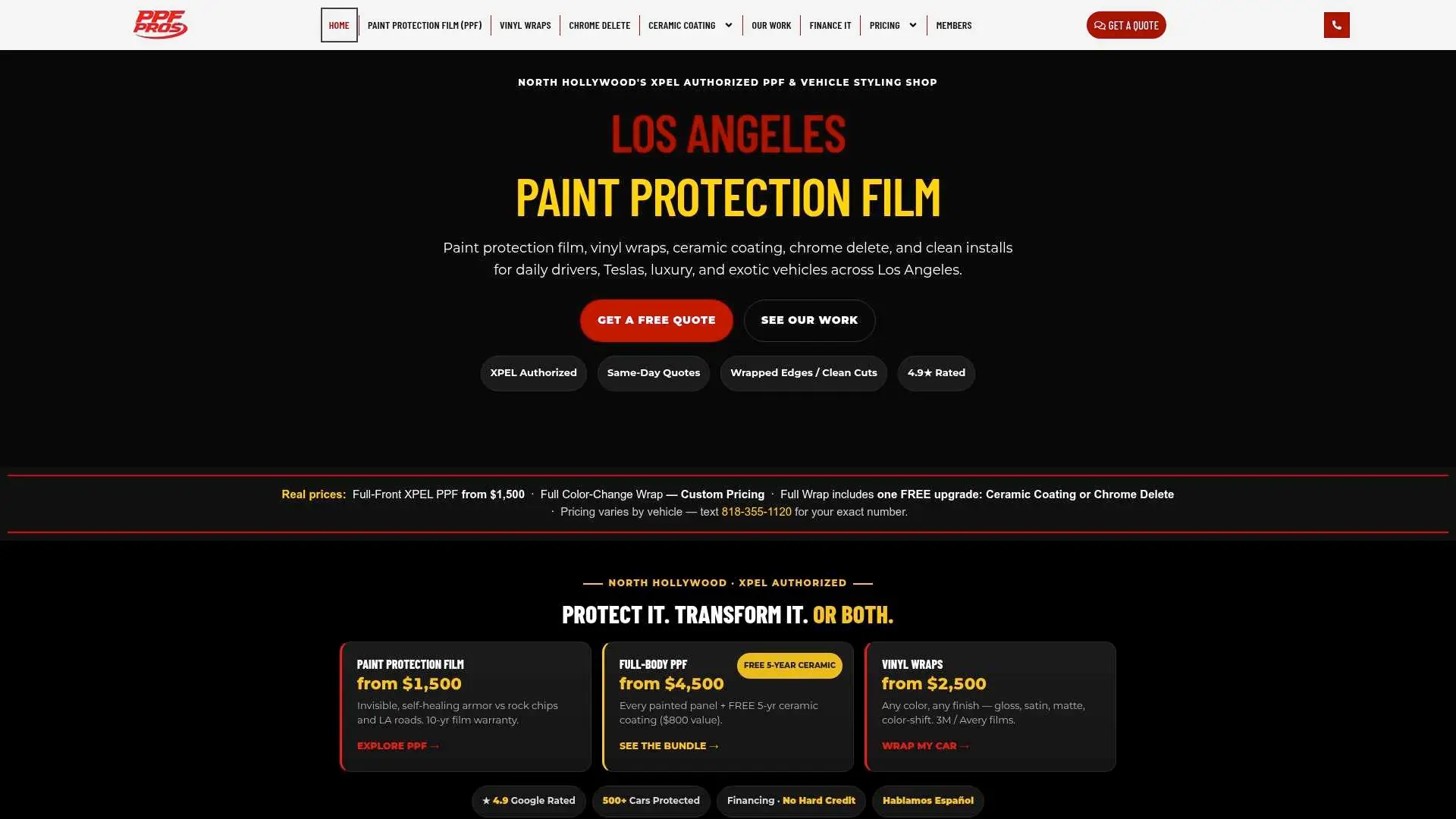
When you book with us, you get a straightforward quote, a realistic install timeline, and warranty registration handled. Many owners pair film with our Ceramic Coating for added gloss and easier maintenance between washes.
Ready to protect your new car before its first highway mile? Get a quote for Full Front PPF and we will walk you through coverage, pricing, and scheduling around your delivery date.
FAQ
Is paint protection film worth it on a new car?
For most owners planning to keep their vehicle several years, lease it, or protect resale value, PPF is worth the cost since it prevents rock chips and light scratches that are otherwise expensive to correct later. It matters less for a car you plan to trade in quickly or drive mainly on low-debris surface streets.
What is the best protective coating for a new car?
PPF and ceramic coating solve different problems: film physically blocks chips and scratches, while ceramic coating adds gloss and hydrophobic protection against UV and light contamination. Many owners combine both, using film on high-impact panels and ceramic coating over the full vehicle.
How much does a full PPF usually cost?
Full-vehicle PPF can run into the thousands depending on vehicle size and film grade, while partial front coverage costs considerably less. As one reference point, our Full Front package is $2,199 and our Full Vehicle package starts from $4,500.
What is the downside of PPF?
Film adds upfront cost, is not immune to deep scratches or collision damage, and requires some maintenance, including avoiding automatic car washes and inspecting for lifting over time. It also has a slight texture that some owners notice under close inspection in direct light.
Sources
- XPEL Product Care
- Edmunds — Paint protection film explainer
- Consumer Reports — dealer add-ons guidance
- USA Today — How to protect your car’s paint