
The best off-road paint protection is paint protection film (PPF) on the panels that take the hits, plus a ceramic coating if you want easier cleanup. Film absorbs rock chips and light scratches. Ceramic coating does not. Neither one turns your paint into skid plates, so brush, rocks and heavy contact still call for sensible lines and, on serious trails, real armor.
Below, we break down what trail damage looks like, what each product does and does not stop, which panels to cover first, what it costs at our shop, and how to wash a vehicle after a dirty weekend without undoing the work.
TL;DR
- PPF is the only permanent, nearly invisible layer that handles rock chips and light scratches. Ceramic coating adds chemical, UV and hydrophobic protection but little impact resistance.
- Vinyl wraps are mainly for color and looks. They are thinner than film and are not a trail-debris shield.
- Cover the rocker panels, lower doors, rear quarters and fender flares first. That is where tires throw gravel and where brush rubs.
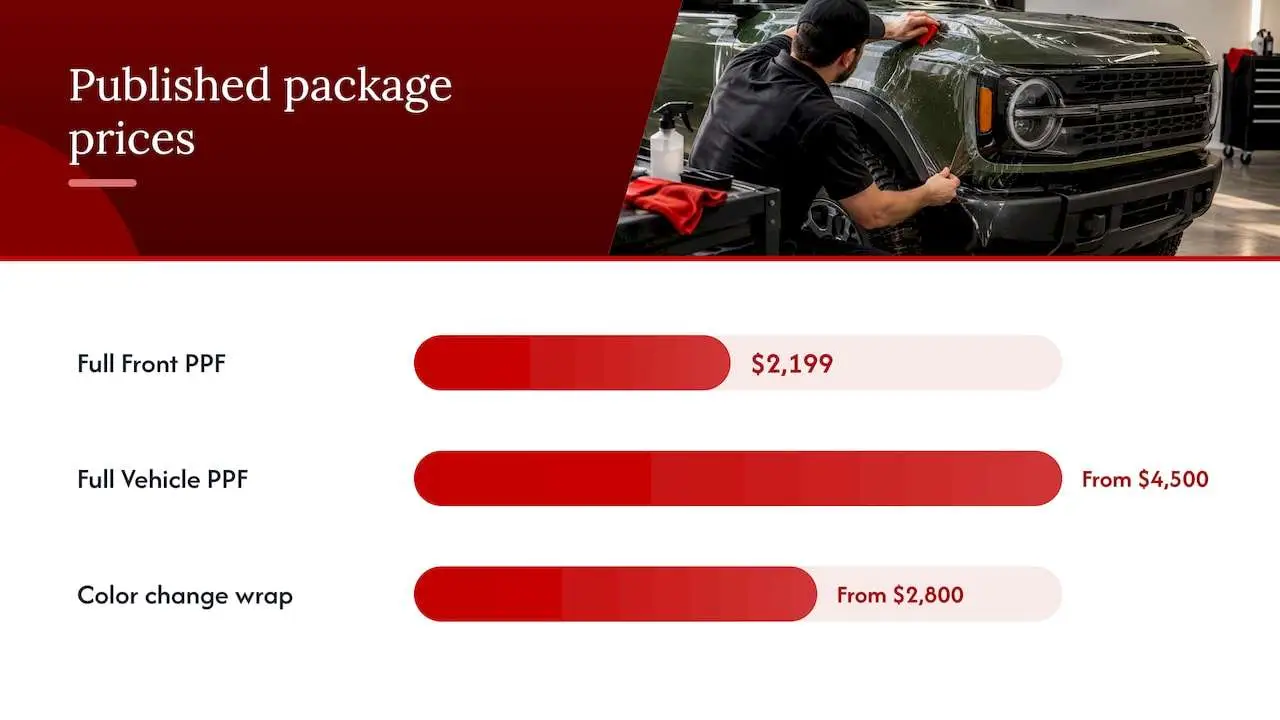
- At our North Hollywood shop, a Full Front is $2,199 and a Full Vehicle starts from $4,500.
- Wash after every trip with mild soap and plenty of water. Dried mud and grit scratch paint.
Table of Contents
- What off-road driving does to paint
- PPF, ceramic coating, wraps and removable armor compared
- Where to put protection first
- What it costs at our shop
- Perspective: what we tell off-road owners
- Protect your vehicle before the next trip
- Washing after a trip without scratching the paint
- FAQ
- Sources
What off-road driving does to paint
Trail damage comes in three main forms, and each one calls for a different defense.
Trail pinstriping. Branches and shrubs drag along the side panels and leave fine scratches. A professional coatings paper notes that branches, shrubs and airborne sand or grit can scratch or mar a finish, which dulls gloss and leaves visible marks.
Rock chips. The same paper explains that stones thrown by your own tires or by other vehicles can chip a coating by crushing, slicing, lifting layers or abrading it. How bad the chip is depends on stone size, shape, speed and angle. Gravel roads and washboard approaches to a trailhead do this to paint long before you reach anything technical.
Abrasive dirt. Mud, sand and grit ride on the body and scratch it, especially when they dry and get wiped off carelessly. TouchUpDirect points out that mud and grit left clinging to a vehicle can scratch the paint as they dry.
The stakes go beyond looks. A vehicle owner’s manual from Kia warns that deep scratches or stone chips that expose metal can rust quickly, because stones, gravel and abrasion can strip paint or protective coatings down to bare panel. A cosmetic chip becomes a corrosion problem if it is left alone.
PPF, ceramic coating, wraps and removable armor compared
People use these words as if they were interchangeable. They are different layers doing different jobs.
| Option | What it is | Rock chips | Branch scratches | Best for |
|---|---|---|---|---|
| Paint protection film | Thick, clear polyurethane film applied to the paint | High resistance | Good on light marks, with self-healing for minor ones | Permanent, near-invisible protection on exposed panels |
| Ceramic coating | Thin chemical layer bonded to the clear coat | Low | Low | UV and chemical resistance, easier washing, gloss |
| Vinyl wrap | Thin color or finish film | Limited | Limited | Color change and style |
| Removable trail armor | Reusable panels or covers placed over paint | Moderate to high | High | Brush-heavy trails, used only when needed |
The ratings above follow MEK Magnet’s comparison of PPF and trail armor, which describes PPF as a thick polyurethane layer for rock chips and lighter scratches. It describes ceramic coatings as providing chemical, UV and hydrophobic protection that makes cleaning easier but does not absorb significant physical impacts.
Paint protection film
Film is the foundation for off-road paint protection. It is thick enough to take the sandblasting that comes from gravel, and it is virtually invisible once installed correctly.
Many premium films also self-heal. XPEL’s technology director explained to Popular Science that elastomeric films can recover from minor surface scratches when warmed. Self-healing deals with light marks, such as swirls from washing. It will not erase a deep gouge or a hard impact, so set expectations accordingly.
Film has to be installed well. Edges that are cut short or lifted collect dirt and give trail grit a place to start peeling. That is why we wrap edges and align panels carefully rather than leaving open seams where the film stops.
Ceramic coating
Ceramic coating is worth having for different reasons. Mud rinses off a slick, hydrophobic surface more easily, and the coating resists UV and chemical staining. But it is thin. A rock moving at speed will chip through it as if it were not there. If your main fear is chips and branch rub, ceramic alone is the wrong tool.

The best setup for most off-road owners is both: film on high-impact zones, ceramic over the film and the remaining paint. If you want to dig into the trade-offs, we compare them in PPF vs ceramic coating for LA drivers and explain realistic durability in our ceramic coating benefits guide.
Vinyl wraps
A wrap changes how your vehicle looks, and it also covers the paint beneath it. But wrap vinyl is significantly thinner than PPF, and its job is mostly aesthetic. It will not shrug off trail debris the way film does. If you want a new color and real chip protection, the usual answer is to put film on the vulnerable panels. We cover that question in does vinyl wrap protect paint.
Removable armor and temporary films
Some owners prefer something they can take off. Magnetic or removable panels give a reusable barrier against brush scrapes and can be peeled away without leaving adhesive or changing the look of the vehicle, according to OnAllCylinders. They suit people who run tight, overgrown trails a few times a year and want a clean look the rest of the time.
They are a complement, not a replacement. Both MEK Magnet and 4x4Attitude draw a line between cosmetic protection and structural armor. Surface layers preserve appearance. They are not designed to survive heavy contact with boulders. For that, you need rock sliders and skid plates, and you need to pick your line.
Where to put protection first
You do not have to cover everything to get most of the value. Start where the vehicle is attacked.
- Rocker panels and lower doors. They sit in the path of tire spray and rub against ruts, brush and rocks.
- Rear quarter panels. The rear tires throw gravel forward onto them.
- Fender flares and front fenders. Fender flares and the panels behind the tires collect gravel on loose surfaces, a priority also noted by MEK Magnet.
- Front bumper, hood edge, mirrors and grille area. This is the zone that road debris hits at highway speed on the way to the trail.
- Door edges and cup areas. Small, cheap to cover, and often scratched by branches and fingernails.
For a specific platform, our Jeep Gladiator PPF coverage guide shows how we think through grilles, fenders and doors on a truck that sees real use.
Terrain changes the plan. Desert and gravel driving is mostly about chips and sand abrasion, so the front end, rockers and quarters matter most. Wooded trails are about pinstriping along the sides and mirrors. Rock crawling is mostly a structural problem, and film cannot fix it.
What it costs at our shop
We publish pricing for the main packages. Specialty work gets a custom quote.
| Package | Price |
|---|---|
| Full Front PPF | $2,199 |
| Full Vehicle PPF | From $4,500 |
| Full color change wrap | From $2,800 |
We also install partial front coverage and a Track Pack, and we apply System X 5-year ceramic coating. Those do not have a flat published price, so we quote them based on your vehicle and where it goes. Our PPF cost breakdown explains what moves the number: vehicle size, panel complexity, coverage and film choice.
The real question is whether the money makes sense. Compare it with the alternative. A repaint is a legitimate path and some owners choose to repaint after hard use rather than protect up front. The trade-off is that film preserves factory paint, which many buyers value at resale, while a trail-worn vehicle may be exactly what its owner wants. Some owners see scratches as trail badges. Others keep a vehicle for daily driving and want the paint to stay clean. Be honest about which you are.
Perspective: what we tell off-road owners
Most off-road customers who walk in want one word: “bulletproof.” We tell them no coating, film or wrap is. What film does is turn the most common daily and weekend damage, chips from gravel and light brush marks, into something you never see.
Our advice is to be selective. Put film on the lower half and the front end, where a vehicle gets hit. Add ceramic coating so washing mud off is not a chore. Keep removable armor in mind for the few trails where branches really close in. And do not expect any paint-level product to replace rock sliders.
Installation quality decides how it ages. Wrapped edges, clean alignment and good prep keep film from lifting where grit and water hit it hardest. That is the work we obsess over, and we would rather cover fewer panels perfectly than all of them carelessly.
— Jake
Protect your vehicle before the next trip
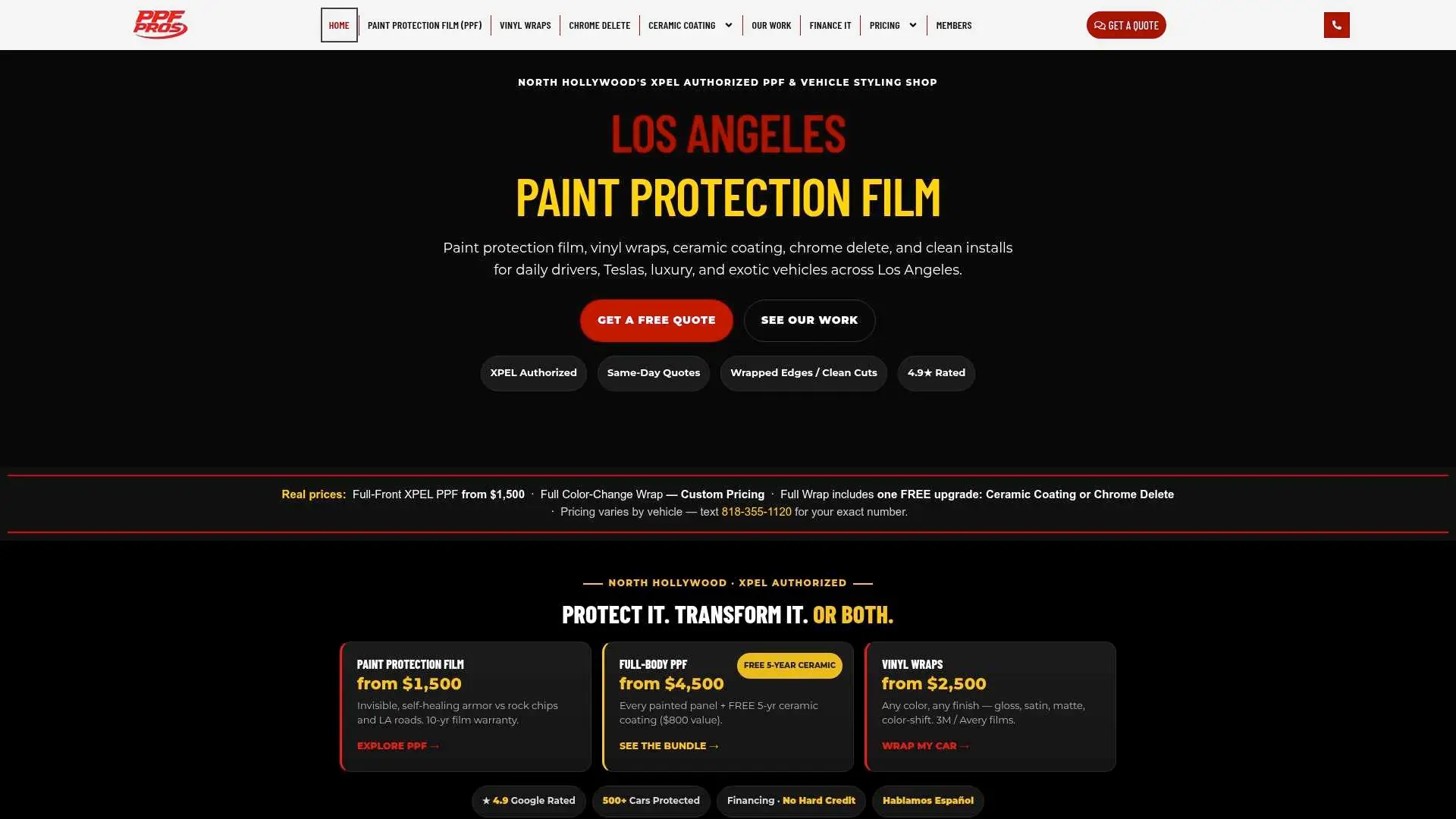
If you drive to the trailhead through Southern California gravel, canyon roads or desert washes, we can build a coverage plan around the panels you actually use hardest. Our Full Front package is $2,199, and the Full Vehicle package starts from $4,500. See the PPF packages and quote options, and we will reply with a clear quote.
Want the cleanup side handled too? We also offer ceramic coating and auto detailing, and we detail Jeeps among other vehicles.
Washing after a trip without scratching the paint
Maintenance decides whether protection stays good-looking. Genesis’s owner’s manual guidance on off-road use is a sound baseline for any vehicle, and it comes to a short routine:
- Wash soon. After each trip, remove salt, dirt, mud and other foreign material. The same guidance warns that insects, tar, tree sap, bird droppings and industrial pollution can damage the finish if left on.
- Rinse before you touch. Flush mud off with water first. Do not dry-wipe dirt across the panels.
- Use mild soap and rinse thoroughly. Do not let soap dry on the surface.
- Flush the underbody and wheel openings. Keep drain holes clear.
- Mind the pressure. High-pressure water can damage cameras, sensors, trim, boots and connectors, so keep the nozzle back from those areas.
On film, be gentle around edges and avoid aiming a pressure washer straight at them. Follow your installer’s cure and care instructions for the first weeks. If you want help after a muddy weekend, our detailing team can handle it.
FAQ
Is PPF worth it for an off-road vehicle?
It is worth it if you care about keeping the paint clean and chip-free on a daily driver that also sees dirt roads. It is much less compelling on a dedicated trail rig that you expect to scratch. Film covers the cosmetic damage from gravel and light brush, but it will not protect against heavy rock contact.
Is ceramic coating enough for off-roading?
Not by itself. Ceramic coating helps with UV, chemicals and washing, but it does not absorb significant physical impact, so rock chips and branch scratches still reach the paint. Pairing it with film on exposed panels covers both needs.
Does a vinyl wrap protect paint on the trail?
A wrap covers the paint and changes its color, but it is much thinner than PPF and is designed for appearance rather than impact resistance. If trail protection matters, use film on the high-impact panels. You can still wrap other areas for color.
Which panels should I protect first?
Start with the rocker panels, lower doors, rear quarter panels and fender flares, then the front bumper, hood edge and mirrors. These are the places where tires throw gravel and where brush drags along the body.
Can I use removable armor and PPF together?
Yes. Film handles everyday chips and light marks permanently, and removable panels can add a reusable barrier for tight, brushy trails. Neither replaces structural armor like rock sliders for hard terrain.
Sources
- Automotive Coatings, Coatings Technology paper
- Kia owner’s manual, vehicle care introduction
- Off-Road Paint Protection: PPF vs Trail Armor, MEK Magnet
- Inside the Texas factory where a gravel-shooting machine tests film, Popular Science
- Trail Protection: Safeguarding Your Jeep’s Paint and Finish, OnAllCylinders
- Off-Road Vehicle Armor: Types, Materials and Uses, 4x4Attitude
- Off-Road Paint Protection Tips, TouchUpDirect
- Exterior Care, 2025 Genesis GV70 owner’s manual