Paint protection film (PPF) comes in four common coverage levels: partial front, full front, track pack and full vehicle. The right one depends on how you drive, how long you plan to keep the car and how much of the paint you want guarded. For most daily drivers in Los Angeles, full front is the sweet spot. Owners of luxury, exotic or long-term cars usually get more from full vehicle coverage.
This guide walks through each level panel by panel, shows what we charge at PPF Pros in North Hollywood, and gives you a simple way to pick.
TL;DR
- Partial front covers the highest-impact spots only. It is the entry point when budget is tight.
- Full front wraps the hood, fenders, bumper, mirrors and headlights. It is our published package at $2,199 and the usual choice for daily drivers.
- Track pack extends protection beyond the nose for cars that see fast, debris-heavy miles.
- Full vehicle covers every painted panel, from $4,500, and suits luxury, exotic and keep-for-years cars.
- You can start small and add panels later, but film laid in one session matches in color and edge lines.
Table of Contents
- What PPF coverage actually means
- The main PPF coverage options compared
- Partial front: the essentials
- Full front: the package most Angelenos pick
- Track pack: for fast, debris-heavy driving
- Full vehicle: every painted panel
- How to choose: five questions
- Our perspective: protect the nose first, then decide on the rest
- Pair coverage with a ceramic coating or a color change
- Book your PPF package in North Hollywood
- FAQ
- Sources
What PPF coverage actually means
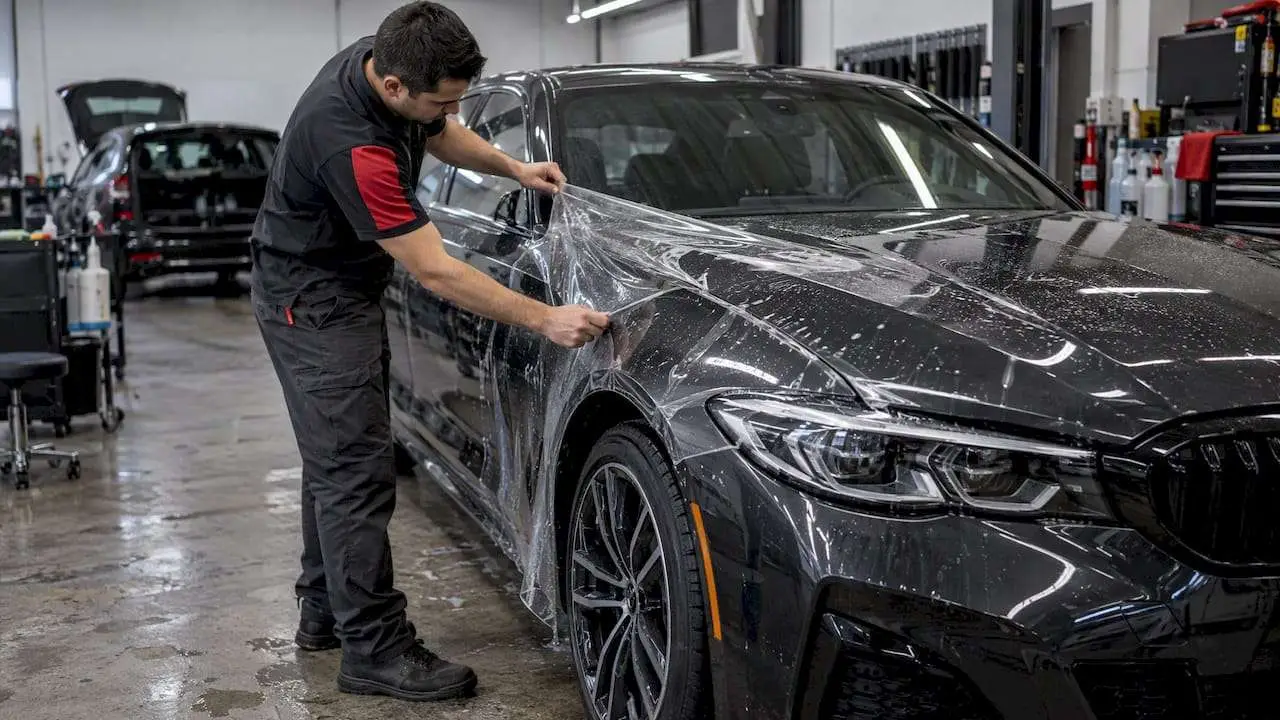
PPF is a clear urethane film that is cut to fit specific panels and applied over factory paint. It takes rock chips, road grit, bug acid and light scratches so the paint underneath does not. “Coverage” is simply which panels get film.
Film manufacturers frame this the same way: you can cover the whole car or only the areas prone to nicks and scratches, with options at different price points. That is the whole logic of the packages below. Each step up adds panels, and each added panel adds both protection and cost.
Two things matter beyond the panel list:
- How the edges are finished. Film that stops short of a panel edge leaves a visible line and a place for dirt to creep in. We wrap edges where the panel geometry allows, so the film disappears into the body lines.
- Which film is used. We install XPEL as an authorized installer. You can read more about the film on our XPEL paint protection film page.
The main PPF coverage options compared
| Package | Typical panels | Best for | Our published price |
|---|---|---|---|
| Partial front | High-impact zones on the nose of the car | Tight budgets, leased or short-term cars | Quote on request |
| Full front | Full hood, fenders, front bumper, mirrors, headlights | Daily drivers, Teslas, freeway commuters | $2,199 |
| Track pack | Front end plus additional areas chosen for high-speed or track use | Enthusiasts, canyon and track drivers | Quote on request |
| Full vehicle | Every painted panel | Luxury, exotic and long-term cars | From $4,500 |
Exact panel lists vary by vehicle, since a Model Y and a Porsche 911 have different shapes. We confirm the list on your car before any film is cut.
Partial front: the essentials
A partial front package protects the areas that take the most direct hits: usually the leading section of the hood, the front bumper, the fender tips and the mirror backs. It is the smallest sensible package.
Who it suits
- Owners on a tight budget who still want the worst chip zones covered
- Cars with a short ownership horizon
- People adding film to a second or work vehicle
The trade-off: film ends partway across the hood and fenders. That means a visible edge, and the paint just behind it remains exposed. On a dark color, you will notice the line more in direct sun. If you will see that line every day and it will bother you, step up to full front.
Partial front pricing depends on the vehicle, so request a quote from us with your year, make and model.
Full front: the package most Angelenos pick
Full front covers the entire hood, both fenders, the full front bumper, mirrors and headlights. Because whole panels are covered, there is no mid-panel edge line. The front of the car looks the same as it did, only protected.
Why it works so well in LA:
- Freeway debris. Highway driving on the 101, 405 and 5 means a steady spray of gravel and grit hitting the nose.
- Sun. Southern California sun fades and dulls paint over time. Film adds a sacrificial layer over the surface that faces the sun most.
- Resale. Front-end chips are the first thing a buyer or appraiser sees. Clean original paint on the hood and bumper helps a car present well.
Our Full Front package is $2,199. The page explaining Full Front pricing and what is included has the details, and our guide to what full front PPF covers and whether it’s worth it goes deeper on the decision.
Track pack: for fast, debris-heavy driving
A track pack is for cars that take more punishment than a commute delivers. Think canyon runs, track days, long road trips or a lowered car that sits close to the road surface. It builds on the front-end coverage and adds panels that catch debris or take hits at speed.
The exact panels vary by car and by how you use it, which is why we quote it. Tell us how you drive. If you only do an occasional track day, your coverage might look quite different from someone who drives 30,000 miles a year on highways.
You can see the track pack listed with our other film packages on the paint protection film services page.
Full vehicle: every painted panel
Full vehicle (also called full body or full wrap PPF) covers every painted surface: hood, fenders, bumpers, doors, quarter panels, roof, mirrors and trunk or tailgate. It is the most complete protection and the most expensive. Ours starts from $4,500, and the final figure depends on the size and shape of the vehicle and how complex the panels are.
Full vehicle makes sense when:
- The car is a luxury or exotic model where paint condition drives value
- You plan to keep it for many years, so the cost spreads over a long period
- You park in tight lots, where door dings and scrapes are the real threat, not just rock chips
- You want the whole car to look identical in gloss and texture, with no film-versus-paint difference anywhere
One point worth considering if you lease or finance: the decision often follows the term. If you hand the car back in three years, a smaller package is usually enough. If you plan to keep it much longer, a full wrap can be the more economical choice in the end. UK readers weighing this up against a contract may find it helpful to read how full-maintenance car leasing works in the UK, since maintenance and condition rules differ by lessor. In the US, check your own lease agreement for wear-and-tear terms before adding film.
Our full body PPF guide covers coverage, cost and value in more detail.
How to choose: five questions
1. How long will you keep the car?
Under three years, partial or full front is usually enough. Five years or more, consider full vehicle.
2. Where does the damage come from?
Freeway chips point to full front. Parking-lot scrapes and door edges point to full vehicle. Spirited driving points to a track pack.
3. What color is the car?
Dark and metallic colors show chips and swirl marks more. They also show a partial-front edge line more.
4. What does the car cost to repaint?
The more a respray costs, the better PPF looks as insurance for the original paint. Luxury and exotic cars sit at the top of that scale.
5. What is your budget today?
If the full package is out of reach, a smaller package done properly beats a bigger one done cheaply. Film quality and install quality matter more than the panel count.
Our perspective: protect the nose first, then decide on the rest
We see the same pattern with most customers. They come in thinking they need the whole car wrapped, or they come in wanting the cheapest option, and the right answer usually sits in between.
Our view is simple. For a daily driver in Los Angeles, a clean, properly edged full front install does most of the work. It gives you the whole hood and fenders in one continuous piece of film with no awkward lines, and it is where the car takes its heaviest damage. For Tesla owners, the large flat hood and low nose make that package especially worthwhile.

For luxury and exotic cars, we lean toward full vehicle. The car is worth more, repaint costs are higher, and a partial job leaves exposed paint right next to protected paint.
What we do not recommend is choosing by price alone. The finish depends on precise cutting, wrapped edges and clean alignment, and that is where we put our attention. If the shop cannot show you how it handles edges and corners, keep looking.
— Jake
Pair coverage with a ceramic coating or a color change
PPF is one layer of a larger plan, and some customers combine it with other services:
- Ceramic coating on top of film or on unprotected panels makes washing easier and adds gloss. We offer a System X 5-year coating, and you can read how XPEL ceramic coating gives your car a lasting showroom shine.
- Color change wrap changes the look of the car. It is a styling choice, not impact protection, and our full color change wrap starts from $2,800 on the vinyl wraps page.
- Chrome delete blacks out chrome trim. It pairs well with a front-end film package on cars with bright window surrounds and grilles.
The common pattern is film on the panels that get hit, coating or vinyl for the look.
Book your PPF package in North Hollywood
If you already know your coverage level, you can price it directly. Full Front is $2,199 and Full Vehicle starts from $4,500. For partial front, track pack or a custom panel list, send us your vehicle details and we will quote. We reply the same day. Start on our paint protection film page or go to the PPF Pros home page to get in touch.
FAQ
Is full front PPF enough?
For most daily drivers, yes. It covers the whole hood, fenders, bumper, mirrors and headlights, which is where freeway debris does the most harm. If you also worry about door dings and side scrapes, full vehicle coverage is the better fit.
Can I add more PPF later?
Yes. You can start with partial or full front and add panels afterward. The caveat is that film applied at different times can differ slightly in age and appearance. If you already know you want the entire car covered, doing it in one session gives the most uniform result.
How long does paint protection film last?
Lifespan depends on the film, your climate, how the car is stored and how you care for it. Warranties vary by manufacturer and film line, so read the terms for the specific film you are offered. We cover this in our guide on how long paint protection film lasts.
What is the downside of PPF?
The main downsides are cost and the need for a skilled installer. Cheap or rushed installs can show lifted edges, stretch marks or trapped dust. Choosing a shop that wraps edges cleanly and uses quality film avoids most of that.
Does PPF coverage affect resale value?
Protected paint stays closer to its original condition, and that is what buyers and appraisers look at. Results vary by car and market, so treat PPF as a way to preserve condition rather than a guaranteed price increase.