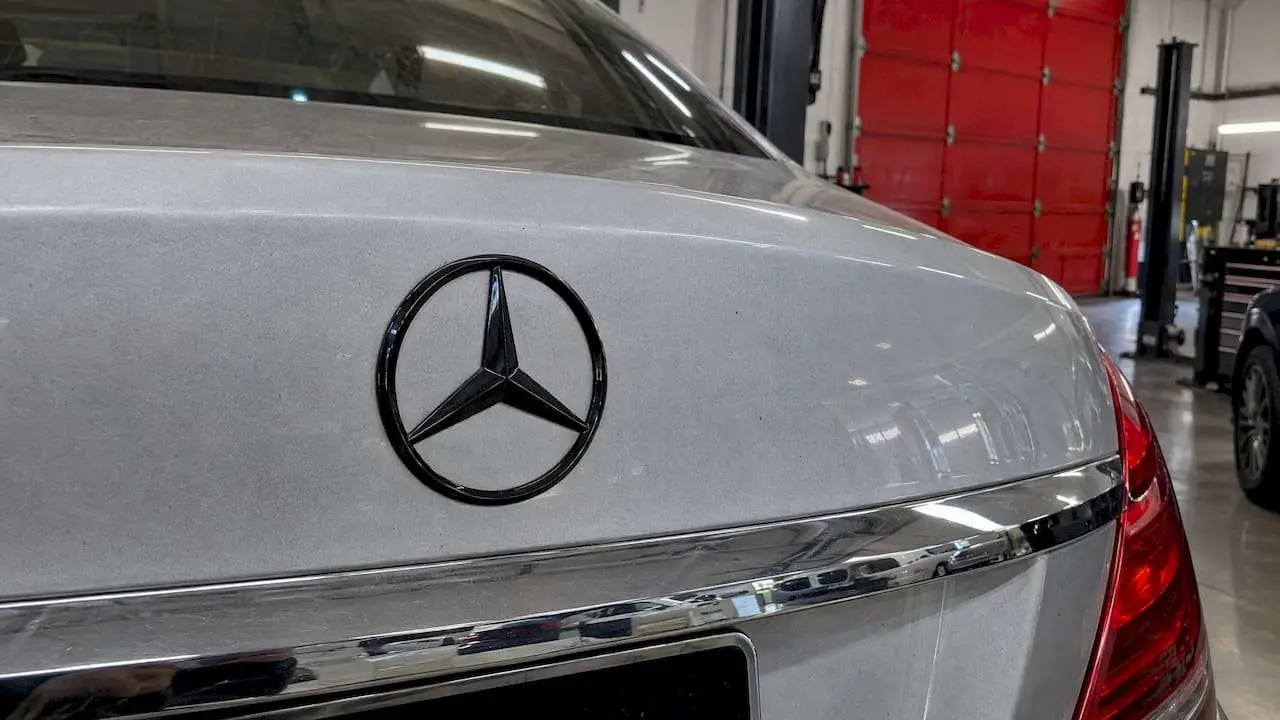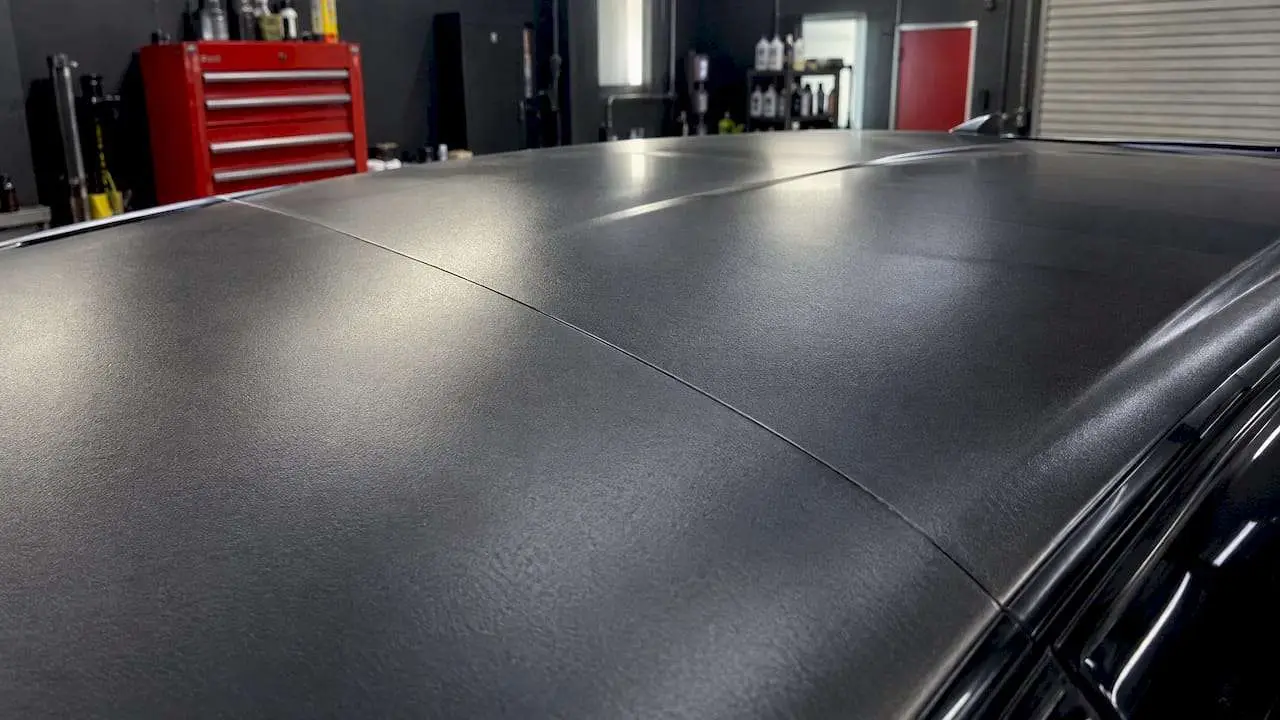

Yes, you can put paint protection film on carbon fiber, and for most owners with exposed carbon it’s worth doing. The film is clear, it shields the glossy clear coat and resin from rock chips, abrasion and sun, and a good installer leaves the weave looking the way it did before. The catch is paperwork, not physics: film makers generally treat carbon fiber as something other than factory paint, so their warranties often stop at the edge of the carbon part. Here’s how to decide, what to ask, and what a careful install looks like.
TL;DR
- PPF can be installed over genuine carbon-fiber hoods, roofs, mirrors, spoilers and trim. It guards the clear-coated surface against rock chips, minor abrasion and UV exposure.
- It doesn’t stop dents, cracks or structural damage. A film is a sacrificial skin, not armor.
- Some film manufacturers say carbon fiber isn’t OEM paint and exclude it from their warranty, so ask who stands behind the install before you book.
- Carbon-pattern film (a film that imitates the weave) is a different product from clear film over real carbon. Know which one you’re buying.
- Prep and technique decide the result: clean surface, pre-cut pieces, minimal stretching, and a shop that has done carbon before.
Table of Contents
- Why carbon fiber needs protecting in the first place
- Can you put PPF on carbon fiber?
- What PPF does for carbon fiber
- Clear film over real carbon vs. carbon-pattern film
- How PPF is installed on carbon fiber
- Risks to check before you book
- Is it worth it?
- Our take at PPF Pros
- Caring for filmed carbon fiber
- What it costs at our shop
- FAQ
- Sources
Why carbon fiber needs protecting in the first place
Genuine carbon-fiber parts aren’t bare fiber. They’re layers of woven carbon set in epoxy resin, then covered with a clear coat that gives the weave its depth. That clear layer is what you see and what takes the abuse: sun, road grit, car-wash marring, bird droppings, and stone strikes on hoods and roofs.
The resin is the vulnerable part. BASF, which makes light-stabilizing additives for these materials, notes that the aromatic epoxy matrix in carbon-fiber-reinforced materials is sensitive to sunlight, and that long-term exposure outdoors calls for additional protective coating layers. In plain terms: the clear coat on a carbon part is doing a lot of work, and once it fails, the weave underneath can look cloudy, yellowed or patchy.
That matters in Los Angeles, where a car can sit in direct sun nearly every day of the year. A carbon roof or hood on a daily driver that lives outside takes more UV in a year than the same part on a garage-kept weekend car takes in several.
And carbon parts are expensive. Replacing or refinishing an OEM carbon hood or roof is a bigger bill than touching up a painted panel, which is the real reason owners ask about film.

Can you put PPF on carbon fiber?
Yes. LLumar’s own FAQ says PPF may be successfully installed on carbon-fiber finishes. The same page adds the important qualification: carbon fiber isn’t considered OEM paint, so related issues can fall outside warranty coverage.
That pairing, “it works, but the warranty may not follow,” shows up across the industry. INOZETEK, for example, states that its film is warranted on OEM clear-coat surfaces only, and that installations on non-painted surfaces, carbon fiber included, aren’t covered.
What this means for you:
- The film itself isn’t the problem. It bonds, it protects, and it can be removed.
- The manufacturer’s coverage for yellowing, lifting or adhesive problems on carbon may not exist. Ask the shop what they cover on their own labor, in writing.
- Warranty language varies by brand and changes over time. Read the current terms for the specific film before you pay.
Parts that are commonly filmed
Owners typically ask about hoods, roofs, mirror caps, rear spoilers and wings, front splitters, diffusers and interior or exterior trim pieces. Hoods, roofs and splitters take the most direct hits from road debris; mirror caps and spoilers are more about sun and washing marks.
What PPF does for carbon fiber
The benefits are the same ones you’d expect on paint, applied to a surface that costs more to fix.
Rock chips and road debris. LLumar says its film protects against scratches, rocks and other road debris. On a carbon hood, the film takes the strike instead of the clear coat. For more on how this works on any surface, see our guide to rock chip protection.
Light scratches. The same FAQ says most surface scratches self-heal with heat, which is why swirl-prone surfaces look fresher under film. This applies to the top layer of the film only, not to deep cuts.
UV exposure. Because the resin under the clear coat is sensitive to sunlight, a film layer on top adds a barrier between the sun and that clear coat. It doesn’t make carbon immune to aging, but it slows the surface wear that tends to show first.
Easier maintenance. Wash marks and light abrasion land on the film, not the clear. When the film eventually ages, it comes off and the part underneath is still glossy.
What PPF can’t do
Be realistic about the limits:
- It won’t stop dents, cracks or structural damage. Carbon that’s hit hard can still crack beneath a clear film, and a deep impact is a repair, not a scratch.
- It won’t hide existing damage. Film over a hazed or peeling clear coat will show the haze. Fix or refinish first, or accept what you’ll see.
- It won’t carry a manufacturer warranty on carbon in many cases, as covered above.
One forum owner put it simply: film won’t save you from golf-ball-size dents, but it can handle small rocks and sun. That’s the right expectation.
Clear film over real carbon vs. carbon-pattern film
The phrase “carbon fiber PPF” means two different things, and mixing them up leads to the wrong purchase.
| Clear PPF over genuine carbon | Carbon-pattern film | |
|---|---|---|
| What it is | Transparent film applied on top of real carbon parts | A film printed or textured to imitate a woven carbon look |
| Goal | Protect the existing carbon and its weave | Create a carbon look on painted or plastic surfaces |
| Appearance | The part looks the way it did, with its own gloss and depth | A patterned look; realism depends on the film and the install |
| Typical use | Hoods, roofs, spoilers, mirror caps on cars with real carbon | Trim, interior pieces, accents, or full panels on cars without carbon |
| Related service | Paint protection film | Vinyl wrap |
If you already own real carbon, you want the first column. If you want the look on a car that doesn’t have it, you’re shopping for a wrap-style film, and a shop should talk you through finishes, seams and how it will wear. We cover that side on our vinyl wrap options page.
A third case: you want carbon-look film and protection. Some products combine both, but their durability, thickness and warranty vary by manufacturer. Ask for the spec sheet and the warranty terms for the exact product on the exact surface.
How PPF is installed on carbon fiber
The core steps match a painted panel, with extra care around texture and edges.
- Inspect the part. Look for hazing, lifting clear coat, resin print-through or repairs. Film won’t fix any of these, and it can make problems harder to diagnose later.
- Clean and decontaminate. The surface has to be free of oils, dust and residue. Anything left behind can cause lifting or bubbling.
- Pre-cut the pattern. Film is cut to the shape of the part, ideally with as little stretching as possible. Stretching film across a weave can distort how the pattern reads, and some installers split a large carbon area into panel-specific pieces rather than pulling a single sheet.
- Position and squeegee. Gentle heat and a soft felt-edge squeegee work the film down without marring the surface.
- Finish the edges. Edges are where film either looks invisible or looks like a sticker. Wrapped edges and tight alignment make the difference.
- Cure. Give the adhesive time to settle before heavy washing.
If the carbon part has a pronounced texture, an adhesion promoter or a higher-tack film may be called for. That’s a judgment call for the installer, which is another reason to choose a shop with carbon experience over the cheapest quote. For the general timeline, our article on the PPF installation process walks through what happens across the days a job takes.
Risks to check before you book
Existing clear-coat condition. Carbon parts that have already started to cloud or peel are the riskiest candidates. If the clear is compromised, adhesive can pull on it during removal. Ask the installer to evaluate the part before quoting.
Aftermarket or repaired carbon. LLumar says its film is designed for original painted surfaces, and that problems with aftermarket and repaired paint aren’t covered. For carbon-fiber applications, it recommends contacting a dealer. Aftermarket carbon parts with thin or uneven clear coats call for extra caution.
Removal. Film has to come off correctly, with heat and patience, not by yanking. A rushed removal is where a carbon part can get damaged. Ask who will remove the film down the road and how.
Warranty gaps. As above: confirm in writing what the shop covers on labor, and what the film maker covers (probably nothing on carbon). Both answers should be clear before you pay.
Is it worth it?
A simple way to decide:
- Yes, strongly if the carbon is OEM or expensive, the car is parked outside, you drive highways where gravel and tire debris fly, or you plan to sell and want the carbon to look fresh.
- Probably if the carbon is small trim, like mirror caps or a lip spoiler, and you’re already filming the front end. The extra cost is small next to what it saves.
- Think twice if the clear coat is already failing, the part is cheap and easy to replace, or you want a guarantee from the film maker that a carbon surface won’t get.
Many owners film carbon at the same time as the rest of the car. A full-front package usually covers the hood and bumper, which are the parts most exposed to stone strikes. If your car has a carbon hood or roof, tell the shop before they quote so it’s included.
Our take at PPF Pros
We install XPEL film at our North Hollywood shop, and carbon fiber is one of the surfaces owners ask about most, especially on performance cars, Teslas with carbon accessories, and luxury cars with carbon roofs or hoods.
Our view is simple. Film on carbon is a good idea, but only when it’s done honestly. That means looking at the part before we quote, telling you if the clear coat is already tired, and being clear about what the film maker covers and what we do. We’d rather lose a job than film a part we think will disappoint you.
Here’s what we focus on when carbon comes in. First, precision: wrapped edges and clean alignment, because the weave is the point of the part and nothing should distract from it. Second, prep: carbon doesn’t forgive a dirty surface. Third, communication: a quote that names each part and explains what’s included, and same-day replies when you have questions.
If you’re deciding between filming the carbon or leaving it bare, our usual advice is to film it early, while the clear is still perfect. Protecting a good surface costs far less than trying to rescue a faded one.
— Jake
Caring for filmed carbon fiber
Wash by hand with a pH-neutral car soap and a clean microfiber mitt. Avoid harsh household cleaners; even a common kitchen product can strip protection and dull finishes, as dish soap and car paint explains. Skip automatic washes with stiff brushes, keep pressure-washer nozzles back from film edges, and don’t pick at lifted corners. If a corner does lift, have the shop look at it instead of pressing it down yourself.
Rinse off bird droppings, bug splatter and fuel spills quickly. They’re harsh on any surface, filmed or not.
What it costs at our shop
We publish prices for our standard packages. A Full Front PPF package is $2,199, and a Full Vehicle package starts from $4,500. Carbon parts, such as an OEM carbon roof or hood, are quoted individually because size, shape and texture affect the work. Ceramic coating and other services don’t have a published price and are quoted for your car.
If you’re protecting a car with carbon bodywork, start with our paint protection film services and tell us which parts are carbon. We’ll tell you what we’d film, what we’d leave alone, and what it costs. You can also reach us through our main site.
FAQ
Does PPF damage carbon fiber?
Not when the part is in good shape and the installer is careful. The risks come from a clear coat that’s already weak, poor prep, or rough removal later. Have the part inspected before film goes on.
Is the film covered by warranty on carbon fiber?
Often not. LLumar says carbon fiber isn’t considered OEM paint and may fall outside warranty coverage, and INOZETEK excludes non-painted surfaces including carbon. Ask the shop what they cover themselves, and get it in writing.
Does PPF protect carbon fiber from sun damage?
It adds a protective layer over the clear coat, which is what shields the resin underneath from sunlight. It won’t make the part immune to aging, but it reduces the surface wear that shows first on outdoor-parked cars.
Should I film the carbon roof or hood first?
The hood takes the most direct hits from road debris, so it’s usually the first priority. A roof benefits more from UV protection, especially if you park outside. If budget allows, do both with the front end.
Sources
- Paint Protection Film Frequently Asked Questions | LLumar
- Tinuvin Carboprotect | BASF
- INOCOLOR Warranty | INOZETEK