
Self-healing PPF is a clear urethane film whose elastomeric topcoat closes up light surface marring, so your car keeps its gloss day to day. It repairs the film itself, not your paint underneath. Per the manufacturer’s care guidance, light scratches in the film heal on their own once the film warms.
TL;DR:
- Use the fingernail test: if your nail glides over a mark, it is superficial; if it catches, the topcoat is cut and will not heal.
- The manufacturer says light scratches heal in 20–30 minutes at room temperature, while warm water around 120°F can speed healing in cooler conditions.
- Wait 48 hours after installation before washing, then hand wash with pH neutral soap and keep automated washes and pressure washers away from film edges.
- A professional Full Front package costs $2,199, while Full Vehicle coverage starts at $4,500; partial front and track package quotes depend on the vehicle.
Table of Contents
- How does the self-healing topcoat actually work?
- What does self-healing PPF protect your car from?
- What are the practical limits, and how do you get the most from your film?
- Which film thicknesses, finishes and options matter?
- Should you hire a pro or install PPF yourself?
- How do you care for self-healing PPF?
- How does PPF compare with ceramic coating, and can you combine them?
- How do you choose a PPF installer?
- What we see in the bay: an installer’s perspective
- Ready to protect your car? Here’s how we can help
- FAQ
- Sources
How does the self-healing topcoat actually work?
The outer layer of a self-healing film is an elastomeric polymer, a flexible coating with a kind of memory. When a soft brush bristle, a wash mitt or a fingernail drags across it, the surface is pushed aside rather than torn. As the material warms and relaxes, the polymer chains flow back toward their original shape, and the groove fills in. Nothing is added or “repaired” in the way a body shop fixes paint. The film simply returns to its resting form.
That is why the effect depends on how deep a mark goes. A swirl mark or a light scuff only disturbs the very top of the coating, so the polymer can flow back. A cut that slices through the topcoat has removed or split the material, and there is nothing left to flow.
You can sort most marks with the fingernail test. Drag a nail lightly across the scratch. If it glides over, the mark is surface level and will fade. If your nail catches in the groove, the damage has gone through the topcoat and will not self-heal.
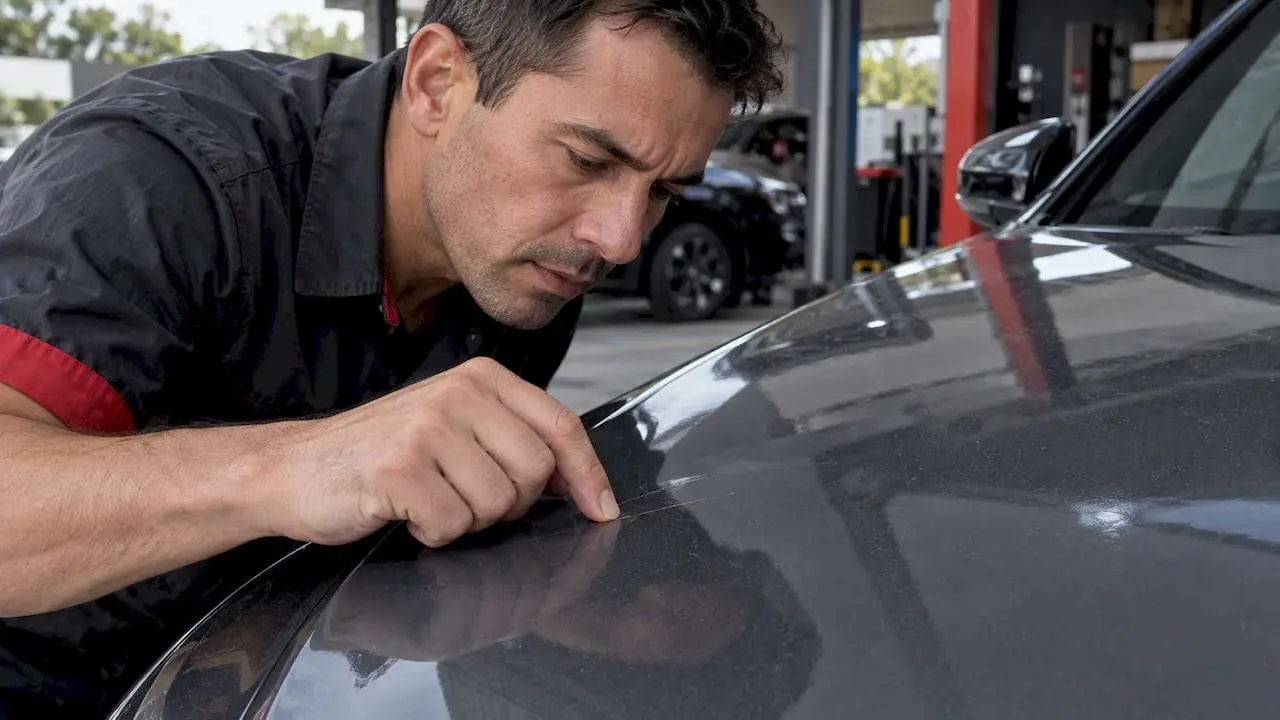
Heat and time do the rest. The manufacturer’s care sheet says light scratches heal in 20–30 minutes at room temperature, and that pouring warm water of about 120°F over the area speeds things up in cooler conditions. A car parked in summer sun often heals its own wash marks before you notice them. In winter, the same marks may linger until the film warms up.
Here is what that looks like in practice:
- Swirl marks from washing: these usually fade as the film warms.
- Light scuffs from a jacket zipper, a ring or a bag strap: may fade as the film warms.
- Fine grazes from dust wiped off with a dry cloth: typically heal, though you should not wipe dust dry in the first place.
- Deep cuts from keys, gravel dragged under a tire or sharp tools: these stay.
- Gouges where a chip has already taken a piece out of the film: these stay too, though the paint under the film is still protected.
Pro Tip: On a cold day, don’t wait for spring. Pour warm tap water, not boiling, over the marked area and check again in a few minutes. Boiling water or a heat gun held close can lift edges, so keep it gentle.
If you want a deeper technical read, our team wrote an explainer on whether scratches really disappear, with real-world examples.
What does self-healing PPF protect your car from?
The film’s main job is to take the beating so your paint doesn’t. Rock chips, road grit and everyday scuffs land on the film first. The manufacturer’s product page describes the film as designed to defend against rock chips, scratches and scuffs, with a self-healing topcoat that helps vehicles keep looking new.
Owners usually choose it for a handful of practical reasons:
- Swirl and wash marks: the marks that dull dark paint over the years tend to fade on the film instead of etching into clear coat.
- Light scuffs from daily use: door-edge brushes, loading groceries and leaning against the fender are everyday events, and the film shrugs most of them off.
- Many rock chips: a chip that would have taken a bite out of paint is often absorbed by the film. Very hard or sharp impacts can still damage the film, but the paint under it often stays intact.
- Optical clarity: a good film stays clear, so your color and gloss look like the paint, not like a layer on top of it.
- Fewer cosmetic repairs: light polishing jobs and touch-up trips become rarer, which is where much of the long-term value comes from.
There is also the resale angle. A car whose front end has no pitting, no chipped hood edge and no haze of swirls simply looks better cared for. Buyers notice a clean nose, and an unprotected hood after a few highway seasons rarely compares well. We can’t promise a dollar figure on resale, since that depends on the market, but paint in better condition is a point in your favor.
The film is also not a force field. A deep scratch from a key or a heavy impact can cut through it, and edges can collect dirt if they are poorly finished. The benefits are real, but they are strongest when the film is installed well and cared for properly, which the next sections cover.
What are the practical limits, and how do you get the most from your film?
Think of self-healing as a bonus on top of a protective layer, not as a repair service that runs forever. The fingernail test tells you in seconds what you are dealing with. If your nail glides, wait for warmth and time. If it catches, that mark is permanent in the topcoat, and the film is doing its sacrificial job by protecting the paint beneath.
Several things reduce how well a film performs over the years:
- Poor installation: gaps, stretched corners or contamination trapped under the film show up later as lifting or dirt lines.
- Edge lift: once an edge opens, water and grit work underneath and the film starts to peel.
- Contaminants left on the surface: bird droppings, bug remains and tar can stain or etch the topcoat if they sit.
- Harsh washing: abrasive brushes, dirty mitts and high-pressure spray aimed at edges wear the film faster.
The manufacturer’s care sheet is clear on two of these: avoid automated car washes and high-pressure washing near film edges.
To keep the self-healing working over the long run, follow these steps in order:
- Check the mark with your fingernail before you worry about it. Many marks fade by themselves.
- Warm the area gently if it is cold out, with warm water poured over the film, then give it a little time.
- Clean contaminants quickly so they don’t soften or stain the topcoat while you wait.
- Skip abrasive products and dry wiping. Polishing compounds and rough towels create the very marring you are trying to avoid.
- Call a professional if an edge has lifted, a bubble has formed or a mark stays after warming. Repairs are easiest when caught early.
The most common mistake we see is owners treating the film like paint: scrubbing a stubborn spot, using a gritty cleaner or rushing to a drive-through wash. Gentle habits keep a film looking good far longer than any product can.
Pro Tip: Photograph your car in good light right after install. If a mark appears later, you can compare against the baseline and tell a real defect from a mark that simply hasn’t healed yet.
Which film thicknesses, finishes and options matter?
Film specs are worth understanding because they shape how the car looks and how much upkeep it needs. You do not need brand names to compare them. You need to know what each feature does.
- Thickness: most automotive films fall in a range measured in thousandths of an inch, called mils. A thicker film generally absorbs more impact from rock strikes, while a thinner one conforms more easily to tight curves and sharp creases. Installers balance the two based on where the film goes: a flat hood edge can take a heavier film, a mirror cap benefits from something more flexible.
- Gloss finish: the standard choice. It keeps the paint’s reflection intact and, because it is smooth, it is easy to wash and to inspect for marks.
- Matte or satin finish: changes the look of the paint without a respray. Matte surfaces are less forgiving to maintain, since oils and wax-type products can leave shiny or blotchy areas, so you will want matte-safe cleaners and a gentler routine.
- Hydrophobic topcoats: a surface that sheds water makes washing faster and helps stop water spots from setting. It does not make the film dirt-proof, but a quick rinse removes more.
- Stain resistance: a tougher topcoat helps resist yellowing and staining from road contaminants, which matters most on light-colored cars where discoloration shows.
Beyond the film, installers sometimes offer extras that change the outcome:
- Sealed or wrapped edges: film wrapped around the panel edge, instead of left cut short, reduces the places where dirt and water can start lifting it.
- Ceramic overlays: a coating applied over cured film for easier cleaning and extra gloss. We cover how this pairs with film in a later section.
- Extended warranties: coverage terms vary, so ask what is included and what voids it. Care instructions, like the wait before first washing, are often part of the conditions.
When you compare quotes, don’t simply pick the thickest film or the cheapest price. Ask what finish suits your driving, what edges will look like and what care the warranty expects. The right answer is a film you will actually look after.
Should you hire a pro or install PPF yourself?
For most owners, a professional install is the safer path. Paint protection film is unforgiving: it is cut to a pattern, stretched over curves and squeegeed with the right pressure, and mistakes show as lifted corners, trapped dust and visible seams. Professionals also have a clean bay, patterns for your specific vehicle and a warranty that covers their work.
A do-it-yourself job does have appeal, mainly the cost savings. The trade-off is risk. Film can’t always be repositioned cleanly, a dust speck sealed under the surface is there to stay and a mis-cut panel means buying more film. If you try it, a small, flat area teaches you the most at the least expense.
Coverage is the other decision. The common packages are:
- Partial front: protects the highest-impact zones, typically the leading part of the hood, fenders and mirrors.
- Full front: covers the whole hood, fenders, bumper, mirrors and headlights, so there are no visible film lines across the nose.
- Full vehicle: every painted panel, for owners who want total coverage or a car that sees heavy use.
- Track packs: targeted coverage for cars that see track days and heavy debris.
Our own published pricing gives you a concrete anchor: a Full Front package at our shop is $2,199, and Full Vehicle starts from $4,500. Partial Front and Track Pack pricing is available on request, since it depends on the vehicle.
The film needs to cure after installation. During that cure period, the film is still settling, which is why the manufacturer’s care guidance says to wait 48 hours after installation before washing. Tiny haze or moisture pockets seen right after install usually clear up as the film cures, so it’s best not to poke at them.
How do you care for self-healing PPF?
Good care is simple, and it is the cheapest way to protect your investment. The steps below follow the manufacturer’s warranty and care information, plus the habits we recommend to customers.
- Wait 48 hours after installation before the first wash, so the adhesive can settle.
- Wash with the two-bucket method: one bucket of soapy water, one of clean rinse water, so grit from the car never goes back into your wash mitt.
- Use a pH-neutral soap and soft microfiber: harsh detergents and rough cloths cause the marring you are trying to avoid.
- Skip automated washes and keep pressure washers away from edges. The manufacturer specifically calls out avoiding both.
- Spot clean quickly: remove bird droppings, bug splatter and tar as soon as possible with approved cleaners, then follow up with a normal wash.
- Dry gently, blotting or using a soft towel rather than dragging dirt across the surface.
- Seal the film regularly: the manufacturer suggests sealing at least once every three months to preserve the finish and help it shed water.
Acidic contaminants are the real enemy, and the longer they sit in summer heat, the harder they are to remove. Keep a bottle of approved quick cleaner and a clean microfiber in the car for those moments.
Pro Tip: Wash in the shade and let the panels cool first. Hot film plus soap dries fast and leaves spots, and a cool surface gives you more time to work gently.
If you are ever unsure whether a product is safe, check the manufacturer’s care sheet or ask us before you apply it. A minute of checking saves a damaged finish.
How does PPF compare with ceramic coating, and can you combine them?
They do different jobs, which is why people often use both. PPF is a physical, sacrificial barrier: a layer of urethane that absorbs impacts so your paint doesn’t. A ceramic coating is a thin liquid layer that cures into a hard, slick surface. It adds gloss and chemical resistance but doesn’t stop a rock.
- Impact protection: PPF wins. A ceramic coating won’t stop a chip.
- Chemical resistance and easy cleaning: coating wins. It sheds water and dirt, so washing is easier.
- Self-healing: only the film does this, through its elastomeric topcoat.
- Maintenance: film needs gentle washing and periodic sealing, while coatings need compatible soaps and occasional upkeep.
- Appearance: both can look excellent in gloss. A coating over film adds depth and slickness.
The usual order is film first, coating second. The film has to be on the paint and cured before anything goes over it, and it is worth checking that the coating is compatible with your specific film. A partner guide on ceramic coating over PPF suggests checking film compatibility before applying. Your installer’s own cure guidance should come first.
If you want both, we offer a ceramic coating service that can follow your film install. A common plan is film on the high-impact areas and coating on the rest of the car. That gives you the chip protection where it counts and easier cleaning everywhere else.
How do you choose a PPF installer?
The film is only as good as the hands that apply it. Use this checklist when you talk to shops:
- Ask about authorized-installer status. Manufacturers certify installers, and it shows the shop meets a standard. We are XPEL authorized, and you can read about our services on our Industry, CA page.
- Ask to see a portfolio of recent work, including close-up photos of edges.
- Ask how long they have been installing and how many vehicles like yours they have done.
- Ask about edge sealing: will edges be wrapped, and how are panel gaps handled?
- Ask where the patterns come from, and whether they are cut for your exact model.
- Get the warranty in writing, including what it covers and what care it requires.
- Ask about aftercare: a good shop explains the 48-hour wait and the washing rules before you leave.
In portfolio photos, look for wrapped edges, no visible seams and clean alignment around curves and headlights. Dust specks, crooked lines and ragged cut edges tell you how the shop treats details.
Red flags include no written warranty, vague answers about edges, no care instructions and slow or unclear communication. A shop that is hard to reach before you pay is rarely easier afterward.
What we see in the bay: an installer’s perspective
After enough installs, the patterns are clear. Cars that get gentle washes and a periodic sealant look nearly new years later, while cars that go through drive-through washes show worn edges first. The biggest misconception we hear is that self-healing means maintenance-free. It doesn’t. It means the film forgives light mistakes, not careless habits. Our recommendation is simple: protect the front end, pair the film with a sealant every few months and wash by hand.
— Jake
Ready to protect your car? Here’s how we can help
If you want this done properly, we install XPEL-authorized paint protection film at our North Hollywood shop, with coverage to match how you drive.
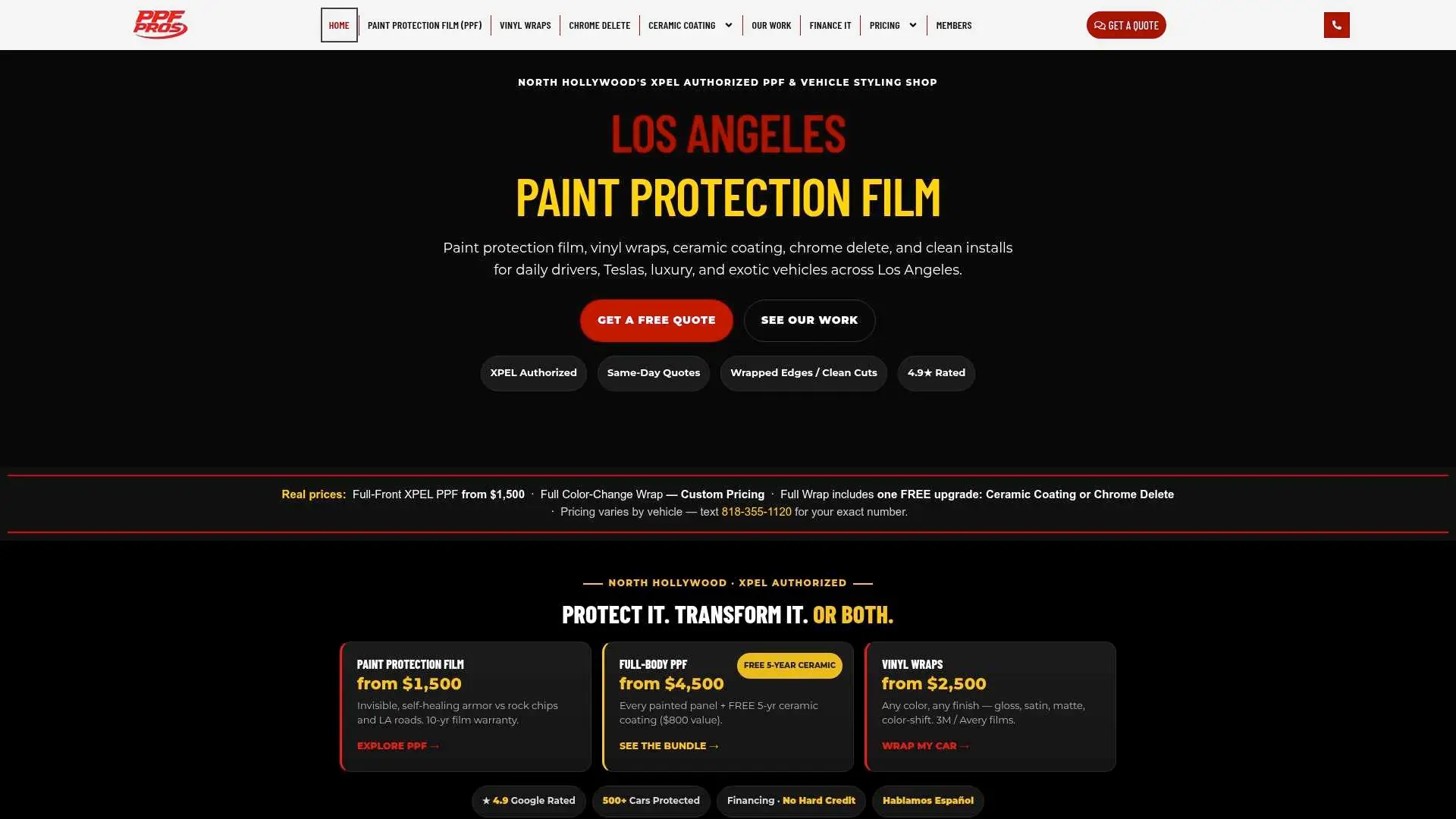
Here is what you can choose from:
- Full Front: $2,199.
- Full Vehicle: from $4,500, for complete coverage.
- Partial Front and Track Pack: targeted coverage for high-impact zones and track use, with pricing available on request.
- Add-on: a ceramic coating.
Tell us about your car and how you use it, and we will recommend the right scope, explain the care routine and give you a clear quote. Request your quote or book an estimate today and we will get back to you.
FAQ
Does self-healing PPF repair scratches in paint?
No. Self-healing only works on the film’s own topcoat, closing light marks on the surface. Any mark that catches your fingernail has gone through the topcoat and will not heal.
How long does self-healing PPF take to heal a scratch?
According to the manufacturer’s care information, light scratches heal in 20–30 minutes at room temperature. In cooler weather, pouring warm water of about 120°F over the area speeds it up.
When can I wash my car after PPF installation?
You should wait 48 hours before the first wash, per the manufacturer’s guidance. After that, hand wash with pH-neutral soap and avoid automated washes and high pressure near edges.
Can I put ceramic coating over PPF?
Yes, in most cases, once the film has cured and you have confirmed the coating is compatible. Film goes on first, and the coating follows after the recommended wait.