Stealth PPF typically runs $1,200 to $2,000 for a partial front, $2,200 to $3,500 for a full front or track pack, and $6,000 to $9,000 or more for full-vehicle coverage. Expect matte and satin finishes to add roughly 10% to 25% over the same brand’s gloss film, since satin surfaces show prep flaws more easily and take longer to install cleanly. The exact number on your quote depends heavily on vehicle size, film brand, and the shop’s labor rates.
TL;DR:
- Full-vehicle stealth PPF can cost between $5,000 and $9,000, with exotic cars or complex wraps exceeding $10,000 depending on film and shop variables.
- Prices vary significantly based on film brand, installation environment, vehicle size, and included coverage details, often creating wide quote ranges for the same scope.
- Accurate quotes should specify panel coverage, film brand and thickness, paint correction, and warranty terms, avoiding vague or lump-sum totals.
- Satin and satin-finish PPF typically cost 10% to 25% more than gloss due to longer installation times and more visible surface imperfections.
- Compared to vinyl, stealth PPF offers more impact protection and longer lifespan, but at a higher upfront cost, making it more cost-effective over a vehicle’s lifespan.
Table of Contents
- How Much Is Stealth PPF by Coverage Level?
- What Does a Stealth PPF Quote Actually Include?
- What Makes Two Stealth PPF Quotes So Different?
- Is Stealth PPF Worth the Extra Cost Over Vinyl or Gloss?
- How Do You Get an Accurate Stealth PPF Quote?
- What Itemized Stealth PPF Pricing Looks Like in Practice
- What Actually Matters When You’re Comparing Stealth PPF Quotes
- Ready to Get an Itemized Stealth PPF Quote?
- Sources
- FAQ
How Much Is Stealth PPF by Coverage Level?
Coverage level drives most of the price swing you’ll see between quotes, and vehicle size stacks another layer on top of that.
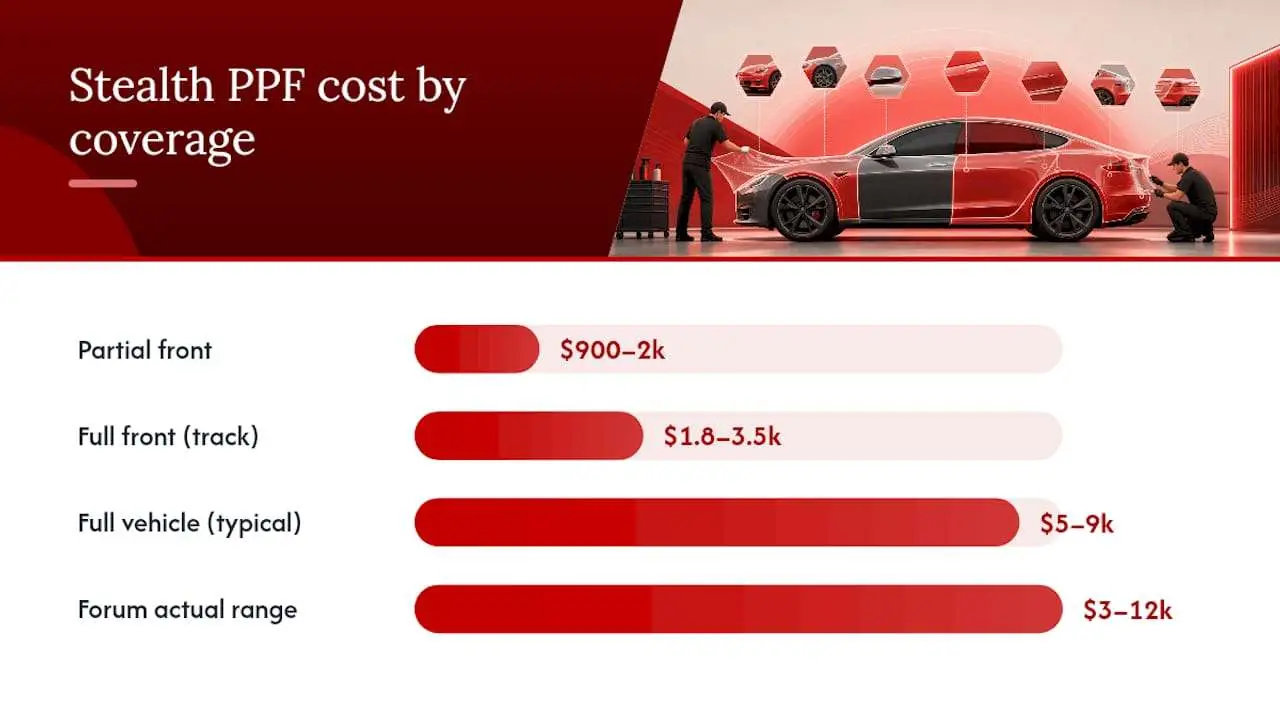
A partial front (bumper, partial hood, mirrors, and fenders) typically lands between $900 and $2,000, with sedans on the low end and larger SUVs pushing toward the top. Full front coverage, sometimes bundled as a “track pack” that adds rocker panels or headlights, generally falls between $1,800 and $3,500. Full-vehicle stealth wraps are where the spread gets wide: $5,000 to $9,000 covers most daily drivers, but real shop pricing breakdowns show totals starting near $4,000 for compact cars and climbing beyond $10,000 on exotics or vehicles with heavy body lines.
- Partial front: $900–$2,000
- Full front / track pack: $1,800–$3,500
- Full vehicle: $5,000–$9,000+
- Exotic or complex builds: can exceed $10,000
A quick reality check: Forum discussions on r/CarWraps show actual paid prices for full-vehicle stealth installs ranging from roughly $3,000 to $12,000. That gap isn’t random. It reflects real differences in film brand, shop overhead, and how much prep work a car needs before the film goes on.
Trucks and SUVs cost more than sedans because there’s simply more surface area and more curves to wrap around mirrors, door handles, and wheel arches. A three-row SUV or a long-wheelbase truck can push a full-vehicle quote toward the higher end of that range even before you factor in film choice.
What Does a Stealth PPF Quote Actually Include?
A legitimate quote breaks down into distinct line items, not one lump number.
- Film and material cost. This covers the actual roll of satin or matte film, priced by square footage and brand.
- Labor. Satin installs generally take longer than gloss because imperfections in the paint or film show up more visibly, so installers often move slower and check their work more often.
- Paint correction or decontamination. Many shops require a wash and clay-bar decontamination before application; deeper paint correction is a separate line item if your paint has swirl marks or oxidation.
- Panel coverage. “Full vehicle” should specify exactly which panels are included: hood, fenders, doors, mirrors, roof, pillars, and sometimes headlights.
- Warranty terms. Look for written coverage against yellowing, cracking, and delamination, typically five to ten years depending on the film brand.
What Makes Two Stealth PPF Quotes So Different?
Two shops quoting the same car can land $2,000 apart, and it’s rarely because one is scamming you.
- Film selection. Specialty satin films like XPEL STEALTH, a self-healing satin polyurethane designed to resist staining, cost more per square foot than standard gloss film.
- Installer skill and film handling. Wider-format films such as 3M’s Scotchgard Pro Series 200 reduce visible seams, but only in the hands of an experienced installer, which affects both time and price.
- Installation environment. A climate-controlled, dust-free bay costs more to run than an open garage, and that overhead shows up in labor rates.
- Vehicle complexity. More panels, tighter curves, and complex bumper designs all add install hours.
- Local market rates. Labor costs in a major metro area will differ from a smaller market, sometimes by several hundred dollars on a full-vehicle job.
Pro Tip: Ask any shop to name the exact film line they’re quoting, not just the brand. “XPEL” alone doesn’t tell you if you’re getting STEALTH satin film or a different product line entirely.
Is Stealth PPF Worth the Extra Cost Over Vinyl or Gloss?
Satin and matte PPF costs more than gloss PPF and considerably more than a matte vinyl wrap, but the comparison isn’t apples to apples.
- Protection level: PPF is a thick, self-healing polyurethane film built to absorb rock chips and resist punctures; vinyl wrap is thinner PVC designed primarily for color and finish change, not impact protection.
- Lifespan: Quality PPF often lasts 7 to 10 years; vinyl wraps typically need replacement every 3 to 5 years depending on sun exposure.
- Total cost of ownership: One PPF install can outlast two vinyl wrap cycles, which narrows the cost gap over time according to cost-of-ownership comparisons.
- When vinyl makes sense: If you want a temporary color change with no plans to keep the car long-term, vinyl is the cheaper, faster option.
How Do You Get an Accurate Stealth PPF Quote?
A vague number over the phone tells you nothing. Insist on specifics before you book anything.
- Request panel-level pricing, not a single “full car” figure, so you can see exactly what’s covered.
- Ask for the film brand and thickness in writing, along with confirmation of whether paint correction is bundled in or billed separately.
- Ask to see photo examples of completed satin or matte installs, since satin finishes reveal seams and prep flaws more than gloss does.
- Get the warranty terms in writing, including coverage length and what voids it.
Industry guidance consistently points to itemized, panel-level quotes as the single best defense against hidden fees.
Pro Tip: Treat a verbal-only quote as a red flag. Any shop confident in its pricing will put it on paper, panel by panel, before you ever sit in the chair.
What Itemized Stealth PPF Pricing Looks Like in Practice
At Ppfprosla, quotes break down by panel, film brand, and labor hours before a customer commits to anything. A partial front on a compact sedan tends to run toward the lower end of typical ranges, while a full-vehicle satin wrap on a larger SUV or an exotic climbs higher due to panel count and prep time. Controlled shop conditions matter especially for satin finishes, since dust and debris are far more visible under a matte topcoat than under gloss.
What Actually Matters When You’re Comparing Stealth PPF Quotes
Most of the advice floating around forums fixates on finding the lowest number, and that’s backward. The research here points to something more useful: the spread between quotes almost always traces back to what’s included, not what the shop charges per hour.
A $4,000 full-vehicle quote and a $7,000 quote on the same car aren’t necessarily one honest and one inflated. They might reflect two entirely different scopes: one skipping paint correction, using a thinner film, or excluding door jambs and headlights that the other includes. Forum threads showing $3,000 to $12,000 spreads for the same category of work aren’t proof that pricing is random. They’re proof that “full vehicle” means different things to different shops.
If you take one thing from this guide, make it this: stop comparing bottom-line totals and start comparing itemized panel lists side by side. The shop that hands you a five-line breakdown with film brand, thickness, and warranty terms is giving you something you can actually evaluate. The one that quotes a round number over text isn’t necessarily wrong. But you have no way to check.
— Jake
Ready to Get an Itemized Stealth PPF Quote?
Ppfprosla is the alternative to guessing from forum posts and phone-quote round numbers: every stealth PPF job here gets priced panel by panel, with the film brand, thickness, and labor spelled out before you commit. As an XPEL authorized installer, Ppfprosla works with the same STEALTH satin film referenced throughout this guide, backed by written warranty terms against yellowing, cracking, and delamination.
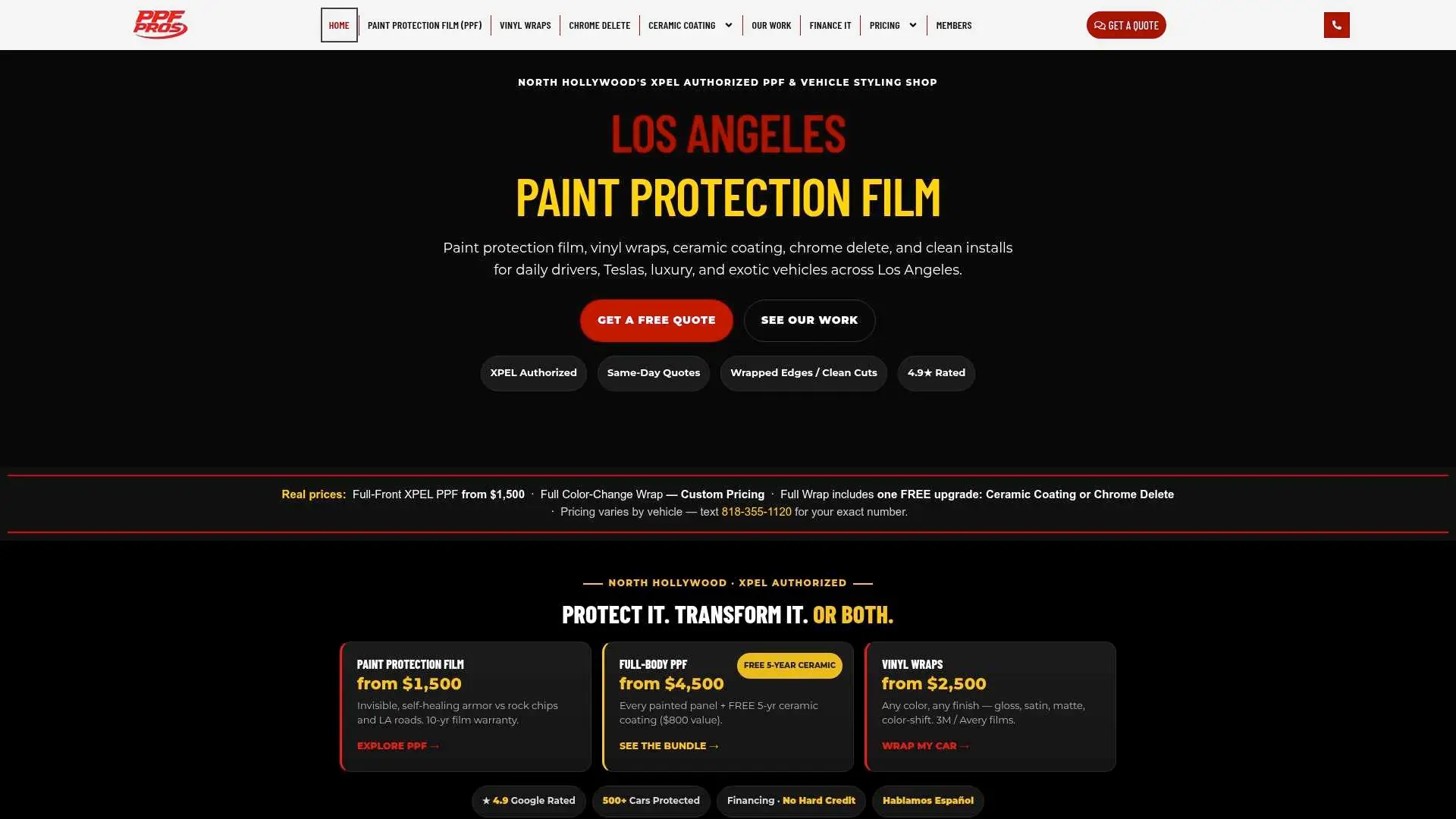
Whether you’re looking at a Full Front package at $2,199, a Full Vehicle install starting from $4,500, or a Track Pack for a daily driver, ask for the same itemized breakdown covered in this guide before you compare it against any other shop’s number. If you’re weighing PPF against a color change instead, the Full Color Change Wrap option starts from $2,800. Request your itemized quote through the PPF and wrap pricing page and compare it panel by panel against anything else you’ve been quoted.
Sources
- Matte PPF: Is satin paint protection film worth it?
- XPEL Stealth PPF Cost: Breakdown of Real Prices & Fees
- XPEL STEALTH technical data sheet (TDS)
- Scotchgard Paint Protection Film Pro Series 200
- Matte PPF costs unveiled
FAQ
How Much Does PPF Usually Cost?
Standard gloss PPF typically runs slightly less than stealth finishes, with partial front packages often starting near $900 and full-vehicle jobs commonly landing between $5,000 and $9,000. Exact pricing depends on film brand, vehicle size, and whether paint correction is included.
What Is the Difference Between XPEL PPF and Stealth PPF?
XPEL PPF is the manufacturer’s broader film lineup, while XPEL STEALTH refers specifically to their satin finish product line. STEALTH is a self-healing satin polyurethane film formulated to resist staining, distinct from XPEL’s standard gloss films.
Does Stealth PPF Hide Scratches?
Stealth PPF’s matte or satin surface can make minor swirl marks less noticeable than gloss film does, but it doesn’t hide existing paint damage underneath it. Most satin films also carry self-healing topcoats that use heat to smooth out light surface marks on the film itself, not the paint below it.