The strongest Tesla wrap directions fall into a handful of camps: stealth matte black, satin pearl color changes, metallic and chrome-effect finishes, full graphic themes, carbon-fiber accents, and colored paint protection film for owners who want a new look and real protection in one job. Matte and satin vinyl change the car’s appearance only, while colored PPF adds a protective layer along with the color shift. The gallery below gives you specific prompts to bring to a designer or installer.
TL;DR:
- Colored paint protection film offers long-term protection and resale value, with prices around $7,500 to $8,000 installed for Tesla models.
- Vinyl wraps are more affordable and easily removable but typically last five to ten years and provide limited protection against debris.
- Matte black, satin pearl white, and color-shift finishes remain popular, but material choice should align with your ownership timeline for best satisfaction.
- Full vehicle wraps are more expensive and time-consuming, often taking five to seven days with installation costs starting around $2,800, while partial wraps cost less and install faster.
- Proper maintenance involves gentle washing, avoiding abrasive products, and considering ceramic coatings to keep wraps looking new longer.
Table of Contents
- 1. Top Tesla wrap ideas worth copying
- 2. Finishes and materials: vinyl vs colored PPF, what to pick and why
- 3. Popular colors and trends for Tesla owners in 2026
- 4. Matching wrap ideas to your Tesla model
- 5. What a Tesla wrap costs and how long it takes
- 6. Keeping a wrapped Tesla looking new
- 7. How to choose an installer and what to ask them
- 8. What PPF Pros sees working on Teslas
- 9. Legal and warranty implications of wrapping a Tesla
- 10. Environmental impact of wraps and sustainability options
- 11. What actually matters when picking a Tesla wrap
- 10. Get your Tesla wrap done right
- FAQ
- Sources
1. Top Tesla wrap ideas worth copying
A Tesla’s smooth panels and minimal trim make it an easy canvas for bold color and clean lines. These ten ideas work well on the Model 3, Y, S, and X, and each comes with a short phrase you can hand to an installer or paste into a wrap visualizer.
- Matte black stealth with satin black wheels: a low-key, blacked-out look that hides road grime and pairs with a chrome delete for a seamless finish.
- Satin pearl white with a gloss black roof and chrome delete: keeps the factory elegance but adds contrast at the roofline.
- Glacier blue full wrap with gloss accents: a cool-toned alternative to factory blues that photographs well in daylight.
- Carbon-fiber hood and mirror caps: adds texture and a performance cue without committing to a full color change.
- Two-tone roof and hood contrast: a gloss or satin hood paired with a contrasting roof color for a custom look at partial cost.
- Racing stripes with matching wheel accents: a classic motorsport cue that works especially well on the Model 3’s shorter proportions.
- Subtle full graphic or character wrap: best kept to lower panels or a single accent area so it reads as intentional, not busy.
- Matte gray with gloss black trim: a modern, understated combination that ages well.
- Chrome-effect accents on the hood seam and mirrors: used sparingly, this draws the eye without overwhelming the car’s lines.
- Color-shift or chameleon panels on the hood only: a statement piece for owners who want one dramatic element rather than a full wrap.
Each of these works because Teslas have few body seams to interrupt a wrap, which keeps installation cleaner and the finished look more cohesive than on cars with heavier trim lines.
2. Finishes and materials: vinyl vs colored PPF, what to pick and why
Matte, satin, gloss, metallic, chrome-effect, and textured finishes each read differently in photos: matte absorbs light and hides minor imperfections, satin sits between matte and gloss with a soft sheen, and gloss and metallic finishes reflect light and show the car’s lines more sharply.
Vinyl wrap offers the widest color palette, is fully removable, and costs less than colored PPF, but it offers limited protection against rock chips and road debris. Colored paint protection film is a thicker, urethane-based material that is self-healing against light scratches and protects the paint underneath, at a premium price. Tesla itself began selling colored urethane-based wraps for the Model 3 and Model Y at roughly $7,500 to $8,000 including installation, which signals how much demand exists for a color change that also protects the paint.
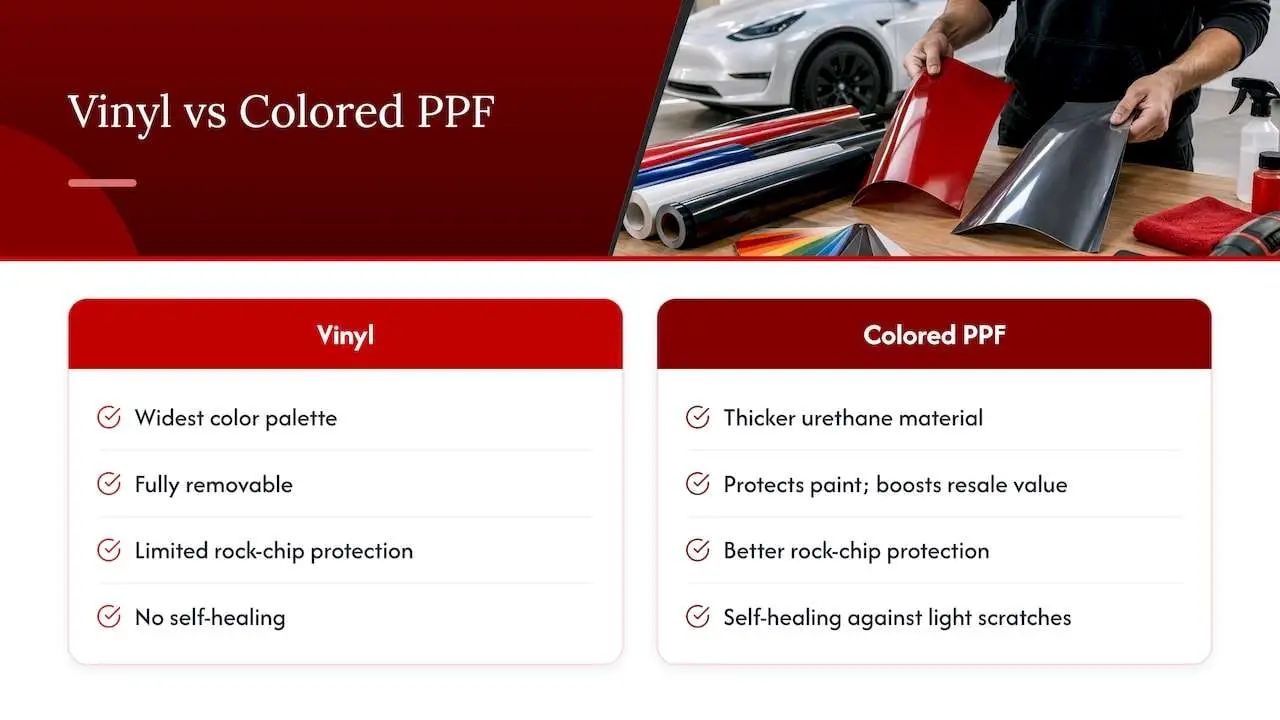
If you want long-term protection and resale value, colored PPF is the stronger choice. If you want to change your look every couple of years without a major investment, vinyl wrap makes more sense.
3. Popular colors and trends for Tesla owners in 2026
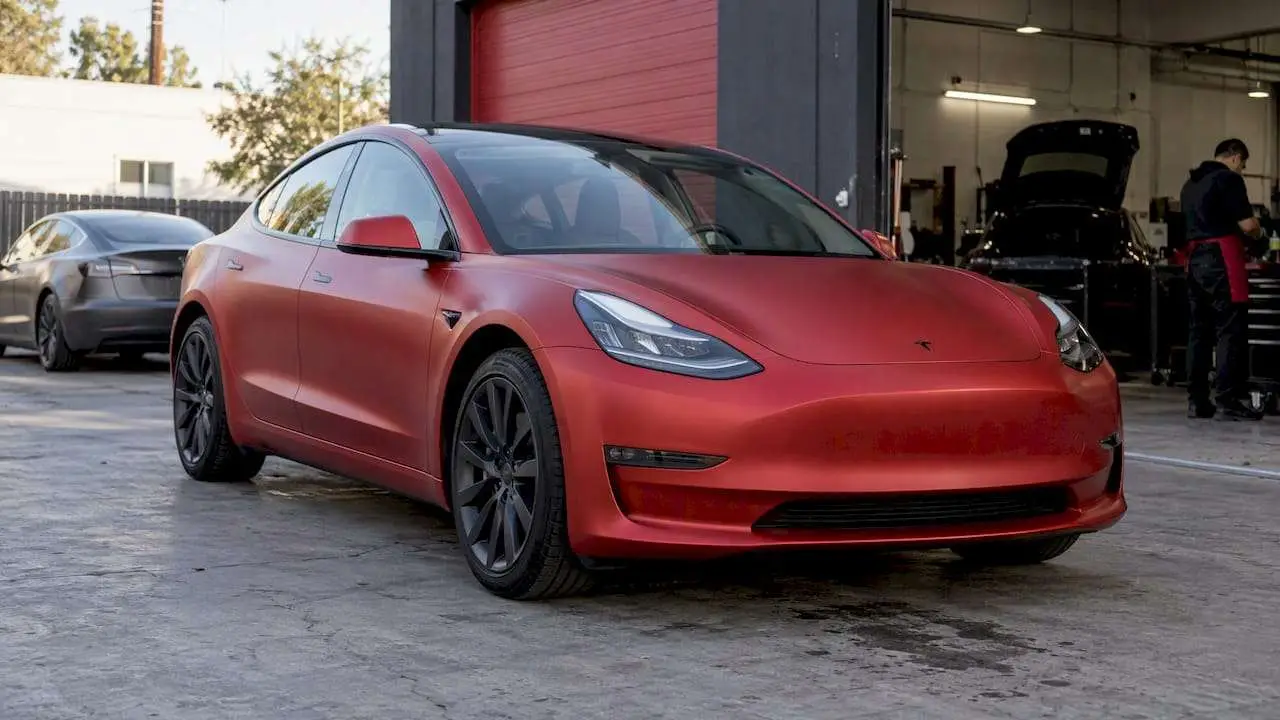
Matte black remains the most requested finish because it reads as deliberate rather than damaged, and it hides swirl marks between washes. Satin pearl white gives a factory-plus look that still feels premium. Metallic blue stands out against Tesla’s limited factory blue options, while matte gray splits the difference between stealth and standout. Satin red brings warmth without the glare of gloss, and rose gold has become a favorite among owners who want something no other Tesla on the road is wearing.
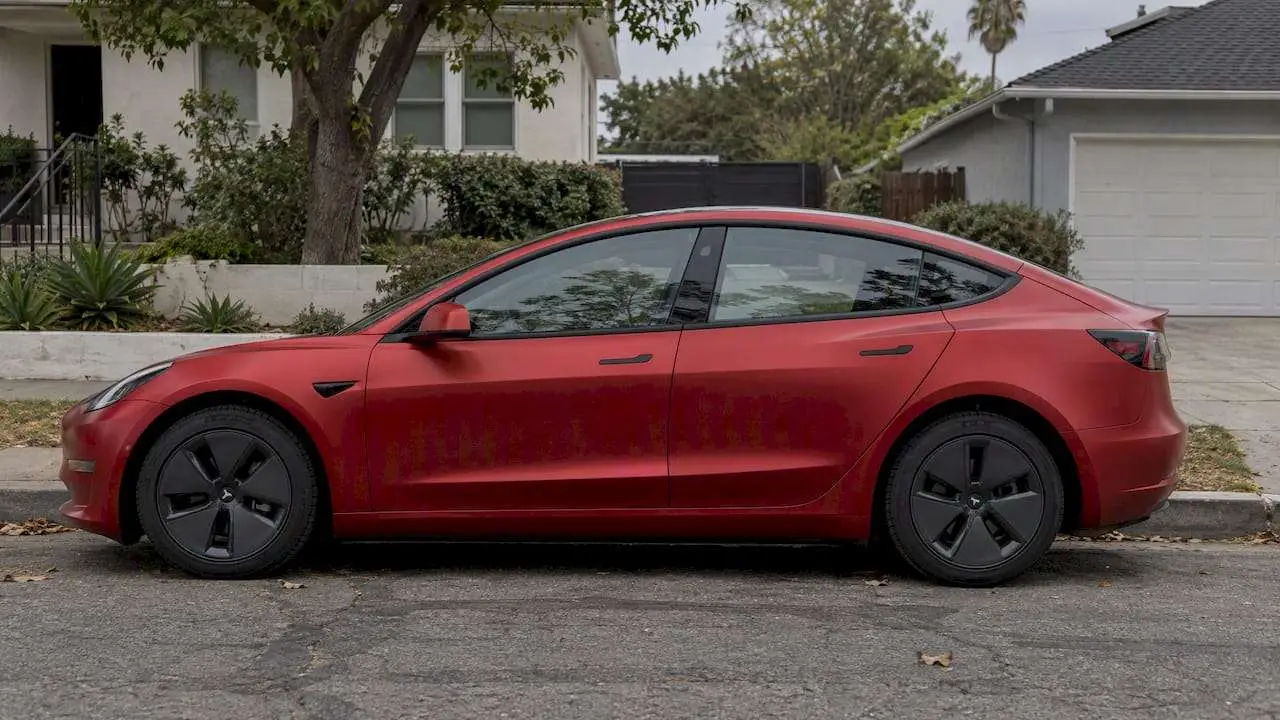
For a rarer statement, forest green and color-shift or chameleon finishes make the most impact on simpler body styles like the Model 3, where there is less trim to compete with the color.
Tesla’s own colored wrap program prices full installs at roughly $7,500 to $8,000, a useful anchor for what a factory-level colored PPF job costs before comparing independent shop quotes.
4. Matching wrap ideas to your Tesla model
The right placement depends on the car’s proportions as much as the finish you pick.
- Model 3: its compact body suits bold hood or roof accents more than busy full-vehicle graphics.
- Model Y: the taller profile carries full-vehicle wraps well, especially in solid or two-tone colors.
- Model S and Model X: satin and pearl finishes suit the luxury positioning better than loud graphics.
- Budget-friendly options: a hood-only wrap, mirror caps, or a stripe package deliver visual impact without the cost of a full vehicle wrap.
- Wheel accents: satin or matte wheel wraps tie a partial wrap together even when the body color stays factory.
5. What a Tesla wrap costs and how long it takes
Partial wraps, like a hood, roof, or mirror caps, typically cost the least and take a day or less to install. A full vinyl wrap covers the entire body and takes longer because of the compound curves around the hood and bumpers. Colored PPF commands a premium over vinyl, reflected in Tesla’s own $7,500 to $8,000 installed pricing, which also noted an installation window of five to seven business days.
Expect extra time for door jambs, tight curves around sensors, and any custom graphic work. Vinyl wraps typically last five to ten years depending on quality and climate, while colored PPF tends to outlast vinyl thanks to its thicker, self-healing construction. UV exposure, garage versus street parking, and wash habits all affect how long either material holds its finish.
6. Keeping a wrapped Tesla looking new
A wrap only looks as good as the care routine behind it.
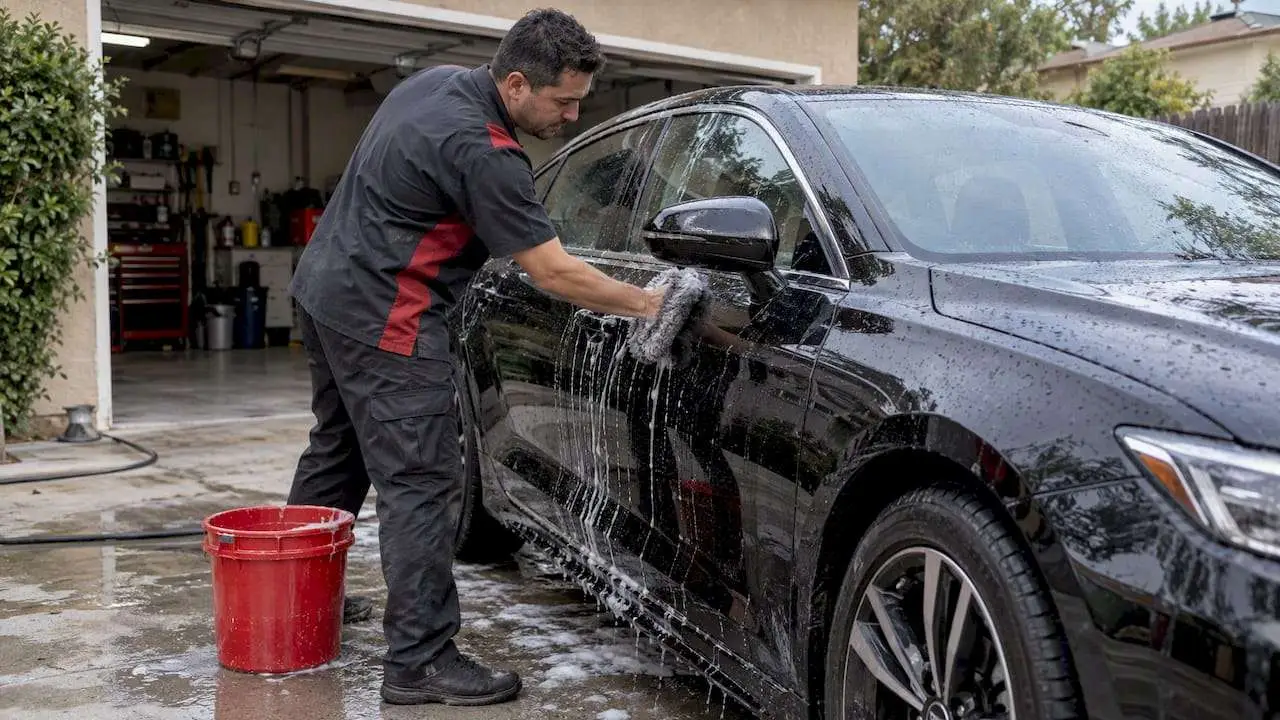
- Wash with a two-bucket method and a pH-neutral soap, rinsing loose dirt before touching the surface to avoid dragging grit across the film.
- Dry with a blot-and-lift technique rather than wiping, which keeps swirl marks off matte and satin finishes.
- Remove bird droppings and tar immediately, since both can etch or stain vinyl and PPF if left to sit.
- Skip abrasive polishes and compounds on matte or satin wraps, since they can create unwanted shine or strip the texture.
- Consider a ceramic coating over the wrap for easier washing and added UV resistance, and bring the car to a professional for any chip repair rather than attempting a patch yourself.
Pro Tip: Matte finishes need gentler drying and zero wax, since both can leave a glossy sheen where you want a flat one; see Diamondbrite’s matte care guide for the full routine.
7. How to choose an installer and what to ask them
Not every shop that advertises wraps has the experience to handle a Tesla’s curves and sensors cleanly.
- Confirm the materials they use, since brands like 3M, Avery Dennison, and XPEL have track records that generic films don’t.
- Ask to see a Tesla-specific portfolio, not just general wrap photos, since door handles and camera housings demand different prep.
- Confirm the shop removes door handles and masks sensors rather than cutting around them, which is the biggest source of sloppy Tesla wraps.
- Ask about warranty coverage, expected removal process years from now, and whether they offer a loaner vehicle during longer installs.
- Treat a price well below competitors as a red flag if the shop won’t disclose which film brand they’re using.
8. What PPF Pros sees working on Teslas
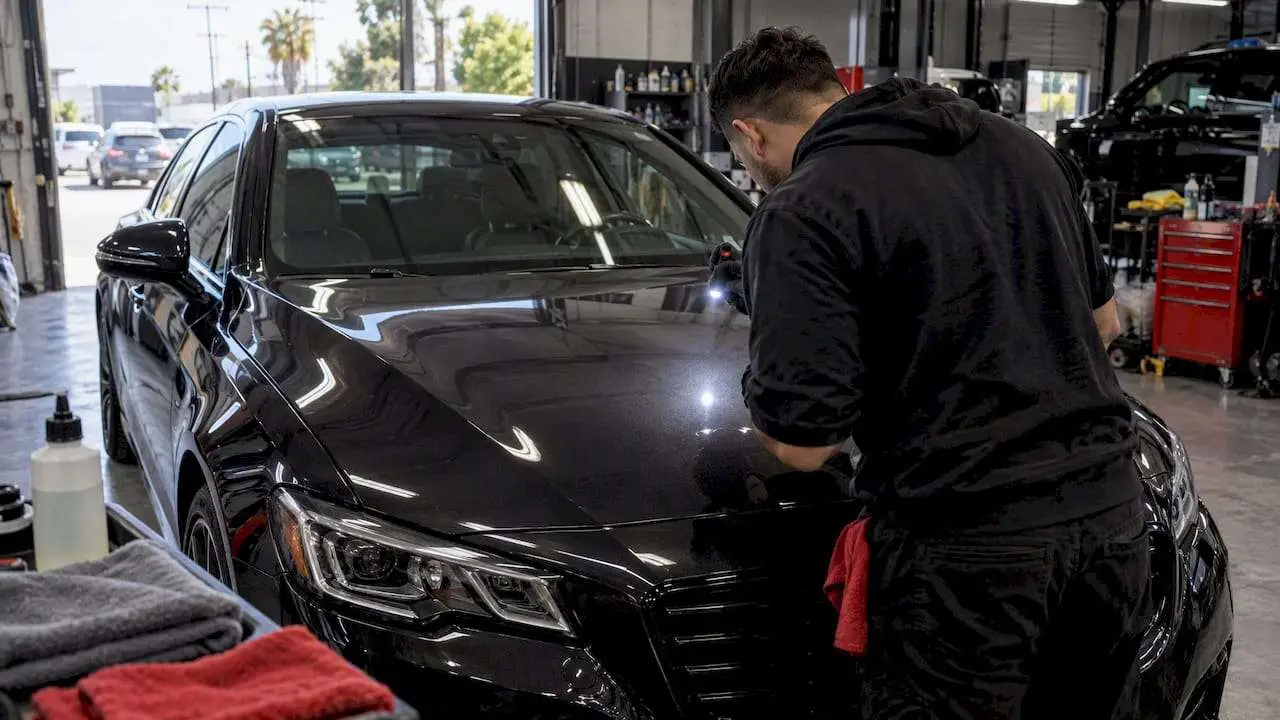
PPF Pros is a vehicle styling shop in North Hollywood that installs XPEL authorized paint protection film alongside vinyl wraps, ceramic coatings, and chrome deletes, and reports a 4.9-star rating across its completed jobs. On Teslas specifically, the shop’s approach centers on sensor-safe prep, meaning door handles, cameras, and parking sensors get masked and reinstalled properly rather than cut around. For owners deciding between colored PPF and vinyl, the general guidance holds: PPF suits anyone planning to keep the car long-term, while vinyl suits owners who expect to change styles again within a few years. Material choice matters more than finish on a Tesla, since the smooth panels forgive almost any color or texture equally well.
9. Legal and warranty implications of wrapping a Tesla
Wrapping a Tesla does not void the vehicle’s underlying factory warranty, since a wrap is a cosmetic addition rather than a modification to the car’s mechanical or electrical systems. That said, any damage an installer causes while removing handles, trim, or sensors during the wrap process falls outside Tesla’s warranty and becomes the installer’s responsibility, which is why a clear agreement on liability before work starts matters.
Registration and inspection rules around full color changes vary by state and sometimes require updating the vehicle’s registered color with the local motor vehicle agency, particularly for a full wrap that changes the car’s appearance from its factory color. Checking your local requirements before a full color change avoids a mismatch between your registration and the car’s new look.
Window tint wraps and any film applied near the windshield or side glass are subject to separate state tint laws that are unrelated to body wrap rules, so those need to be checked independently if a design plan includes glass. None of this is legal advice, and a quick call to your state’s motor vehicle office or your insurer before a major color change is worth the ten minutes it takes.
10. Environmental impact of wraps and sustainability options
Vinyl wraps are petroleum-based, and manufacturing them carries a carbon footprint similar to other plastic products, though a wrap’s lower material use compared to a full repaint gives it a smaller footprint than stripping and repainting a car’s factory finish. Removal creates waste vinyl that is not widely recycled, since the adhesive backing complicates standard plastic recycling streams.
Colored PPF carries a similar footprint during manufacturing but tends to stay on the car longer thanks to its durability, which spreads that footprint over more years of use compared to a vinyl wrap that gets swapped more frequently. For owners who care about minimizing waste, choosing a finish you’ll want to keep for years, rather than chasing a trend you’ll want to redo, is the simplest way to reduce the environmental cost of either material. Reusing accent pieces, like wheel or mirror wraps, instead of redoing an entire vehicle also cuts down on material waste between style changes.
11. What actually matters when picking a Tesla wrap
The gallery approach to Tesla wraps gets one thing right and one thing wrong. It’s right that seeing specific combinations, matte black with satin wheels, pearl white with a gloss roof, helps you commit to a direction faster than browsing color swatches alone. It’s wrong when owners treat the finish as the whole decision and skip the material question entirely.
Most of the disappointment I’ve seen traced back to owners choosing a dramatic color without asking whether vinyl or colored PPF fit their actual ownership timeline. A color-shift hood looks incredible in photos and loses its charm fast if you’re trading the car in eighteen months later, since you’ve paid a premium for a short-lived upgrade. The material decision should come before the color decision, not after.
If you’re keeping the car for the long haul, lean toward PPF even if it narrows your color choices. If you like to change things up, vinyl gives you room to experiment without the regret of a permanent-feeling commitment.
— Jake
10. Get your Tesla wrap done right
If any of these ideas caught your eye, the next step is matching the look to the right material and a shop that knows Tesla panel lines. PPF Pros installs Full Color Change Wraps starting from $2,800 for owners who want a fresh look, and Full Front PPF at $2,199 for those who want protection on the high-impact panels without committing to a full wrap. A Full Vehicle PPF package starts from $4,500 for owners who want the entire car covered.
Ceramic coating and chrome delete are available as add-ons for a finished, low-maintenance look. Get a quote for your Tesla and we’ll walk you through which material fits your plans.
FAQ
How much does it cost to fully wrap a Tesla?
A full vinyl color change wrap starts from $2,800, while Tesla’s own colored PPF program runs $7,500 to $8,000 installed. The gap reflects the added protection and self-healing properties of colored PPF compared to standard vinyl.
What are the coolest Tesla wraps?
Matte black stealth, satin pearl white with a gloss black roof, and color-shift hood accents consistently stand out because they play to the Tesla’s clean panel lines. Subtle graphic placements and carbon-fiber trim accents are popular choices for owners who want detail without a full color change.
How long do wraps last on Tesla?
Quality vinyl wraps typically last five to ten years depending on climate and care, while colored PPF tends to outlast vinyl because of its thicker, self-healing construction. UV exposure and wash habits are the biggest factors affecting either material’s lifespan.
What is the rarest Tesla color?
Rarity depends on factory color availability by year and region rather than a fixed list, so owners seeking something uncommon typically turn to custom wraps in colors like forest green or color-shift chameleon finishes that Tesla has never offered from the factory.