
Three rules govern how long a vinyl wrap looks new: wait at least a few days after installation before the first wash, hand wash gently with a pH-neutral wrap-safe shampoo using the two-bucket method, and avoid brush washes and harsh solvents or abrasive pads for stains. Break any one of these and you risk edge lift, scratching, or a stain that sets in permanently. Everything else in wrap care builds on those three habits.
TL;DR:
- Hand washing with a pH-neutral wrap-safe shampoo using the two-bucket method is essential for preserving the vinyl’s adhesive and minimizing scratches or edge lift.
- Avoid automatic brush washes entirely, as they can trap grit and cause tears or lifting at seams, while touchless or foam-only washes are safer alternatives.
- Use a pressure washer no higher than 2,000 psi with a 40-degree fan nozzle, maintaining at least 12 inches distance and spraying perpendicular to panels to prevent damage.
- Quickly remove contaminants like bird droppings, sap, or bugs with well-soaked, wrap-safe cleaners and avoid aggressive scrubbing or solvents that can degrade the film.
- Regular inspections during each wash and storing the vehicle in a garage or under a breathable cover significantly extend the wrap’s lifespan, which is typically five to seven years with proper maintenance.
Table of Contents
- Why Vinyl Wrap Maintenance Differs from Paint Care
- How Do You Hand-Wash a Wrapped Car Safely?
- Can a Wrapped Car Go Through a Carwash?
- What PSI and Nozzle Distance Are Safe for Pressure Washing?
- How Do You Remove Bird Droppings, Sap, Bugs, or Tar Safely?
- How Should You Dry a Wrapped Car and Use Maintenance Sprays?
- How Often Should You Clean a Vinyl Wrap?
- Do Matte and Gloss Wraps Need Different Products?
- What Should You Check During Every Wash?
- How Should You Store a Wrapped Vehicle When It’s Not in Use?
- What Mistakes Shorten a Vinyl Wrap’s Life the Fastest?
- How Do You Preserve a Vinyl Wrap for the Long Haul?
- How Do Pollution and Acid Rain Affect Vinyl Wraps?
- Can You Repair Minor Scratches or Damage Yourself?
- What Installers See Most Often in the Shop
- When It’s Time to Call a Pro for Vinyl Wrap Repair
- Sources
- FAQ
Why Vinyl Wrap Maintenance Differs from Paint Care
A vinyl wrap is a film bonded to your car with adhesive, not a hard, cured paint surface. That distinction changes the rules for washing, drying, and product selection. Paint can shrug off a stiff brush or a strong wax; wrap film can’t. The adhesive underneath needs time to fully bond, the surface texture (especially on matte and satin finishes) reacts to certain chemicals in ways paint never does, and the seams at panel edges are physical weak points where water and pressure can work their way underneath.
That’s why manufacturer documentation from 3M and Avery Dennison treats washing, drying, and pressure-washing as film-specific procedures rather than generic car-wash advice. Follow their guidance and a well-installed wrap holds its color and edge integrity for years. Ignore it and you’ll be calling a shop like PPF Pros sooner than expected.
How Do You Hand-Wash a Wrapped Car Safely?
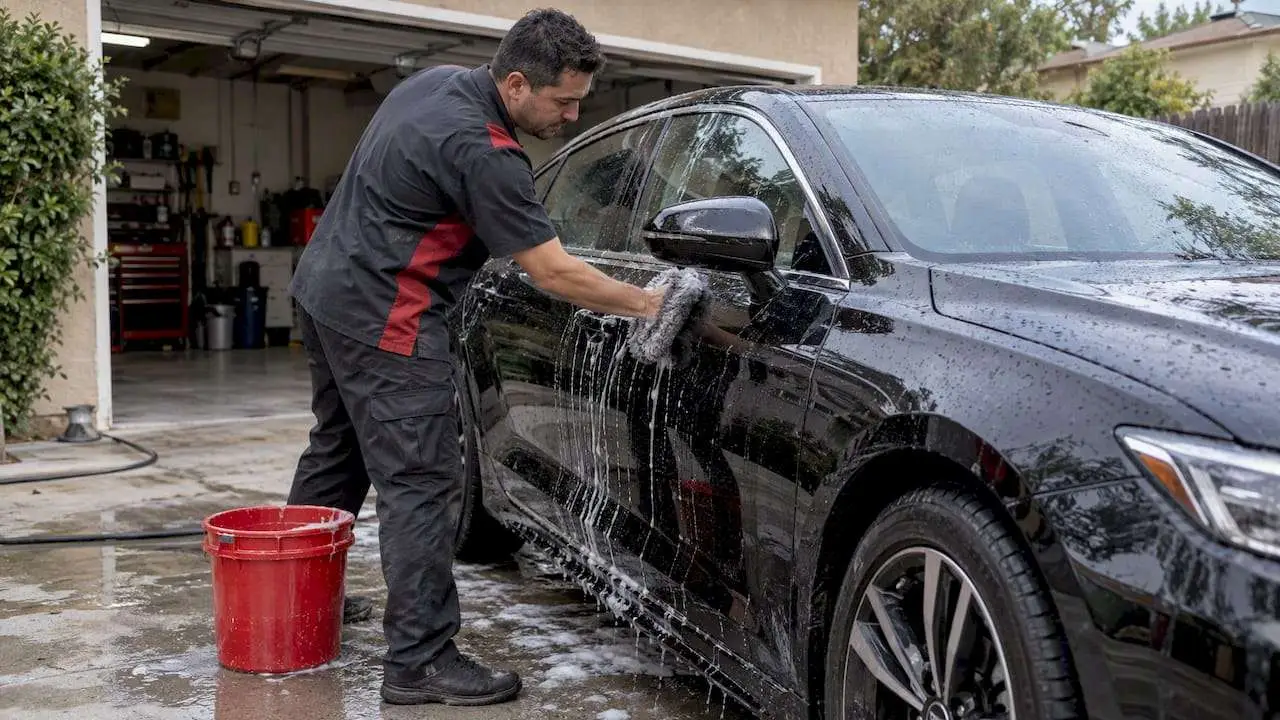
Hand washing is the gold standard for washing a wrapped car, and the process is nearly identical to washing bare paint with a few wrap-specific adjustments.
- Pre-rinse the entire vehicle or apply a snow-foam pre-wash and let it dwell for a few minutes to lift grit before anything touches the surface.
- Fill two buckets: one with pH-neutral, wrap-safe shampoo and water, the other plain rinse water with a grit guard at the bottom.
- Use a soft microfiber wash mitt, dip it in the soap bucket, wash one panel, then rinse the mitt in the plain-water bucket before reloading it with soap.
- Work top-down, since the roof and hood collect less grime than the lower rocker panels and wheel wells.
- Rinse each section as you finish it and inspect seams and edges while the water is running. That’s the easiest moment to spot a lifting corner.
- Keep pressure light near seams, door edges, and mirror caps. These are the spots most likely to trap water if the film starts to peel.
This two-bucket method, backed by Avery Dennison’s care bulletin, also happens to be the same swirl-prevention washing technique detailers recommend for painted cars, minus the wax step at the end.
Can a Wrapped Car Go Through a Carwash?
Brush-type automatic washes are the single worst thing you can do to a vinyl wrap on a regular basis. The spinning cloth strips and stiff bristles used in tunnel washes grind grit into the film and can catch a lifted edge, tearing it further.
- Brush washes: Avoid entirely. The mechanical action abrades film and stresses seams.
- Touchless washes: An acceptable backup when hand washing isn’t possible, though the high-pressure jets and strong detergents used in some touchless bays still warrant caution near edges.
- Foam-only or rinseless washes: Fine for light maintenance between full hand washes, especially for keeping road film off the surface without a full production.
- Fresh installs, visible seams, or matte finishes: These always call for a hand wash. There’s no automated option gentle enough for a wrap still curing or a finish that scars easily.
What PSI and Nozzle Distance Are Safe for Pressure Washing?
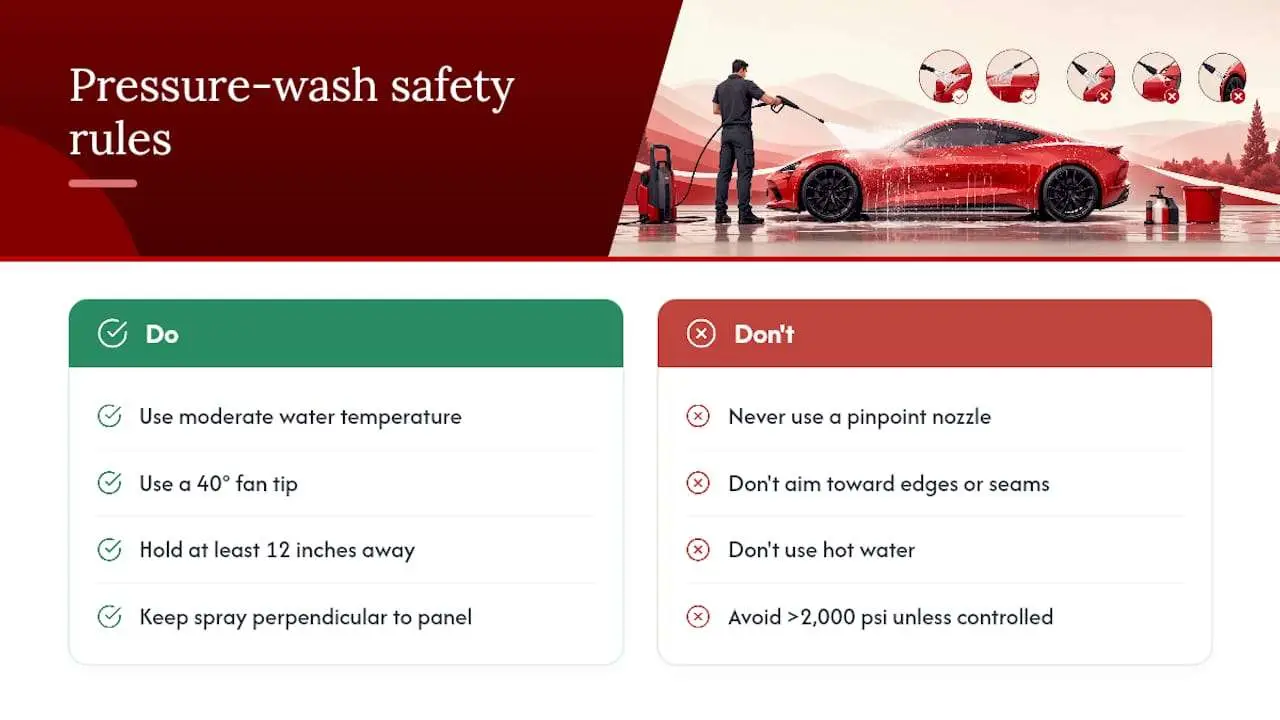
Pressure washers can be safe for a wrapped vehicle, but the margin for error is narrower than most owners expect. Avery Dennison’s guidance recommends staying roughly at or below recommended safe pressure levels, and other detailing sources allow up to 2,000 psi only under controlled conditions. Water temperature should stay moderate; hot water softens adhesive and increases lift risk.
Use a 40 degree fan tip, never a pinpoint nozzle, and hold it at least 12 inches from the surface. Keep the spray perpendicular to the panel rather than angled toward an edge or seam, where water pressure can wedge underneath the film. If you’re unsure of your equipment’s output, a low-pressure garden hose is always the safer default, or check with your installer before pointing anything stronger at the car.
How Do You Remove Bird Droppings, Sap, Bugs, or Tar Safely?
Contaminants that sit on a wrap do more damage the longer they stay put. Bird droppings are acidic and can etch or discolor film within hours in direct sun; tree sap hardens and bonds to the surface; bug residue contains enzymes that eat into clear coats and films alike.
- Soak the spot with warm water and a wrap-safe shampoo first, letting it sit for a minute or two to soften before wiping.
- For stubborn sap or tar, use a cleaner specifically labeled safe for vinyl or PPF rather than a generic degreaser.
- A diluted isopropyl alcohol mix can lift tougher residue, but test it on an inconspicuous spot first since concentration and finish type both affect how the film reacts.
- Rinse fuel spills immediately with water. 3M’s guidance flags petroleum products and aggressive solvents as capable of degrading both the vinyl and the adhesive beneath it.
Speed matters more than force here. A five-minute soak beats aggressive scrubbing every time.
How Should You Dry a Wrapped Car and Use Maintenance Sprays?
Drying technique matters more on wrap than most owners assume. Use short-fiber microfiber towels and pat rather than drag, especially near seams where a long-pile towel can snag a lifted edge you haven’t noticed yet.
While the panel is still slightly damp, a wrap-safe quick-detail spray restores the slick, water-shedding feel that fades between washes and slows how fast dust resettles, according to detailing guidance on PPF and wrap care. This is a lighter-duty product than a full ceramic coating and works well as a between-wash refresher.
Coatings are a different decision. A ceramic layer over vinyl can improve hydrophobic performance and make future washes easier, but applying one over an install with unresolved seam or edge issues locks those problems under a harder-to-remove layer. Fix any lifting or adhesion issue before adding a coating, and confirm with your installer whether a topcoat affects your wrap’s warranty terms.
How Often Should You Clean a Vinyl Wrap?
Most wrapped vehicles need a wash every one to two weeks, with garage-kept cars able to stretch that interval since they collect less UV exposure and airborne grime. Daily drivers parked outside need the shorter end of that range, particularly in urban areas with heavier pollution.
Seasonal shifts change the math. After winter road-salt exposure, rinse the lower panels and wheel wells promptly. Salt left to sit accelerates corrosion at panel edges where the film meets metal. During heavy pollen season or in hard-water regions, increase drying frequency, since mineral deposits and pollen residue etch faster than plain dust. Whenever possible, park in shade or a garage. UV exposure is the single biggest long-term threat to color retention, and even a few fewer hours of direct sun per day adds up over a wrap’s service life.
Do Matte and Gloss Wraps Need Different Products?
Finish type changes what’s safe to put on the surface, and this is where owners cause the most irreversible damage.
Matte and satin finishes should never touch a polish, wax, or any gloss-enhancing product. A single application can permanently glaze a matte surface into a shiny patch that no amount of cleaning reverses, since the finish depends on a specific surface texture that polish physically alters. Stick to matte-safe shampoos labeled for the purpose, and satin finishes call for the same restraint with an even narrower list of tolerated products.
Gloss finishes are more forgiving but still off-limits for petroleum-based waxes and harsh solvents, which can dull the surface or attack the adhesive over time. A gloss wrap can generally handle a wrap-safe sealant without issue, something a matte finish should skip entirely.
What Should You Check During Every Wash?
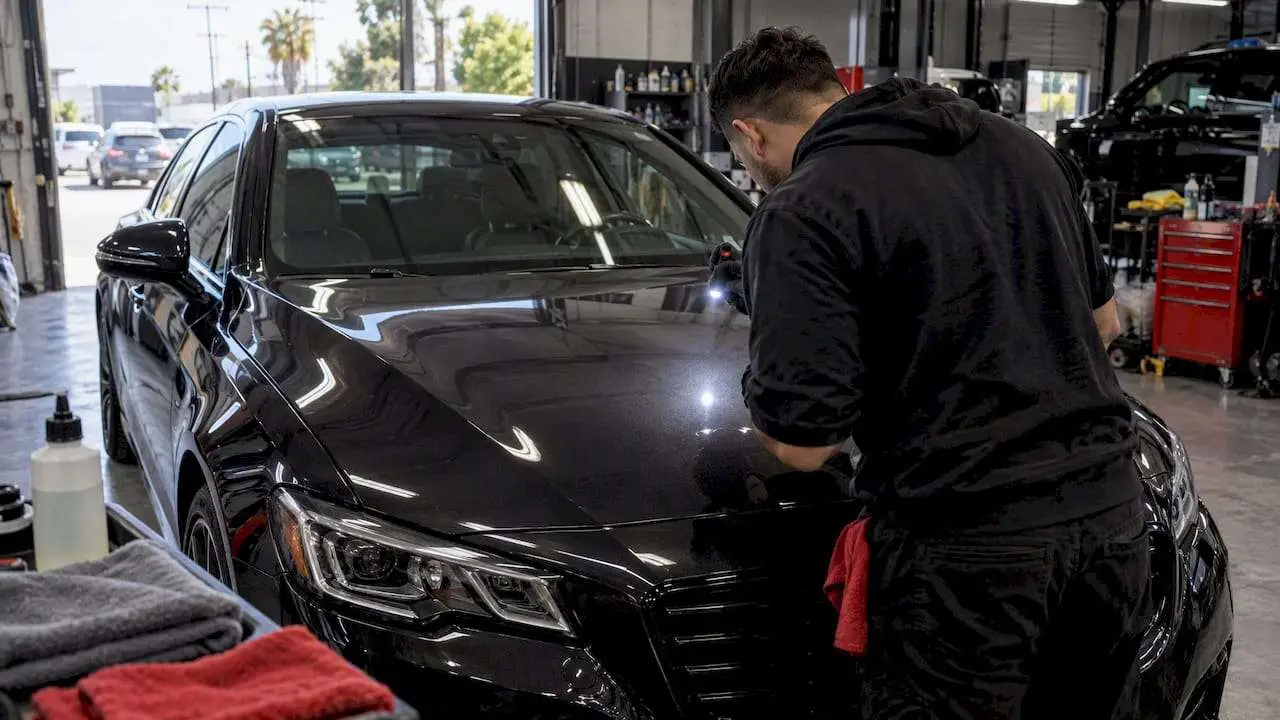
Treat every wash as an inspection, not just a cleaning. Run your fingers along the areas most prone to failure while the car is wet.
- Seams and panel-to-panel transitions, where two pieces of film meet.
- Door edges and jambs, which flex every time the door opens.
- Mirror caps, a common lifting point due to airflow and washing angle.
- Bumper corners, where impact and curb contact stress the film most.
A small lift or a bit of trapped dirt caught early is usually a quick fix. A lift that’s spreading, bubbling, or already peeling back more than an inch needs shop attention. Document what you see with a photo and timestamp, and resist the urge to glue it down yourself. Contact your installer, especially if the wrap is still under warranty, since a DIY fix can void coverage.
How Should You Store a Wrapped Vehicle When It’s Not in Use?
Storage decisions matter as much as washing habits for wrap longevity, especially for seasonal or collector vehicles that sit for weeks at a time. A garage is the best option available, since it removes UV exposure entirely and shields the film from rain, pollen, and temperature swings that stress the adhesive bond over time.
If garage space isn’t available, a breathable car cover is the next-best choice. Look for one designed for outdoor use with a soft interior lining. A cover that traps moisture against the film can encourage mold or mildew at seams, so avoid tarps or non-breathable plastic covers, which do more harm than leaving the car uncovered.
Before covering a wrapped car, make sure the surface is clean and fully dry. Covering a dirty or wet wrap traps grit against the film, and that grit can create fine scratches every time wind shifts the cover slightly. Wipe down mirror caps and door handles, too, since covers snag on protruding trim more than on flat panels.
A few extra habits help with long-term storage:
- Park nose-in toward a wall or use a moisture-absorbing product in an enclosed garage to reduce humidity buildup.
- Crack a window slightly if the vehicle sits somewhere with big temperature swings, since heat buildup can stress adhesive at the edges.
- Check on a stored vehicle every few weeks even if it’s not being driven, since a slow leak, pest issue, or moisture problem can go unnoticed longer than you’d expect.
Vehicles stored outside without a cover should still get their normal wash cadence, since dust and pollen accumulation don’t pause just because the car isn’t moving.
What Mistakes Shorten a Vinyl Wrap’s Life the Fastest?
Most wrap failures trace back to a handful of repeat mistakes rather than bad luck or bad material.
Washing too soon after installation tops the list. Owners who can’t resist a wash within the first day or two risk disturbing adhesive that hasn’t finished bonding, and 3M’s own guidance is explicit that early washing is a leading cause of premature lift. Using a clay bar is another common error carried over from paint-care habits. Clay is an abrasive mechanical process, and dragging it across film risks scuffing or thinning the top layer in ways that show up as dullness weeks later.
Ignoring bird droppings or sap because “it’s not a big deal” ranks close behind. Left in direct sun, these contaminants etch into the film in hours, not days, turning a five-minute fix into a permanent blemish. Running a wrapped car through an automatic brush wash out of convenience is another repeat offender. It takes one pass through a worn brush tunnel to introduce fine scratching across an entire panel.
Skipping seam inspection is a quieter mistake but an expensive one. A lifted edge caught on day one is a five-minute repair. The same lift ignored for a month lets water and dirt work underneath, and by the time it’s visible from three feet away, you’re often looking at a full panel replacement instead of a patch.
How Do You Preserve a Vinyl Wrap for the Long Haul?
Proper upkeep pushes a wrap toward the higher end of its expected lifespan, while neglect (unremoved sap, salt buildup, constant UV bombardment) cuts that timeline down substantially, according to aftercare research from BrittoPrint. Cast vinyl films typically run five to seven years of useful life, and where you land in that range depends almost entirely on habits, not luck.
UV exposure does more cumulative damage than any single wash mistake. A wrap-safe UV protectant, applied every few months as part of your regular detailing routine, helps slow color fade and prevents the film from becoming brittle at the edges, which is often where cracking starts. Garage storage or shaded parking amplifies this protection significantly, since even a few hours less direct sun per day adds up across a multi-year ownership period.
Reapplication schedules for protective sprays or sealants vary by product, but a general rule holds: if water stops beading and starts sheeting flat across the surface, it’s time to reapply. That visual cue is more reliable than a calendar date, since exposure conditions vary so much between a daily commuter and a weekend car kept in a garage.
Long-term preservation also means accepting that a wrap isn’t a lifetime product. Planning for eventual replacement, rather than pushing a fading, brittle wrap well past its practical life, keeps your car looking intentional rather than neglected. When the color starts to chalk or the edges start cracking despite good care, that’s the wrap telling you it’s near the end of its service window.
How Do Pollution and Acid Rain Affect Vinyl Wraps?
Airborne contaminants attack wrap film in ways that aren’t always obvious until the damage has already set in. Industrial pollution and vehicle exhaust deposit fine particulates that settle into the film’s texture, and on matte or satin finishes those particles can embed into the surface grain rather than sitting on top where a normal wash would lift them off.
Acid rain is a real concern in areas with heavy industrial activity or seasonal atmospheric conditions that concentrate pollutants into rainfall. The acidity can etch into film the same way it etches into paint, particularly if the rain is left to dry on the surface rather than rinsed promptly. A quick rinse after a rain event, even a light one, prevents mineral and acidic residue from baking into the film under the next day’s sun.
Coastal environments add salt air to the mix, which behaves similarly to winter road salt: it doesn’t just sit on the surface, it works into seams and edges where it can accelerate lifting over time. Vehicles in coastal or heavy-pollution regions benefit from a slightly more aggressive wash schedule than the standard one to two week cadence, closer to weekly, with particular attention to rinsing the lower rocker panels and wheel arches where airborne residue concentrates.
The practical takeaway is simple: environmental exposure isn’t uniform, so your maintenance schedule shouldn’t be either. A wrap in a dry, low-pollution climate can tolerate more time between washes than one parked near a freeway or a coastline.
Can You Repair Minor Scratches or Damage Yourself?
Small, cosmetic scuffs on a vinyl wrap are sometimes fixable at home, but the margin between a safe fix and a bigger problem is thin.
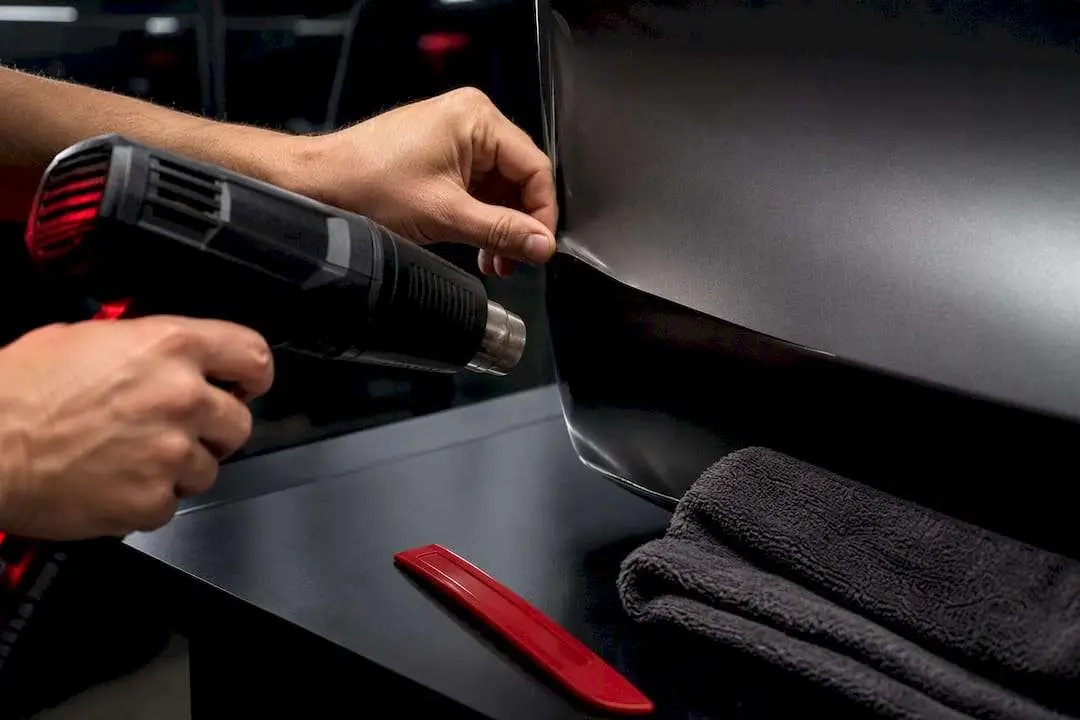
Light surface scuffs that haven’t broken through the film’s color layer can sometimes be minimized with heat. A heat gun on low setting, held several inches away and moved constantly, can help shrink and re-seat a minor edge lift or a small bubble, since vinyl film responds to gentle, even heat by conforming back to the panel surface. This only works for small, fresh issues, not for lifted edges that have already collected dirt or water underneath.
For a genuine scratch that has cut into the film, home repair options are limited. Unlike paint, you can’t sand and refinish vinyl. A scratch that’s gone through to the adhesive or the panel underneath usually means a patch or panel section needs to be replaced by someone with matching material and the right heat-forming technique. Attempting to glue down a lifted edge with generic adhesive is one of the most common DIY mistakes, since off-the-shelf glues don’t match the flexibility or heat tolerance of automotive wrap adhesive, and they often make a future professional repair harder, not easier.
The safest home fix is prevention: keep a microfiber towel and a bottle of wrap-safe quick detailer in the car for immediate spot cleaning, since catching a scuff-causing contaminant early avoids the need for any repair at all.
What Installers See Most Often in the Shop
Most preventable wrap failures we see trace back to three causes: an automatic brush wash, sap or droppings left too long in the sun, and a lifted edge nobody caught until it spread across a panel. Catch any of those early and it’s a five-minute fix, not a replacement. Our experience installing 3M and Avery Dennison film shapes every recommendation here.
— Jake
When It’s Time to Call a Pro for Vinyl Wrap Repair
Persistent edge lift, a scuffed panel that won’t buff out, or a wrap that needs prep work before ceramic coating are all signs it’s time to bring the car in rather than keep experimenting at home. PPF Pros handles the situations home fixes can’t: partial panel repair and re-seating, full Full Vehicle coverage for owners upgrading their protection, and coating prep that ensures a Ceramic Coating goes over a surface without hidden adhesion problems underneath.
An appointment starts with a walk-around inspection of seams, edges, and problem panels, the same checklist covered above, so you’ll know exactly what’s being addressed and why before any work begins. If you’re weighing a full color change instead of a repair, the Full Color Change Wrap starts from $2,800 and gives you a chance to reset the clock on a wrap that’s past saving. For protection-focused work, the Full Front package runs $2,199 as a one-time cost. Book a walk-in consultation or request a quote through the site, and bring photos of any problem spots so the shop can plan the visit before you arrive.
Sources
The 72 hour cure window and pressure limits above come from 3M’s Vehicle Maintenance FAQ and Avery Dennison’s Supreme Wrap Care bulletin, the two film manufacturers whose adhesive chemistry and product specs actually govern these rules. Detailing guidance on decontamination and product safety comes from CA Detailing’s wrap washing guide.
- 3M™ Protection Wrap Film — Vehicle Maintenance FAQ (Revision A, April 2024)
- Avery Dennison — Supreme Wrap Care: Cleaning & Maintenance instructional bulletin
- How to wash cars with PPF and vinyl wraps — CA Detailing
- Vehicle Wrap Aftercare Guide — BrittoPrint
FAQ
Can a Wrapped Car Go Through a Carwash?
Touchless or foam-only automatic washes are acceptable, but brush-type washes should be avoided since the spinning cloth and bristles abrade film and can catch a lifted edge. Hand washing with the two-bucket method remains the safest option overall.
What Are the Downsides of Vinyl Wrap?
Vinyl wrap requires more careful maintenance than paint, since certain finishes (matte and satin especially) can be permanently damaged by the wrong product, and edges are vulnerable to lifting from pressure washing or automatic brushes. It also has a finite service life, typically five to seven years with proper care, compared to paint’s longer practical lifespan.
Can I Use Dawn Dish Soap on Vinyl Wrap?
Dish soap isn’t recommended for regular vinyl wrap maintenance because many formulas aren’t pH-neutral and can strip protective sealants or dry out the film over repeated use. A pH-neutral, wrap-safe shampoo used with the two-bucket method is the safer standard recommended by manufacturers.
How Long Do Vinyl Wraps Usually Last?
Cast vinyl wraps typically last five to seven years with regular maintenance, though neglect from salt, UV exposure, and unremoved contaminants can shorten that significantly. Garage storage and prompt spot cleaning push a wrap toward the higher end of that range.
How Much Does a Vinyl Wrap Cost to Replace?
A Full Color Change Wrap starts from $2,800, with final pricing depending on vehicle size and finish choice. Partial repairs or panel-specific work are quoted individually since scope varies by damage extent.