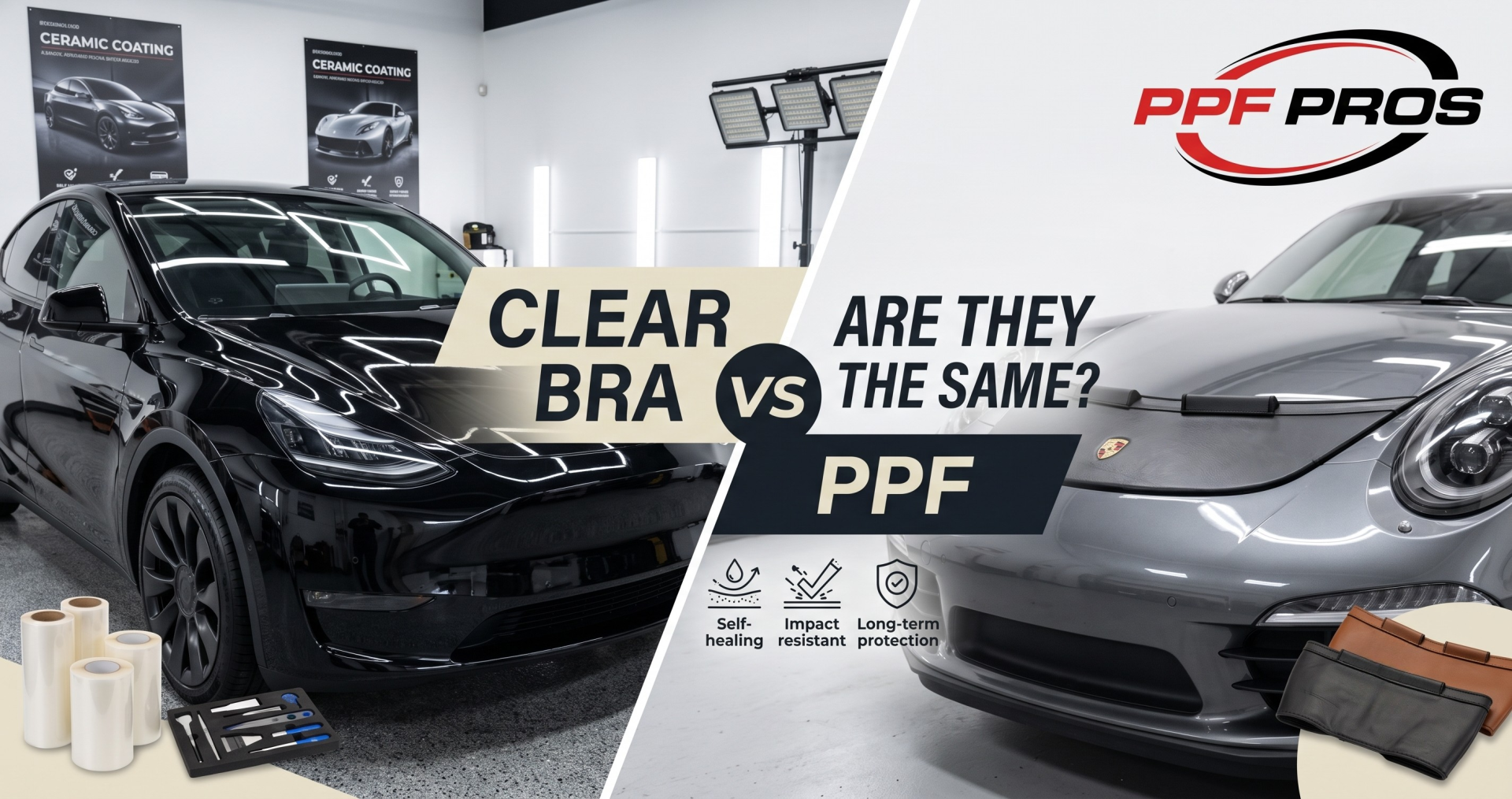
If you are trying to shield your vehicle from rock chips, you have probably run into the debate over clear bra vs PPF and wondered if they are the same thing. The short answer is yes—clear bra and PPF (Paint Protection Film) are structurally and functionally the exact same automotive product. However, understanding the slight historical and modern naming differences between them will help you make the smartest choice for protecting your vehicle’s resale value.
Let’s break down the terminology, explore the costs, and dive into how to pick the right shield for your ride.
Demystifying the Jargon: What’s In a Name?
When shopping around for automotive paint protection, the industry terms can get confusing fast. You might see one shop advertising “Clear Bra packages” while another promotes “Advanced PPF installations.” Don’t let the marketing confuse you. You are looking at the same underlying technology.
Paint Protection Film (PPF): The Technical Definition
Paint Protection Film, universally abbreviated as PPF, is the actual technical term for the material. It is a high-performance, multilayered thermoplastic polyurethane (TPU) film. The material is completely transparent and is applied directly over a vehicle’s factory paint.
Think of it as a heavy-duty, invisible screen protector, but engineered specifically to absorb high-velocity impacts from road debris.
Clear Bra: Why the Historic Nickname?
“Clear Bra” is simply an industry nickname. To understand where it came from, you have to look back at automotive trends from a few decades ago.
In the 1980s and 1990s, car owners used heavy, black leather or vinyl covers that clipped onto the front hood and bumper to prevent rock chips. These bulky accessories were widely called “car bras.” While they protected the paint underneath, they altered the vehicle’s appearance and trapped moisture and dirt underneath, causing scratches.
When transparent polyurethane films emerged as a replacement, installers dubbed the service a “clear bra” because it replaced the old black vinyl covers with a crystal-clear alternative.
The Evolution: How a 90s Trend Became Modern Paint Tech
The material has come a very long way since those early iterations. The earliest transparent films were originally developed by the military during the Vietnam War. The military needed a way to protect helicopter rotor blades from flying gravel and debris, which caused severe structural damage.
Automotive installers eventually adapted this industrial film for consumer cars. Early consumer clear bras in the late 1990s and early 2000s were thick, difficult to install, and prone to losing their visual clarity.
Today, the technology has evolved into highly engineered, multi-layered films. Modern films feature advanced elastomeric polymers that allow the material to stretch dynamically around complex body panels without losing structural integrity or optical clarity.
How Modern PPF / Clear Bra Works
To truly appreciate the value of paint protection film, it helps to understand the science happening inside these incredibly thin layers. Modern film does not just sit on top of your paint; it actively works to preserve it.
Key Features of Modern Film Technology
Premium films are built with multiple specialized layers working in unison:
- The Release Liner: The protective backing that is peeled away during installation.
- The Acrylic Adhesive: A high-tack, optical-grade adhesive layer engineered to bond tightly to factory clear coats without causing damage if the film is ever removed.
- The Polyurethane Core: The thickest layer, specifically formulated to absorb and dissipate the kinetic energy of flying rocks and highway debris.
- The Clear Topcoat: A microscopic layer that resists environmental contaminants like bird droppings, bug acids, and harsh chemicals.
Advanced Self-Healing Properties Explained
One of the most impressive features of modern high-end film is its ability to self-heal. The top layer of the film is highly pliable. When it suffers minor abrasions, swirl marks, or wash scratches, the underlying polymers naturally want to return to their original layout.
When you apply heat—either from direct sunlight, warm water, or a heat gun—the topcoat softens. As it warms up, the surface relaxes, causing fine scratches and swirls to completely vanish right before your eyes.
UV Resistance and Scratch/Chip Protection
Los Angeles sun can be brutal on factory paint finishes. Over time, heavy ultraviolet radiation breaks down the chemical bonds in automotive clear coats, causing severe paint oxidation, fading, and peeling.
Modern paint protection films are engineered with advanced UV inhibitors built directly into the polyurethane core. These blockers intercept harmful radiation, preventing the paint underneath from losing its color, depth, and gloss.
The Real Difference Today: Coverage Options
While the terms clear bra and PPF refer to the same material, many modern detailing shops use the phrases to differentiate between two completely distinct levels of coverage.
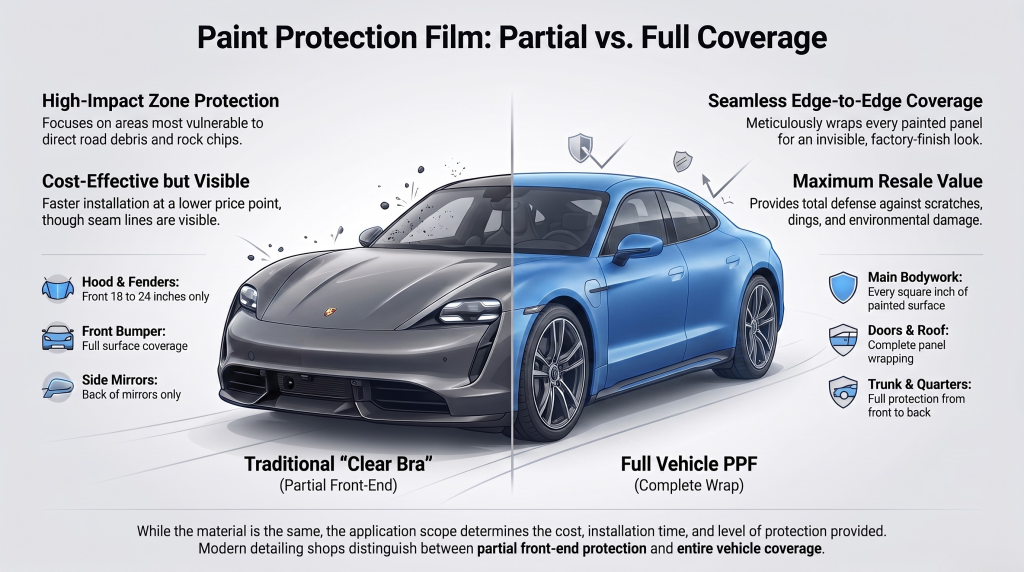
The Traditional “Clear Bra” (Partial Front-End Coverage)
When a shop offers a classic “Clear Bra” package, they are usually referring to a partial installation designed to protect the areas most vulnerable to direct road impacts.
- Typical Coverage Areas: The front bumper, the first 18 to 24 inches of the hood, the front fenders, and the back of the side mirrors.
- Pros: Highly cost-effective; protects the primary impact zones; fast installation turnaround times.
- Cons: A faint, visible seam line will run horizontally across your hood where the partial film ends; exposed panels remain completely vulnerable to scratches and environmental damage.
Full Vehicle PPF (Full Panel or Entire Car Coverage)
A full-body PPF package treats the entire vehicle as a canvas. Every single exterior painted panel is meticulously measured, cut, and wrapped.
- Typical Full PPF Coverage Options: Every square inch of painted bodywork, including all doors, the roof, the trunk, rocker panels, and full quarter panels.
- Pros: Provides complete, seamless coverage with hidden edges; total peace of mind against shopping cart dings, key scratches, and parking lot accidents; maximizes resale value.
- Cons: Requires a much higher initial investment; requires a multi-day installation process.
Cost Comparison: Clear Bra vs. Full PPF
Because installing protective film is a highly labor-intensive process requiring meticulous surface preparation and bulk cutting, prices vary based on the size of your vehicle and the coverage level you choose.
To help you map out your budget, it helps to look at real-world market entry points. At professional Southern California shops like PPF Pros, specialized packages are structured around practical automotive needs:
- Partial/Full-Front Packages: A high-quality front-end installation—covering the bumper, full hood, full fenders, and side mirrors—generally starts around $1,500. This is the smart baseline choice for daily highway commuters who want maximum protection where rock chips happen most.
- Full-Body Protection: Wrapping every single painted panel on a vehicle typically starts around $4,500. This comprehensive option is tailored for luxury vehicles, exotic sports cars, and new Tesla owners who want absolute, uncompromising defense across the entire body of their vehicle.
The Yellowing Myth: Modern TPU vs. Old Aliphatic Films
If you have ever seen an older car driving around with a yellowed, cracked, or cloudy clear bra, you might feel hesitant about installing film on your own vehicle. That unsightly discoloration is a major concern for many car owners, but it is largely a thing of the past.
Early generations of clear bras used low-grade plasticizers and primitive adhesives. When exposed to harsh UV rays and atmospheric pollution, those early chemical compounds degraded, turning a dingy yellow color.
Modern premium films utilize a highly stable material called Aliphatic Thermoplastic Polyurethane. This advanced polymer is structurally stable under intense UV exposure and does not yellow, dry out, or crack over time. When installed correctly by certified professionals, modern films remain perfectly clear for a decade or longer, backed by solid manufacturer warranties.
Can You Combine PPF with Ceramic Coatings?
A very common question among car enthusiasts is whether they have to choose between the impact defense of a film or the extreme gloss of a ceramic coating. The great news is that you do not have to choose—they actually work better together.
While film provides unmatched physical defense against flying gravel and deep scratches, ceramic coatings offer incredible hydrophobicity (the ability to repel water and grime).
By applying a specialized ceramic coating directly on top of your installed paint protection film, you create the ultimate automotive shield. Dirt, mud, and bug splatter struggle to stick to the slick ceramic surface, making your weekly maintenance washes incredibly fast and effortless.
Can You Install a Clear Bra Yourself? (DIY vs. Pro)
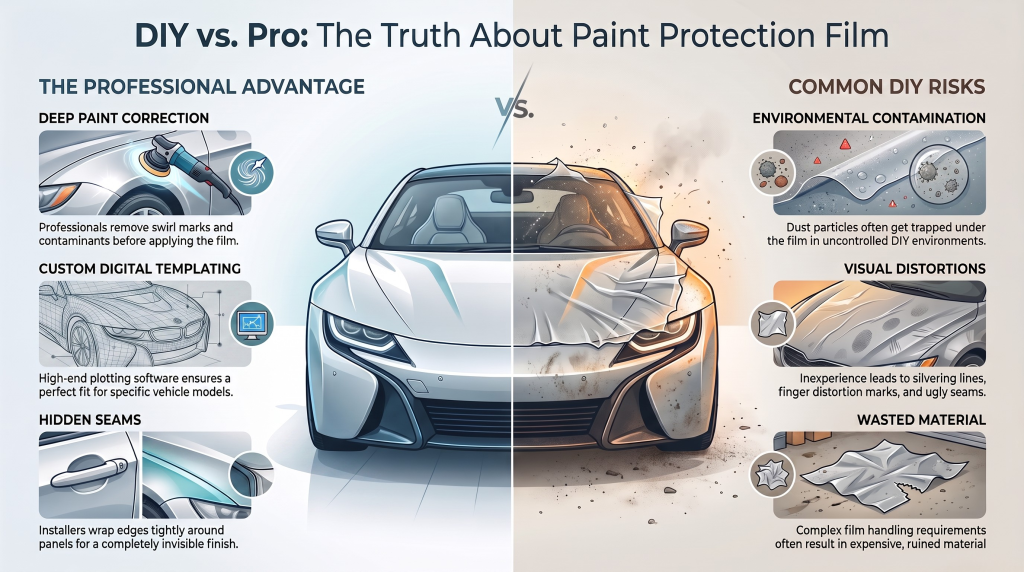
With pre-cut film kits widely available for purchase online, it can be tempting to try a DIY installation in your garage to save a few dollars. However, working with polyurethane film requires an immense amount of specialized skill, specialized tools, and a perfectly controlled environment.
Professional installation involves deep paint correction to remove deep swirl marks and contaminants before the film is applied. Installers use high-end plotting software to create custom templates for your exact vehicle model, allowing them to wrap edges tightly around panels so the seams remain completely hidden.
Trying to do this yourself without experience often leads to trapped dust particles, ugly silvering lines, finger distortion marks, and wasted material. Entrusting the job to a certified professional ensures the film looks completely invisible and performs exactly as intended.
The Decision Matrix: Which Option Fits Your Lifestyle and Budget?
If you are still on the fence about whether to get a partial front clear bra or go for full-body protection, use this quick checklist to find your perfect match:
- Choose Partial Front Coverage If: You drive a standard daily commuter car, your driving is mostly urban or city-based, you want to stay within a targeted budget, and your main priority is stopping highway rock chips on the nose of your car.
- Choose Full-Body Coverage If: You own a high-end luxury vehicle, an exotic sports car, or a brand-new Tesla with soft factory paint; you frequently drive on gravel or poorly maintained canyon roads; or you simply want absolute peace of mind knowing your car is safe from parking lot mishaps and door dings.
Frequently Asked Questions (FAQ)
Does a clear bra damage factory paint upon removal?
No. High-quality films use stable, advanced acrylic adhesives that are specifically engineered to bond safely with factory clear coats. If the film needs to be replaced or removed years down the road, a certified professional can safely peel it away using controlled heat without causing any lifting or damage to your original paint.
How long does modern PPF last?
When you choose a premium film installed by a certified shop, you can easily expect it to last between 7 to 10 years. The longevity depends heavily on how well you care for the vehicle, how often it faces harsh weather, and whether it is regularly washed.
Is color paint protection film different from a vinyl wrap?
Yes, they are fundamentally different products. Traditional color-change vinyl wraps are thin and designed solely for aesthetics and changing your car’s color; they offer very little impact protection. Color PPF combines the best of both worlds: it gives you a stunning new color or finish while providing the heavy-duty, rock-chip-absorbing protection of clear film.
How do you wash a car with a clear bra installed?
Washing a protected car is simple, but requires a few gentle adjustments. Always use a clean microfiber wash mitt and a dedicated, pH-neutral car wash soap. If you prefer using a pressure washer, keep the spray nozzle at least 12 to 18 inches away from the edges of the film to prevent the high pressure from lifting the corners.
Can you wax over paint protection film?
You can apply wax over film, provided the wax does not contain any abrasive compounds or polishing agents that could scuff the topcoat. However, make sure to avoid waxes that contain dyes, and ensure you don’t let dried wax build up along the exposed seams or edges of the film.
Conclusion: Protecting Your Investment
At the end of the day, clear bra and PPF are just two different names for the absolute best defense you can give your vehicle’s exterior. Whether you choose a practical front-end clear bra package to halt highway rock chips or invest in complete, full-body protection, you are making a smart move that preserves your vehicle’s styling and eventual resale value.
Don’t wait for the first deep rock chip or parking lot scratch to ruin your fresh factory finish. The team of certified installation experts at PPF Pros is ready to help you find the exact protection package that fits your goals, your vehicle, and your budget.
If you live in the Greater Los Angeles area, bring your vehicle down to our North Hollywood shop for a flawless, clean install with perfectly wrapped edges. Contact PPF Pros today to request your fast, no-nonsense quote and lock in your installation spot!