Most partial wraps on a car or SUV land between $500 and $2,500, according to one national car-ownership guide. Where you fall in that range depends on which panels you cover, the film you choose, and how complex the car’s curves are. A single hood or roof sits at the low end. A hood, roof, mirrors and stripe package sits near the top.
This guide breaks the number down panel by panel, explains what actually moves a quote, and shows you how to compare estimates so you are pricing the same job each time.
TL;DR
- A partial vinyl wrap typically costs $500 to $2,500, depending on panels, film and vehicle.
- On a sedan, a roof alone often runs about $250 to $500 and a hood about $300 to $600, with a hood and roof combo at roughly $550 to $950.
- There is no universal definition of “partial wrap,” so a quote only means something when it lists the exact panels.
- Finish matters: matte and specialty films cost more than standard gloss colors.
- We quote partial wraps individually at our North Hollywood shop. Send us the panels and the car, and we reply with a written price.
Table of Contents
- What counts as a partial wrap
- Partial wrap cost by coverage
- What moves the price up or down
- Why two partial wrap quotes rarely match
- Partial wrap or full wrap: which makes sense
- How long a partial wrap lasts
- Does a partial wrap protect your paint?
- Ways to keep a partial wrap quote reasonable
- Our perspective
- Get a written partial wrap quote
- FAQ
- Sources
What counts as a partial wrap
A partial wrap covers some of the vehicle’s exterior and leaves the rest in factory paint. The most common versions are:
- Hood only. A single large, mostly flat panel. It is the easiest accent and often the first one people try.
- Roof only. Popular for a gloss black or carbon look, and common on Teslas and SUVs with panoramic glass surrounds.
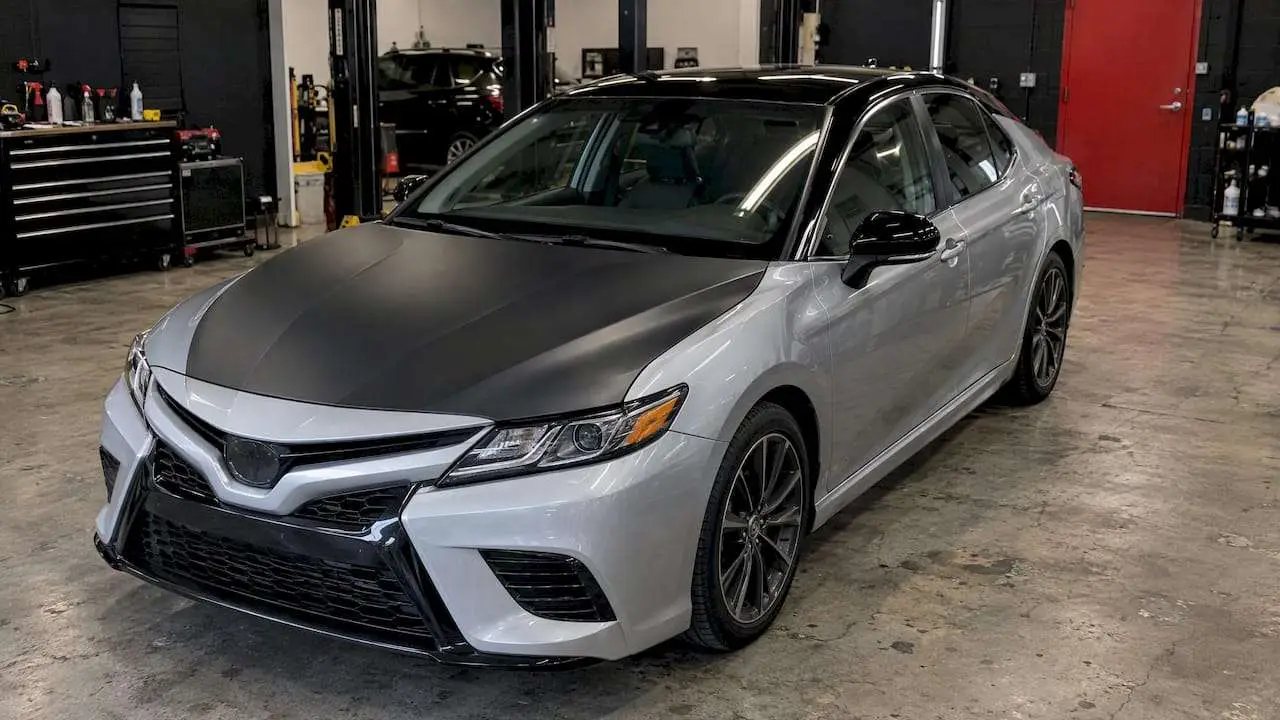
- Hood, roof and mirrors. The classic contrast package. One national calculator site calls it the sweet spot for partial wraps because the three pieces change the car’s whole look without touching the doors.
- Racing stripes. Narrow strips running over the hood, roof and trunk.
- Lower body or rocker sections. Side skirts, lower doors or bumper trim.
- Trim and chrome accents. Window surrounds, grille bars and emblems. This is where a chrome delete overlaps with wrapping.
Because shops use the word loosely, one shop’s “partial” can be 25% of the car and another’s can be 80%. When a price looks too good, check what it actually includes.
Partial wrap cost by coverage
The figures below are typical U.S. ranges for a standard sedan in a common color or finish. Treat them as a planning guide, not a quote. Trucks, large SUVs and cars with sculpted bumpers cost more.
| Coverage | Typical cost (sedan) | What drives it |
|---|---|---|
| Roof only | $250 to $500 | Roof size, panoramic glass, antenna and rails |
| Hood only | $300 to $600 | Hood size, vents, sharp creases |
| Hood and roof | $550 to $950 | Two panels, one color, one visit |
| Hood, roof and mirrors | Often $800 to $1,500 | Mirror housings are small but fiddly |
| Stripes, lower body, multiple accents | Up to $2,500 | Panel count, seams, edge work |
The hood, roof and combination numbers come from a wrap price calculator, and the overall $500 to $2,500 band comes from the Bumper car-wrap guide. Local rates in Los Angeles and other high-cost markets can sit above national averages, because labor and shop overhead are higher.
How much does a hood wrap cost?
On a typical sedan, expect roughly $300 to $600. The hood looks simple, but it is the panel that takes the most abuse: heat from the engine, rock chips, bug acids and constant sun. A clean install needs the film to wrap fully over the edges and tuck under the lip, not stop at the visible surface. Cars with deep hood creases, scoops or vents add time and cost.
How much does a roof wrap cost?
A roof is usually the cheapest single panel to wrap, around $250 to $500 on a sedan. A larger roof on an SUV, a panoramic sunroof, roof rails, a shark-fin antenna and a roof spoiler all add detail work. Gloss black roofs are the most requested because they give a floating-roof look at a low price.
What about a hood and roof together?
Doing both in one visit is more efficient than doing them separately, since the shop preps, cleans and sets up once. A combined price in the $550 to $950 range is common for a sedan. Adding mirrors usually pushes it closer to the four-figure mark.
What moves the price up or down
Wrap prices vary with vehicle size and complexity, film brand and quality, installer experience and market, and color or finish. In practice, that breaks down into six things you can control or ask about.
Vehicle and panel shape
A flat roof on a compact sedan takes less film and less time than a curved hood on a lifted truck. Aggressive bumpers, deep recesses and body lines make film harder to stretch without distortion, so those areas take longer.
Film brand and quality
Cast films from established manufacturers hold color, conform to curves and remove more cleanly than cheap calendared rolls. Our vinyl work uses 3M and Avery Dennison films. A cheaper roll may save a few dollars on material, but the installer’s time is the bigger cost, and redoing a failed panel is far more expensive than buying decent film once.
Finish and color
Matte, satin, chrome, color-shift and textured films cost more than standard gloss colors. Matte and specialty finishes carry a premium, and some are harder to install because they show every fingerprint and stretch mark.
Installer skill
Poor technique leads to lifting edges, bubbles and early peeling regardless of how good the vinyl is. That is the main reason two quotes for the same hood can differ by a few hundred dollars. Ask to see finished work on a similar panel, and look closely at edges and corners.
Prep and condition of the paint
Vinyl sticks to sound paint. Chipped clear coat, rust spots, failing repaint or dents need repair first, or the film will lift or show the damage through. Heavy contamination needs a clay bar and decontamination wash before film goes on.
Local market
Shop rates differ by city. A wrap in a major metro with high rent and labor costs will usually price above the same job in a smaller market.
Why two partial wrap quotes rarely match
There is no single industry standard for what a partial wrap covers, so the first step in getting a useful quote is to name the panels. “Hood and roof” is clear. “A partial wrap” is not.
Here is the checklist we suggest for any written estimate, from us or anyone else:
- Vehicle. Year, make, model and trim, since bumpers and roof options differ by trim.
- Coverage. Each panel listed by name, and whether edges are wrapped around and tucked or trimmed flush.
- Material. Film brand, product line, color name and finish.
- Design or color matching. Whether any design work or sample approval is included.
- Installation. Prep, removal of emblems or trim, and reassembly.
- Exclusions. Rust or paint repair, door jambs, and anything else left out.
- Schedule. How many days the car stays at the shop.
- Warranty. What is covered, for how long, and what voids it.
A quote that skips most of these is a guess, and the cheapest guess often turns into extra charges once the car is in the bay.
Partial wrap or full wrap: which makes sense
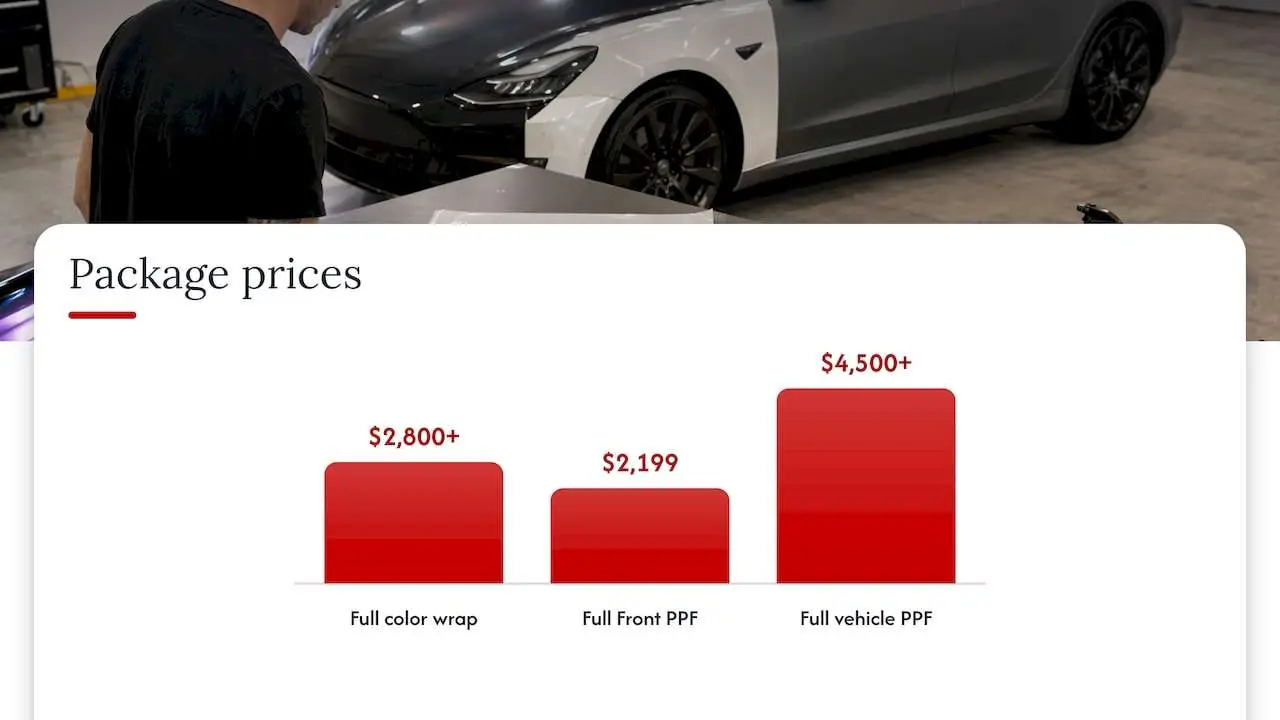
If you want one or two accents, a partial wrap is the clear value. If you want a new color on every panel, the math changes quickly. Our published pricing for a full color change wrap starts at $2,800, so a large partial package that creeps past $1,800 or $2,000 is worth comparing against a full job.
A few ways to decide:
- You want contrast. Roof, hood and mirrors in gloss black or carbon is a partial job.
- You want a different color everywhere. Price the full wrap, because door jambs and panel gaps are where partial work gets awkward.
- You want to protect paint more than change it. Paint protection film may suit you better than vinyl. Our Full Front PPF package is $2,199, and full vehicle coverage starts at $4,500.
- You are weighing a repaint. Our guide to vinyl wrap versus paint walks through that tradeoff.
How long a partial wrap lasts
Lifespan depends on the film, the surface and how the car lives. 3M’s product bulletin says actual performance life depends on substrate condition, surface texture, application method, sun exposure, environment and maintenance. For its unprinted 1080 film on a flat vertical surface, 3M lists an expected life of 7 years for matte, satin and gloss, and 5 years for carbon-fiber and brushed-metal finishes.
The important caveat for partial wraps: horizontal panels such as hoods and roofs take the harshest sun and heat, so they tend to age faster than doors and fenders. In Los Angeles, with year-round UV, that matters. Garaging or shading the car, washing by hand and avoiding harsh chemicals all help. See our guides to how long vinyl wrap lasts and vinyl wrap maintenance for the care routine, including the 72-hour wait before the first wash.
Does a partial wrap protect your paint?
To a degree, yes. 3M states that car-wrapping film can protect paint from the elements and that removal within the warranty period is very unlikely to cause damage, while poorly cured resprays are more vulnerable. It also recommends professional removal.
That protection is mainly against UV fade and light abrasion. It is not the same as impact protection, and vinyl is much thinner and softer than paint protection film when it comes to rock chips. If chips are your main worry on a hood, ask about PPF. More on the difference is in our post on whether vinyl wrap protects paint.
When the day comes to take a wrap off, expect a budget for it. Our wrap removal cost guide covers typical prices and when removing a wrap yourself is reasonable.
Ways to keep a partial wrap quote reasonable
- Bundle panels. Hood and roof together cost less than two separate visits.
- Pick a standard finish. Gloss black and common colors cost less than specialty films.
- Keep the paint sound. Fix chips and rust before you wrap, so you do not pay for prep or a redo.
- Send clear photos. Several angles of each panel let a shop quote accurately without guessing.
- Ask about a bundle. Pairing wrap work with a ceramic coating or chrome delete can make the visit more efficient. We sometimes run offers like a full wrap with one free upgrade, so check the page for what is current.
Our perspective
Most people who call us about a partial wrap have already seen a number online and wonder why ours is different. The honest answer is that the number online rarely describes the same job.
We care about the parts you cannot see in a price list: edges wrapped and tucked rather than cut short, clean alignment where the film meets a panel gap, and premium film from brands we trust. A hood with lifting corners after three months costs more than the wrap did.
That is why we quote partial work by panel and tell you exactly what is included. Roof, hood, mirrors or a stripe set, we want you to know what you are paying for before the car comes in. And if your real goal is stopping rock chips, we will say so and show you the PPF option that fits.
Jake
Get a written partial wrap quote
We are a vehicle styling shop in North Hollywood. We install vinyl wraps, paint protection film, ceramic coatings and chrome deletes for daily drivers, Teslas and luxury cars across Los Angeles. Partial wraps are priced by panel, and we reply to quote requests the same day.
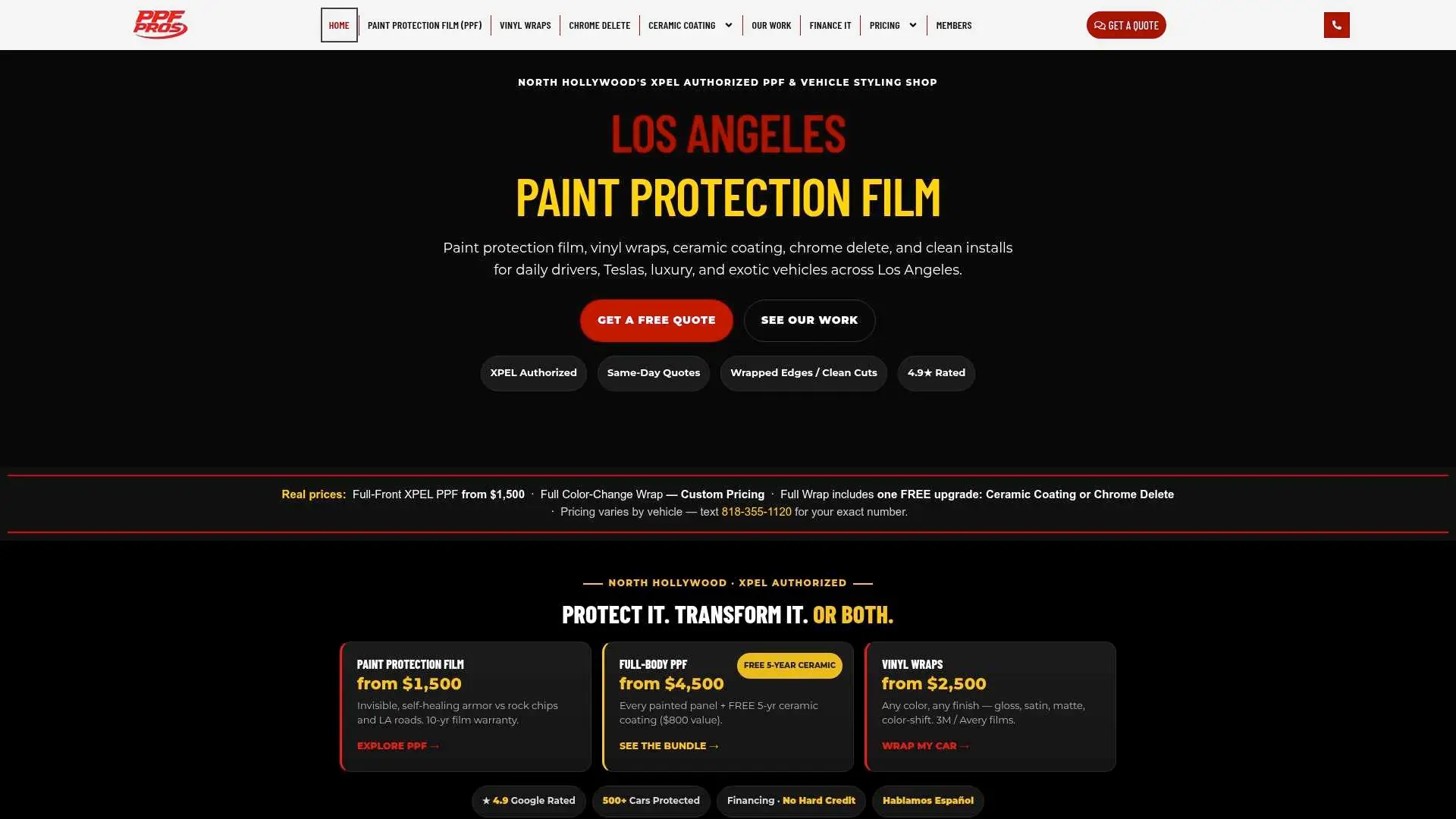
Tell us the car and the panels you want, and send a few photos. For reference, our published full color change wrap starts at $2,800, and you can see the range of finishes on our vinyl wraps page. Want the paint sealed afterward? Ask about our ceramic coating as well.
FAQ
What is the average price of a partial wrap?
Most partial wraps cost between $500 and $2,500. A single roof or hood sits near the bottom, and multi-panel packages with mirrors and stripes sit near the top. Vehicle size, film and finish decide where your quote lands.
Is it cheaper to wrap a car or paint it?
A partial wrap is almost always cheaper than a quality repaint of the same panels, and it is reversible. A full wrap and a full-quality paint job can be closer in price, depending on the paint level. Our wrap versus paint comparison covers the details.
What does a partial wrap look like?
It is an accent: usually a gloss black or carbon roof, a contrasting hood, mirror caps, or stripes over the top of the car, with the factory color on the doors and fenders. Done well, the film edges disappear into panel gaps so the contrast looks painted.
How long will a wrap on a car last?
With good care, quality film is rated for roughly five to seven years under test conditions, according to 3M’s product bulletin. Hoods and roofs get the most sun, so they may age faster than side panels.
Sources
- Car Wrap Cost: Full Wrap, Partial Wrap and What Affects the Price (Bumper)
- Full Wrap vs Partial Wrap Cost (Vinyl Wrap Calculator)
- How Much Does a Partial Vehicle Wrap Cost? (Printara)
- 3M 1080 Product Bulletin
- 3M India: Frequently Asked Questions About Car Wrap