Matte paint needs a different routine from gloss: hand wash only, matte-safe soap, soft tools, no wax, no polish and no rubbing hard. The finish looks flat because its surface scatters light, and anything that smooths or fills that surface leaves permanent shiny patches. Below is the full routine, from the first rinse to spot cleaning to protection, built on guidance from automakers and a paint manufacturer.
TL;DR
- Wash by hand with matte-safe soap, two buckets and a soft mitt. Skip automatic car washes.
- Never wax, polish, compound or clay matte paint. Each one can make it glossy.
- Remove bird droppings, sap and bugs quickly, with light pressure and no dry wiping.
- Dry with a clean, slightly damp chamois or matte-safe microfiber, never a water blade.
- For long-term protection, choose products made for matte or low-gloss finishes and test them in a hidden spot first.
Table of Contents
- Why matte paint is handled differently
- What you need before you start
- How to wash matte paint step by step
- Why automatic car washes are a bad idea
- Cleaning bird droppings, bugs, sap and tar
- What to keep away from matte paint
- How to protect matte paint without making it glossy
- A simple matte care schedule
- Making matte care easier with professional help
- Frequently asked questions
- Sources
Why matte paint is handled differently
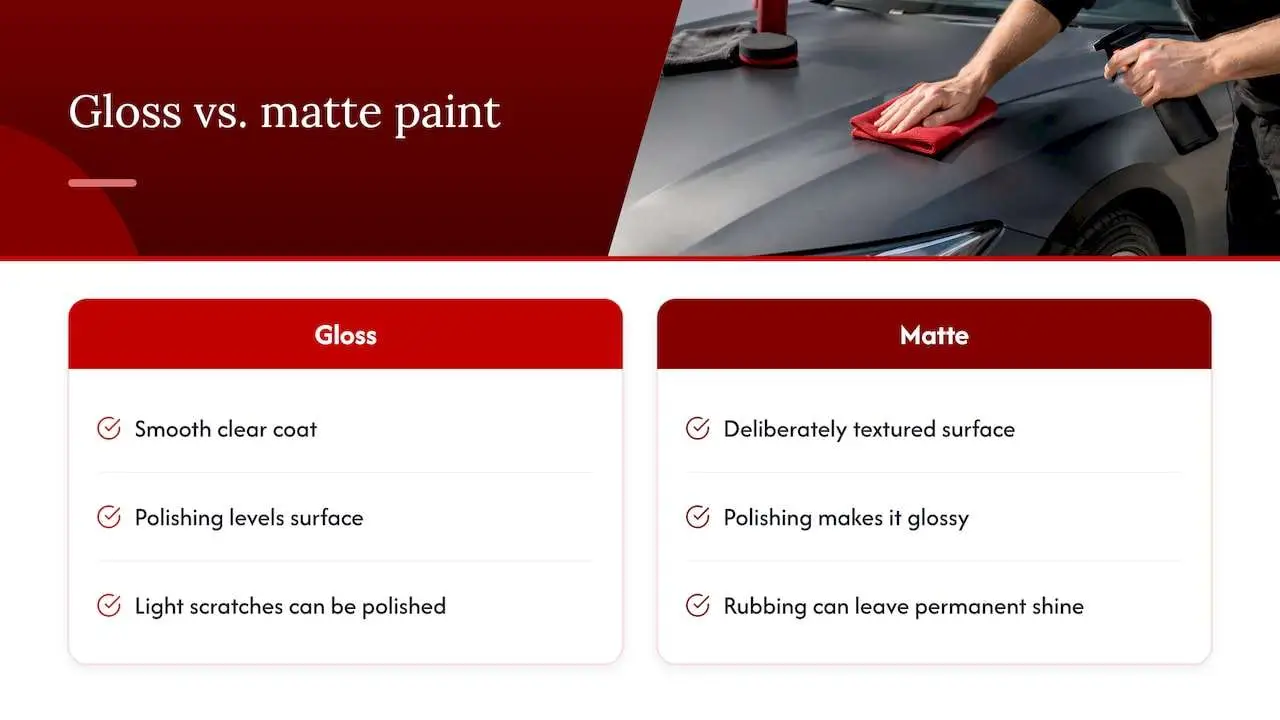
Gloss paint has a smooth clear coat. You can polish out light scratches because polishing levels the surface. Matte finishes rely on a deliberately textured surface, so the same trick works against you. Polestar’s US owner guidance says matte paint needs gentler handling, must be washed by hand and should never be polished, because polishing makes it glossy.
So is matte harder to maintain? It is less forgiving, not necessarily more work. The routine is simple, but mistakes cannot be buffed out. A shiny spot from rubbing is permanent, and contaminants left on the surface can mark the texture. That is why the habits below matter more than any single product.
What you need before you start
A matte-ready kit is short and inexpensive. PPG’s matte finish guide lists matte or low-gloss car wash soap, a soft mitt, wash pad or microfiber sponge, two buckets with dirt separators, and a microfiber cloth or chamois. Kia’s matte guide lists much the same: matte-specific soap, a soft mitt or microfiber sponge, two grit-guard buckets, a hose and a drying chamois.
Your checklist:
- Matte-safe car shampoo (check the label says matte or satin)
- Two buckets, each with a grit guard
- A clean wash mitt or microfiber sponge
- A chamois or clean matte-safe microfiber drying cloth
- A hose, ideally with a gentle fan setting
- Optional: alcohol-based window cleaner for stubborn spots, plus a few clean microfiber cloths
Keep these tools just for the matte car. A mitt that has touched wax-based products or gritty wheels does not belong on the paint.
How to wash matte paint step by step
Work in the shade on a cool panel. Sun bakes soap and water into the surface and leaves marks.
1. Pre-rinse to remove loose grit
Grit dragged across the surface does the most damage, so rinse first. If you use a pressure washer, keep it gentle. For heavy soil PPG recommends no more than 1,200 psi with a 45-degree fan tip, held at least 12 inches away. Kia’s technical bulletin, published through NHTSA, sets a higher ceiling of under 2,500 psi with a wide fan nozzle at least 10 inches away. When two numbers differ, take the lower one. It is the safer choice for any matte finish.
CUPRA also suggests a matte-safe snow foam as a pre-wash to loosen dirt before you touch the paint.
2. Wash in small sections, top to bottom
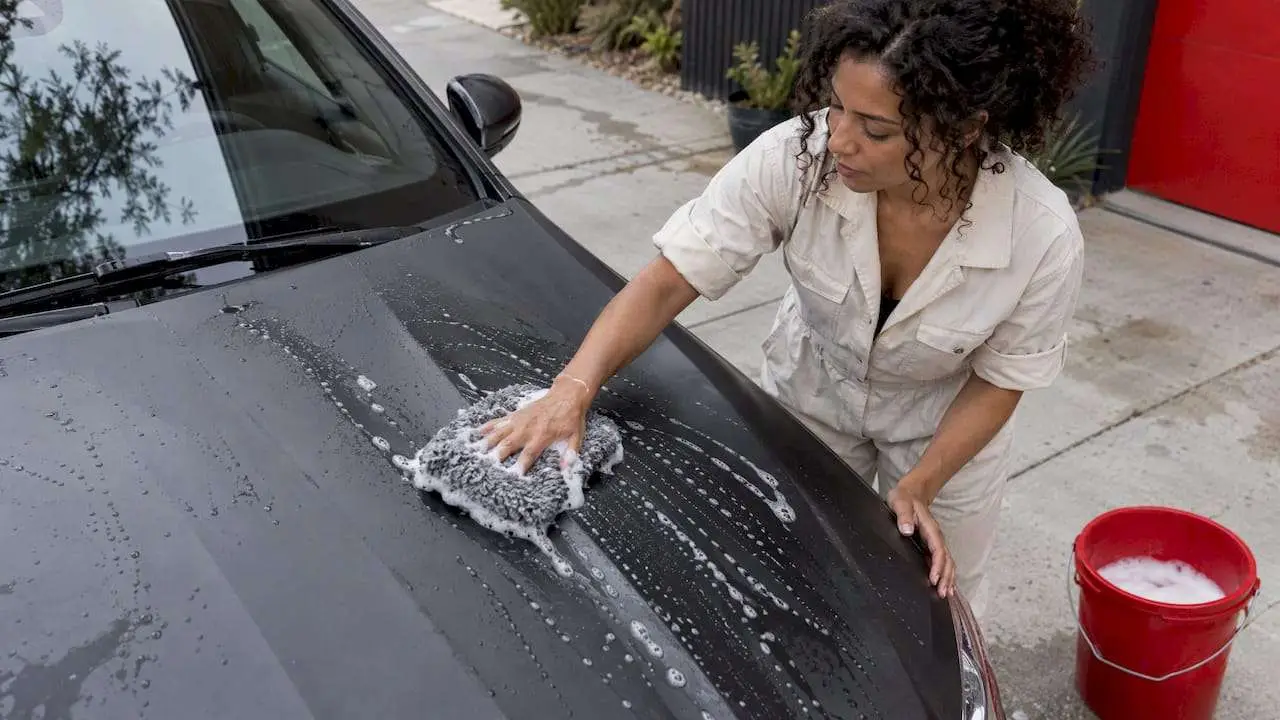
Fill one bucket with soapy water and the other with clean rinse water. Load the mitt, wash one section, and rinse the mitt in the clean bucket before reloading. Start at the roof and finish at the lower panels, which carry the most grit. Use straight, light passes rather than circles. Kia warns that circular wiping can leave swirls on matte paint.
Rinse each soapy section fully before moving on, and keep the sections you have already cleaned wet so soap does not dry on them. Kia’s guide says exactly this.
3. Wheels last
Wheels and tires collect brake dust and heavy grime. Do them with separate tools after the paint, or before you start with a dedicated mitt, so none of that dirt reaches the body.
4. Dry gently
Do not let the car dry on its own in the sun, and do not drag a dry towel across it. Kia’s bulletin says dry towels should not touch the paint. The method from PPG is to dry with a clean damp chamois or microfiber cloth before air-drying, and not to use a water blade. Lay the cloth on the panel, pat or pull it lightly, and lift it off. Do not scrub.
Why automatic car washes are a bad idea
The Kia bulletin states plainly that automatic car washes should not be used on its matte paint. Brushes and cloth strips carry grit from every car before yours, and many washes finish with wax or gloss-enhancing sprays. Both change a matte surface. Touchless washes still often add drying agents or waxes. If you cannot hand wash, book a professional hand detail from someone who knows the finish. Our auto detailing service in North Hollywood is one option, and our guide on wash frequency versus a full detail helps you decide how often you need each.
Cleaning bird droppings, bugs, sap and tar
Bird droppings, bug remains and tree sap are acidic or sticky and can mark the finish if they sit. Remove them as soon as you see them. A car cover or garage helps, but a small bottle of matte-safe quick cleaner and a clean microfiber in the trunk helps more.
Fresh droppings and bugs. Soak the spot first so it softens, then lift it with light pressure. Genesis says a dry towel can damage matte paint, so soak the spot with window cleaner or matte cleaner, wipe lightly forward and back, then rinse.
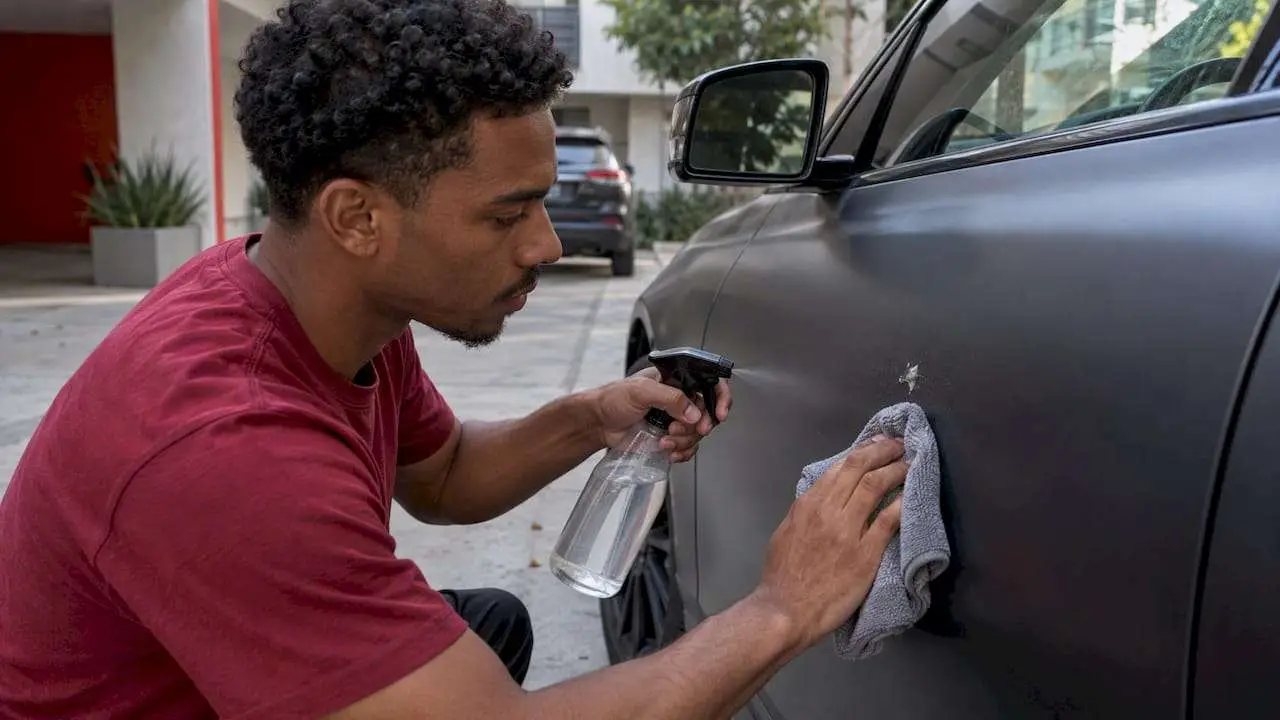
Tar and tree sap. GM’s bulletin, published through NHTSA, says to spray the area with an alcohol-based window cleaner or a 50% alcohol and 50% deionized water solution, apply it to a damp microfiber towel, wipe lightly and dry with a clean damp microfiber cloth. PPG’s version is to rinse off loose debris, soak the spot with tar remover or an alcohol-based window cleaner, wipe lightly with a damp microfiber cloth, then wash with matte soap and rinse (see its matte finish guide).
Solvent-based products. Kia says solvent-based tar and bug removers are for cases where you will not need to rub excessively, and any such product should be tested very carefully first.
The pattern is the same each time: soften, then wipe lightly. If a spot does not come off, let the cleaner soak longer instead of pressing harder. Pressure is what creates the shiny patch.
What to keep away from matte paint
The list from Kia’s matte guide is a good rule set. Avoid wax, detail spray, products made for normal paint, mildly abrasive polishes, glazes and rubbing compounds, mechanical cleaners or polishers, commercial car washes, terry-cloth or paper towels, and vigorous rubbing. Kia notes that vigorous rubbing can leave a permanent shiny spot.
A few practical notes:
- Wax by accident. Polestar says only products intended for matte paint should be used, and that if wax touches the finish it should be removed immediately with an appropriate cleaning agent. Do not let a well-meaning friend spray a “quick shine” on it.
- Decals and stickers. Polestar also advises avoiding decals on matte painted surfaces, since adhesive residue may damage the paintwork.
- Clay bars and compounds. Tools made to level a gloss surface do the same to matte, which is the opposite of what you want.
- Test first. PPG says to test cleaning products in a hidden area before using them on a visible panel. A door jamb or the lower edge of a panel works.
How to protect matte paint without making it glossy
What can you use to protect matte paint? Products designed for matte or low-gloss finishes. Regular sealants and waxes add gloss by design, so they are out. Two of the automakers point to the right category:
- CUPRA identifies ceramic coatings specifically designed for matte finishes as a protective option.
- Genesis says matte-specific protection products can help protect the finish, ease maintenance and prevent water spots.
If you apply a sealant yourself, PPG’s advice is to follow the maker’s directions, test in a hidden area, apply evenly and keep wiping to a minimum. Uneven application is the most common way to end up with blotchy sheen on a finish that is meant to be uniform.
The main benefit of a protective layer is that dirt releases more easily, so each wash is quicker and needs less contact with the paint. Less contact means fewer chances to mark the surface. If you are weighing coating against traditional wax on other cars in your household, our comparison of ceramic coating versus wax covers the trade-offs, and our matte paint detailing guide goes deeper on the finish itself.
A simple matte care schedule
| Task | How often | Notes |
|---|---|---|
| Remove bird droppings, sap, bugs | As soon as you notice | Soak, then wipe lightly |
| Hand wash | Every 1 to 3 weeks, or when visibly dirty | Two buckets, matte soap |
| Wheels and tires | With each wash | Separate tools |
| Check protective layer | Each season | Water should still bead or sheet off evenly |
| Professional detail | Once or twice a year | Ask for matte-safe products only |
These intervals are our shop’s practical guidance for daily drivers in Los Angeles, where dust, sun and freeway grime build quickly. Garaged weekend cars can go longer.
Our take: protect it before it needs fixing
A shiny patch on matte paint is not something we can polish out, and that is the whole story of this finish. Prevention does the work. In our shop, the owners who keep their matte cars looking right are the ones who cut down how often anything touches the paint: gentle hand washes, quick spot removal, and a protective layer so dirt does not cling.
That is why we usually talk to matte owners about protection at the start, not after the first scare. We offer ceramic coating (System X, 5-year) and XPEL authorized paint protection film, and we match the plan to your car, how you drive and how it is stored. We will tell you what we recommend for your finish and explain why before any work begins.
If you want a matte look without committing to factory matte paint, a satin wrap is another route. Our guide on gloss versus satin wrap explains how each finish shows swirls and wear.
Jake
Making matte care easier with professional help
If you would rather not manage this yourself, we can. We install XPEL authorized paint protection film and System X ceramic coatings, and we also wrap vehicles in custom finishes, including color change wraps. Our published pricing: a Full Front PPF package is $2,199, a Full Vehicle package starts from $4,500, and a Full Color Change Wrap starts from $2,800. For ceramic coating, send us your car details and we will quote and answer questions on your finish. We reply the same day.
Bring the car in, show us what finish you have and we will explain the options. If you are not sure which one fits, our comparison of PPF versus ceramic coating is a good place to start before you book.
Frequently asked questions
Is matte paint harder to maintain than glossy paint?
It is less forgiving rather than much more work. You must hand wash, use matte-safe products and avoid polishing, since polishing makes the surface glossy. Contaminants like bird droppings and sap should come off quickly. Once you have the routine, a wash takes about as long as it would on gloss.
What is the best treatment for matte paint?
Use a matte-safe wash and a protection product designed for matte or low-gloss finishes. Automaker guides from CUPRA and Genesis point to matte-specific ceramic coatings and protection products. Avoid anything made for regular gloss paint, including waxes and polishes.
Can I use a pressure washer on matte paint?
Yes, with care. PPG recommends keeping it at or below 1,200 psi with a 45-degree fan tip from at least 12 inches away. Kia allows up to under 2,500 psi with a wide fan nozzle from at least 10 inches away. Staying on the gentler side is the safer choice.
How do I remove tree sap or tar from matte paint?
Soak the spot with an alcohol-based window cleaner or a 50% alcohol and 50% deionized water mix, wipe lightly with a damp microfiber, then dry with a clean damp microfiber. Test the product in a hidden area first and never scrub.
Sources
- Cleaning and caring for matte paintwork, Polestar US owner manual
- Matte Finish Guide, PPG Refinish
- Kia technical bulletin on matte paint, NHTSA
- Kia Matte Paint Care Guide
- How to Care for Matte Car Paint, CUPRA
- Genesis matte paint care guide
- GM matte paint information bulletin, NHTSA