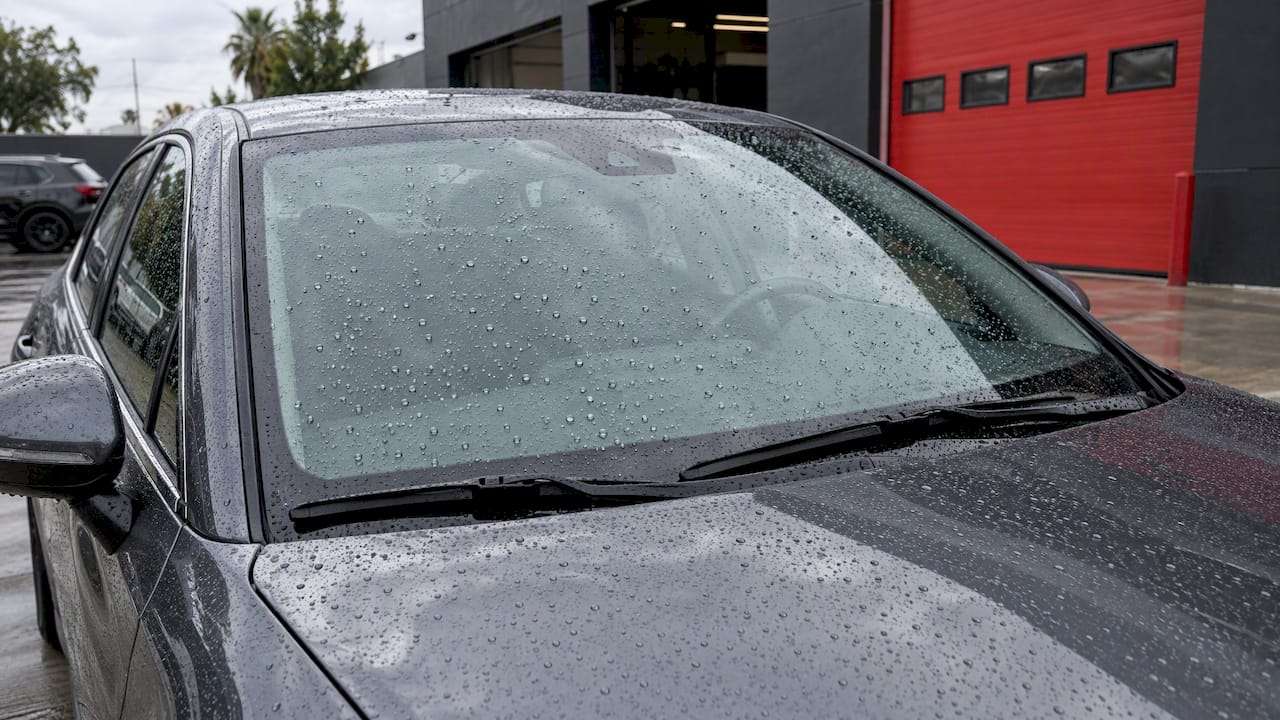
A glass ceramic coating is a clear, water-repelling layer that bonds to your windshield and windows. Rain beads and rolls off, bugs and road film wipe away more easily, and glare from wet roads is easier to manage. Yes, it can go on a windshield, as long as the product is made for glass. The coating that protects your paint is not the one for your windshield. Below you will find what the coating does, how it goes on, how long to expect it to last, and how to keep it working.
TL;DR
- Ceramic coating can be applied to a windshield, but only a product whose label lists glass. Paint coatings can smear and make wipers judder.
- Expect water beading, easier cleaning, fewer water spots and less frost buildup. Manufacturers describe glass coating life in months, not years.
- Preparation decides the result: the glass must be polished and cleaned until it is residue-free, then left to cure before it touches water or wipers.
- Wipers are the main wear point. Skip ammonia cleaners and keep blades clean and fresh.
- If your view is smeared or chattering after coating, do not drive until it is fixed.
Table of Contents
- What a glass ceramic coating is
- Can you ceramic coat a windshield?
- What you gain
- How long a glass coating lasts
- How glass is prepared and coated
- DIY kit or professional application
- What does it cost?
- Keeping coated glass working
- Perspective: why we treat glass as part of the whole job
- How glass fits with paint protection
- Book your coating with us
- A quick checklist before you coat glass
- FAQ
- Sources
What a glass ceramic coating is
Ceramic coatings are liquid products built around nanostructured silanes and siloxanes. They chemically bond to a surface, whether that is paint or glass. Once cured, the surface is slick and hydrophobic, which means water has little to hold on to.
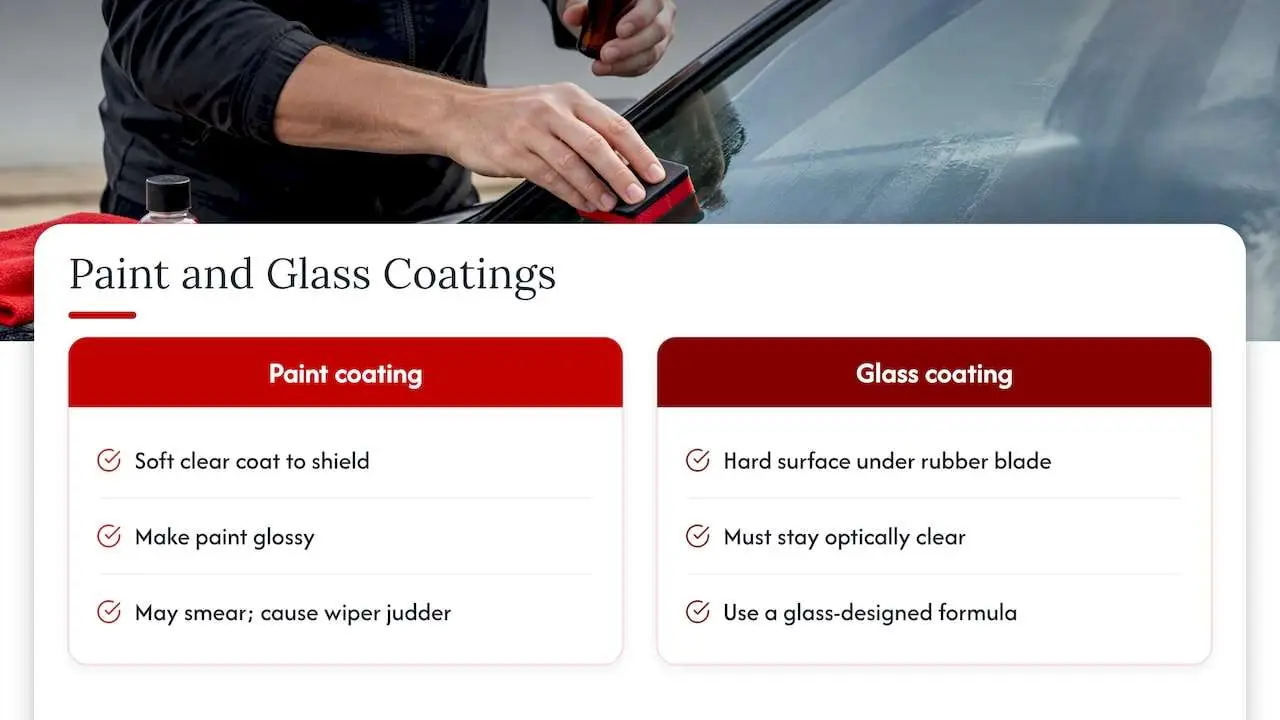
Glass coatings and paint coatings share that chemistry, but they are formulated for different jobs. Paint is soft clear coat that you want to shield and make glossy. Glass is hard, must stay optically clear, and sits under a moving rubber blade. Guidance for applicators says a ceramic coating can be used on glass if it is designed for glass, and warns that a paintwork coating may smear and cause wiper judder.
Some glass products are also tested for toughness. One manufacturer reports that an independent TÜV SÜD test found its glass coating more scratch-resistant than uncoated glass and hydrophobic. That is one maker’s result for one product, so treat it as a sign of what a good formula can do, not a promise for every bottle.
Can you ceramic coat a windshield?
Yes. The rule is simple: check that the label lists glass or the windshield and do not assume a product is suitable otherwise. That one check avoids most of the problems drivers report, such as streaks, haze and noisy wipers.
The same logic covers side windows, the rear window and mirrors. Side glass has no wiper wear at all, so coatings there tend to hold up longest and give the quickest payoff: rain slides off the door glass and your mirrors stay clearer in wet weather.
What you gain
The benefits that coating guides and manufacturers describe are consistent:
- Water repellency. Water forms tight beads and leaves the glass. In the TÜV test mentioned above, water ran off the windscreen at 50 km/h, roughly 31 mph, for that coating.
- Better visibility in rain. Less water sitting on the glass means less distortion from headlights and streetlights at night.
- Fewer water and chemical stains. Mineral deposits have a harder time etching in.
- Easier cleaning. Bugs and other contaminants release more readily.
- Less frost buildup. All of these are listed as typical benefits of coated automotive glass.
In Los Angeles you may not scrape frost, but you do deal with dust, ash, freeway grime, bug splatter on a Grapevine drive, and hard water spots from sprinklers. Those are exactly the things a slick surface helps with.
How long a glass coating lasts
Be realistic here, because glass is different from paint. A paint ceramic coating is built for years. A glass coating is a thinner, more exposed layer, and the windshield takes constant wiper passes. One manufacturer says its glass coat lasts several months, depending on how it was applied, the weather, how often you wash and how the vehicle is used.
What shortens it:
- Wiper abrasion, the biggest factor on the driver’s side arc
- Grit and dirt trapped under the blades
- Automatic brush washes and strong alkaline pre-soaks
- Contamination left on the glass before coating
- Ammonia or abrasive cleaners
What extends it: careful prep, full cure time, clean blades, and gentle washing. Side and rear glass usually outlast the windshield because the wipers are not rubbing them.
If you want the long-term picture for your paint, our guides on how long ceramic coating lasts and extending lifespan with a maintenance plan cover it in detail.
How glass is prepared and coated
The coating is only as good as the surface under it. A professional process follows the same order every time.
1. Decontaminate and polish
Glass collects oxidation, mineral deposits, water spots, traffic film and light wiper marks. One manufacturer’s guide says to wash and polish the glass to remove all of these, then clean until the surface is residue-free. Skipping this step is the most common reason a coating looks patchy or fails early. If the coating bonds over a stain, you have sealed the stain in.
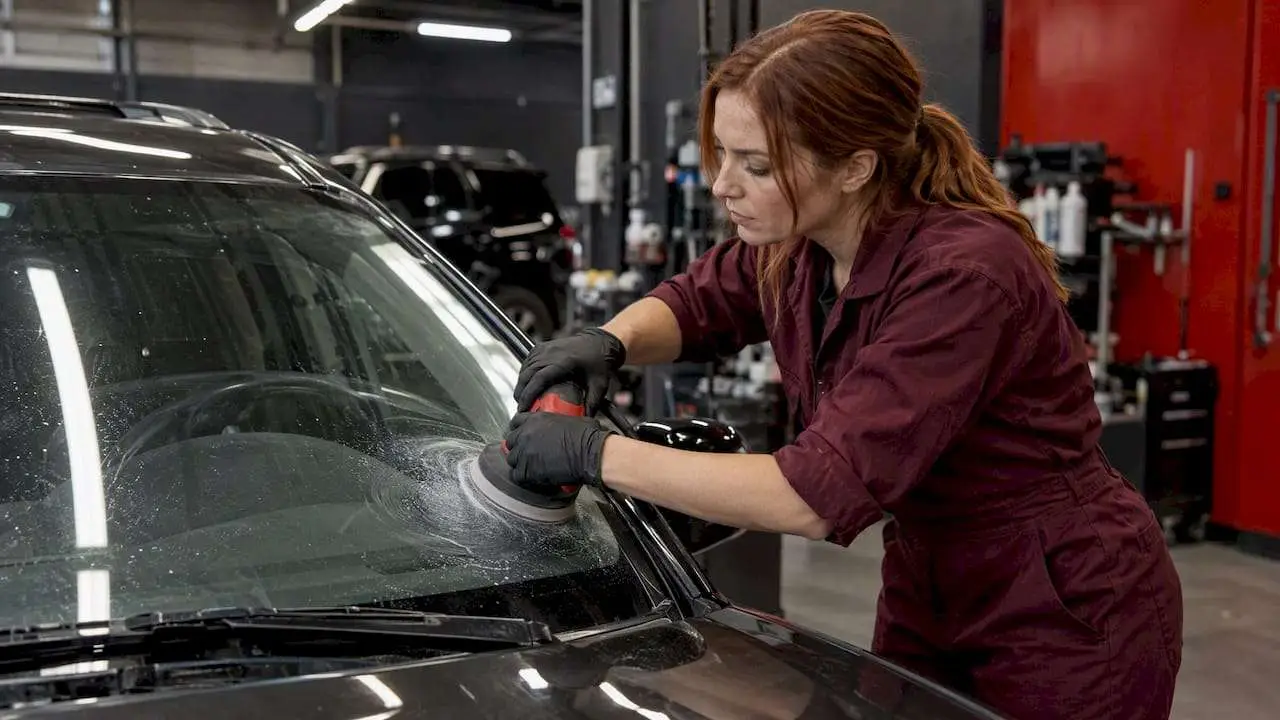
2. Apply evenly in sections
The product goes on in manageable sections and is worked into the glass. Even coverage matters because uneven application and leftover residue are what cause smearing and chatter later. Working small sections keeps the product from flashing before you level it.
3. Cure, then buff
The same guide calls for at least 1 hour of curing before buffing, then keeping the glass dry for 4 hours and avoiding wipers for 24 hours. Other guidance notes that, depending on the product, glass should stay dry for anywhere from 4 to 24 hours. Always follow the instructions for the specific product used.
Curing is also a big deal on paint, where full cure takes longer. See why paint ceramic coating cure time can run 2 to 4 weeks if you are coating the whole car.
DIY kit or professional application
Glass kits are easy to find, and a careful owner can apply one. The catch is the polish and decontamination step, which needs the right compounds, lighting and patience. Windshield work also has a safety side: any haze, streak or high spot sits directly in your line of sight. A professional has the tools to inspect the glass under proper light, correct light marks first and leave a uniform finish. If you are already booking paint protection, adding glass during the same visit is the simplest way to handle it.
What does it cost?
Prices for glass coating vary by shop, vehicle, the number of panels of glass and the product. A windshield alone is a small job; a full set of windows takes more time, and heavily weathered glass needs more polishing. We do not publish a glass-only price, so the honest answer is to get a quote that names which panes are included, how the glass will be prepared and what product goes on. If you are comparing quotes, make sure each one covers the same glass and the same prep.
Keeping coated glass working
A few habits make the biggest difference:
- Skip ammonia. Avoid ammonia-based cleaners and washer fluids, abrasive or corrosive cleaners, and washer fluids with hydrophobic additives. Use an alcohol-based glass cleaner instead.
- Go easy on the wipers. Running them on dry glass grinds grit into the coating. Spray first, or do not use them when there is no need.
- Replace worn blades. Dirty or worn blades, residue, uneven application or an oil film can cause smearing, chatter or skipping. Clean the blade edge with a damp cloth every few washes.
- Wash gently. Touchless or hand washing is kinder than brush tunnels. Our guide on washing a ceramic coated car applies to the glass too.
One safety point is not negotiable. If your view is smeared, hazy or chattering, do not drive until your view is clear. Re-clean the glass, replace the blades, and if the problem remains, return to whoever applied the coating so they can correct it.
Perspective: why we treat glass as part of the whole job
Most people come to us about paint. They want rock chips handled with XPEL film, or a ceramic coating that keeps the car easy to wash. The windshield comes up later, usually after a rainy drive where the glass looked like a smeared mess.
Our view is that glass deserves the same discipline as paint: proper prep first, the right product for the surface, and a clean finish with no residue. The coating is only the last ten percent. The care before it is what you see through every day.
We also like to match the product to the job. Paint gets a paint coating, glass gets a glass product, and we do not mix them. When a car is in for PPF or a ceramic coating, the glass is right there, already clean and inspected, so it makes sense to look at it while the car is on the lift.
Precision is how we work: wrapped edges, clean alignment, premium materials from trusted brands. We apply that same standard to anything we put on your car.
Jake
How glass fits with paint protection
Glass coating handles water and grime. It does not stop rock chips, because a coating is thin and a stone is not. Paint takes the real beating on the front end, which is why film and coating do different jobs. Our comparisons of PPF versus ceramic coating and which suits LA drivers lay out where each one fits. If you are weighing coating against wax, see ceramic coating versus wax, and for the paint side, the real benefits of ceramic coating.
A sensible order for a new or newly cleaned car is film on the high-impact areas, ceramic coating on the paint, and a glass coating for visibility and easier cleaning.
Book your coating with us
We are an XPEL authorized shop in North Hollywood, serving daily drivers, Teslas, luxury and exotic cars across Los Angeles. Our ceramic coating work uses System X with a 5-year rating, and our team answers quote requests the same day.
If you want your glass looked at alongside paint protection, tell us when you request a quote. See our ceramic coating service for what we offer, or start from ppfprosla.com and send us your vehicle details.
A quick checklist before you coat glass
- Confirm the product says glass or windshield on the label.
- Make sure the glass is polished and decontaminated, not just wiped.
- Allow the full cure time stated for that product, and keep the car dry and the wipers off.
- Replace worn wiper blades at the same time.
- Use an alcohol-based glass cleaner afterward and avoid ammonia.
- Re-check your view in rain and at night. Fix any smear before relying on it.
FAQ
Can ceramic coating go on a windshield?
Yes, provided the product is made for glass. Check that the label lists glass or windshields, since paint coatings can smear and make wipers chatter. Prep and cure time matter as much as the product.
How long does a glass ceramic coating last?
Manufacturers describe it in months, depending on application, weather, washing and how much the wipers work the glass. Side and rear windows typically last longer than the windshield because they see less abrasion.
Will it make my wipers squeak or smear?
It should not. Smearing and chatter usually come from residue, uneven application, an oil film, or dirty or worn blades. Clean the glass and replace the blades, and have the applicator redo the work if it persists. Do not drive if your view is affected.
What should I clean coated glass with?
Use an alcohol-based glass cleaner and a clean microfiber towel. Avoid ammonia-based cleaners and washer fluids, abrasive cleaners, and washer fluids with hydrophobic additives.
Can I use a paint ceramic coating on glass?
Not unless the label says it is safe for glass. Paint formulas are not made for optical clarity or wiper contact, and they can cause smearing and wiper judder.
Sources
- Ceramic Coatings, Gtechniq
- How to Apply a Ceramic Coating to Glass, AutoCareHQ
- TÜV test: Glass Coating 7601 on a car windscreen, CCM
- Can You Use Ceramic Coating on a Windshield?, APGO
- How to apply Ceramic Coating Glass, SONAX
- Rapid Ceramic Glass Coat FAQs, Cerakote
- Complete Guide to Windshield Coatings and Treatments, GlassParency