
Yes, ceramic coating over PPF is not only safe but recommended, as long as you use a PPF-rated coating and let the film outgas before application. Done right, you get better hydrophobicity, deeper gloss, and far easier cleaning than film alone provides. Done wrong, with the wrong chemistry or a rushed timeline, you risk hazing, softened film, or a voided warranty.
TL;DR:
- Using a PPF-rated, SiO2-based ceramic coating after a full cleaning and proper outgassing period enhances water repellency, chemical resistance, and gloss on PPF.
- Application should only occur after a one-week wait post-installation, ensuring the film has fully outgassed and shows no residue or lifting.
- Professional installation in a climate-controlled environment minimizes common errors like high spots, uneven layering, or bonding issues that lead to failure.
- Only coatings explicitly labeled as PPF-safe or compatible with TPU film should be applied, avoiding aggressive or non-listed products to prevent damage.
- Recoat every one to three years based on exposure, with reapplication recommended once water beading diminishes to maintain protection and appearance.
Table of Contents
- What Are the Real Benefits of Ceramic Coat Over PPF?
- Which Ceramic Coatings Are Safe for PPF?
- How Long Should You Wait After PPF Before Ceramic Coating?
- Step-by-Step: Applying Ceramic Coating Over PPF
- Common Mistakes That Ruin a Ceramic-Over-PPF Job
- How Long Does Ceramic Coating Last on PPF, and How Do You Maintain It?
- How Professional Installers Reduce the Risk of a Failed Ceramic-Over-PPF Job
- When We’d Recommend Ceramic Over PPF, and When We Wouldn’t
- Get a Warranty-Safe Ceramic-Over-PPF Install
- Sources
- FAQ
What Are the Real Benefits of Ceramic Coat Over PPF?
Paint protection film already blocks rock chips, road debris, and most UV damage on its own. What it does not do especially well is stay clean, and that is where a ceramic topcoat earns its keep.
PPF topcoats are engineered for durability and self-healing, not water behavior. A SiO2-based ceramic coating adds a hydrophobic layer that beads and sheets water instead of letting it sit and dry into hard-water spots. That same chemistry improves chemical resistance against bird droppings, bug splatter, and tree sap, contaminants that eat into an unprotected topcoat faster than most owners expect.
The visual upgrade is real too. Bare PPF has a slightly plastic look under direct light. Ceramic on top adds depth and a wet-glass gloss that most owners notice within the first wash.
Here is where the extra spend actually pays off:
- Daily drivers in high-mileage, high-exposure conditions see the fastest return, since ceramic cuts contaminant bonding and reduces wash frequency.
- Commuters near coastal or industrial areas benefit from the added chemical resistance against salt and airborne pollutants.
- Resale-focused owners protect the film’s clarity longer, since UV-driven yellowing shows up faster on uncoated PPF.
- Show cars and weekend drivers get less practical value, since limited exposure means the film alone often holds up fine for years.
If you already invested in full-coverage PPF, a compatible ceramic layer is the difference between maintaining that investment and slowly losing its finish to UV and grime.
Which Ceramic Coatings Are Safe for PPF?
Not every ceramic coating belongs on film. PPF topcoats are typically a thermoplastic polyurethane (TPU) layer, and TPU reacts differently to solvents and acids than clear-coated paint does. A coating formulated for paint can, in some cases, soften or cloud a TPU surface, especially if the product relies on aggressive carrier solvents to help it bond.
The safe pattern to look for is straightforward: SiO2-based chemistry, a pH-balanced formula, and an explicit “PPF-safe” or “PPF-rated” label from the manufacturer. When applied correctly, these nano coatings bond to the film’s topcoat and add hydrophobic, chemically resistant properties without damaging the film, and failures almost always trace back to skipped prep or the wrong product, not the concept itself.
Watch for these red flags before you buy or book a coating:
- Products with no stated pH or a noticeably low (acidic) pH rating.
- Marketing copy that never mentions film, TPU, or PPF compatibility anywhere.
- Coatings marketed exclusively for glass, wheels, or paint with no cross-application testing.
- Installers who cannot name the coating’s chemistry when you ask directly.
Verifying compatibility takes three steps, and skipping any of them is how owners end up with a cloudy hood six months later. Check the product datasheet for an explicit PPF statement, look for a direct manufacturer statement (many premium brands publish PPF compatibility guides), and ask your installer which coatings they have personally applied over film without issues. Manufacturer SOPs and datasheets remain the authoritative source for safe solvents and layering intervals, so when in doubt, that document settles the argument, not a forum thread.
Pro Tip: If a coating’s website never mentions PPF by name, treat that as a compatibility gap, not an oversight. Reputable PPF-safe products advertise it because it is a selling point.
How Long Should You Wait After PPF Before Ceramic Coating?
Fresh PPF continues releasing installation slip solution and trapped moisture for a period after install, a process detailers call outgassing. Coat too early, and you risk sealing that moisture under the ceramic layer, which shows up as haze or milky patches that will not buff out.
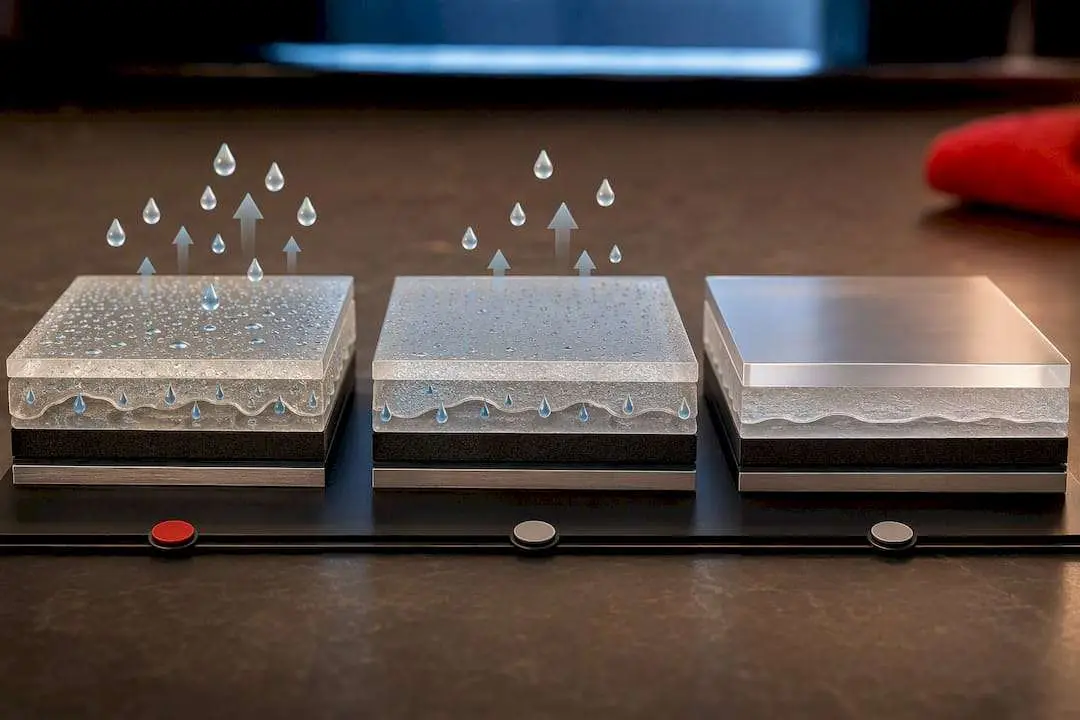
The commonly cited wait is about a week after install, though humid climates and thicker films can push that toward the longer end. Ambient conditions matter almost as much as the calendar. Application performs best between 60°F and 75°F with humidity under 60%, since heat and moisture both affect how the coating levels and cures.
Before scheduling the coating appointment, run this quick check:
- No tacky or slippery residue remains anywhere on the film’s surface.
- Edges and trim wraps show no lifting or bubbling at the seams.
- The film has been through at least one full wash cycle since install.
- The vehicle has spent minimal time in direct sun or extreme heat during the wait period.
Shops sometimes push the ceramic appointment out further than the minimum window, not out of caution alone, but because a longer cure gives a more predictable, streak-free result on the first pass.
Step-by-Step: Applying Ceramic Coating Over PPF
This is the sequence a trained installer follows, and it is worth knowing even if you plan to hire it out, because it tells you exactly what “done right” looks like.
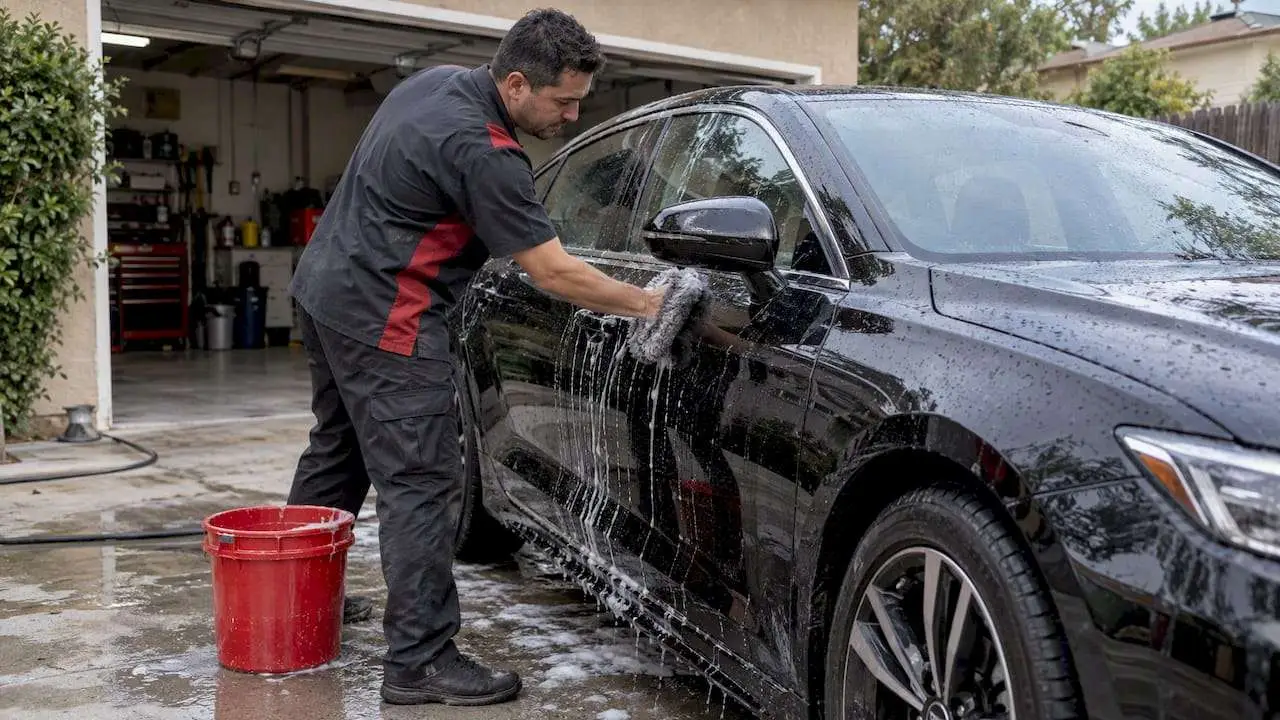
1. Wash and decontaminate. A thorough two-bucket wash removes loose grime, followed by an iron remover to pull embedded brake dust and a tar remover for road residue. Skipping this step traps contaminants under the coating permanently.
2. Clay bar if needed. If the film still feels rough after washing, a fine-grade clay bar lifts bonded contaminants without abrading the TPU surface. Most fresh PPF installs will not need this step at all.
3. Light polish only if required. Polishing PPF is rare and should only happen with a product explicitly rated for film, at low speed, and only to address minor surface texture. Aggressive polishing can dull the film’s factory clear coat.
4. Final IPA wipe. An isopropyl alcohol panel wipe strips any remaining oils or waxes right before coating. This step is where most rushed jobs fail, since leftover polish residue prevents the ceramic from bonding evenly.
5. Apply in small sections. Manufacturer guidance calls for working roughly 2 feet by 3 feet at a time in a cross-hatch pattern, applying a few drops per applicator pad rather than saturating the panel.
6. Respect the dwell and flash window. Most coatings need a 2 to 5 minute dwell before leveling. Go too fast and the coating streaks; wait too long and it becomes difficult to buff evenly.
7. Level with two clean microfiber towels. One towel lifts the flash haze, a second buffs to a clear finish. Change towels frequently, since a saturated cloth just redistributes residue instead of removing it.
8. Apply a second coat if the product calls for it. Many PPF-rated products recommend waiting a short period between coats to let the first layer flash before adding another.
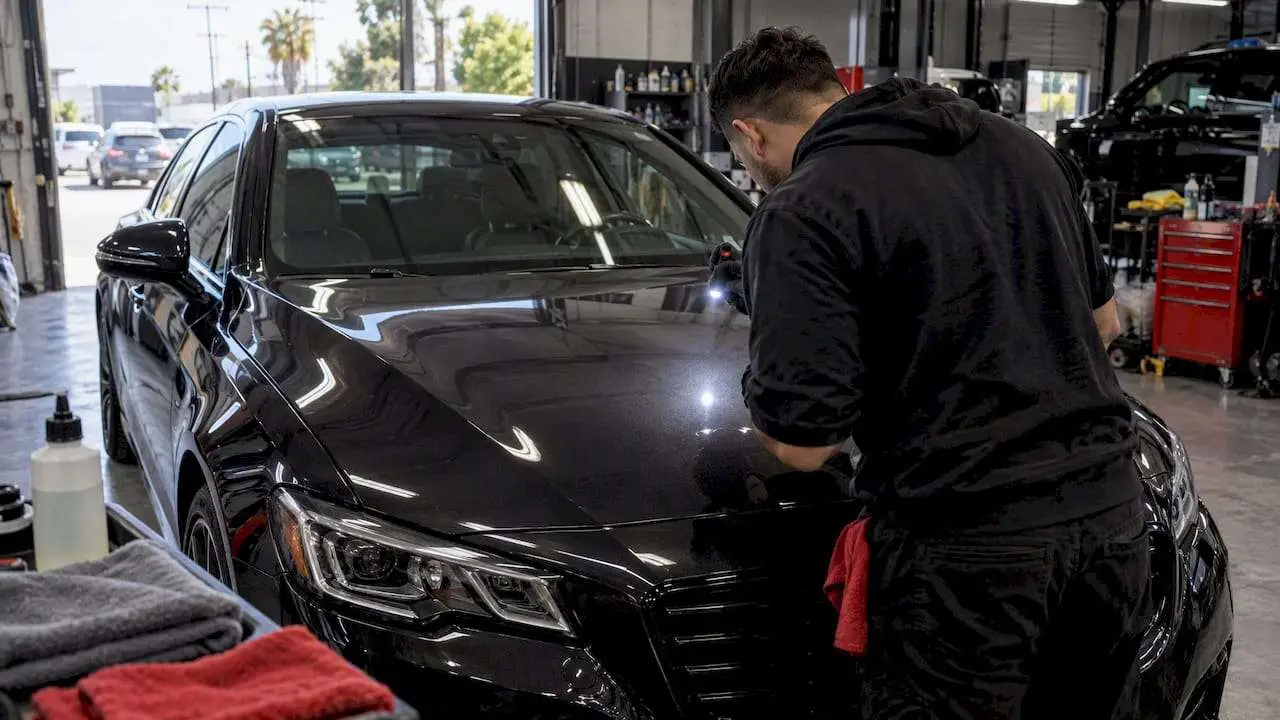
9. Inspect under angled LED light. This is the only reliable way to catch high spots or streaks before they cure permanently into the coating.
10. Let it cure undisturbed. Store the vehicle in a dust-free space and avoid washing it for the number of days the product specifies, typically several days to a week.
Pro Tip: Never judge a coating job under overhead garage lighting alone. High spots and streaking only show up clearly under a raking, low-angle light, which is exactly what professional bays use during final inspection.
Common Mistakes That Ruin a Ceramic-Over-PPF Job
Most failures trace back to five avoidable errors, and every one of them is a process issue, not a product issue.
- Coating too soon after PPF install. Trapped slip solution or moisture under a fresh coating almost always shows up as haze within weeks.
- Using a non-PPF-rated coating. Some paint-only formulations can soften, yellow, or delaminate TPU film over time.
- Skipping the IPA wipe. Leftover polishing oils or wax create uneven bonding and patchy gloss.
- Ignoring high spots during leveling. A coating left to cure with uneven thickness needs correction fast, since cured high spots require abrasive removal that risks the film underneath.
- Coating too close to trim and seams. Edge lift risk increases when coating pools at seams; professional installers tape or mask these zones and work the edges by hand.
Improper application or unsuitable product choice is one of the most common sources of comeback complaints in professional detailing, which is exactly why the inspection step in the SOP above is not optional.
How Long Does Ceramic Coating Last on PPF, and How Do You Maintain It?
Ceramic coatings applied over PPF typically last several years depending on the product, exposure conditions, and wash habits, with some premium formulations lasting longer under ideal care.
Modern SiO2-TiO2 nanocomposite formulations hold up noticeably better than older coatings, maintaining a water contact angle above 120 degrees across many wash cycles even when exposed to alkaline cleaners. That is a meaningful upgrade over coatings from just a few years ago.
Maintaining that performance comes down to a few consistent habits:
- Wash with a pH-neutral shampoo and a soft microfiber wash mitt, never a dish soap or degreaser.
- Avoid automatic brush washes, which can introduce fine scratches and strip hydrophobic performance faster.
- Use manufacturer-recommended top-up sprays between full details to extend beading performance.
- Book a professional recoat once water beading noticeably flattens rather than waiting for visible dulling.
If the PPF itself gets damaged, repair or replace that section of film first, then recoat only that localized area. Coating over damaged film just seals in the problem. For a deeper look at reapplication signs and coating lifespan, the maintenance cadence matters as much as the initial application quality.
How Professional Installers Reduce the Risk of a Failed Ceramic-Over-PPF Job
Most of the failure points above come down to a controlled process, which is exactly what separates a shop install from a driveway attempt. A trained installer runs through a consistent checklist before the coating ever touches the film:
- Confirm the outgassing window has passed and the film shows no residue or lifting.
- Run a full decontamination wash, iron and tar removal, and a final IPA panel wipe.
- Apply in a climate-controlled bay to hold temperature and humidity in the ideal range.
- Change applicators and microfiber towels on a fixed schedule, not just when they look dirty.
- Inspect every panel under angled LED lighting before calling the job complete.
Authorization matters here too. Shops working with XPEL-authorized materials have access to documented compatibility guidance between the film and the coatings paired with it, which removes the guesswork that causes most DIY compatibility issues. Premium, well-documented materials combined with a controlled cure environment are the actual reasons professional installs fail less often than home attempts, not brand reputation alone.
When We’d Recommend Ceramic Over PPF, and When We Wouldn’t
Ceramic over PPF makes clear sense for daily drivers, vehicles parked outside, and owners who plan to keep the car long enough to appreciate lower maintenance over time. If you already committed to full-coverage film, the incremental cost of a compatible coating is small next to what you already spent protecting the paint underneath.
It makes less sense on a garage-kept weekend car with partial film coverage and a tight budget. In that case, the film alone will likely perform fine for years, and the money is better spent elsewhere.
Our practical rule: for any vehicle worth protecting with PPF in the first place, spend the extra on a PPF-rated coating and a professional install. The chemistry compatibility and cure conditions are too easy to get wrong at home, and a bad ceramic job over good film is a worse outcome than no coating at all.
— Jake
Get a Warranty-Safe Ceramic-Over-PPF Install
A professional shop process using PPF-rated coatings, climate-controlled cure bays, and trained installers reduces the risk of compatibility issues on XPEL film.
Booking the PPF and ceramic bundle gets your vehicle a full inspection, proper prep, a PPF-rated ceramic application, and clear aftercare guidance so you know exactly when it is safe to wash and what products to use. Expect the shop to walk you through timing, warranty terms, and pricing before any work starts, no surprises after the fact. If you are ready to protect a daily driver, a Tesla, or a higher-value vehicle the right way, get a quote through Ppfprosla’s service page and get on the schedule.
Sources
- Standard Operating Procedures | 3M™ Ceramic Coating
- Ceramic coatings material and performance overview
- Ceramic Coating on PPF: Does It Work or Damage Your Car’s Protection – Vetrosol
- How to Apply Ceramic Coating Without Streaks or High Spots
FAQ
Is It Worth Ceramic Coating on Top of PPF?
Yes, for most daily-driven or long-term-owned vehicles, since it adds hydrophobicity, chemical resistance, and easier cleaning beyond what the film’s topcoat provides alone.
Can I Apply Ceramic Coating After PPF Installation?
Yes, but wait 7 to 14 days for outgassing to finish and confirm the film shows no slip residue or edge lifting before applying a PPF-rated coating.
Should Ceramic Coating Go Before or After PPF?
Ceramic coating goes after PPF installation, applied to the top of the film once it has fully cured, never underneath it.
Can Any Ceramic Coating Be Used on PPF?
No, only coatings labeled PPF-safe or PPF-rated with pH-balanced, SiO2-based chemistry should be used, since some paint-only formulations can soften or cloud the film’s TPU topcoat.
How Often Should a Ceramic-Coated PPF Vehicle Be Recoated?
Most coatings need refreshing every one to three years depending on the product and exposure, with a professional recoat recommended once water beading noticeably weakens.