
DIY ceramic coating kits run $50 to $300 for the product alone, or $200 to $400 once you factor in prep supplies and applicators. Professional installation costs considerably more: entry-level packages start around $500 to $1,000, most owners land in the $1,000 to $2,000 mid-tier range, and premium multi-stage jobs run $2,000 to $3,500 or higher. The single biggest swing factor in any quote isn’t the coating itself. It’s whether your paint needs correction before that coating goes on.
TL;DR:
- Correcting paint issues can add 15 to 20 hours of labor, significantly increasing the overall cost beyond just the coating price.
- Mid-tier professional ceramic coating packages typically include two coats, multi-step paint prep, and warranties of three to five years, making them the most common choice.
- Vehicle size and paint condition are the main factors influencing quotes, with larger and more neglected cars requiring more correction work.
- Labor costs usually dominate quotes, with product costs being a relatively small part of the total, especially if extensive correction is needed.
- Premium coatings with longer lifespans often justify their higher price through better durability, longer warranty coverage, and the need for less frequent reapplication.
Table of Contents
- Ceramic Coating Cost Breakdown: DIY Kits vs. Pro Tiers
- How Vehicle Size and Paint Condition Move the Price
- What’s Actually Driving Your Quote
- Turning Sticker Price Into Cost Per Year
- Questions to Ask Before You Book a Quote
- Cost Comparison Between Popular Ceramic Coating Brands
- PPF Pros’ Take on Pricing Ceramic Coating Right
- Get a Real Quote, Not a Guess
- Where These Numbers Come From
- Sources
Ceramic Coating Cost Breakdown: DIY Kits vs. Pro Tiers
The price tag on a bottle of coating tells you almost nothing about what you’ll actually pay. What separates a $75 DIY kit from a $2,800 professional job is prep work, product grade, and labor hours, not the ceramic formula itself.
DIY: cheap upfront, expensive in time
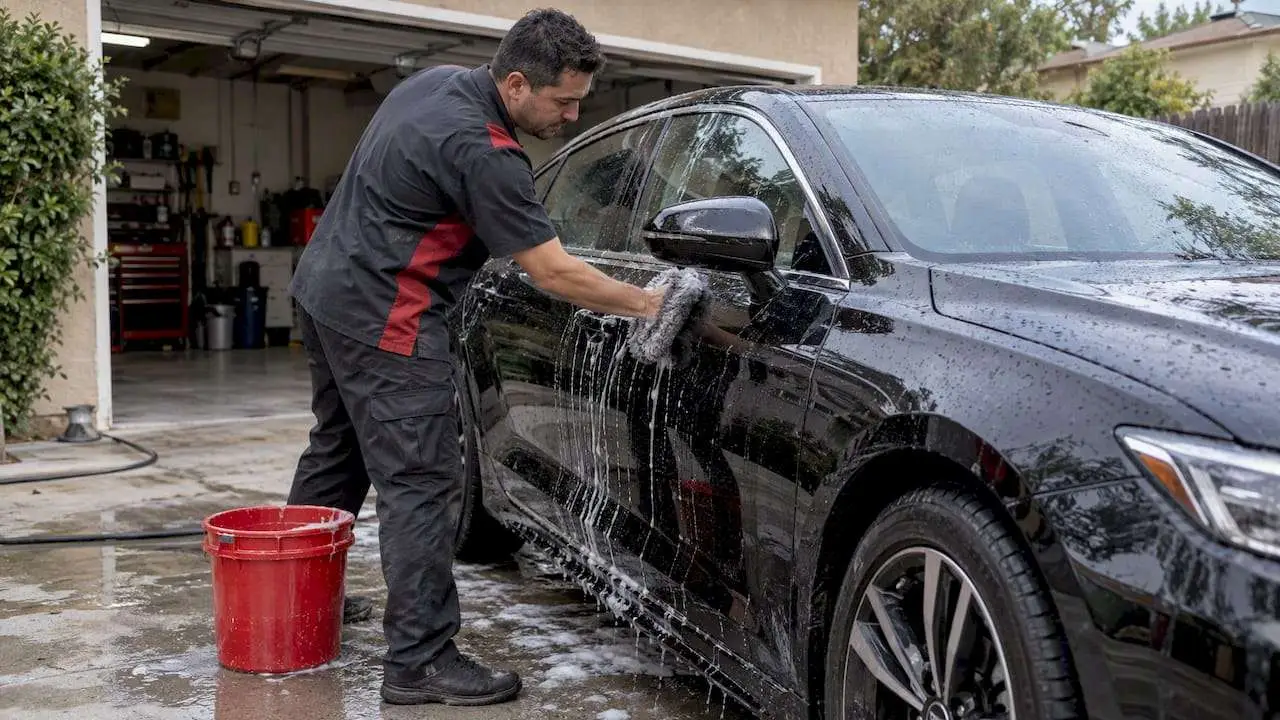
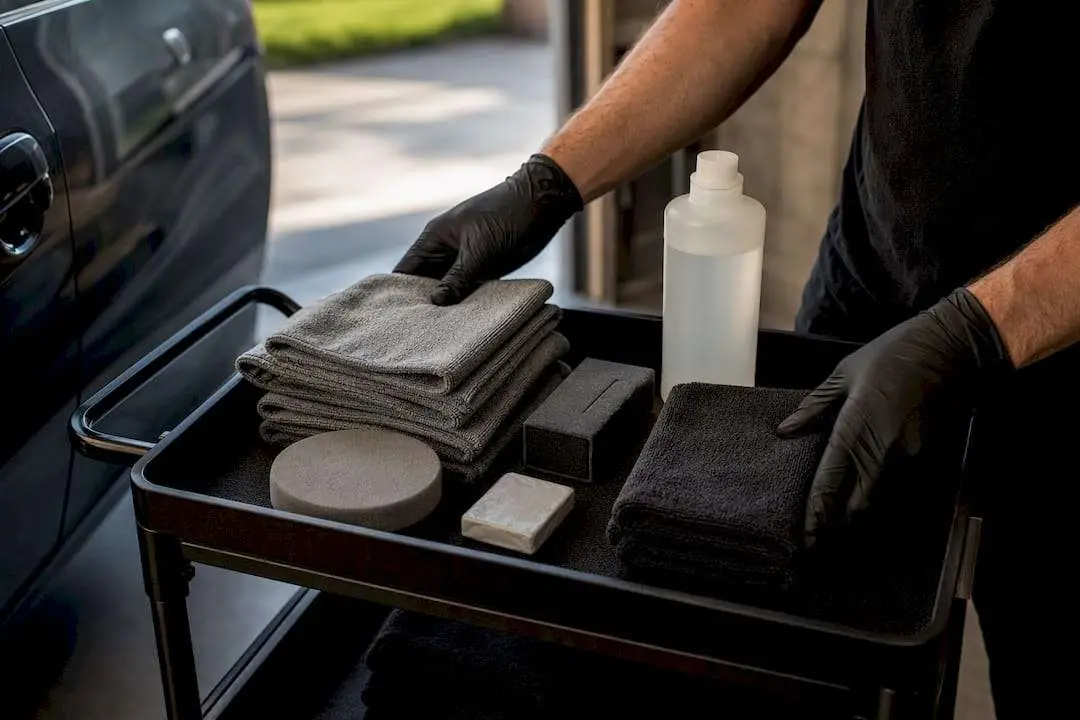
A DIY kit typically costs $50 to $300 for the coating, with total project costs (microfiber towels, clay bars, polish, applicator pads, isopropyl alcohol for surface prep) landing between $200 and $400. What most first timers underestimate is the labor. Getting a DIY application to look close to professional results takes 15 to 30 hours of careful work, including washing, decontaminating, taping off trim, and applying thin, even coats without leaving high spots or streaks. Rush it and you’ll see hazing within months.
Entry-level professional packages ($500 to $1,000)
This tier usually covers a wash, a light decontamination pass (iron remover and clay bar), and a single coat of a mid-grade ceramic product. It’s a reasonable option for a newer vehicle with paint that’s already in good shape. Warranty coverage at this level tends to run one to two years, if it’s offered at all.
Mid-tier professional packages ($1,000 to $2,000)
This is where most owners end up, and for good reason. A mid-tier package usually includes multi-step paint prep, two coats of a professional-grade product, and a written warranty in the 3 to 5 year range. Many shops offer glass and wheel add-ons at this level, sometimes bundled, sometimes priced separately.
Premium packages ($2,000 to $3,500+)
Premium jobs include full multi-stage paint correction, higher SiO2 concentration coatings, complete coverage (paint, glass, wheels, calipers, trim), and warranties extending 5 to 7+ years. This tier makes sense for enthusiast vehicles, exotics, or any car where resale value and appearance matter enough to justify the spend.
Common add-ons worth budgeting for separately:
- Glass coating: $50 to $150, improves visibility in rain and cuts down on water spotting
- Wheel face coating: $75 to $200, makes brake dust far easier to wipe off
- Trim and plastic restoration: $50 to $150, prevents that gray, sun-faded look on bumpers and mirrors
Pro Tip: If a shop bundles glass and wheels into the base price instead of charging separately, that’s usually a sign they’re pricing the whole job as a package rather than nickel-and-diming line items.
How Vehicle Size and Paint Condition Move the Price
Two variables push a quote up or down more than anything else: how big your vehicle is, and how much correction its paint needs before coating.
Vehicle size and body complexity:
- Compact cars and two-door coupes sit at the low end of every tier, thanks to less surface area and fewer panels to mask and prep
- Midsize sedans land in the middle of published ranges, roughly the baseline most price guides quote
- Full-size SUVs and trucks push toward the higher end of each tier since more panels, larger glass, and extra trim mean more labor hours
- Luxury and exotic vehicles often cost more even at the same size class, because shops budget extra time for complex curves, exposed carbon fiber, or paint that’s simply harder to work around without risk
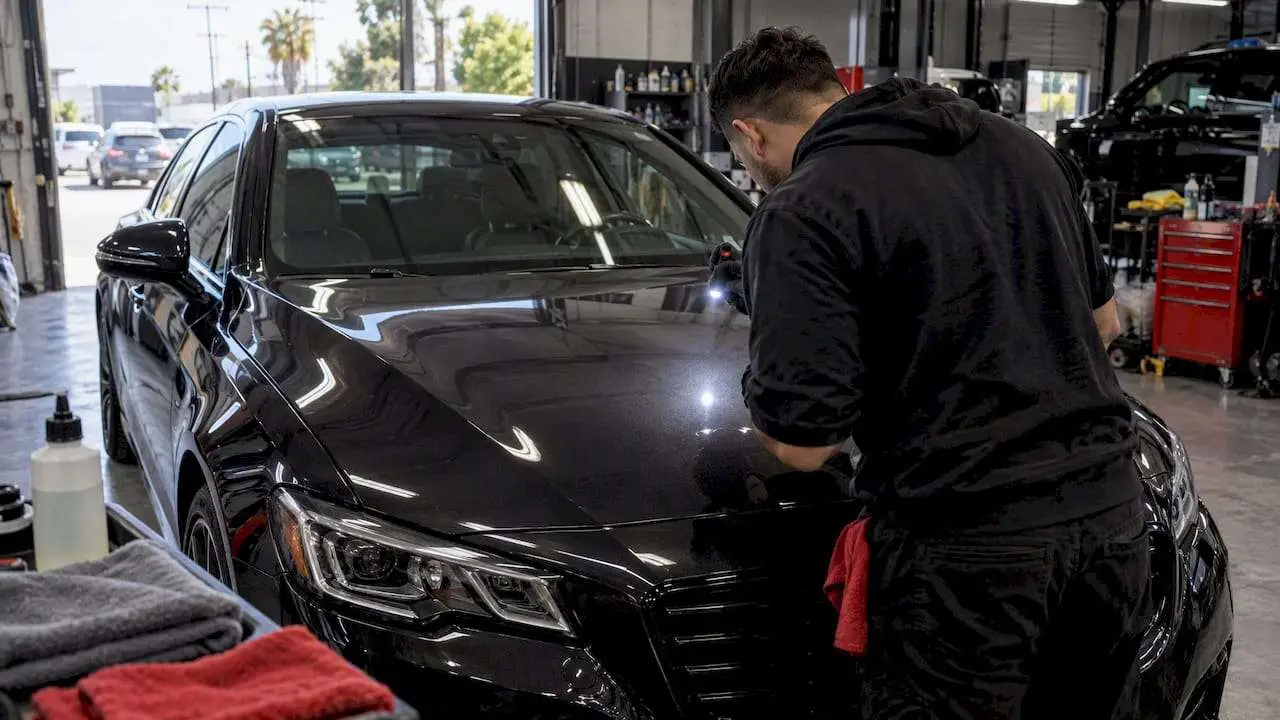
Paint condition matters more than vehicle class. A one-year-old car with minimal swirl marks might only need a single-stage polish before coating, adding little to the base price. An eight-year-old daily driver with years of automatic car washes and sun exposure is a different story: swirls, oxidation, water spots baked into the clear coat, maybe a few scratches down to primer. Correcting that kind of paint can take 15 to 20 hours of compounding and polishing, and that labor alone can add several hundred to over a thousand dollars on top of the base coating price.
This is why two people can ask “what does ceramic coating cost” for what looks like the same car and get quotes $1,500 apart. The coating isn’t the variable. The paint underneath it is.
What’s Actually Driving Your Quote
Every line item on a real ceramic coating quote traces back to one of five factors: labor, correction, product grade, region, or warranty terms.
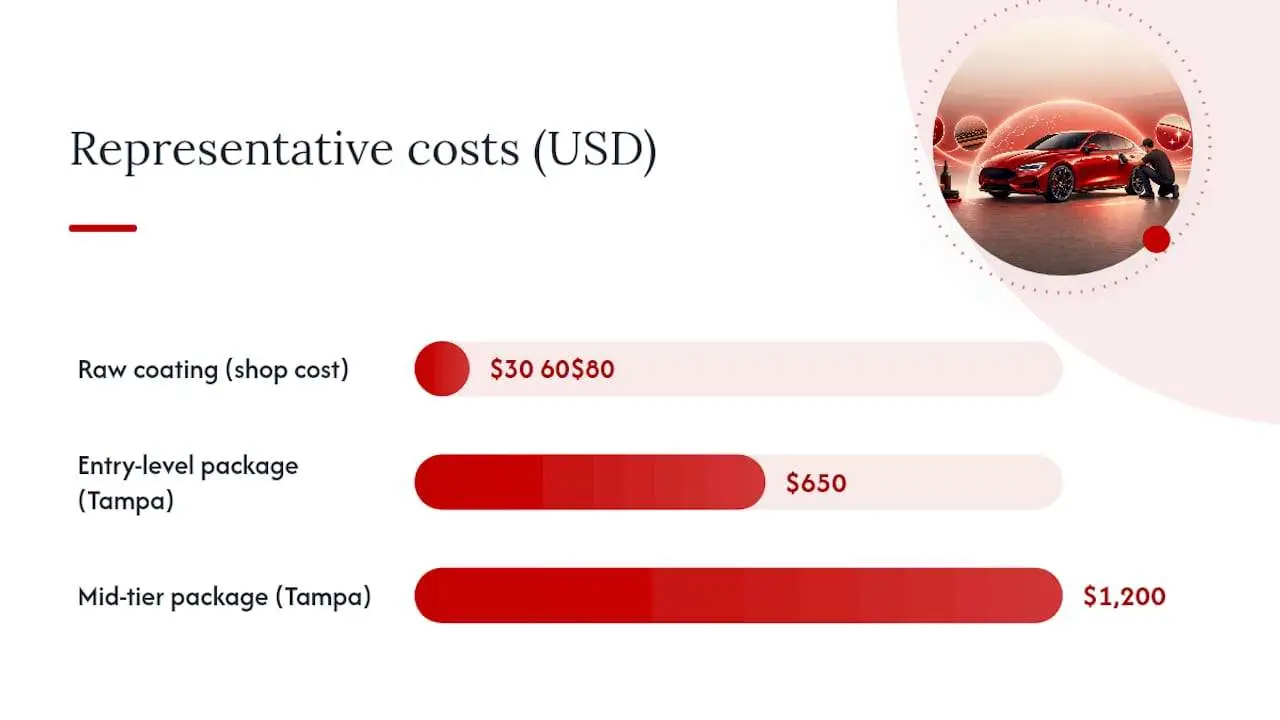
Labor vs. product split. Labor is usually the majority of what you’re paying for, not the ceramic formula itself. That’s because most of the cost in a professional job comes from the hours spent correcting and prepping paint, not from the bottle of coating, which might only cost the shop $30 to $80 per vehicle in raw product.
Paint correction, step by step:
- Decontamination (iron remover, tar remover, chemical wash)
- Clay bar treatment to pull embedded contaminants out of the clear coat
- Compounding to cut down deeper scratches and oxidation
- Polishing to refine the finish and restore gloss
Do all four thoroughly on a neglected vehicle and you’re easily at 15 to 20 hours before the coating even goes on.
Product grade. Consumer-grade kits and professional formulations aren’t the same chemistry at different price points. Professional coatings generally carry higher SiO2 concentration, which is part of why they last longer and resist etching better than what you’d buy off a shelf.
Region and overhead. Shop location changes pricing more than most buyers expect. Major metro shops often charge more due to higher overhead, while smaller markets can run leaner. As one regional example, entry-level coatings in the Tampa market start around $650, with mid-tier packages from roughly $1,200 up, giving a sense of how local labor rates and rent shift the same service.
Warranty terms. A real warranty should specify what’s covered (gloss retention, hydrophobic performance, chemical resistance) and for how long, with clear maintenance requirements to keep it valid.
Turning Sticker Price Into Cost Per Year
A $2,800 premium coating sounds expensive next to a $75 DIY bottle until you run the numbers over time. Lifespan is where the real value comparison happens, not the invoice total.
Consumer-grade DIY coatings typically last 6 months to 2 years depending on climate and how well they’re applied. Professional coatings, thanks to their higher SiO2 concentration, commonly last 3 to 7 or more years, with premium products and diligent maintenance stretching toward the longer end.
A $1,500 mid-tier professional coating that lasts 5 years, plus modest annual maintenance, works out to roughly $300 per year, often cheaper annually than keeping up a regular professional waxing routine.
Run that same math on a $250 DIY kit lasting 18 months and you’re closer to $165 a year, cheaper on paper, but that number doesn’t account for your own labor or the touch-up products you’ll likely buy along the way. Maintenance itself is light either way: a gentle wash every one to two weeks, periodic inspection for water spotting, and an optional topper or booster spray every 6 to 12 months to extend hydrophobic performance.
The math tips toward premium professional coatings when you plan to keep the vehicle 5+ years, when the car has real resale value to protect, or when you simply don’t want to think about paint maintenance more than a few times a year. For a car you’ll trade in within 18 months, a solid DIY application or entry-level pro package is harder to argue against on pure cost-per-year terms.
Questions to Ask Before You Book a Quote
A trustworthy quote reads like a checklist, not a single flat number. Here’s what to run through before you hand over a deposit:
- Ask what paint correction steps are included. A legitimate quote should name specific stages, decontamination, clay, compound, polish, not just say “we’ll clean it up.”
- Ask how many coats you’re getting and what product line. Vague answers like “our premium coating” without a product name are a caution flag.
- Ask about cure time before the first wash. Most professional coatings need 24 to 72 hours minimum before water contact; anything less suggests rushed application.
- Ask for the warranty in writing, including what voids it (certain wash products, automatic car washes) and what’s covered if the coating fails early.
- Ask how many labor hours they’re budgeting, especially if your paint has visible swirls or oxidation. If the answer sounds too short for the correction your car needs, that’s often a sign corners are getting cut, and skipped correction gets permanently sealed under the coating.
A full job, prep through cure, typically takes one to three days at a real shop. If someone quotes same-day service on a car that clearly needs correction, ask why. For more detail on how correction and coating timing interact, this breakdown of paint correction requirements is worth a read before you book anything.
Cost Comparison Between Popular Ceramic Coating Brands
Coating brands don’t all price the same way, and the differences usually come down to SiO2 concentration, warranty length, and whether the formula is sold direct-to-consumer or shop-exclusive. Consumer-facing brands sold at auto parts stores tend to sit at the lower end of the DIY range, generally under $100, with shorter expected lifespans and no professional warranty backing.
Shop-exclusive professional lines cost more per bottle to the installer, which shows up in the final invoice, but they typically come bundled with a written multi-year warranty that consumer brands simply don’t offer. That warranty is often the real price difference: two coatings might perform similarly on paper, but one comes with a shop standing behind it for 5 years and the other doesn’t.
The brand name on the bottle matters less than what backs it up. A mid-tier professional coating with a real 3 to 5 year warranty is generally a better value than a premium-branded product applied without correction or documentation. When comparing quotes across shops, ask which coating line they use and whether it’s a name you can verify independently, not just a house brand with no track record.
PPF Pros’ Take on Pricing Ceramic Coating Right
Ceramic coating pricing only makes sense when it’s tied to what your paint actually needs, not a flat menu price. A North Hollywood shop rated highly factors paint correction into every quote before recommending a coating tier. That’s the piece most buyers skip when comparing prices online.
Because PPF Pros is an XPEL authorized installer, coating decisions often get discussed alongside paint protection film, especially for owners bundling PPF on high-impact panels with a full ceramic coating over the rest of the vehicle. For a daily driver, mid-tier coating with solid multi-year coverage usually makes sense. For a low-mileage exotic or a car you plan to keep long-term, premium coating paired with correction protects the investment for years, not months.
— Jake
Get a Real Quote, Not a Guess
Reading price ranges only gets you so far. The number that actually matters is what your specific paint needs, and that requires eyes on the car. Some shops offer a no-obligation inspection where you get an itemized quote covering correction steps, coat count, timeline, and warranty terms in writing, not a vague “starting at” figure.
Ceramic coating at PPF Pros is often bundled with XPEL paint protection film, so you can protect high-impact panels with film and coat the rest of the vehicle in one visit instead of scheduling two separate jobs. That bundled approach tends to cost less than booking PPF and ceramic coating separately at two different shops, and it means one warranty conversation instead of two. If you’re deciding between DIY and professional application, or just want to know what your specific vehicle would run, book an inspection and get pricing based on your paint, not an internet average.
Where These Numbers Come From
The pricing ranges and correction estimates in this guide draw from FEYNLAB’s cost breakdown, AutoZone’s ceramic coating cost guide, and SR Detailing’s regional Tampa pricing analysis. For DIY-specific labor considerations, Diamondbrite’s UK cost guide offers additional perspective on time investment. Readers weighing coating against film protection can also check PPF Pros’ guide on whether ceramic coating is worth the cost.
Sources
- Ceramic Coating Cost: How Much Should You Pay? | FEYNLAB®
- How Much Does It Cost to Ceramic Coat a Car? – AutoZone
- How Much Does Ceramic Coating Cost in Tampa? (2026 Prices) | SR Detailing