Yes, you can apply ceramic coating on PPF, and in most cases you should. The single condition that decides success or failure is using a coating rated for film, not a rigid, traditional formula, and applying it only after the film has fully cured. Get those two things right and you get better hydrophobicity, easier washing, and slower UV yellowing. Get them wrong, and you risk haze or edge lift. Some shops build their process around exactly this sequence.
TL;DR:
- Using a film-rated ceramic coating after PPF fully cures enhances water repellency, reduces water spots, and slows UV yellowing more effectively than standard coatings.
- Proper application timing is critical, with a recommended wait of several days to weeks for outgassing and surface stabilization before coating.
- Elastomeric, PPF-specific formulas are safest for flexible film, while high-hardness products may crack or lift at edges, especially if improperly applied.
- Coating failures often result from rushed timing, inadequate surface preparation, or coating before the film fully outgasses, not the product quality.
- Professional installation in a controlled environment with proper timing increases coating durability and minimizes haze or edge lift.
Table of Contents
- Why Layer Ceramic Coating Over PPF?
- Which Ceramic Chemistries Are Safe for PPF?
- When Should You Apply Ceramic Coating After PPF Installation?
- How Long Does Coated PPF Last, and How Do You Maintain It?
- Why Do Coated PPF Jobs Get Hazy or Lift at the Edges?
- PPF Pros’ Shop-Tested Workflow
- The Advice Nobody Follows Closely Enough
- Ready to Get PPF and Ceramic Coating Done Right?
- Sources
Why Layer Ceramic Coating Over PPF?
Paint protection film already does the hard work: absorbing rock chips, resisting scratches, and self-healing minor marring with heat. Ceramic coating doesn’t replace that job. It adds a second layer of chemistry that makes the film easier to live with day to day.
The biggest win is water and contaminant behavior. A properly cured ceramic layer pushes water into tight beads that roll off at highway speed, taking road grime with it. That cuts down on water spots, mineral etching from hard water, and the kind of bug and tar staining that eats into unprotected film over a single summer. Because the surface sheds contaminants instead of holding them, washing takes less scrubbing, and less scrubbing means less swirl and less mechanical wear on the film’s topcoat over time.
UV exposure is the other piece. PPF film yellows with age, especially in high sun states, and that yellowing accelerates when the surface sits dirty or oxidized. A ceramic layer acts as a sacrificial UV buffer, and detailers who install both together report it noticeably slows that discoloration timeline compared to bare film left to fend for itself, according to professional detailing guidance on layering ceramic over PPF.
Here’s what a properly coated film delivers that bare film doesn’t:
- Beading and sheeting that reduces wash time and water spot risk
- Added chemical resistance against bug splatter, tree sap, and light acid rain exposure
- A slower yellowing curve on the film itself
- A sacrificial layer that takes swirl and light scratching instead of the film’s clear coat
Professional installation typically runs $300 to $800 above a DIY coating job for the labor and material, according to Fresh Layer’s application guide, but that premium buys controlled application conditions that most driveways can’t match.
Which Ceramic Chemistries Are Safe for PPF?
Not every ceramic coating belongs on film. This is where most DIY jobs go sideways.
“PPF-rated” and “elastomer” coatings are formulated to flex with the film instead of fighting it. Standard automotive coatings are built for rigid clear coat, and many pack heavy silica (SiO2) content designed to cure into a hard, glass-like shell. That hardness is great on paint. On film, it can crack under the substrate’s natural flex, especially around body lines and edges where PPF moves more than paint does.
Elastomeric, PPF-specific formulas are built to balance hardness with flexibility so the coated system holds up through thermal cycling and daily flexing, according to Titan Coatings’ technical breakdown of PPF-compatible chemistry. Thin-build versions, generally thin enough to preserve most of the film’s self-healing ability while adding chemical resistance, are recommended.
What to avoid: low-pH acidic formulas, high-solvent coatings meant to strip old sealants, and any product marketed purely for hardness without mention of flexibility or film compatibility. Newer nanocomposite chemistries built with SiO2-TiO2-ZrO2 blends have demonstrated improved resistance to alkaline solutions and maintained strong hydrophobic contact angles over many wash cycles, according to materials research published on AZoM, which shows how far coating chemistry has come from the brittle, rigid formulas of a decade ago.
Before committing to a product, run through this quick checklist:
- Confirm the manufacturer explicitly lists PPF or vinyl compatibility on the label or spec sheet
- Check the film thickness build; thinner (1 to 2 micron) is generally safer than thick, layered applications
- Look for pH and solvent disclosures rather than vague “professional grade” marketing language
- Ask your installer whether the film manufacturer has published guidance on that specific coating
Pro Tip: Test any new coating on a hidden panel, like inside the door jamb where the film wraps, and check it after 48 hours before committing the whole car. It costs you a day. A failed hood is a lot more expensive.
When Should You Apply Ceramic Coating After PPF Installation?
Timing is where most haze and adhesion complaints actually start. The film needs to outgas, releasing trapped solvents and letting the adhesive fully set, before it’s ready for anything sitting on top of it.
- Install the PPF and let it settle without touching the surface.
- Wait through a conservative cure window. Detailers generally recommend erring toward the longer end of the range, since humidity and cold temperatures both slow outgassing, according to Fresh Layer’s guide to layering timing.
- Decontaminate gently. A snow foam or low-abrasion wash first, then a clay or iron decon pass only if contamination remains.
- Wipe with isopropyl alcohol (IPA) to strip any leftover slip solution and surface oils that would otherwise sit trapped under the coating.
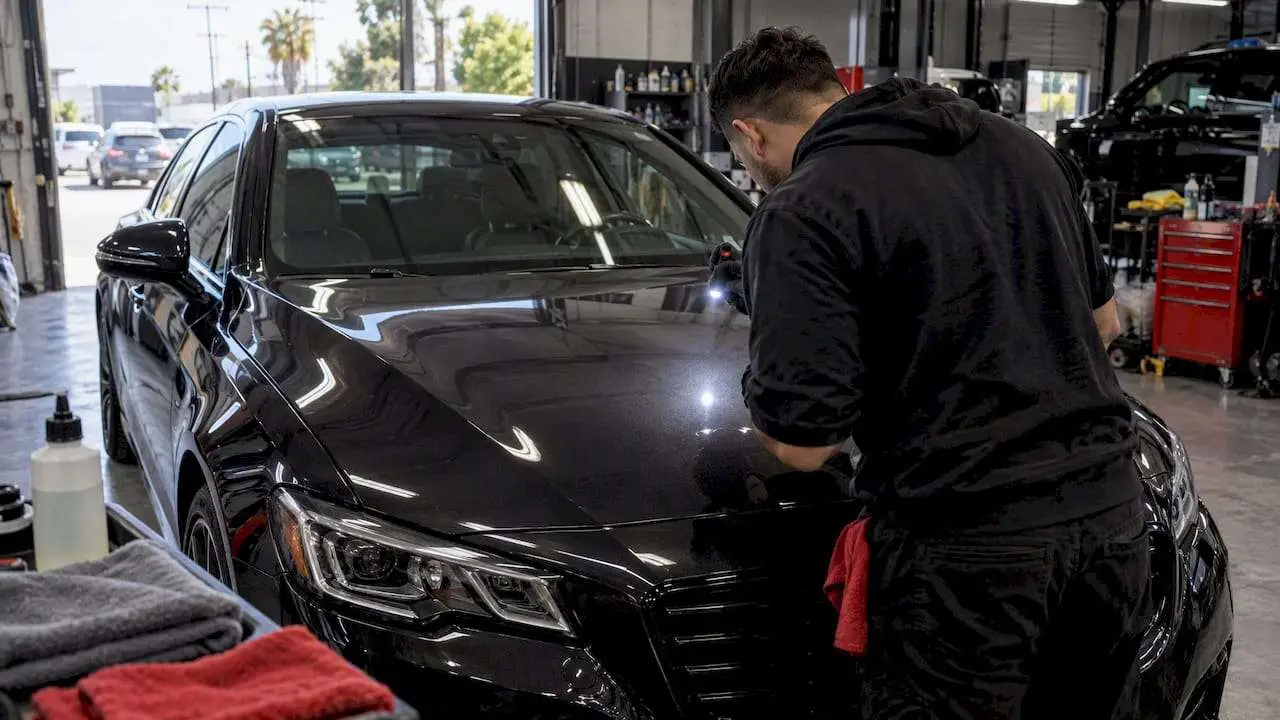
- Inspect under an LED light to check for missed contamination or lifted edges before coating goes on.
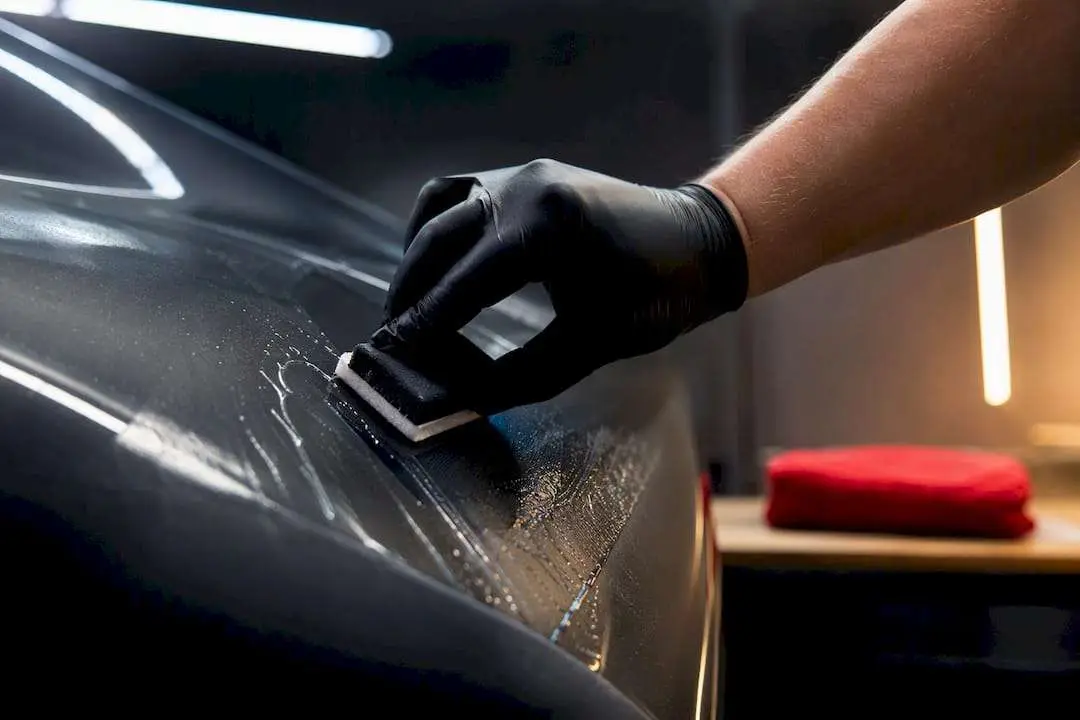
- Apply coating panel by panel, working in manageable sections rather than flooding the whole car at once.
| Condition | Typical wait before coating |
|---|---|
| Warm, dry shop environment | Shorter end of the recommended range |
| High humidity or cold weather | Longer, more conservative wait |
| Uncertain conditions or no climate control | Default to the longest safe window |
Once coated, the surface needs a dust-free cure environment and a no-wash period before its first rinse. Driving in light rain is usually fine once the coating has flashed and bonded, but a full wash should wait until the cure window closes. Applying the coating too soon traps moisture and slip residue underneath, which is the most common cause of haze detailers see on freshly wrapped cars.
How Long Does Coated PPF Last, and How Do You Maintain It?
Coated film typically holds its hydrophobic performance and gloss for a meaningfully longer stretch than bare film left unprotected, though hard water, aggressive chemical exposure, and heavy highway mileage all shorten that window. Cars that see frequent freeway driving pick up more bug strikes, tar, and brake dust, all of which stress the coating faster than a garage-kept daily driver.
The maintenance routine that actually preserves both layers is simple:
- Wash with a pH-neutral shampoo instead of anything labeled “power” or “heavy-duty”
- Use the two-bucket method to keep grit out of your wash mitt
- Dry with a soft, plush microfiber towel rather than letting the car air-dry with spotting
- Reach for a maintenance spray between washes to top up hydrophobicity rather than assuming it needs a full recoat
Diamondbrite’s maintenance guidance backs the same approach: gentle, pH-neutral products protect the coating’s slickness far longer than anything abrasive.
A maintenance spray is enough when water beading has slowed but the surface still sheets water. A full recoat becomes the right call once beading disappears entirely or the surface starts holding onto grime after a wash. Coating wear doesn’t affect your film’s own warranty coverage, since the two are separate products, but a worn coating does leave the film more exposed to the staining and etching it was helping prevent.
Why Do Coated PPF Jobs Get Hazy or Lift at the Edges?
Haze almost always traces back to timing. Coating applied before the film has finished outgassing traps solvent vapor and slip solution underneath, and that trapped moisture clouds the surface days or weeks later. The fix is usually a gentle solvent wipe or, in stubborn cases, stripping and recoating that panel.
Edge lift is a different problem, and it’s almost always an installation order issue rather than a coating issue. Coating applied before the film, or applied too close to an unsealed edge, interferes with adhesion and gives the film’s edges somewhere to start peeling from, according to Baltimore Detail’s breakdown of installation order failures.
Quick troubleshooting reference:
- Cloudy, milky haze days after coating: usually trapped solvent, treat with a gentle solvent wipe
- Edges curling or lifting: almost always wrong installation order or unsealed edges, not a coating defect
- Self-heal seems weaker after coating: test with warm water on a light swirl; thin-build elastomer coatings preserve most of that ability, thick rigid coatings don’t
Pro Tip: If self-healing seems sluggish after coating, run a warm water test on a small scuff before assuming the worst. Thicker, rigid coatings can dull the effect; a thin elastomer layer rarely does.
PPF Pros’ Shop-Tested Workflow
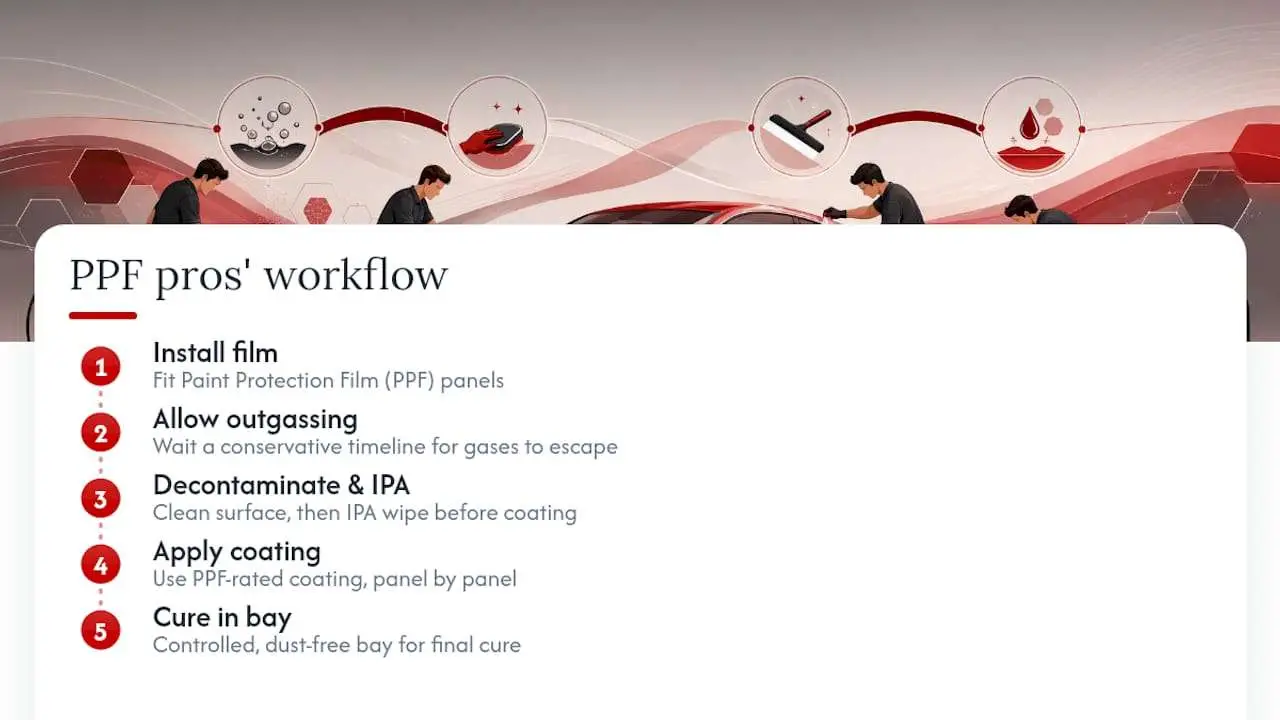
The workflow that avoids nearly every failure above is straightforward: install the film, let it outgas on a conservative timeline, decontaminate and IPA wipe the surface, apply a PPF-rated coating panel by panel, then cure in a controlled, dust-free bay.
Ppfprosla runs Paint Protection Film installs on this same sequence, pairing XPEL Authorized PPF with coatings selected for film compatibility rather than raw hardness.
A high customer rating often reflects a process built around getting the order and timing right the first time, not chasing a redo six months later.
The Advice Nobody Follows Closely Enough
Most of what goes wrong with ceramic coating on PPF has nothing to do with the coating itself. It’s impatience. Owners read that a coating adds protection and want it on the same week the film goes on, and that single decision causes more haze complaints than bad chemistry ever does.
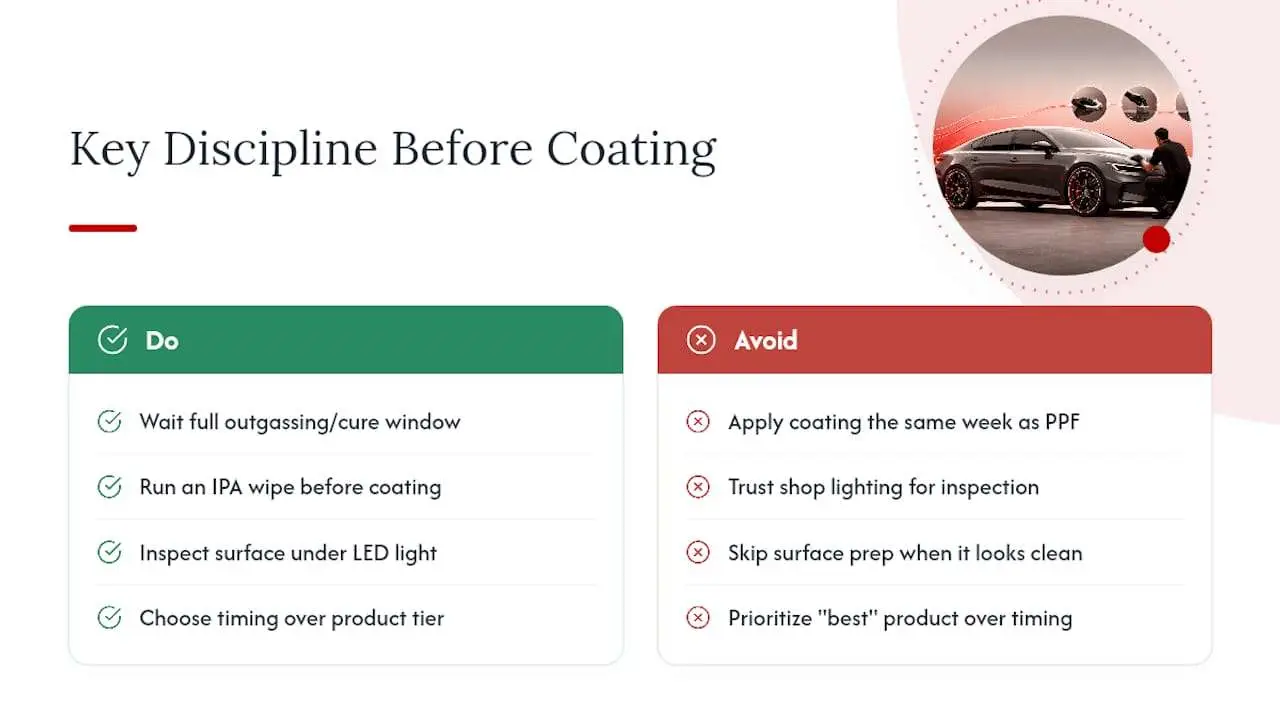
The conventional advice treats coating selection as the hard part. It isn’t. Any reputable PPF-rated or elastomer product will perform fine if it’s given the right cure window and a clean surface. The real skill is discipline: waiting out the outgassing period even when the car looks ready, running the IPA wipe even when the surface looks clean, and inspecting under LED light instead of trusting your eyes in shop lighting.
If you take one thing from this guide, prioritize timing over product research. A mid-tier PPF-rated coating applied correctly will outlast a premium coating rushed onto film that hasn’t finished curing. That’s not a popular opinion among people shopping for the “best” coating, but it’s the one borne out by every failure case in this piece.
— Jake
Ready to Get PPF and Ceramic Coating Done Right?
Skipping the DIY guesswork and having a shop handle both layers together solves the timing problem before it starts. Some shops install XPEL Authorized PPF and pair it with PPF-rated ceramic coatings, curing everything in a controlled bay so outgassing, decontamination, and application all happen on the correct schedule instead of a rushed weekend timeline.
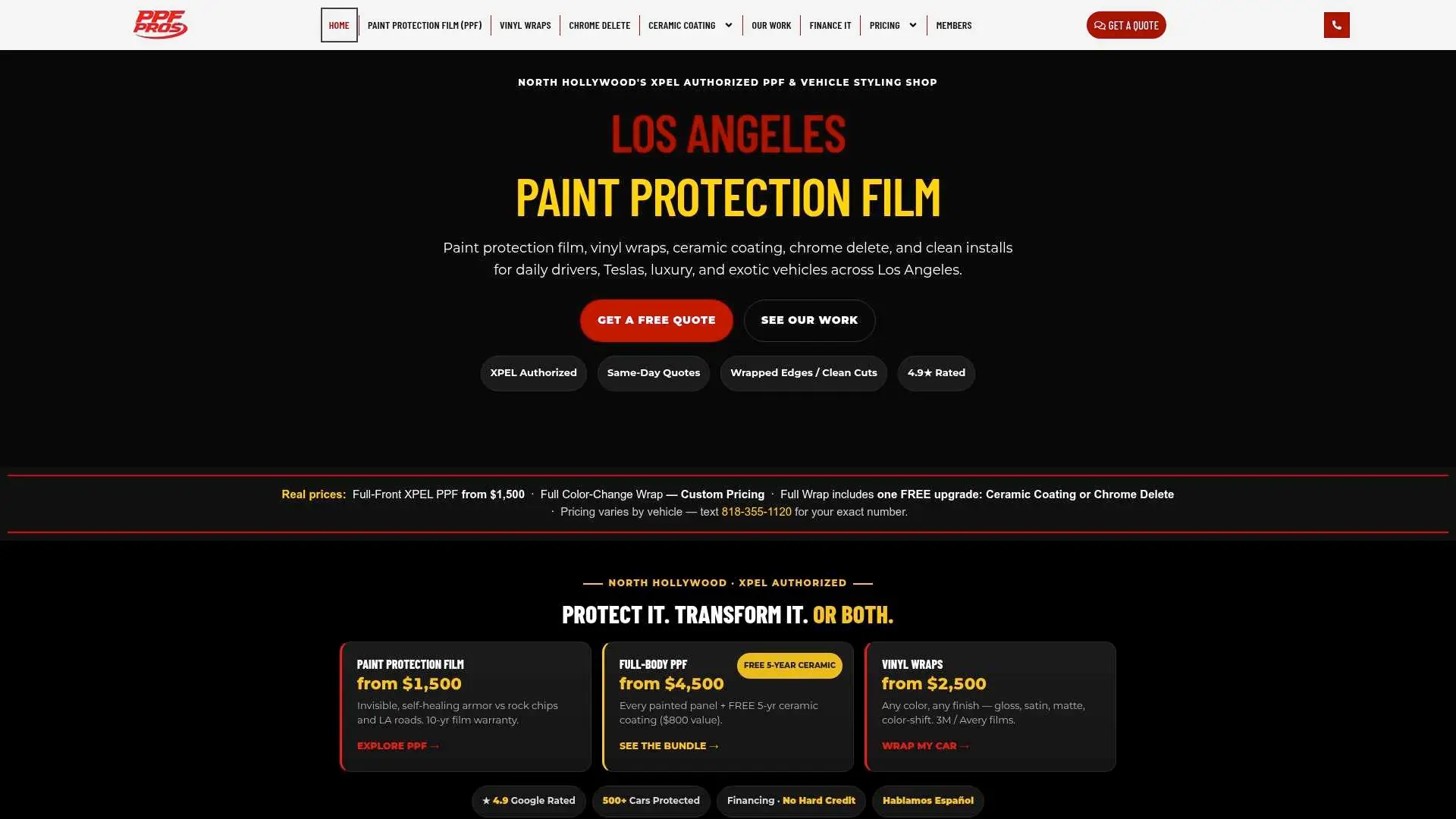
When you request a quote, ask specifically for the coating name being used, the recommended wait time before application, the warranty terms, and what maintenance plan comes with it. Those four questions separate a shop that treats coating as an afterthought from one that treats it as part of the system. Check out the PPF and ceramic coating bundle or schedule an inspection to get a firm timeline and price for your vehicle.
Sources
- Ceramic Coating Over PPF: Right Way To Layer (2026 Guide)
- AZoM: Nanocomposite protective layer (SiO2–TiO2–ZrO2) — 2025
- Fresh Layer: Ceramic Coating Over PPF Guide
- Baltimore Detail: Ceramic coating and PPF — installation order