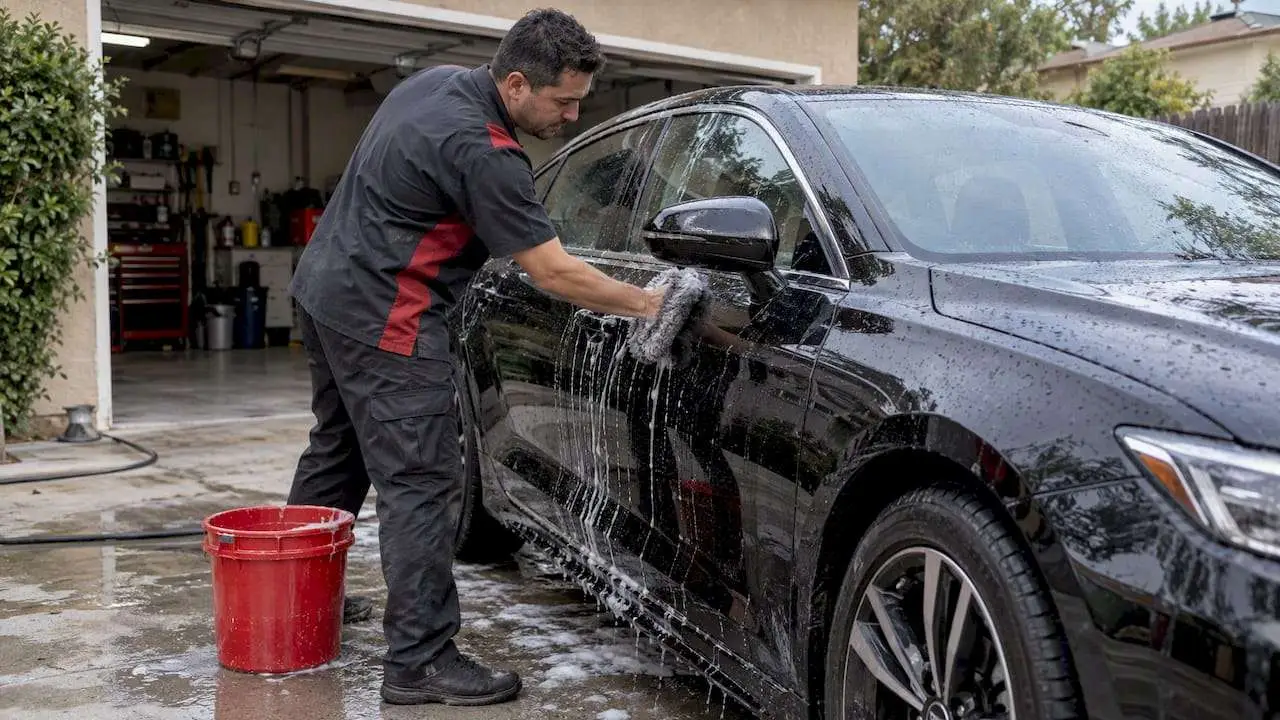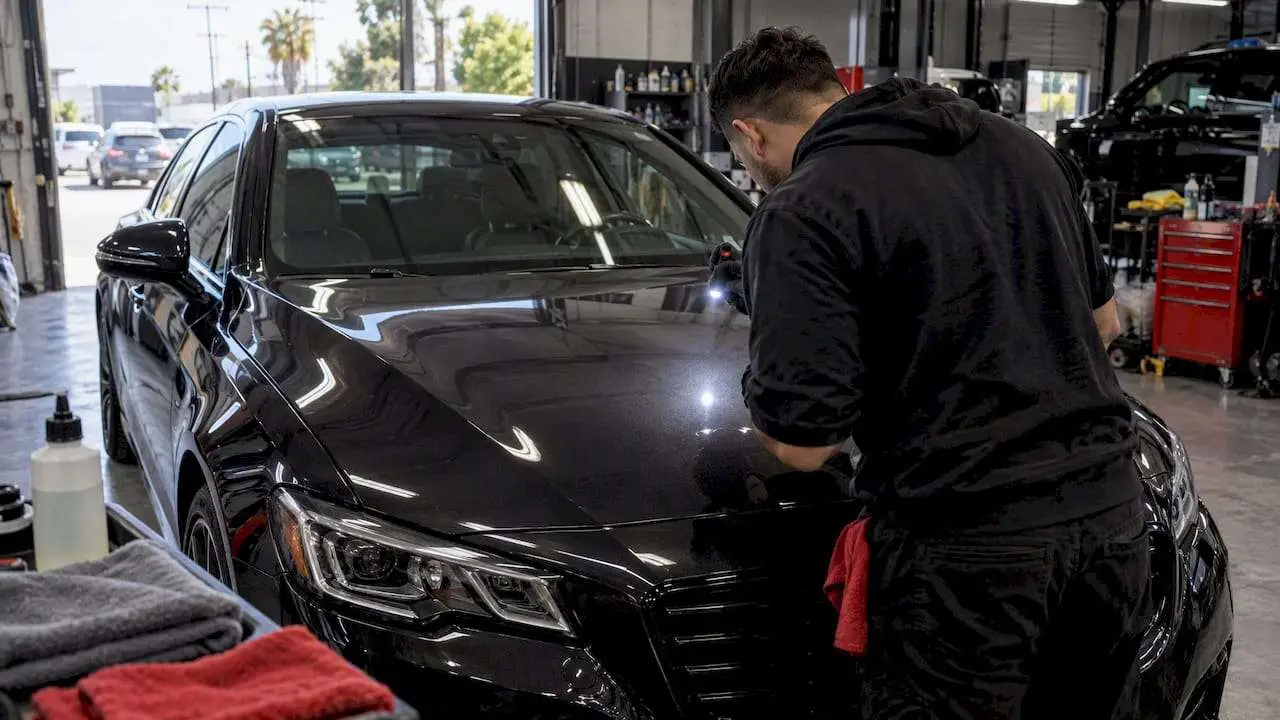

A decontamination wash strips bonded contaminants like iron particles, tar, and industrial fallout off paint so the surface is truly smooth, not just visibly clean. Run one before polishing, ceramic coating, or PPF installation, and any time paint feels gritty or looks dull despite regular washing. The core methods are iron removers, clay or mechanical scrubbers, tar solvents, and touchless chemical decon.
TL;DR:
- Iron removers produce a color change reaction indicating the presence of embedded iron particles, which need thorough rinsing to prevent staining.
- Mechanical decon with clay or scrubbers effectively removes stubborn bonded grime but risks marring the paint if not used with proper lubrication and clean tools.
- Full decontamination before paint correction, ceramic coating, or PPF is essential to prevent contamination from causing micro-scratches or adhesion issues, especially in high-exposure conditions.
- Decon frequency depends on environmental factors, with exposed vehicles requiring regular checks for gritty feel, water sheeting issues, or heavy chemical bleeding.
- Product selection should prioritize pH-neutral formulas and spot testing to avoid damaging existing coatings or films, with professional help recommended for heavily contaminated or delicate surfaces.
Table of Contents
- What Happens to Paint When Contaminants Bond to It
- When Should You Decontaminate Your Car’s Paint?
- Iron Removers, Clay, Tar Solvents, and Touchless Decon Compared
- The Correct Order for a Decontamination Wash
- Picking Products That Won’t Damage Coatings or PPF
- Safety and Disposal Basics You Shouldn’t Skip
- How Shops Sequence Decon Before PPF or Coating Work
- When DIY Decon Is Fine, and When It Isn’t
- Get Your Car Professionally Prepped Before PPF or Coating
- Sources
- FAQ
What Happens to Paint When Contaminants Bond to It
Regular washing removes loose dirt, but it does nothing for contaminants that have physically bonded to the clear coat. Iron particles from brake dust and rail dust embed themselves into the paint surface, then oxidize and expand, creating tiny pits. Tar, road grime, and industrial fallout do something similar, sitting on top of the clear coat and hardening into the texture rather than sitting loosely on it.
The difference matters because loose dirt wipes away with a wash mitt. Bonded contamination doesn’t. It has to be dissolved chemically (iron removers, tar solvents) or physically lifted off with a mechanical decon method like a clay bar.
Skipping this step before polishing or coating causes real problems. Polishing over embedded iron drags hard particles across the paint, creating new micro-scratches instead of removing old ones. Coatings and PPF applied over contamination don’t bond evenly. Adhesion suffers, and the film or coating can trap contaminants underneath, leading to premature failure or a hazy finish.
Detecting contamination doesn’t require special equipment. Three quick checks tell you what you’re dealing with:
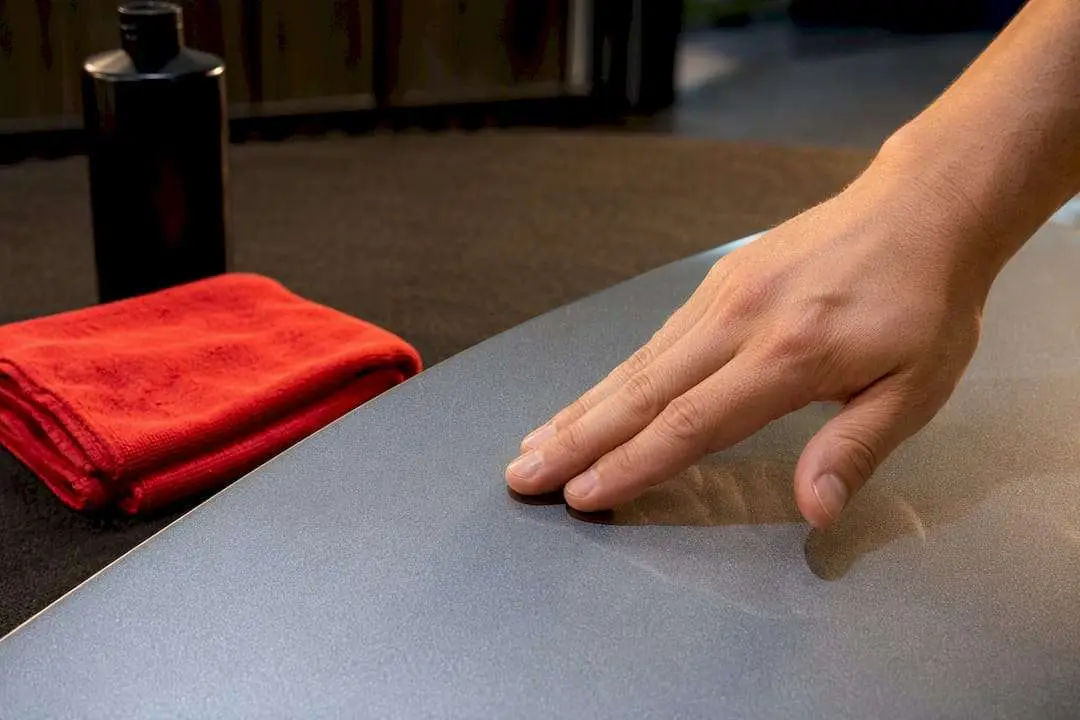
- Hand-feel test: Run a sandwich-bagged hand lightly over clean, dry paint. Roughness or tiny bumps signal bonded contaminants.
- Reflection test: Angle the panel under direct light. Clean paint reflects a crisp, unbroken image; contaminated paint looks textured or cloudy.
- Water behavior: Spray plain water on the surface. It should sheet off evenly. Water that clings in odd patterns often means an uneven contaminant layer or degraded wax is interfering with the surface.
A staged decontamination approach that separates physical removal, chemical action, and rinsing produces a cleaner result than any single-step wash, and that principle carries directly into automotive detailing.
When Should You Decontaminate Your Car’s Paint?
A decon wash isn’t optional before three specific jobs. Skip it and you’re polishing dirt into the clear coat or bonding a coating to a surface that isn’t actually clean.
- Before paint correction. Any embedded iron or grit left on the surface acts like sandpaper under your polishing pad, undoing the correction work as fast as you do it.
- Before ceramic coating. Coatings bond to the paint surface at a microscopic level. Contamination between the coating and the clear coat means poor adhesion and an uneven cure.
- Before PPF installation. Film needs a flawless surface to lay flat and adhere without trapping debris underneath, where it becomes a permanent bump under the film.
Frequency depends on exposure. Vehicles kept in low-traffic areas with garage storage might only need full decontamination every several months. Cars frequently exposed to iron fallout or salt air, such as near train tracks, industrial zones, or coastal roads, often require more frequent decontamination.
Seasonal shifts are their own trigger. Coming out of winter road salt, driving through active construction zones, or parking under trees dropping sap are all reasons to decon outside your normal schedule.
Watch for the signs yourself: paint that feels gritty no matter how recently it was washed, an iron remover that shows heavy purple or orange “bleeding” on first application, or water that no longer beads and sheets the way it used to. That last one usually means old wax or sealant has broken down and contamination is filling the gap.
Iron Removers, Clay, Tar Solvents, and Touchless Decon Compared
Each decon method solves a different contamination problem, and picking the wrong one either wastes time or risks marring the paint.
Iron removers work by chemically reacting with embedded iron particles, dissolving the bond between the metal and the clear coat. The visual cue is unmistakable: spray it on a contaminated panel and you’ll see purple, orange, or red streaks appear as it reacts, often called the product “bleeding.” That reaction is the product working, not a sign of damage. Dwell time matters. Most iron removers need 3 to 5 minutes on the surface, and letting them dry onto the paint in direct sun can cause staining, so always rinse thoroughly before that happens and never apply on a hot panel.
Mechanical decon covers traditional clay bars, clay mitts, and modern alternatives like an Ultra Clay Scrubber pad. These physically shear contaminants off the surface through light abrasion. The method works well for stubborn bonded grime that chemicals alone won’t touch, but it carries real marring risk if you skip the lubricant or use a dirty clay surface. Fold clay frequently, keep the panel wet with spray lubricant, and never let it drag dry.
- Clay bars: aggressive on heavy contamination, higher marring risk if under-lubricated
- Clay mitts and towels: easier to handle on large panels, generally lower risk
- Rubber or synthetic scrubbers: gentler contact, a solid choice for coated paint or PPF, where you want to avoid clay’s grab
Tar and adhesive removers are solvent-based products meant for localized spots, not full-panel use. Bug splatter, tree sap, tar specks, and sticker residue respond to spot treatment rather than a blanket application. Spot test on an inconspicuous area first, wait a few minutes, and check for softening or discoloration before treating a visible panel.
Touchless chemical decon skips physical contact almost entirely. The workflow is foam, then an iron remover, then a pressure rinse, with the goal of dissolving contaminants rather than scrubbing them off. Detailers frequently reach for this method specifically because it’s gentler on existing coatings than a clay bar would be. The tradeoff is that touchless methods sometimes underperform against heavily bonded contamination that chemistry alone can’t fully break down.
DI (deionized) water at the final rinse stage isn’t strictly necessary, but it noticeably reduces mineral spotting and gives a cleaner finish going into polishing or coating work.
Pro Tip: If you’re not sure whether a panel needs mechanical decon or just chemicals, run the iron remover first and re-check with the hand-feel test after rinsing. If it’s still gritty, that’s your signal to bring in clay or a scrubber.
The Correct Order for a Decontamination Wash
Sequence isn’t a preference here, it’s the difference between a clean result and cross-contaminated paint. Skipping ahead or working out of order tends to redeposit the exact grime you just removed.
- Wheels and wheel wells first, using dedicated cleaners and separate wash tools. Brake dust is the heaviest iron source on the car, and you don’t want it splashing onto paint you’re about to work on.
- Pre-soak with snow foam across every panel to loosen surface grime before any tool touches the paint. This step alone removes a large share of loose contamination without any friction.
- Two-bucket contact wash using a wash mitt, rinse bucket, and grit guard. Switch to chemical decon products once the surface is clean of loose dirt but still feels rough to the touch.
- Apply iron remover to a cool, shaded panel. Watch for the bleeding reaction, respect the dwell time on the label, and rinse thoroughly before it dries.
- Clay or mechanical decon in small sections, one panel at a time, with generous spray lubricant. Re-check the surface with a hand-feel test as you go rather than assuming one pass covers everything.
- Spot-treat any remaining tar or adhesive residue, then finish with a clean water or DI rinse and a proper dry using a clean microfiber or air blower.
Multiple rinses between stages aren’t optional. Staged rinsing between decontamination steps dramatically improves how much contamination actually leaves the surface rather than getting redistributed. A practical wheels-first, foam, contact wash, iron remover, clay, DI rinse sequence is exactly what most experienced detailers follow, for good reason: each step sets up the next one to work properly.
Pro Tip: Work in the shade and keep panels cool to the touch throughout. Chemical decon products dry faster and can stain or streak on hot paint, especially iron removers left too long in direct sun.
If you’re planning to follow this decon with actual paint correction before a ceramic coating, don’t rush this stage. Every bit of contamination left behind becomes a problem the polishing pad has to deal with later.
Picking Products That Won’t Damage Coatings or PPF
Product choice matters more once a car already has ceramic coating or PPF installed. Aggressive, high or low pH chemicals can etch coatings, discolor film edges, or dull matte finishes that have zero clear coat buffer to protect them.
- Choose pH-neutral or manufacturer-approved formulas for any car with an existing coating or film, and avoid anything marketed as “heavy duty” or “industrial strength” unless it specifically lists compatibility with coatings or PPF.
- Spot test any new product on a small, hidden area first. Watch for discoloration, softening, or a change in gloss over a few minutes before trusting it on visible panels.
- For clay lubricant, a dedicated detailing spray lubricant outperforms plain water and reduces marring risk significantly, especially on darker paint where scratches show.
- On matte paint, vinyl wraps, or PPF, favor gentler tools like clay towels or rubber scrubbers over traditional clay bars, which can leave a texture change on finishes without a glossy clear coat to buff out later.
- Save stronger solvents for localized tar and adhesive spots only, and rinse the area immediately afterward rather than letting solvent sit and spread.
Detailing partners who specialize in coated surfaces echo the same caution: safe cleaning routines for coated wheels rely on lower-aggression products specifically because coatings don’t tolerate the harsh chemistry that bare paint can shrug off. If you’re wondering whether your existing coating needs to be reapplied after repeated decon washes, product choice over time is usually the deciding factor.
Safety and Disposal Basics You Shouldn’t Skip
Decon chemicals aren’t dangerous in the way industrial biohazard cleaners are, but they still deserve real caution, not casual handling. Iron removers and tar solvents both carry fumes and skin irritation risk if you’re careless with them.
- Wear gloves and work in a ventilated space, especially with iron removers, which release a noticeable sulfur smell as they react.
- Contain spent wash water where local rules require it rather than letting chemical runoff go straight into a storm drain.
- Work on cool panels out of direct sun, and respect the dwell times printed on the product label rather than guessing.
- If you notice paint softening, lifting at PPF edges, or any discoloration on a coated panel, stop immediately and consult a professional rather than trying to fix it with more product.
The gap between automotive decon and true hazardous material remediation is worth understanding, since some specialized biohazard cleaning products exist precisely because certain contamination requires chemistry and disposal protocols that have no place on a car’s paint.
How Shops Sequence Decon Before PPF or Coating Work

Professional prep starts with inspection, not chemicals. A technician walks the panels first, identifies where contamination is heaviest, brake dust zones, lower rocker panels, front bumpers, and decides which method fits each area rather than blasting the whole car with one product.
Near existing vinyl, coated edges, or PPF seams, shops tend to favor conservative, touchless methods over aggressive clay work, reserving mechanical decon for panels that genuinely need it. Deliverables from a professional PPF installation typically include inspection notes, before-and-after photos, and a documented rinse-and-dry protocol so the film goes onto a surface that’s actually ready for it.
When DIY Decon Is Fine, and When It Isn’t
Routine maintenance decon, done every few months on a well-kept car, is squarely DIY territory. Where it gets risky is a neglected vehicle with heavy bonded contamination or thin, aging clear coat, where an inexperienced hand with a clay bar can do real damage.
Shop-grade tools, filtered DI water, proper iron removers, and controlled drying, reduce the odds of marring or missing hidden problems. If you’re prepping specifically for PPF or a coating and haven’t polished paint before, the investment on the line usually justifies letting a professional handle it.
— Jake
Get Your Car Professionally Prepped Before PPF or Coating
Getting decon right yourself takes patience, the right products, and a willingness to spot test before you commit to a full panel. A careful prep process starts the same way a careful DIY job should: inspection first, targeted chemical decon where contamination is worst, mechanical decon only where it’s actually needed, and product choices that won’t compromise film or coating adhesion.
That inspection-first approach is exactly why installation risk drops when a shop handles prep instead of skipping straight to product application. If you’re staring down PPF installation or considering a bundled PPF and ceramic coating package, request a quote or book an inspection through Ppfprosla’s North Hollywood shop and skip the guesswork on whether your paint is actually ready.
Sources
For deeper technical grounding, see OSHA’s decontamination guidance and HHS staged decontamination guidance.
- Optimum Touchless Decon Wash: The Ultimate Guide
- Decontamination | OSHA
- How To: A Proper Car Paint Decontamination – Obsessed Garage Support
- Decontamination guidance (HHS/PRISM)
FAQ
What Is a Decontamination Wash?
It’s a cleaning process that removes bonded contaminants like embedded iron, tar, and industrial fallout from paint, going beyond what a regular soap wash can lift off.
What Is the Best Car Soap for Decontamination?
A pH-neutral car soap is the safest starting point for the contact wash stage, especially on coated or PPF-protected vehicles, since it won’t strip wax or attack film adhesive.
What Are the Three Main Decontamination Methods?
Most detailers rely on chemical iron removers, mechanical clay or scrubber decon, and touchless foam-based chemical decon, often using two or three together depending on how heavy the contamination is.
What Is in a Decontamination Shower?
That term comes from industrial and emergency response settings, not automotive detailing. It typically refers to a staged rinse and cleaning process used to remove hazardous material from people or equipment, unrelated to car paint prep.
How Often Should I Do a Decon Wash on My Car?
Frequency varies widely depending on exposure, with garage-kept cars needing decontamination less often and vehicles in coastal or industrial areas requiring it more frequently.