Yes, a clear 8-mil TPU film professionally installed on your door sills is the simplest way to stop scuffs and preserve the factory paint underneath. Most owners get the best long-term result from a custom-cut, professionally applied door sill PPF rather than a universal DIY strip. The trade-off is straightforward: film is a sacrificial layer, so it takes the damage instead of your paint and gets replaced every few years instead of forcing a repaint.
TL;DR:
- Custom-cut professional installation provides better adhesion and longevity on curved or contoured sills compared to universal DIY kits.
- Proper surface prep, heat application, and avoiding coatings are essential to prevent film lifting and ensure long-lasting protection.
- Most TPU sill films are 8 mil thick with self-healing topcoats and UV resistance, but quality varies, making specification checks important before purchase.
- A well-installed film typically lasts several years, with replacement costing far less than repainting or repairing clear coat damage.
- For heavily trafficked or frequently scraped sills, professional installation with a warranty is highly recommended to maximize durability and protection.
Table of Contents
- What Is Door Sill PPF and How Is It Different From Edge Guards?
- Why Door-Sill Film Actually Protects Your Car
- DIY Universal Kits vs. Professional Custom Installs
- How Door-Sill PPF Gets Installed the Right Way
- Film Specs and Materials Worth Checking Before You Buy
- How Long Door-Sill Film Lasts and How to Keep It That Way
- What Door-Sill PPF Costs and Whether It’s Worth It
- The Honest Downsides of Door-Sill PPF
- Why a Professional Install Changes the Outcome
- When Door-Sill PPF Stops Being Optional
- Ready to Protect Your Sills? Here’s How to Get Started
- Sources
- FAQ
What Is Door Sill PPF and How Is It Different From Edge Guards?
Door sill paint protection film is a clear or matte polyurethane layer applied directly over the painted sill and step area of your car, the strip you or your passengers brush against every time you get in or out. It’s distinct from the rubber or vinyl “door edge guards” sold at auto parts stores, which clip or stick onto the door’s outer edge rather than bonding to the painted sill panel itself.
Most sill kits use TPU (thermoplastic polyurethane) film with a self-healing topcoat, the same base material used in full-vehicle PPF packages. Coverage generally comes in three styles:
- Band coverage — a single strip sized to the visible sill area, the most common and affordable option.
- Full wrap — film extends slightly under the door jamb edge for cleaner, less visible termination lines.
- Rocker integration — sill film ties into a rocker panel package for continuous lower-body protection.
Vinyl and rubber guards sit on top of the surface and are visible as an add-on accessory. TPU film, by contrast, is optically clear and designed to disappear into the factory finish once installed, while also self-healing light scuffs with heat from sunlight or warm water. That invisibility is the real dividing line between the two approaches, not just the material.
Why Door-Sill Film Actually Protects Your Car
Door sills take a specific kind of abuse: horizontal, repetitive scraping from shoes, boots, and pet claws every time someone climbs in. Detailing shops that specialize in lower-body protection point out that once that abrasion breaches the clear coat, polishing can’t correct it, because the scratch has gone below the surface layer that polishing works on. Prevention is the only real fix, and film is the practical way to prevent it.
Three concrete benefits stand out:
- It intercepts the wear before it reaches the paint. The film takes the scuff; the clear coat underneath stays untouched.
- Self-healing topcoats erase light marks on their own. Warm water or sun exposure smooths out fine swirls within the film surface.
- Replacing film costs far less than repainting a panel. A worn sill strip is a routine swap; a scratched-through sill often means color-matching and full panel refinishing.
Quick fact: Once clear coat is scratched through on a repeated-contact panel like a sill, professional detailers generally agree polishing alone won’t remove the damage because the wear runs below what a compound can safely level out.
That’s the real math behind sill protection. You’re not buying cosmetic insurance. You’re avoiding a repair category (color-matched paint work) that costs far more than swapping a strip of film.
DIY Universal Kits vs. Professional Custom Installs
Universal kits work fine for straightforward, flat sills, and they’re the cheapest way to get some protection in place this weekend. But they have real limits once your sill has curves, and knowing which category your car falls into matters before you buy anything.
- What a universal kit gives you. Most kits ship as a pre-cut roll, typically designed to cover the visible sill area, commonly made from polyurethane with a self-healing finish, according to XPEL’s universal door sill kit listing. You trim to length, apply with a squeegee, and you’re done in under an hour per door.
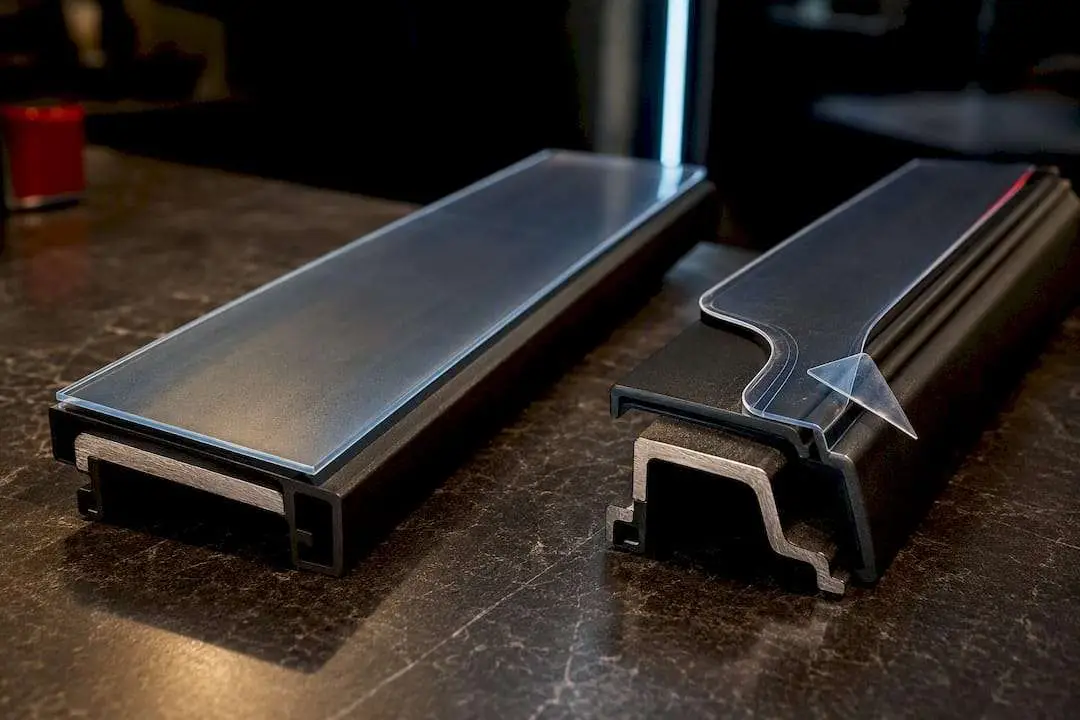
- Where universal film struggles. Flat, simple sill geometry is where these kits shine. Contoured sills, factory body lines, or sills that wrap around a curve often require relief cuts or stretching to conform, and that’s exactly where premature lifting starts. Practitioners who install film for a living note that universal strips frequently need these workarounds on curved sills, which weakens the bond right where the edge takes the most abuse.
- What a professional install adds. Shops cut custom templates to match your exact sill contour, install in a climate-controlled bay where dust and temperature won’t compromise the bond, and typically back the work with a warranty. Many also integrate the sill package with a ceramic coating or a broader front-end PPF job in one visit, so you’re not scheduling separate appointments for separate protection layers.
Pro Tip: If your sills have any visible curve, crease, or body line where the door meets the rocker, skip the universal kit. That’s the exact spot where stretched film lifts first, usually within a few months.
The honest way to decide: measure your sill with your eyes, not your wallet. A flat sill on a basic sedan is a fair DIY candidate. A sill with a factory design line or a stepped edge is a job for a custom template, because that’s where the film has to bend without tearing or peeling.
How Door-Sill PPF Gets Installed the Right Way
Longevity comes down almost entirely to what happens before the film ever touches the car. Skip a step here and you’re looking at a redo in weeks, not years.
Preparation:
- Wash the sill area thoroughly to remove loose grit and road grime.
- Decontaminate with a clay bar if the surface has embedded contamination the wash didn’t lift.
- Wipe the panel down with isopropyl alcohol to strip any wax, sealant, or oily residue.
- Inspect the surface under good light for any leftover debris before the film ever comes out of its backing.
That last step matters more than people assume. A single trapped grain of sand under the film creates a visible bump and a weak point that catches on shoes and starts peeling within weeks.
Application:
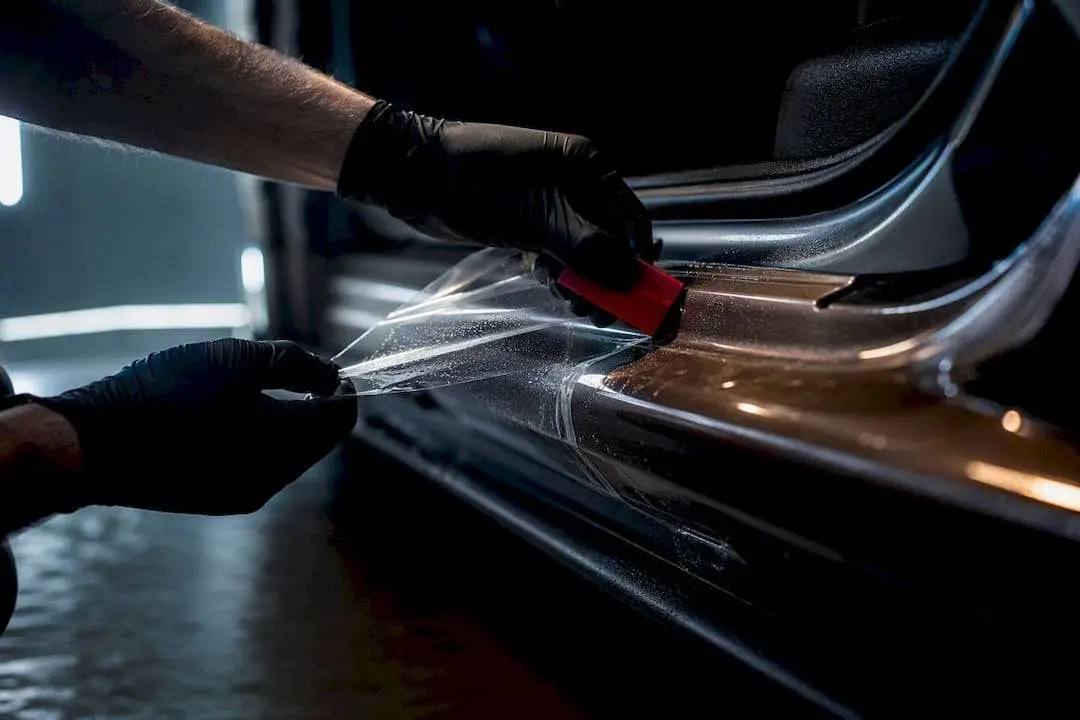
- Mist the panel with a slip solution so the film can be repositioned without sticking prematurely.
- Lay the film and squeegee from the center outward, pushing solution and air out through the edges.
- Tuck the film edge cleanly against any panel gap or jamb line so there’s no lip for a shoe to catch.
- Apply controlled heat with a heat gun where the sill curves, softening the film so it conforms instead of stretching thin.
Installers who work with edge-focused PPF products consistently flag the same trouble spots: surface prep and heat application are the two steps most likely to get rushed, both are where failures start. Skipping heat on a curved section leaves the film under constant tension, and tension is what causes edges to lift six months down the road, not bad luck.
Pro Tip: Never install film directly over a fresh ceramic coating or a recently waxed sill. The coating creates a barrier the adhesive can’t grip, and the film will lift within days, not months.
Film Specs and Materials Worth Checking Before You Buy
Not all sill film is built the same, and the spec sheet tells you more than the marketing copy does. A few numbers and terms are worth knowing before you hand over your card.
- Thickness. Most sill-specific kits run 8 mil, a sweet spot between flexibility for tight curves and enough body to resist punctures from grit and boot heels.
- Self-healing topcoat. This is the layer that lets light swirls and micro-scratches disappear with warm water or sun exposure rather than becoming permanent.
- UV resistance and non-yellowing claims. Quality TPU film is formulated to resist yellowing over years of UV exposure; cheaper films can amber over time, especially in sun-heavy climates.
- Manufacturer disclaimers. Read the fine print. Some vendor pages include specific warnings about where a film should and shouldn’t be applied, including surfaces the film isn’t rated for, so check before assuming one product fits every application.
- Clear vs. textured or colored film. Clear film disappears into factory paint. Textured or colored film is a style choice, useful if you want the sill to visibly stand out rather than blend in.
If a listing doesn’t mention thickness or a self-healing topcoat at all, that’s usually a sign you’re looking at a basic vinyl guard being marketed as film. Read the spec line, not just the product photos.
How Long Door-Sill Film Lasts and How to Keep It That Way
Expect a well-installed sill film to hold up for several years under normal daily use, though the range varies a lot based on three factors: how much foot traffic the sill sees, how clean the edges were sealed at install, and how well the surface was prepped beforehand.
- What shortens lifespan. Constant abrasion from work boots, poor edge sealing that lets water and grit sneak underneath, and rushed prep that traps debris under the film.
- Aftercare basics. Give fresh film at least a few days to fully cure before washing the area, then stick to hand washing or a touchless wash rather than a brush-based tunnel wash. Avoid strong solvents, degreasers, or anything with high alcohol content directly on the film edges.
- Signs it’s time to replace. Lifting corners, visible yellowing, or cloudy patches that no longer self-heal with heat are your cue.
Quick fact: Once a scratch penetrates the clear coat on a heavily contacted panel like a sill, detailers note that correction work usually can’t fully remove it, which is exactly why swapping worn film beats waiting until the paint underneath gets compromised.
Replacing a sill strip is a routine service appointment. Letting the sill wear through to bare paint turns into a color-matching and refinishing job, a completely different cost category.
What Door-Sill PPF Costs and Whether It’s Worth It
DIY universal kits typically run in the affordable range for a full set of four doors, with retail listings showing kits like the RPM Tesla door sill kit bundled with a squeegee and soap solution for straightforward home application. That’s the low end of the cost spectrum, and it reflects the trade-offs already covered: no custom fit, no warranty, and more risk on curved sills.
Professional installation costs more upfront but includes labor, a proper template cut, and typically a warranty on the work. Where the real value shows up is in the comparison that matters most:
- A worn or scratched sill film swap is a routine, affordable service.
- Repainting or color-correcting a scuffed sill panel involves labor, materials, and blending work that costs substantially more, and the outcome still depends on how well the shop matches the factory finish.
Your ownership timeline changes the math. If you’re keeping the car for years, film pays for itself by keeping the original factory paint intact and protecting resale value. If you’re planning to sell soon, even a basic universal kit can be enough to keep the sills presentable through a sale without the bigger investment of a full custom package.
The Honest Downsides of Door-Sill PPF
Film isn’t magic, and pretending otherwise doesn’t help anyone make a good decision. Three real trade-offs are worth knowing going in.
- It’s a sacrificial layer, not a permanent fix. The film absorbs the wear that would otherwise hit your paint, which means it wears down and needs replacing. That’s the deal, not a flaw.
- Edges are the weak point. Trapped debris, rushed prep, or skipped heat application during install are the most common causes of lifting corners down the road.
- Cheap film can yellow. Lower-quality TPU without real UV stabilizers can amber over time, especially in sun-heavy regions, which is why spec sheets matter more than price tags.
- Coating compatibility matters. Installing over a fresh ceramic coating or wax residue can block proper adhesion entirely, so any existing coating needs to come off the install area first.
None of this makes the film a bad investment. It just means going in with realistic expectations about maintenance and eventual replacement.
Why a Professional Install Changes the Outcome
A shop that does this daily brings three things a DIY kit can’t: a template cut specifically for your car’s sill contour, a controlled environment where dust and temperature won’t sabotage the bond, and a warranty that backs the work if something lifts early. Ppfprosla installs XPEL-authorized film out of North Hollywood and often bundles sill protection with a full-front PPF package or a ceramic coating add-on, so the sill isn’t an afterthought tacked onto a bigger job.
Before booking any shop for sill work, ask these questions:
- What film brand and thickness do you use, and is it self-healing?
- Does the install come with a written warranty, and what does it cover?
- Can you show photos of previous sill or rocker panel installs?
- Is the sill package priced standalone, or only bundled with larger services?
A shop with a strong reputation, XPEL-authorized status, and a track record of protected vehicles should answer all four without hesitation. If a shop can’t show you prior sill work, that’s worth noting before you commit.
When Door-Sill PPF Stops Being Optional
If you drive a daily family car with kids climbing in and out, a work truck that sees boots and tools every day, or anything hauling a dog in the back seat, sill film isn’t a luxury upgrade. It’s the cheapest insurance against a repair that costs far more than the film itself.
Where I’d push back on conventional thinking: people treat sill protection as a cosmetic add-on, something you get around to after the “real” PPF work on the hood and fenders. That’s backwards. Sills take more repetitive contact than almost any other painted surface on the car, daily, guaranteed, from the first week of ownership. The comparison between polishing swirl marks out and preventing them in the first place applies here directly. Once the clear coat is breached, correction has limits. Prevention doesn’t.
— Jake
Ready to Protect Your Sills? Here’s How to Get Started
Some shops install door sill film as a standalone package for owners who want targeted protection without committing to a full-vehicle wrap, and may also bundle it into larger jobs when it makes sense. Typical options include a sill-only package for daily drivers, a combined sill-plus-rocker package for trucks and SUVs that see more ground clearance abuse, and a PPF-plus-ceramic-coating bundle for owners who want the sill film paired with a slicker, easier-to-clean finish on the rest of the car.
Some shops use XPEL-authorized film and have strong customer ratings across many protected vehicles in Los Angeles. If your sills already show scuffs, or you just want them protected before they start, request a quote through the full-front PPF service page and the shop will walk you through package options based on your car and how you use it.
Sources
The specs, installation notes, and shop guidance in this article draw from manufacturer and vendor product pages plus detailing-shop writeups:
- PPF for door sills, rocker panels, and lower body areas | EuroLuxe Detailing
- Door Edge Protector PPF | Clear 8mil Paint Protection Film Guard – TWRAPS
FAQ
Is door sill protection film worth it?
Yes, for most owners it’s one of the highest-value protection packages available, because sills take daily, repeated contact that polishing can’t undo once it breaks through the clear coat.
How do I protect car door sills from scratches?
Install a TPU film band over the sill, ideally professionally custom-cut for your car’s contour, and keep it maintained with gentle washing and prompt attention to any lifting edges.
How much does a full PPF install usually cost?
Pricing varies widely based on coverage (sill-only versus full-front or full-vehicle) and vehicle size, so getting a direct quote from a shop like Ppfprosla is the most accurate way to know your cost.
What is the downside of PPF?
It’s a sacrificial layer that wears down and needs eventual replacement, and poor installation can lead to trapped debris, lifting edges, or yellowing on lower-quality film.