
Most premium paint protection film does not yellow quickly, so if your film already looks amber or hazy, the likely culprits are cheap film chemistry, degrading adhesive, or baked-on contamination rather than normal aging. Start by washing the panel and comparing it against an unwrapped reference spot, like a door jamb, and photograph both. That single test tells you whether you’re dealing with dirt or something structural, and the sections below walk through causes, diagnosis, prevention, and what to do next.
TL;DR:
- True yellowing of PPF is caused by UV-induced chemical degradation of aliphatic TPU, not dirt or surface contamination, which can often be cleaned off.
- Checking the ΔYI number after aging and verifying QUV testing hours can help determine whether yellowing is likely or happening prematurely.
- Genuine aliphatic TPU films usually last four to five years before noticeable yellowing, while cheaper TPH or PVC films can yellow within 6 to 24 months.
- Edges and seams are more prone to adhesive breakdown, causing uneven discoloration that washing cannot fix, signaling the need for professional inspection or replacement.
- Asking for specific technical data, including ΔYI, QUV hours, and substrate source, is essential before purchasing or installing PPF to ensure long-term clarity and durability.
Table of Contents
- What Actually Causes PPF Yellowing?
- Is It Really Yellowing, or Just a Stain?
- Building a Maintenance Routine That Actually Protects Clarity
- Cleaning, Repairing, or Replacing Yellowed PPF
- What Installers Actually Check Before They’ll Stand Behind a Film
- A Buyer’s Checklist Before You Commit to PPF
- Get Your PPF Inspected or Replaced by an XPEL-Authorized Shop
- Standards and Specs Worth Requesting
- Sources
What Actually Causes PPF Yellowing?
Three things drive most cases of paint protection film discoloration, and they rarely act alone.
UV exposure triggers photo-oxidation, a chemical reaction that breaks down polymer bonds in the film and shifts its color toward yellow over time. How fast that happens depends almost entirely on what the film is made from. Premium films use aliphatic TPU (thermoplastic polyurethane), a substrate chemistry that resists UV breakdown far better than older TPH or PVC-based films, which can show visible yellowing in 6 to 24 months under normal sun exposure.
Adhesive is a separate failure point entirely. If the bonding layer between film and paint starts breaking down, you’ll often see uneven yellowing near the edges rather than a uniform tint, and that kind of discoloration usually can’t be cleaned away.
Then there’s contamination masquerading as yellowing: bug residue, tree sap, hard water minerals, and road film that bake onto the topcoat under heat. It looks chemical. It’s often just dirt.
Manufacturers quantify true yellowing risk with three lab numbers you can request on a product’s technical data sheet:
- ΔYI (Yellowness Index change), measured per ASTM E313 — a change under 2.0 after full aging is considered invisible to the eye, while anything above 3.0 becomes noticeable
- QUV or ASTM G154 hours — accelerated weathering hours, where roughly 1,000 hours simulates 1 to 2 years of real sun exposure
- Substrate identity — whether the film is genuinely aliphatic TPU or an unbranded blend that may mask a cheaper TPH substrate
Pro Tip: Ask for the ΔYI number specifically, not just “UV resistant” marketing language. A film rated ΔYI under 2.0 after 2,000 QUV hours has been through real accelerated aging testing, not just a sales pitch.
Is It Really Yellowing, or Just a Stain?
Run this quick sequence before assuming the worst:
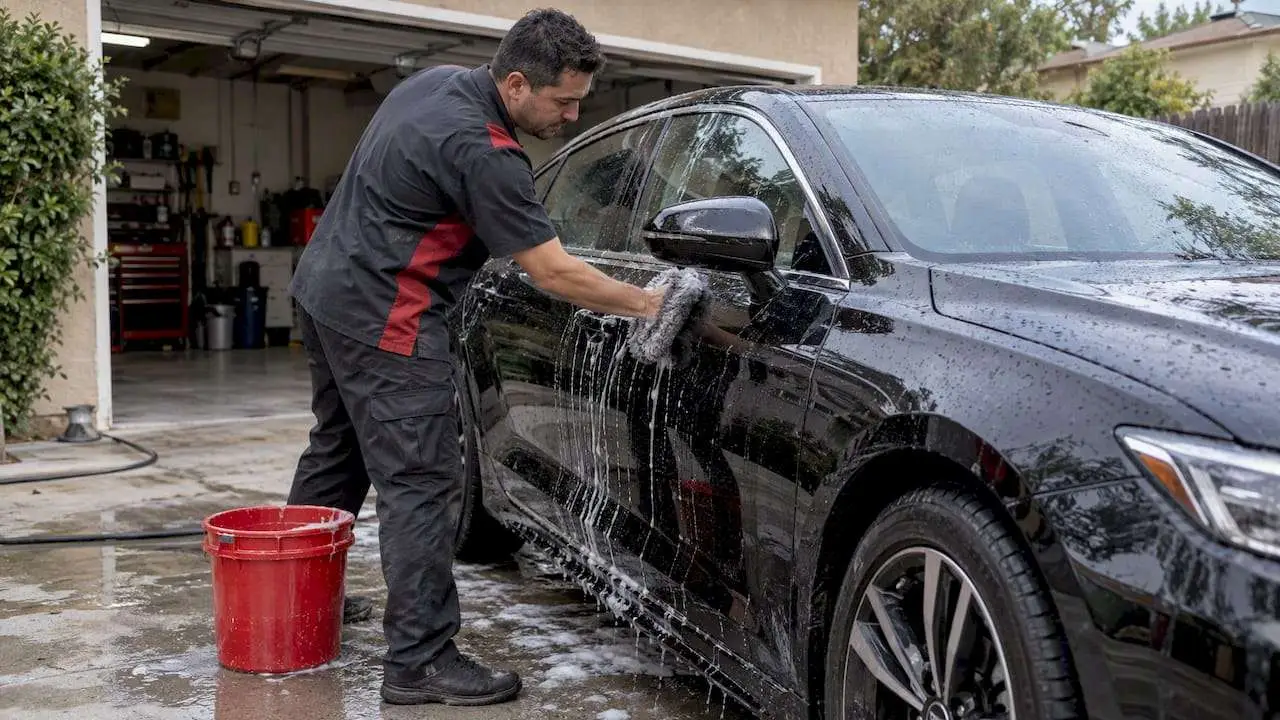
- Wash the panel with a pH-balanced shampoo and a clean microfiber towel, then let it dry fully.
- Compare the washed area to an unwrapped reference spot, like inside a door jamb or under the trunk lid.
- Photograph both under the same lighting and note whether the tint fades, stays put, or shows up only in patches.
- Check the edges and seams specifically. Discoloration concentrated at trim lines or panel edges usually points to adhesive breakdown, not film-wide yellowing.
- If the color persists evenly across the whole panel after washing, that’s a stronger sign of true chemical degradation within the film itself.
Contamination-related discoloration typically lifts with safe decontamination products, clay bars, or iron removers. True film degradation does not respond to any of that.
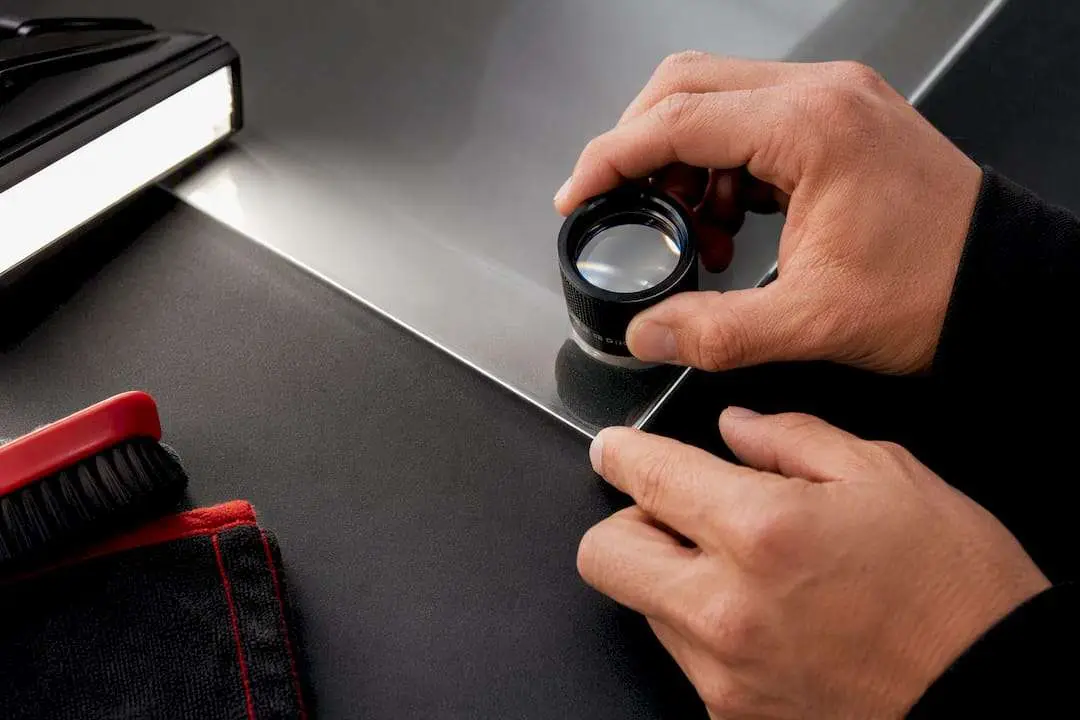
An at-home test can rule contamination in or out, but it can’t measure actual ΔYI change or tell you whether the adhesive is compromised. For that, you need a lab reading or a professional inspection with proper lighting and magnification. If the tint survives a full wash and decontamination pass, it’s time to call an installer rather than reach for another cleaning product.
Building a Maintenance Routine That Actually Protects Clarity
Film doesn’t yellow evenly. It yellows faster wherever contamination sits longest and UV exposure is heaviest, which means your washing habits matter almost as much as the film you chose.
Wash your PPF every one to two weeks using a pH-balanced car shampoo and a soft microfiber towel. Skip anything abrasive. Aggressive chemicals and polishing compounds can damage the film’s topcoat, which then accelerates the exact discoloration you’re trying to avoid.
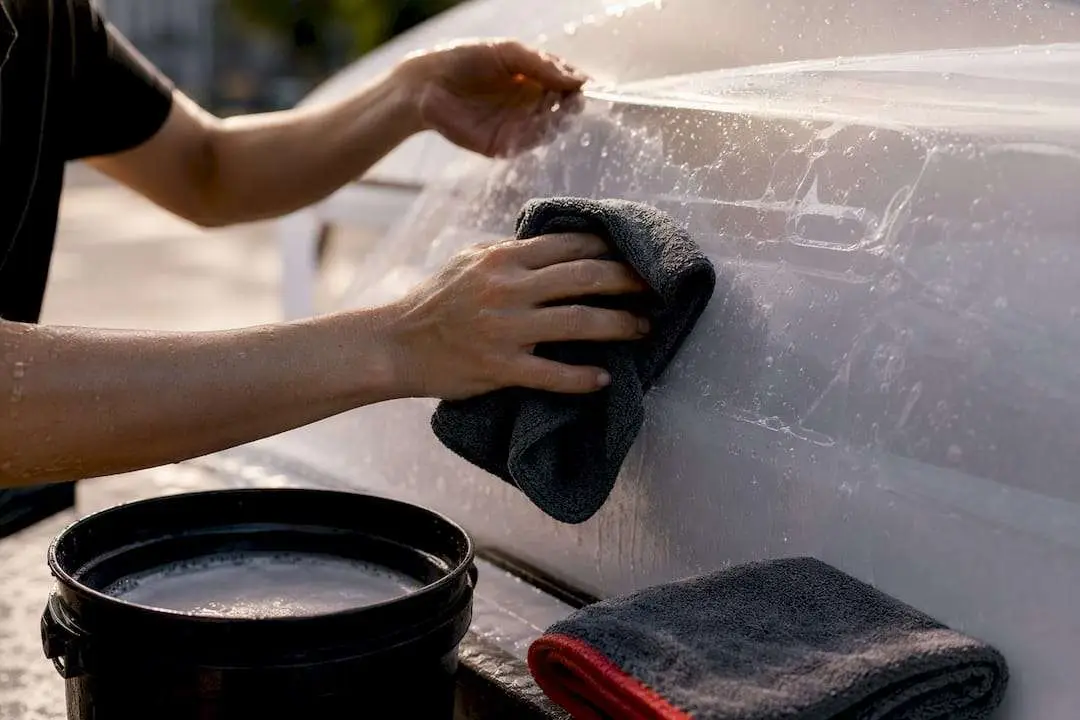
Spot-clean fast. Bug splatter, bird droppings, and tree sap are mildly acidic, and the longer they sit in the sun, the more likely they are to etch or bake into the topcoat. A quick rinse within a day or two prevents most of that.
A few habits worth building into your routine:
- Keep a stocked detailing bag in your trunk with a pH-neutral spray and microfiber towels for on-the-spot cleanups
- Use a dedicated iron remover or bug-and-tar remover monthly, not just water
- Avoid drive-through car washes with brushes; they grind contaminants across the film surface
- Park in shade or a garage when possible to cut cumulative UV load
Ceramic coatings applied over PPF are worth considering, but be realistic about what they do. A quality coating adds hydrophobicity and makes contaminants easier to rinse off, which indirectly reduces staining risk. What it does not do is stop the polymer inside the film from oxidizing under UV exposure. Think of it as a maintenance multiplier, not a UV shield. For readers weighing whether a coating is worth the cost on top of PPF, it helps to understand how long ceramic coatings actually last before reapplication is needed.
Pro Tip: If you park outdoors daily, a breathable car cover during peak summer months does more for film longevity than almost any product you can spray on.
For general vehicle film upkeep beyond PPF specifically, proper window film care habits translate directly. Both film types fail for similar reasons: heat, UV, and neglected contamination.
Cleaning, Repairing, or Replacing Yellowed PPF
If your film tests positive for contamination rather than true degradation, the fix is straightforward:
- Wash with a pH-neutral shampoo, then follow with a dedicated decontamination product (iron remover, tar remover, or a clay bar pass)
- Reassess under good lighting once the panel is fully dry
- If tint remains and looks uniform across the panel or concentrated at edges, book a professional inspection rather than continuing to clean
Uneven yellowing at seams, bubbling, or lifting edges are signs the adhesive has failed. That’s not something a wash restores. Uniform yellowing that survives decontamination usually means the film’s substrate has oxidized at a chemical level, and no amount of polishing brings that back.
Timeline expectations matter here. Cheap TPH or PVC film can show visible yellowing within 6 to 24 months, while premium aliphatic TPU tested to 2,000 QUV hours typically stays clear for 4 to 5 years of real-world exposure. Before assuming you’re stuck paying out of pocket, check your installer’s warranty language for specific ΔYI thresholds or QUV hour guarantees. Vague phrases like “resists yellowing” mean far less than a stated number.
What Installers Actually Check Before They’ll Stand Behind a Film
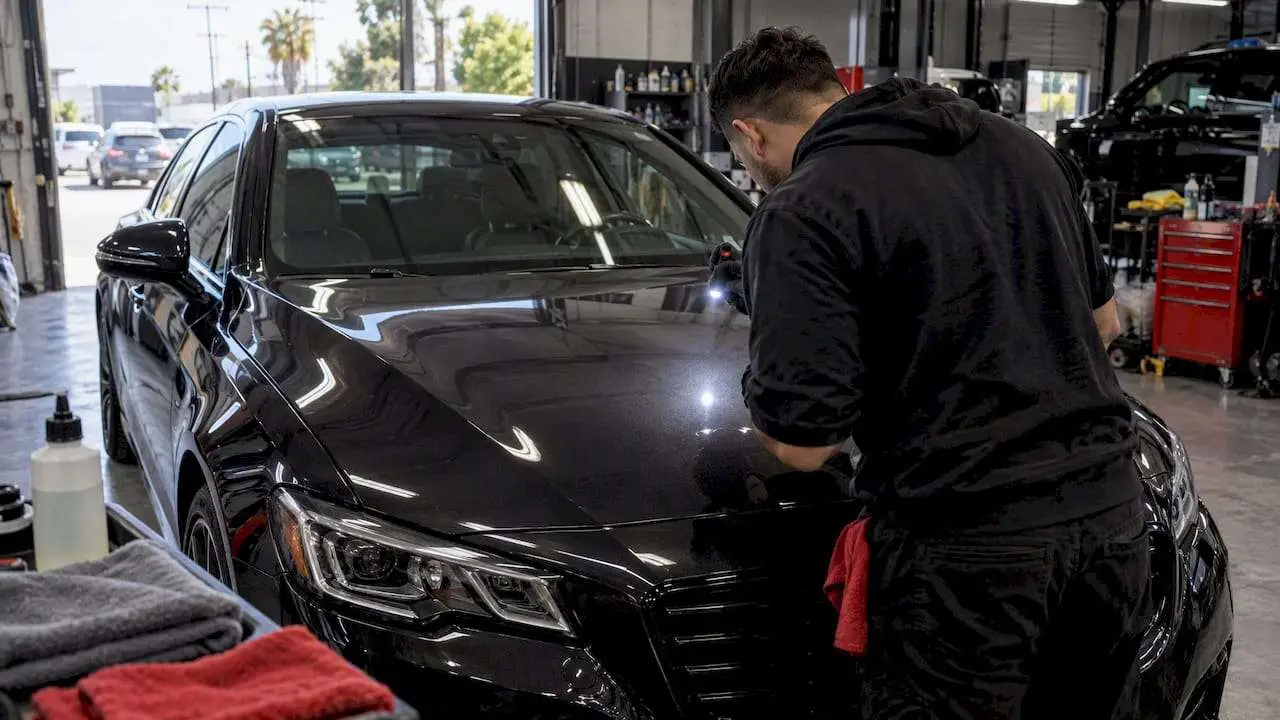
A good installer inspects more than just the roll of film. Before installation, they check edge seal quality, look for trapped dust or fibers under the film, and test how the adhesive behaves during the initial squeegee pass.
They also verify manufacturer numbers rather than taking marketing copy at face value:
- ΔYI rating after full accelerated aging
- QUV or ASTM G154 test hours
- Named substrate supplier (not just “TPU” without a source)
- Adhesive brand and its documented behavior over time
Common installation mistakes that raise yellowing risk down the line include stretching film too aggressively over curves, trapping contamination under the surface, and skipping edge-wrap techniques that leave seams exposed to moisture. A professional installer pairs film selection with a maintenance plan up front, so owners know what upkeep their specific film requires before it gets installed.
A Buyer’s Checklist Before You Commit to PPF
Before signing off on any PPF install, ask for three numbers: ΔYI after aging, QUV hours tested, and the named substrate supplier. If an installer can’t produce those, that’s a red flag worth taking seriously.
Read warranty language literally. “Yellowing resistant” is marketing. A stated ΔYI threshold with a time frame is a real commitment.
Set expectations accordingly: even premium film will show some change eventually. What separates good film from bad is whether that change takes years or months.
— Jake
Get Your PPF Inspected or Replaced by an XPEL-Authorized Shop
If your film is already showing yellow tones that survive a proper wash, the smarter move is a professional inspection rather than another round of guesswork with cleaning products. A qualified shop installs XPEL-authorized paint protection film at a North Hollywood location, and every install comes with documented specs, not vague promises about UV resistance.
During an inspection, the team checks edge seal integrity, adhesive condition, and whether existing film is a true premium substrate or a lower-grade blend prone to early yellowing. If replacement makes sense, you’ll get real numbers on the new film, ΔYI ratings, tested QUV hours, and supplier identity, so you know exactly what you’re paying for instead of relying on a sales sheet. We also bundle ceramic coating with our full front PPF packages to make routine maintenance easier once the film is on. Book an inspection through our paint protection film service page and get a straight answer on whether your current film is salvageable or due for an upgrade.
Standards and Specs Worth Requesting
Ask any installer or manufacturer for these before buying:
- ΔYI per ASTM E313
- QUV hours per ASTM G154
- Substrate supplier name (Lubrizol, BASF, Covestro) and adhesive brand
- Full technical data sheet and written warranty terms, not just verbal claims
Sources
- What causes paint protection film to turn yellow and how to fix it? (The Detailing Gang)
- Why paint protection film turns yellow over time (Autocorrect Detailing)