
A wrap warranty is really two separate promises: the film manufacturer guarantees the material against defects like yellowing, cracking, or delamination, and the installer separately guarantees their own workmanship. Most claims get denied not because the film failed, but because the owner skipped paperwork. The one move that protects both warranties is simple: photograph the problem the moment you spot it and call your installer before touching anything yourself.
TL;DR:
- Most warranty denials result from owners lacking proper documentation such as recordings or registration, not from film failure or defective installation.
- Manufacturer warranties mainly cover material defects for several years, but do not include labor costs, which are typically only covered by installer guarantees that usually last one to three years.
- Proper documentation immediately after installation, including photos, registration, and detailed records, significantly simplifies the claim process if issues arise later.
- Filing a successful claim requires timely reporting within specific periods, registered proof, and avoiding DIY repairs or delayed notifications.
- Vinyl wrap warranties differ from PPF in focus and duration, emphasizing cosmetic issues like color fading over impact resistance, which is the core of PPF warranty coverage.
Table of Contents
- What Does a Wrap Warranty Cover: Manufacturer vs Installer
- Why Do Wrap Warranty Claims Get Denied?
- How to Document a PPF Install and Build a Claim File
- How to Vet an Installer and Confirm Your Warranty Is Active
- What Happens After You File a Claim
- Does Vinyl Wrap Coverage Work the Same as PPF Warranties?
- Author perspective: practical lessons from shop experience
- Ppfprosla: Warranty-Aware Installation Backed by Paperwork
- Primary Warranty Documents Worth Reading
- Sources
- FAQ
What Does a Wrap Warranty Cover: Manufacturer vs Installer
Two different parties stand behind two different things, and mixing them up is the fastest way to file a claim with the wrong company.
The manufacturer warranty covers defects baked into the film itself. Think yellowing, cracking, delamination, or the adhesive letting go across a panel. 3M’s Protection Wrap Film warranty, for example, lists yellowing, bubbling, and cracking as covered defects, often for a decade on certain product lines.
The installer warranty covers the human part of the job: trapped dirt under the film, lifted edges, panels that don’t line up, or sloppy edge finishing that starts peeling within months. That coverage typically runs shorter, usually 1 to 3 years, because workmanship issues tend to show up early or not at all.
Here’s the split that trips people up most:
- Manufacturer warranties usually run several years depending on the film series, but they’re almost always product-only. You get replacement material, not the labor to remove and reinstall it.
- Installer warranties are shorter but often include labor, since a botched install is the shop’s mistake to fix.
- A complete guide to PPF warranty terms notes that manufacturers commonly require authorized installation and formal registration before any material coverage kicks in.
- Confirm in writing whether your quote covers material only or material plus labor. That distinction can mean paying full reinstall costs out of pocket even on an approved claim.
Read the fine print before you assume anything is bundled. A shop that installs full-front PPF should walk you through exactly which panels the manufacturer warranty reaches and which faults fall to them instead.
Why Do Wrap Warranty Claims Get Denied?
Most denials trace back to a short list of avoidable mistakes. Knowing them before you book an install saves you the argument later.
- Chemical etching. Bug splatter left too long, harsh degreasers, or improper cleaning products can void coverage entirely; following a proper UK wash routine for ceramic coatings helps avoid such damage.
- Repainted or aftermarket panels. Film applied over non-factory paint is a frequent exclusion, since aftermarket paint can cure and adhere differently, raising the risk that removal damages the paint underneath.
- No registration on file. If the warranty was never registered with the manufacturer, there’s often nothing to claim against.
- Late notice. Waiting weeks or months to report a defect after you noticed it can get a claim rejected outright.
- DIY intervention. Trying to fix bubbling or lifted edges yourself before the installer inspects them usually voids the claim on the spot.
Panel orientation matters too. Durability notes on wrap performance point out that horizontal surfaces like hoods and roofs take more direct UV exposure than vertical panels, which can shorten how long a film looks fresh even when there is no defect.
How to Document a PPF Install and Build a Claim File
Building your claim file starts the day of installation, not the day something goes wrong.
Before you leave the shop:
- Get a completed Record of Installation listing the film brand, ID or lot number, which panels were wrapped, and the install date.
- Save your invoice and any registration confirmation the installer sends you.
- Take (or request) delivery photos that clearly show edges and high-risk panels like the front bumper and hood.
When you spot a problem:
- Photograph the defect itself, plus the surrounding panel and any nearby edges, before doing anything else.
- Call the installer first. A claim workflow recommended across the industry has the shop inspect and determine whether the issue is material or installation before the manufacturer ever gets involved.
- Expect the installer or manufacturer to ask for lot numbers, photos, and sometimes a physical sample of the film.
Many manufacturers require written notice within a set window, sometimes just days to a couple of weeks after you notice the defect, so don’t sit on it.
Pro Tip: Keep a folder, digital or physical, with your invoice, Record of Installation, and delivery photos the same week you get your car back. Retrieving that paperwork six months later, after a shop closes or staff turns over, is far harder than saving it now.
How to Vet an Installer and Confirm Your Warranty Is Active
The installer you choose determines whether your warranty is real coverage or a piece of marketing language.
Ask these questions before you book:
- Is the shop an authorized installer for the specific film brand you’re getting? Manufacturer warranties commonly require this as a condition of coverage.
- Will they hand you a completed Record of Installation with the film brand, ID or lot number, panels covered, and install date?
- Do approved claims include labor for removal and reinstallation, or is coverage material-only?
- Can they show you the registration confirmation once it’s submitted, not just tell you it was done?
Ppfprosla is an XPEL authorized installer in North Hollywood, carrying a 4.9-star customer rating built on documentation habits that reduce disputes: completed installation records, prompt registration, and delivery photos covering edges and high-risk panels. Shops that skip these steps aren’t necessarily doing bad work, but they’re leaving you without proof if something goes wrong two years down the road.
What Happens After You File a Claim
Approved claims usually land in one of three places: material-only replacement, material plus labor if your installer’s warranty covers it, or denial. Manufacturers frequently limit their liability to replacing the material itself, excluding labor and consequential costs unless local law says otherwise.

Inspections can happen in person, and manufacturers sometimes trace lot numbers to check whether a defect is isolated or part of a wider batch issue. Decisions can take several weeks. If your installer and the manufacturer disagree on fault, ask about reinspection or a formal dispute process, and check your state’s consumer protection options if you hit a wall. If you’re planning to sell the car, confirm in writing whether the warranty transfers to the next owner, since that detail affects resale value more than most sellers realize.
Does Vinyl Wrap Coverage Work the Same as PPF Warranties?
Not entirely. Vinyl wraps and paint protection film are different products with different failure modes, and warranties reflect that.
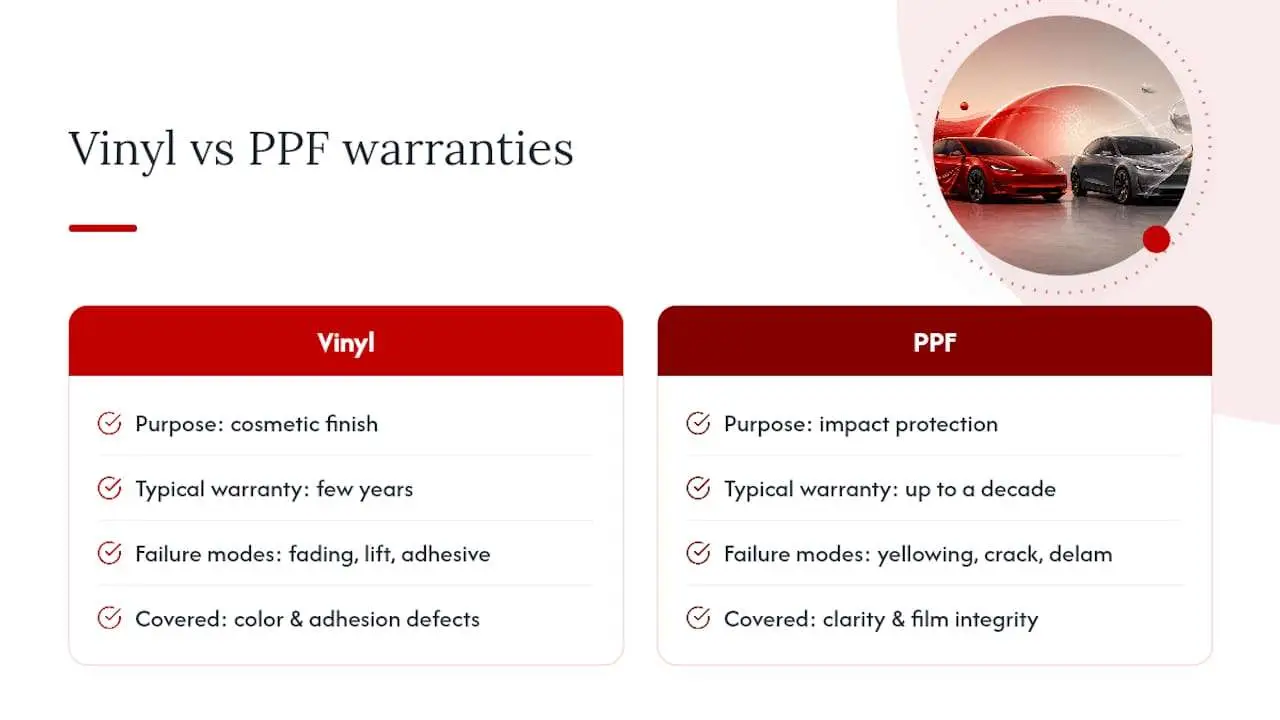
Vinyl wrap warranties typically focus on color fading, edge lifting, and adhesive failure, since vinyl is a cosmetic finish rather than a physical armor layer. Manufacturer coverage on vinyl tends to run shorter than PPF, often in the range of a few years rather than a decade, because vinyl is inherently more exposed to UV breakdown and doesn’t have the same thickness protecting it.
PPF warranties, by contrast, weigh heavily on clarity and structural integrity: yellowing, cracking, and delamination are the headline concerns, since the film’s job is absorbing impact from rock chips and road debris. That functional role also means owners sometimes confuse “the film is doing its job” with “the film should look brand new forever.” A film that shows minor surface marking after absorbing a rock strike is working exactly as designed, and that kind of cosmetic wear typically isn’t a covered defect.
If you’re combining services, like a wrap over PPF-protected panels or PPF paired with a ceramic coating, ask specifically how each layer’s warranty interacts. Overlapping products can complicate who’s responsible if something under the surface fails first.
Author perspective: practical lessons from shop experience
Most denied claims I’ve seen come down to one thing: nobody kept the paperwork. Not bad film, not bad installers, just a missing Record of Installation or a registration that never got submitted. Owners who photograph their car at pickup and file the invoice somewhere they can actually find it later almost always have an easier time when something does go wrong.
The pattern shows up constantly: a customer notices lifting near a mirror cap eight months in, calls the shop, and the whole thing gets resolved in a week because the install date, lot number, and delivery photos were all on file. Compare that to a customer who bought film through a mobile installer with no paperwork trail, and the same defect turns into months of back and forth with no clear resolution.
— Jake
Ppfprosla: Warranty-Aware Installation Backed by Paperwork
If you’ve read this far, you already know that the biggest risk to your coverage isn’t the film, it’s missing documentation. Ppfprosla builds that paperwork into every install: XPEL authorization on the film side, a completed Record of Installation for every job, and warranty registration handled before you drive off the lot.
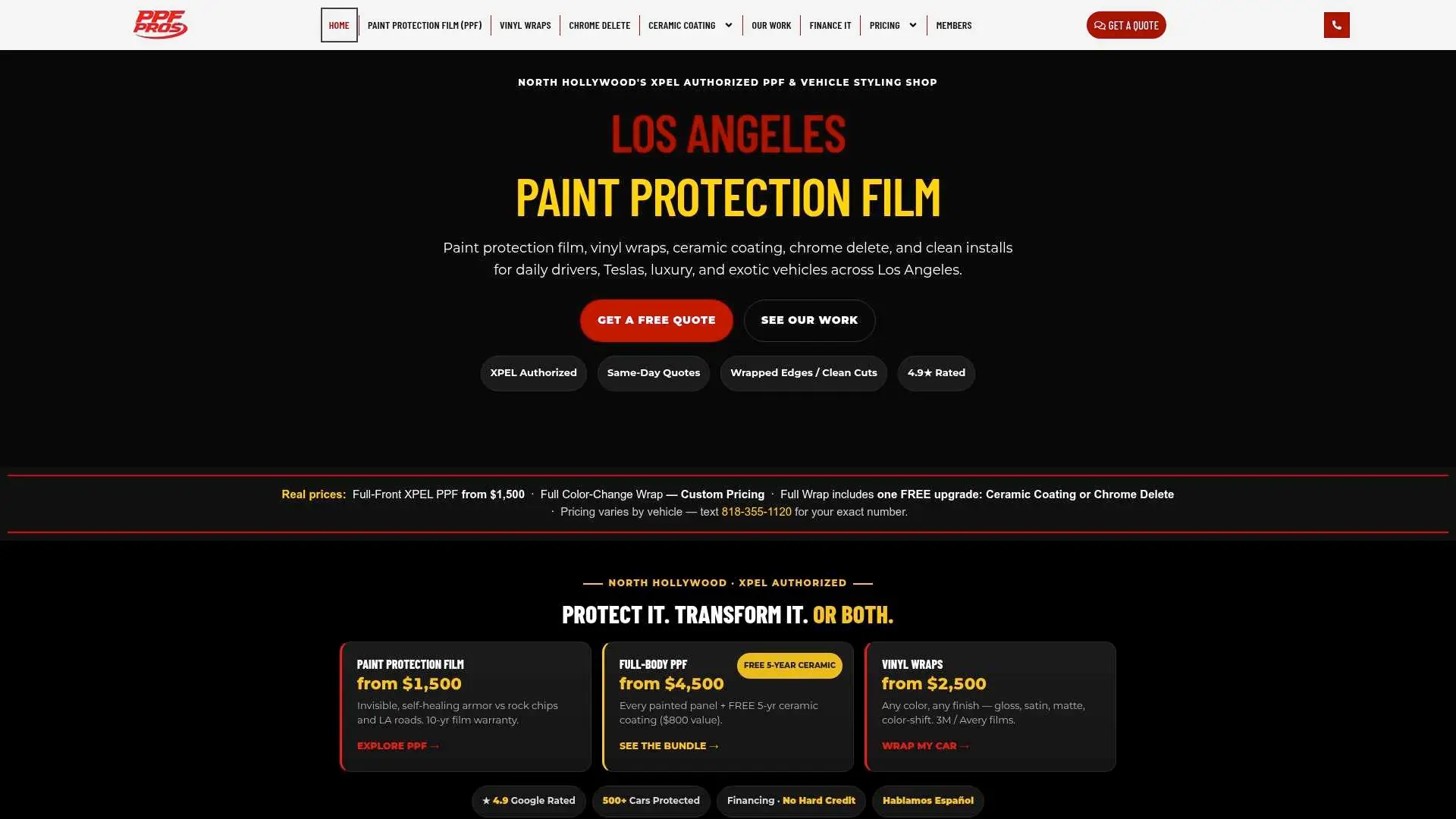
That means if you ever need to file a claim, you’re not scrambling to reconstruct an install date or track down a lot number months later, it’s already documented and on file. Ppfprosla also helps coordinate between you and the manufacturer if a dispute over material versus workmanship comes up, since the shop’s own records usually settle that question quickly. If you’re comparing vinyl wrap options or a full PPF package, request a quote and ask specifically for your Record of Installation and a screenshot of your warranty registration once the job is done. Start with a quote request and bring your questions about coverage terms directly to the shop before you book.
Primary Warranty Documents Worth Reading
Review the 3M Protection Wrap Film warranty and keep every registration confirmation your installer sends you.
Sources
- 3M™ Paint Protection Film / Protection Wrap Film warranty (EMEA excerpt)
- Paint Protection Film: A Complete 2026 Guide
FAQ
What Is a Wrap Warranty?
A wrap warranty combines two separate protections: the film manufacturer’s guarantee against material defects like yellowing or cracking, and the installer’s own workmanship guarantee covering issues like edge lifting or trapped debris.
How Long Does a Wrap Warranty Last?
Manufacturer coverage on PPF often runs 5 to 10 or more years depending on the film series, while installer workmanship warranties typically last 1 to 3 years.
Does a Wrap Warranty Cover Rock Chips or Scratches?
No. Impact damage and normal wear and tear are standard exclusions under nearly every manufacturer and installer warranty.
Is a Wrap Warranty Transferable to a New Owner?
Transferability varies by brand and installer, so confirm the specific terms in writing before you rely on it to support resale value.
Can I File a Wrap Warranty Claim Without an Invoice?
It’s difficult. Manufacturers and installers typically require proof of installation, such as an invoice or Record of Installation, to process a claim; authorized installers generally provide that paperwork with every job.
Is PPF Warranty Different From Vinyl Wrap Warranty?
Yes. PPF warranties focus on clarity, cracking, and delamination since the film absorbs physical impact, while vinyl wrap warranties center on color fading and adhesive failure over a typically shorter coverage period.