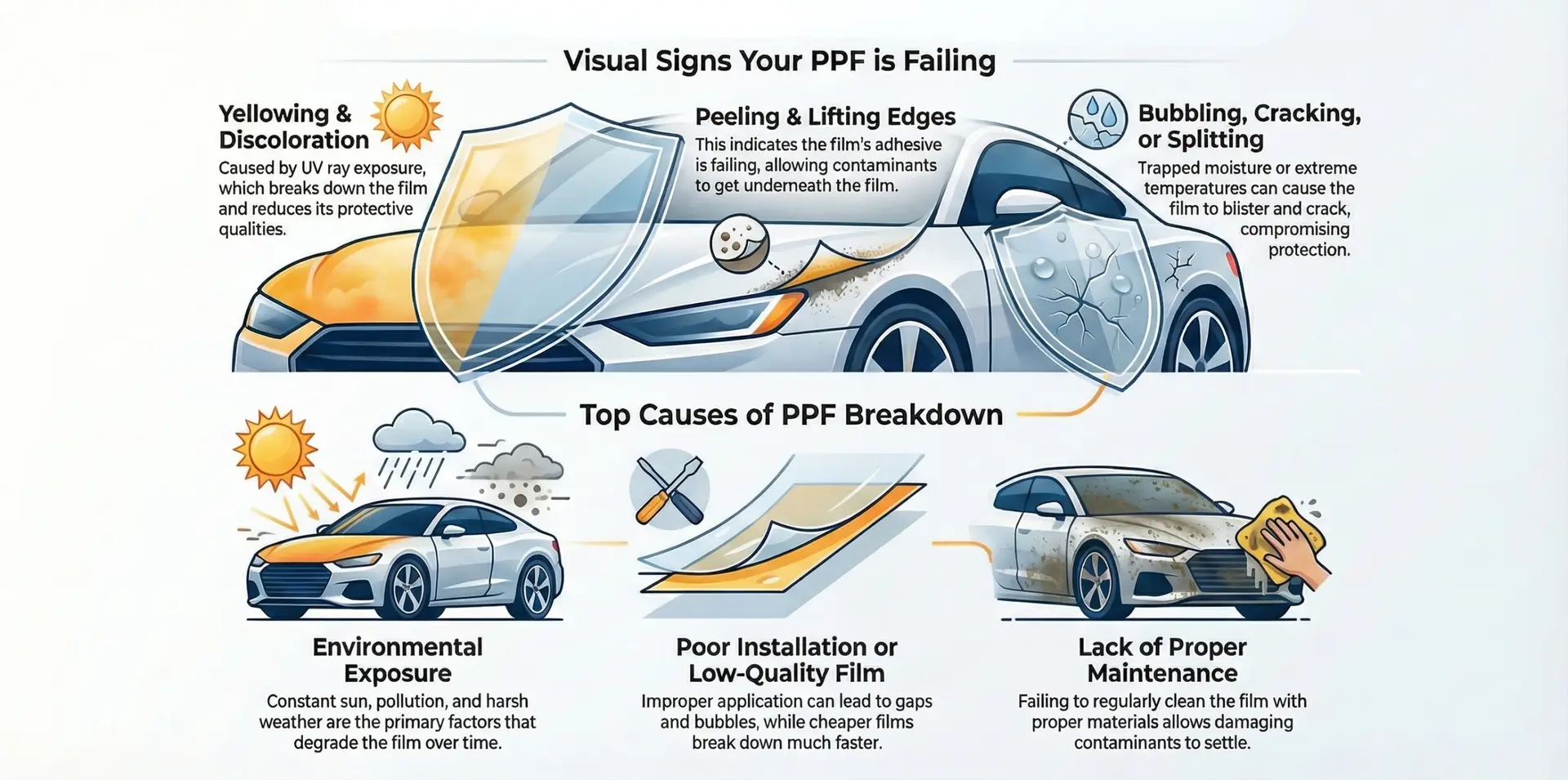
Paint Protection Film (PPF) is one of the most effective ways to safeguard your vehicle’s paint from rock chips, road debris, UV exposure, and everyday wear. Acting as a nearly invisible shield, PPF helps preserve your car’s appearance and resale value over time. However, like any protective material, PPF is not permanent—and knowing when PPF needs replacement is essential for continued protection.
Over time, exposure to sunlight, harsh weather, road contaminants, and repeated washing can cause the film to degrade. Discoloration, lifting edges, cracking, or loss of clarity are common signs of PPF failure that indicate the film is no longer performing as intended. If left unaddressed, damaged PPF can trap dirt or moisture, potentially harming the paint it was meant to protect.
Recognizing these warning signs early allows vehicle owners to replace worn film before paint damage occurs. Professional inspection ensures proper removal and reinstallation, maintaining both protection and appearance.
At PPF Pros, we specialize in expert PPF evaluation, removal, and replacement services. If you’re unsure whether your paint protection film is still doing its job, our team can help you determine the right time for replacement—so your vehicle stays protected, polished, and looking its best.
Introduction to PPF Longevity
Paint Protection Film (PPF) is designed to shield your vehicle’s paint from rock chips, scratches, road debris, and environmental contaminants. Understanding PPF longevity—and what affects it—helps vehicle owners protect their investment and plan for timely maintenance or replacement. While PPF is highly durable, its lifespan depends on several important factors.
Understanding PPF Lifespan
The lifespan of PPF varies based on film quality, installation, and real-world exposure. High-end films from trusted manufacturers are engineered with advanced polymers and self-healing technology, allowing them to withstand daily wear and tear more effectively. When properly installed and maintained, premium PPF can last five to ten years, providing long-term protection without compromising the vehicle’s appearance.
Over time, even the best PPF will naturally degrade due to constant exposure to sunlight, weather, and driving conditions. Knowing the expected lifespan allows vehicle owners to monitor performance and replace the film before it stops protecting the paint.
Factors Influencing PPF Durability
Several key factors determine how long paint protection film remains effective:
- Quality of Film
Higher-quality films are more resistant to UV damage, discoloration, and cracking, ensuring longer-lasting protection. - Installation Quality
Professional installation is critical. Proper alignment and adhesion prevent edges from lifting and stop dirt or moisture from becoming trapped beneath the film. - Environmental Conditions
Prolonged sun exposure, air pollution, road salt, and extreme weather can accelerate wear and aging of the film. - Maintenance Practices
Routine washing, gentle cleaning methods, and avoiding harsh chemicals help preserve clarity and flexibility over time.
By investing in premium materials, professional installation, and proper aftercare, vehicle owners can significantly extend the lifespan of their PPF. At PPF Pros, we specialize in high-quality paint protection solutions designed to keep vehicles protected, polished, and looking their best for years to come.
Recognizing the Signs of PPF Wear and Tear
It’s important to spot early signs of PPF wear and tear. This helps keep your car’s paint protection film in good shape. Knowing when to replace your PPF can prevent expensive fixes and keep your car looking great. A good PPF inspection checklist can help you check the film’s condition.
Common Symptoms of Aging PPF include a loss of shine and clarity. The film may look dull. It also stops protecting your paint as well as it used to. This means it’s time to replace the PPF.
- Loss of clarity and glossiness
- Increased surface scratches and marks
- Staining and discoloration
Inspecting for Physical Damage is also key. Look for cracks, peeling, or lifting at the edges. These problems reduce the film’s protection and harm your car’s look.
- Cracking or splitting of the film
- Edges of the film lifting or peeling away
- Bubbling under the surface indicating trapped moisture or air
Regular checks for these signs can keep your car in great shape. It protects your car’s value and looks. Fixing PPF problems early can stop bigger damage to your paint and keep your car looking new.
Indications Your PPF is Failing
It’s important to know when your Paint Protection Film (PPF) is failing. This is key to keeping your car looking good and its value high. Over time, the film can show signs of wear like cracking, peeling, yellowing, and discoloration. These signs mean it might be time to replace the film to protect your investment.
PPF cracking and peeling are early signs of damage. They often happen from too much sun, extreme weather, or car stress. Cracks let dirt and water get under the film, making damage worse and weakening its bond to the paint.
PPF discoloration and yellowing come from UV rays breaking down the film. This can make the film turn yellow, which looks bad and weakens its protection.
| Sign of Failing PPF | Common Causes | Impact on Vehicle |
|---|---|---|
| PPF Cracking | UV exposure, extreme temperatures | Allows contaminants under the film |
| PPF Peeling | Aging adhesive, poor initial application | Reduces protective coverage, aesthetic damage |
| PPF Yellowing | Chemical breakdown from UV rays | Affects visual appearance negatively |
| PPF Discoloration | Environmental pollutants, UV rays | Visible stains and uneven color tones |
Knowing these signs and why they happen helps car owners know when to get their PPF checked or replaced. This keeps your car protected and looking great. Regular checks and quick action to these signs can make your PPF last longer.
How PPF Yellowing Signals the Need for Replacement
One of the clearest indicators that paint protection film is nearing the end of its lifespan is PPF yellowing. Understanding the causes of PPF discoloration and its impact on performance helps vehicle owners know when replacement is necessary to maintain both appearance and protection.
What Causes PPF Yellowing?
PPF yellowing is most commonly caused by prolonged exposure to UV rays, environmental pollutants, road grime, and chemical contaminants. Over time, these elements break down the film’s protective properties, especially in older or lower-quality films that lack advanced UV inhibitors.
As the film ages, its clarity diminishes, causing a yellow or dull tint that becomes more noticeable on lighter-colored vehicles.
The impact of PPF discoloration goes beyond aesthetics. Yellowing is a sign that the film is degrading and losing its ability to effectively protect the paint beneath it. A compromised film may no longer provide full UV resistance, self-healing capabilities, or contamination protection—leaving your paint vulnerable to fading and damage.
If discoloration continues unchecked, the film can become brittle, crack, or trap contaminants against the paint surface, increasing the risk of permanent damage.
Visible yellowing, fading, or cloudiness are strong indicators that your PPF should be professionally inspected. In most cases, replacement is the best solution to restore clarity, protection, and visual appeal.
Catching these signs early helps avoid higher repair costs and ensures your vehicle maintains a clean, factory-fresh appearance.
The Impact of Bubbling and Blistering on PPF Performance
Paint Protection Film (PPF) protects a car’s paint from damage like rock chips and UV rays. But, when PPF starts to bubble or blister, it shows the film might not be working well. Bubbling can happen if the surface isn’t prepared right or because of the environment. If not fixed, these bubbles can grow and make the film useless.
Blistering in PPF is also bad. It usually comes from air or moisture trapped during application. These blisters can grow into big pockets that peel off the car’s body. This not only looks bad but also leaves the paint open to damage. Also, it means the film’s self-healing PPF might not work right. Films with self-healing should fix small scratches and swirls with heat, but if they don’t, you might need a pro.
Looking at studies, we see that bad installation can lead to more problems. For example, poor edging can cause lifting and peeling, a big self-healing PPF failure sign. But, if installed right, top brands like XPEL and 3M keep the car safe for longer. Learn more about keeping your PPF in top shape in this guide on PPF care.
Also, knowing when PPF fails early can save a lot of money. Catching bubbling and blistering early can stop you from needing a whole new PPF. For tips on spotting and fixing bad PPF jobs, check out this article.
In short, catching and fixing PPF bubbling and blistering early is key. Regular checks and following care tips can make your PPF last longer. This keeps your car looking good and its value up.
Maintaining Your PPF: Tips and Tricks
Keeping your paint protection film (PPF) in top shape makes your car look great and last longer. By following some key PPF maintenance tips, you can avoid problems like peeling, yellowing, and cracking. This will help you get the most out of your investment. Here are some ways to keep your PPF in perfect condition and protect your car.
Regular Inspection and Maintenance Tips
Regular checks are key to good PPF care. Look for any signs of damage like scratches or dents. These can weaken the film. Also, clean the film often with the right products to stop dirt from sticking.
- Wash the PPF with soap that the maker recommends to avoid harsh chemicals.
- Check for edges lifting at seams or transitions, which may need a pro to fix.
- Use a soft squeegee or a microfiber towel to dry the PPF gently.
Extending the Life of Your Paint Protection Film
By following some careful steps, you can make your PPF last longer. This means you won’t have to replace it as often or deal with damage. Here’s how to extend the life of your PPF:
- Avoid parking under direct sunlight for long to prevent yellowing.
- Use a silicon-based maintenance spray every few months to keep it shiny and protect it from pollutants.
- Deal with stains from bird droppings, tree sap, or other contaminants right away to stop them from getting through the film.
By following these PPF maintenance tips, you’ll not only keep your car looking good. You’ll also make sure the PPF stays strong and works well for years to come.
Deciding Between PPF Repair or Replacement
When it comes to preserving your vehicle’s paint, one of the most common questions is whether damaged Paint Protection Film (PPF) can be repaired or if full replacement is necessary. PPF—often referred to as a clear bra—protects against rock chips, UV exposure, stains, and everyday wear. However, no film lasts forever, and determining the right solution depends on the type, severity, and extent of damage.
Understanding when PPF repair vs. replacement is appropriate helps vehicle owners maintain optimal protection without unnecessary costs.
Can PPF Be Repaired?
In many cases, PPF can be repaired if the damage is minor. Most modern films feature self-healing properties, allowing light scratches, swirl marks, and surface scuffs to disappear when exposed to heat from the sun or warm water.
Minor imperfections that do not compromise the film’s structure or adhesion are often manageable through professional inspection and localized repair. However, repair effectiveness also depends on the age and condition of the film.
When Replacement Is the Only Option
Replacement becomes necessary when the PPF suffers structural damage or permanent degradation. Issues such as discoloration from UV exposure, peeling edges, bubbling, delamination, or deep scratches indicate the film can no longer provide proper protection.
Once the film loses clarity or adhesion, repairing it is no longer effective—and replacing it prevents further damage to the underlying paint.
| Degree of Damage | Recommended Action |
|---|---|
| Light scratches or swirl marks | Repair possible (self-healing) |
| Deep scratches or tearing | Replace PPF |
| Discoloration or yellowing | Replace PPF |
| Edge lifting or bubbling | Replace PPF |
Choosing replacement restores both protection and appearance while allowing you to upgrade to newer PPF technology with improved durability and clarity.
At PPF Pros, our technicians assess each situation carefully and provide expert recommendations based on your vehicle’s condition. Whether repair or replacement is needed, we ensure your paint remains protected, polished, and looking its best.
FAQ
What is Paint Protection Film (PPF) and why is it important?
Paint Protection Film, or PPF, is a thin layer applied to a car’s body. It protects the paint from chips, scratches, and environmental damage. It keeps the car looking good and safe from wear and tear.
How long does PPF typically last?
PPF lasts from 5 to 10 years, depending on the film’s quality and how well it’s maintained. Better films like XPEL PPF last longer than cheaper ones.
What are the signs that my PPF needs to be replaced?
Look out for peeling, cracking, yellowing, or lifting edges. If the film looks dull or damaged, it’s time for a new one.
Can environmental conditions affect the durability of PPF?
Yes, UV rays, heat, cold, salt, and pollutants can damage PPF. This can make it fade or degrade faster than expected.
Why does PPF discolor or yellow over time?
UV rays, pollutants, and chemicals can cause PPF to yellow. Even high-quality films can change color over time.
How can I maintain my PPF to extend its life?
Wash and dry your car regularly to remove dirt. Use special cleaning products for PPF. Avoid harsh materials and check the film often for damage. Proper care can make it last longer.
Is it possible to repair damaged PPF, or does it need to be replaced?
Minor scratches can heal on their own in good PPF. But for deep damage, like peeling or yellowing, you’ll need a new one.
How often should I inspect my PPF for signs of wear and tear?
Check your PPF every few months, or more often if your car faces harsh conditions. Early detection helps fix problems before they get worse.
Can I replace the PPF myself, or should I seek professional help?
Installing PPF needs skill and experience. It’s best to have a pro do it. Wrong application can lead to damage and reduce its protective benefits.
How do I know when my PPF is reaching the end of its life?
Look for signs like scratches not healing, dull finish, or extensive discoloration. If it’s not working right, it’s time for a new one.
When should I consult with a professional for PPF inspection?
Get a pro to check your PPF if you see peeling, yellowing, or cracking. They can also advise on when it’s time for a new one to keep your car protected.