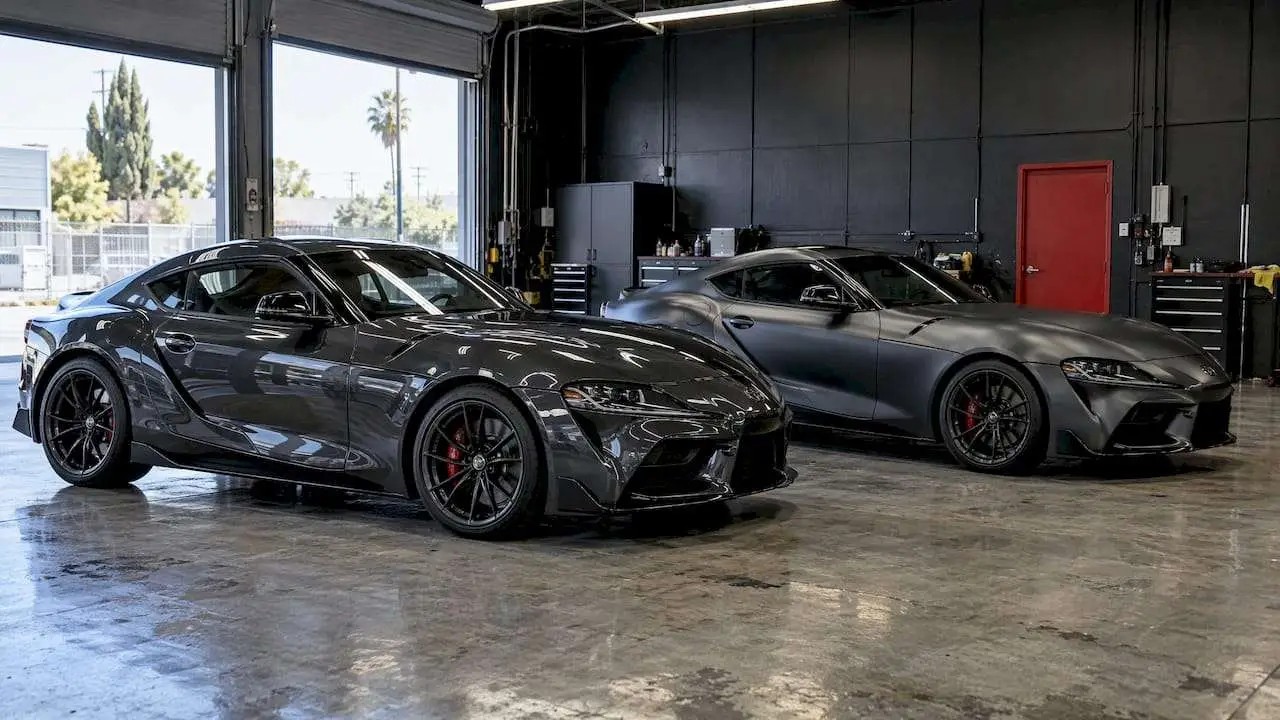
Gloss PPF keeps your paint looking like the factory finish, only with a protective layer on top. Stealth PPF changes the look: it puts a satin, matte-style finish over gloss paint while protecting it from the same rock chips and road wear. If you want your car to look unchanged, choose gloss. If you want a quiet, satin look without repainting or wrapping the car, choose stealth.
That is the short answer. The rest of this guide covers what changes on different paint colors, how each film behaves in a wash, what the two finishes cost in Los Angeles, and how we help owners choose at our North Hollywood shop.
TL;DR
- Gloss PPF is clear and glossy. It protects the paint and leaves the factory shine as it is.
- Stealth PPF is XPEL’s satin film. It makes glossy paint look satin or matte and protects it at the same time.
- Both are polyurethane films that guard against chips, scratches and daily wear. The choice is mainly about looks and upkeep.
- At our shop a full front package is $2,199 and a full vehicle package starts from $4,500, whichever finish you pick.
- Already have matte or satin paint? The film choice matters even more, so read the section on matte paint below.
Table of Contents
- What is the real difference between gloss and stealth PPF?
- Side by side: stealth vs gloss PPF
- How each finish looks on your paint color
- Protection: are the two finishes equal?
- Washing and everyday care
- Which finish suits your goals?
- Our perspective
- Cost in Los Angeles
- Get a quote on gloss or stealth PPF
- FAQ
- Sources
What is the real difference between gloss and stealth PPF?
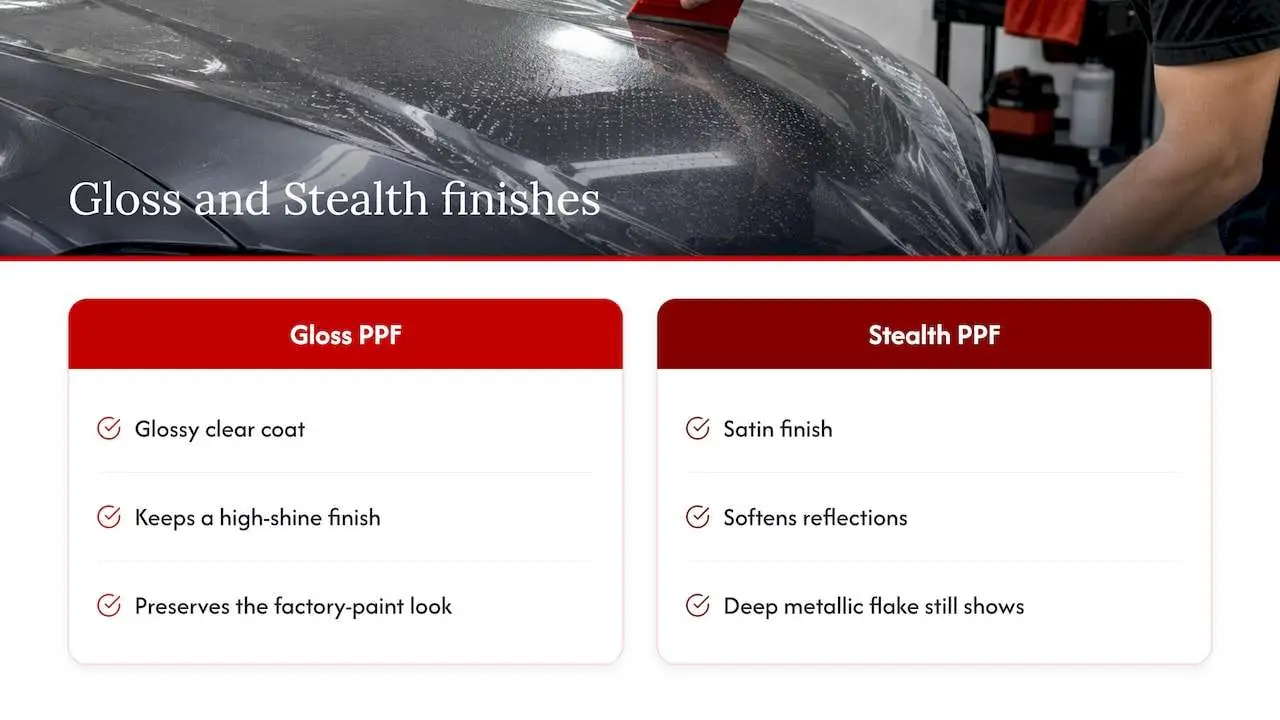
Both films do the same job: a transparent urethane layer that takes the hit instead of your paint. The difference is the top surface. Gloss film has a glossy clear coat. XPEL’s Ultimate Plus is the example we install most for owners who want to keep a high-shine finish, and it is an 8 mil film built to protect against scratches, chips and environmental contaminants.
Stealth is built differently on top. XPEL describes STEALTH as a film designed to protect against everyday road hazards while giving the vehicle a satin finish. Put it over glossy paint and the reflections soften. Deep metallic flake still shows through, but the sharp mirror shine is replaced with a smooth, low-sheen look.
People often search “gloss vs matte PPF” and wonder whether matte and stealth are the same thing. In everyday talk, yes: stealth is the film most owners mean when they ask for a matte or satin look over their existing paint. Stealth is the product, satin or matte is the result.
What is under the surface
Stealth is not a thin film. Its technical data sheet lists a nominal thickness of 8.15 mil without the release liner. The stack is a polyurethane layer, an acrylic adhesive and a hydrophilic top coat. The same sheet states that it passes the SAE J400 gravelometer stone chip test at 3 pints of gravel and 70 PSI. In plain words, the satin finish is not a trade for toughness. It is the same kind of protective urethane with a different surface.
Side by side: stealth vs gloss PPF
| Gloss PPF | Stealth PPF | |
|---|---|---|
| Look on glossy paint | Factory shine, nothing visibly changes | Satin or matte look over the whole panel |
| Look on matte or satin paint | Adds gloss, so the finish changes | Keeps the matte or satin character |
| Protection from chips and road debris | Yes, sacrificial urethane layer | Yes, sacrificial urethane layer |
| Self-healing of light scratches | Heat-activated topcoat on Ultimate Plus | Light scratches self-heal, per XPEL care guidance |
| Best for | Owners who want the car to look untouched | Owners who want a subtle custom look |
| Care approach | Seal with ceramic boost spray regularly to keep the shine | Seal with ceramic boost spray regularly to keep the satin finish |
How each finish looks on your paint color
Color matters more than most buyers expect, because film changes how light plays across the panel.
Dark and black paint
Black, deep gray and dark blue are where stealth looks most dramatic. Gloss black is all reflection, so removing the mirror effect makes the body lines look sculpted and low-key. If your car has blacked-out trim, dark wheels and gloss emblems, stealth gives a contrast that looks deliberate. The finish suits darker luxury and performance cars especially well.
White, silver and light colors
On lighter paint, the satin look is gentler. You get a soft, flat, almost ceramic appearance rather than a stealth-fighter look. Some owners love the clean modern effect on white. Others prefer gloss on light colors because it keeps the crisp, bright shine that makes the color pop. This is a true taste call, and a sample panel in person settles it faster than any photo.
Bright colors and metallics
Bold reds, blues and oranges look different under satin. The color stays, but it reads deeper and less glassy. Metallic and pearl paints keep their flake in satin, just with less sparkle in direct sun. If your paint was chosen for a mirror shine, gloss is the safer way to protect it.
Teslas
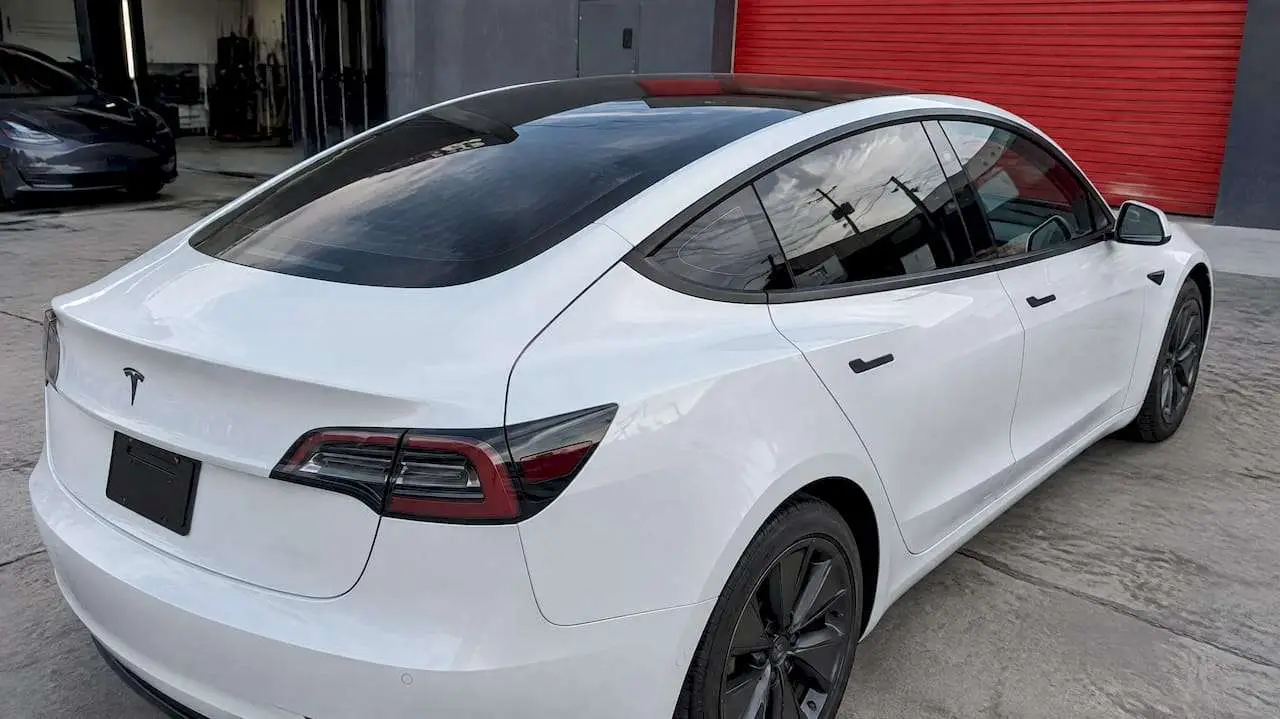
Tesla paint is thin and chips easily on highways, so many owners ask us about film. Stealth is popular on Teslas because it gives a stock car a custom look with no wrap. We wrote a full breakdown in our guide to Tesla stealth PPF if that is your car.
Cars that already have matte paint
Matte and satin factory paint is a special case. A gloss film on matte paint changes the surface, so the car stops looking matte. Stealth is the film that keeps a matte or satin finish looking like it did when the car left the factory, while protecting it. We cover that scenario in more detail in can you put PPF on matte paint.
Protection: are the two finishes equal?
The finish is a surface choice. Both films are urethane built to absorb rock chips, road debris and the light abrasion of daily driving, which is why one installer can offer either on the same car. For reference, the thickness of the two XPEL films we mention is close: 8 mil for Ultimate Plus and 8.15 mil for Stealth, according to the manufacturer documentation linked above.
Self-healing is the other point owners ask about. XPEL says the Ultimate Plus topcoat is heat-activated and repairs light scratches and swirl marks when exposed to heat. For Stealth, XPEL’s care guidance says light scratches self-heal in 20 to 30 minutes at room temperature. In cooler weather, or to speed it up, you can pour warm water at 120°F over the area. Deep gouges still need professional attention, so book an inspection if you see one.
Warranties differ by brand, film line and country, so we do not quote a number here. Ask us for the current terms on the film you pick and we will walk you through the paperwork.
Washing and everyday care
The habits are nearly the same for both finishes, and a few apply to every PPF job.
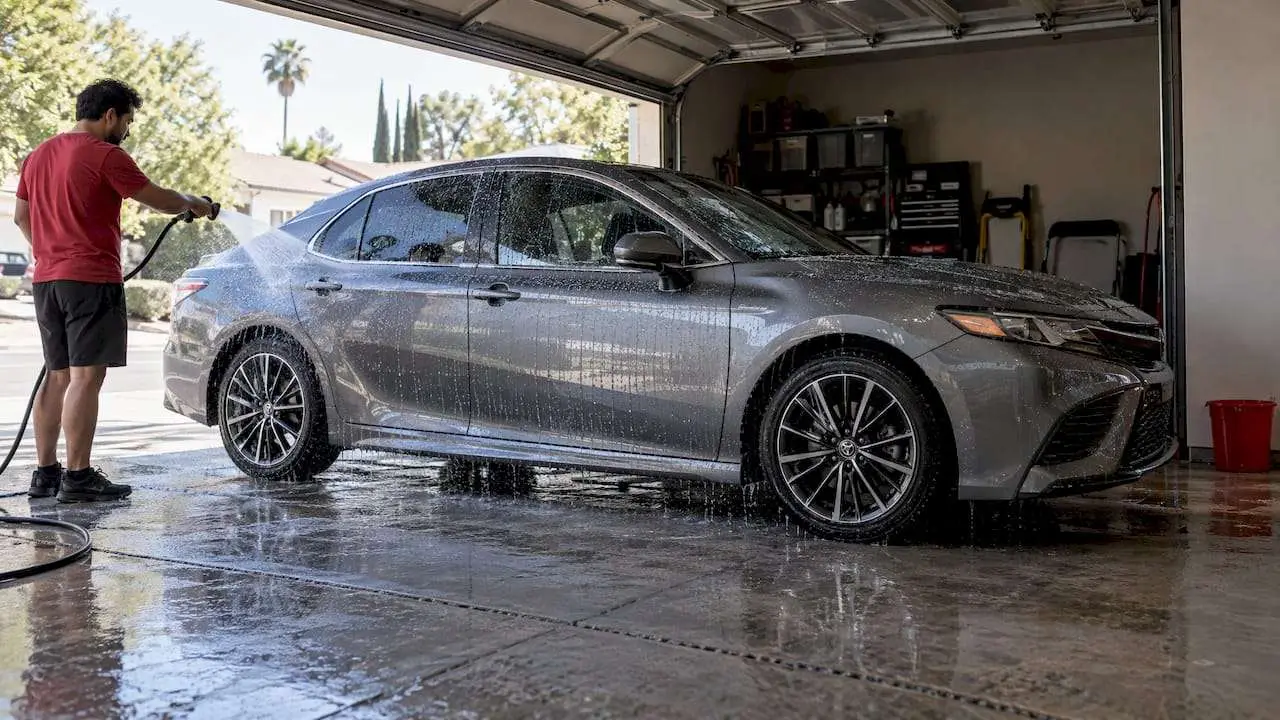
- Wait 48 hours before the first wash. XPEL’s care instructions give this window so the adhesive can settle.
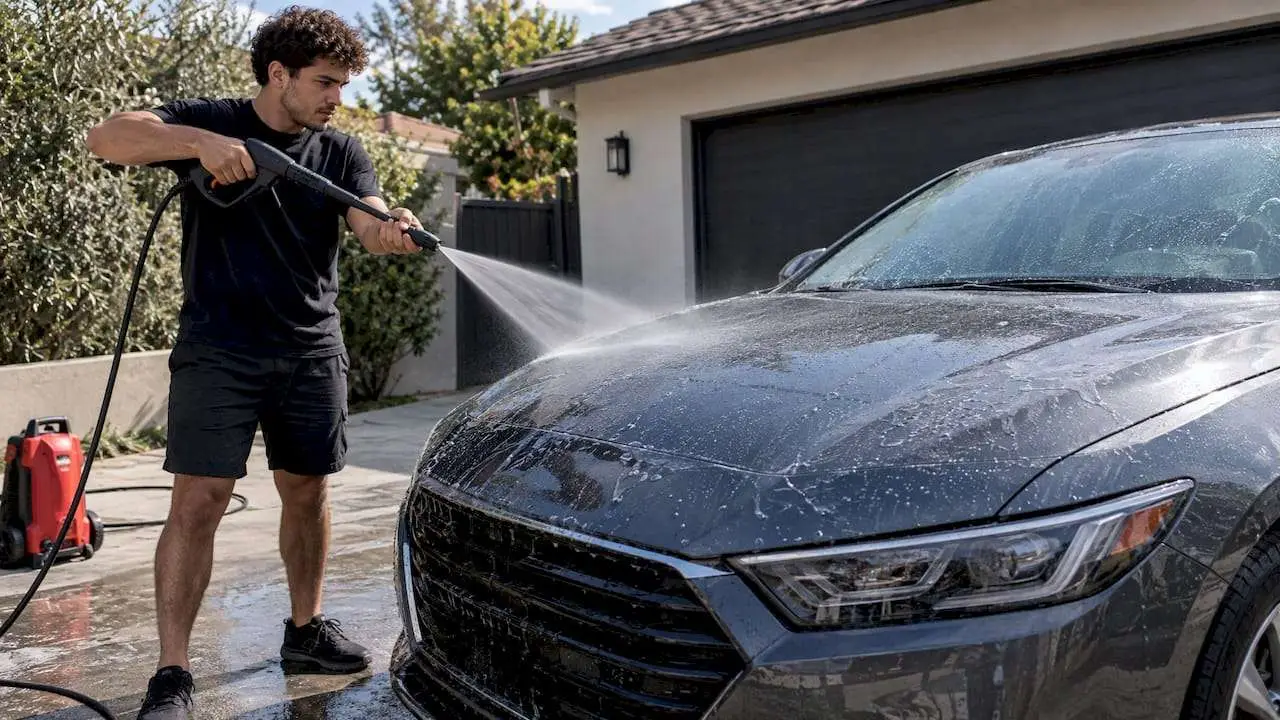
- Keep pressure washers away from edges. Edges are where water can lift film if you aim a jet directly at them.
- Remove bug and bird stains quickly. The same XPEL page says to treat insect and other stains as soon as possible with a film cleaner.
- Seal the film about every six months. XPEL recommends sealing Stealth with its Ceramic Boost at least every 6 months to maintain the satin finish. For Ultimate Plus, the same cadence preserves the high gloss.
- Choose products made for the film. Satin finishes are best cared for with products that do not add gloss or leave streaks.
One point stealth owners often like: a satin surface can be forgiving between washes. A forum thread of owners who chose satin film noted that water spots and fingerprints can be less obvious on it. That is owner experience, not a lab result, and every car in the sun of Southern California still deserves a regular wash.
If you want an extra layer on top, XPEL says its FUSION PLUS ceramic coating is formulated for Stealth to protect the satin finish from UV and environmental damage while letting water and dirt slide off. We also offer ceramic coating at the shop, and you can read how it works in our post on XPEL ceramic coating.
Which finish suits your goals?
Use these questions to decide.
Choose gloss PPF if:
- You want people to see your paint exactly as the factory made it.
- Your color is chosen for its shine, such as a deep metallic or a bright candy shade.
- You prefer a car that looks stock to anyone who sees it, which many luxury and exotic owners want.
Choose stealth PPF if:
- You want a satin or matte look without repainting or a color wrap.
- You like the look of blacked-out styling and want the body to match it.
- You already have matte or satin paint and want to keep it that way.
- You want a custom statement you can show off without changing the paint color.
A note on resale
Gloss is the neutral option because the car looks like well-kept factory paint to every buyer. Satin appeals strongly to enthusiasts, and a car with a distinctive look can stand out in a listing. Film is also removable by a professional, which is why some owners choose stealth for the years they enjoy the car and decide on the finish again later. Talk to us about your plans for the car and we will help you pick.
Our perspective
We install both finishes every week, and the happiest customers are the ones who decided on the look first and the film second.
Gloss PPF is our answer for the owner who loves the paint they paid for. It is protection that disappears, and we put the effort into wrapped edges and clean alignment so you do not notice the film at all.
Stealth is our answer for the owner who wants the car to feel different. A glossy car turns satin and the lines look sharper, without a new paint job. We use XPEL, an authorized program with premium materials, so you get the finish designed for the job.
What we never do is push a finish. We show you the film on your color, explain what the first 48 hours and the first six months look like, and quote clearly. If you tell us how you use the car, we can tell you which finish will make you smile every time you walk up to it.
Jake
Cost in Los Angeles
The finish you choose does not change our published package starting points, so you can plan the budget before you pick the look.
| Package | What it covers | Price |
|---|---|---|
| Full Front | Front-end protection for the areas that take the most impact | $2,199 |
| Full Vehicle | Whole-car film coverage | From $4,500 |
Partial front, track pack and specialty jobs are quoted individually because the panels, curves and vehicle all change the work. For a panel-by-panel look at what drives the number, see our stealth PPF cost checklist.
Get a quote on gloss or stealth PPF
We are an XPEL authorized installer in North Hollywood and serve daily drivers, Teslas, luxury and exotic cars across Los Angeles. Tell us the car and the look you want, and we reply the same day with a clear quote. Many owners start with the Full Front package at $2,199. If you want the whole car covered, the Full Vehicle package starts from $4,500.
You can also see how we work with the brand on our XPEL page or start from the Los Angeles paint protection film page.
FAQ
What is the difference between matte and gloss PPF?
Gloss PPF has a glossy surface, so it keeps the shine of your paint. Matte or satin film, such as XPEL Stealth, softens reflections and gives glossy paint a satin look. The protection underneath comes from the same type of urethane film.
Does PPF make your car shine?
Gloss PPF keeps the paint looking glossy and can look very bright when the film is clean and sealed. It does not add shine beyond the paint itself. Stealth does the opposite on purpose, because it creates a satin look instead of a mirror finish.
Can I put stealth PPF over gloss paint?
Yes. That is the main use: XPEL describes it as converting gloss paint to a satin or matte look while protecting it. The finish covers the panels where it is applied, so many owners pick full coverage so the car looks uniform.
Which is better, ceramic coating or PPF?
They do different jobs. PPF is a physical film that takes the impact of rock chips and scratches, and ceramic coating is a chemical layer that helps with gloss, UV resistance and easy cleaning. Many owners combine them, with ceramic coating on top of the film.
How long should I wait to wash after installation?
XPEL’s care guidance says to wait 48 hours before the first wash, and to avoid pressure washing near the film edges. After that, keep to a regular wash routine and seal the film about every six months.
Sources
- XPEL STEALTH product page
- XPEL ULTIMATE PLUS product page
- XPEL STEALTH technical data sheet
- XPEL Ultimate Plus, self-healing topcoat
- XPEL product care instructions