The most popular chrome delete colors are gloss black, satin black and matte black, but vinyl film also comes in gunmetal, brushed metal looks, carbon fiber, color-shift and a body-matched color. The finish you pick changes how the car looks, how often you wipe it down and how well the trim matches your paint. At PPF Pros in North Hollywood, we wrap chrome trim in the finish that suits the car, and the choice below is the part worth settling before you book.
A chrome delete means covering the bright chrome or polished-silver trim on a car, such as window surrounds, grille slats, badges, roof rails and mirror caps, so it turns black or another color. For a closer look at the basics, see our explainer on what a chrome delete is.
TL;DR
- Gloss black is the safe default: it mimics factory blackout trim and is the easiest finish to keep clean.
- Satin black hides dust and fingerprints better than matte and suits premium and metallic-painted cars. Matte black is the flattest, most aggressive look.
- Black is not the only option: vinyl ranges include gunmetal, brushed metals, carbon fiber, color-shift and custom color matching.
- Color does not change the price of the job. The amount of chrome and the shape of it do.
- Quality cast vinyl from a reputable brand is built to last for years and to come off without harming the paint, which protects resale value.
Table of Contents
- The chrome delete colors you can choose from
- Gloss, satin or matte black: how to pick
- Chrome delete colors beyond black
- Which parts of the car get the color
- What decides the price: not the color
- How a chrome delete is applied
- How long the color lasts, and what protects your paint
- Caring for your colored trim
- Add protection while the car is in the shop
- Ready to pick a color
- Our point of view
- FAQ
- Sources
The chrome delete colors you can choose from
Most shoppers think of chrome delete as a black-only job, and for good reason: black covers the large majority of requests. But the film side is much wider. One major manufacturer’s wrap film line lists gloss, matte, metallic, pearl, satin and carbon fiber finishes, with over 100 finish and color combinations and a custom color match service. Its catalog includes gunmetal, brushed aluminum, brushed titanium, brushed steel, brushed bronze, black and white carbon fiber, and color-shift films.
Here is how those options sort out for chrome trim:
| Option | Look | Best for | Upkeep |
|---|---|---|---|
| Gloss black | Shiny, like factory blackout trim | Almost any car, daily drivers, luxury sedans | Easiest to keep clean |
| Satin black | Soft sheen, modern and understated | Premium cars, metallic or matte paint | Hides dust better than matte |
| Matte black | Flat, stealthy, aggressive | Cars that already lean dark | Shows dust and fingerprints |
| Gunmetal or dark gray | Subtle contrast with black paint or glass | Owners who want less contrast than pure black | Similar to satin |
| Brushed metal tones | Textured, mechanical look | Enthusiast builds, custom projects | Varies with texture |
| Carbon fiber | Woven pattern, sporty | Mirror caps, spoilers, accents | Wipe clean like gloss |
| Color-shift or body color | Statement or seamless match | Show cars, full color change builds | Follows the film’s finish |
Gloss, satin or matte black: how to pick
The three black finishes are the real decision, because they look different in daylight and live differently on your driveway.
Gloss black
Gloss is the most popular choice and mimics the black trim many manufacturers fit from the factory, according to one 2026 chrome delete guide. It is also the easiest to keep clean, since a smooth shiny surface releases dirt readily. If your car has black window glass or a black roof, gloss blends in and looks like it left the factory that way.
Satin black
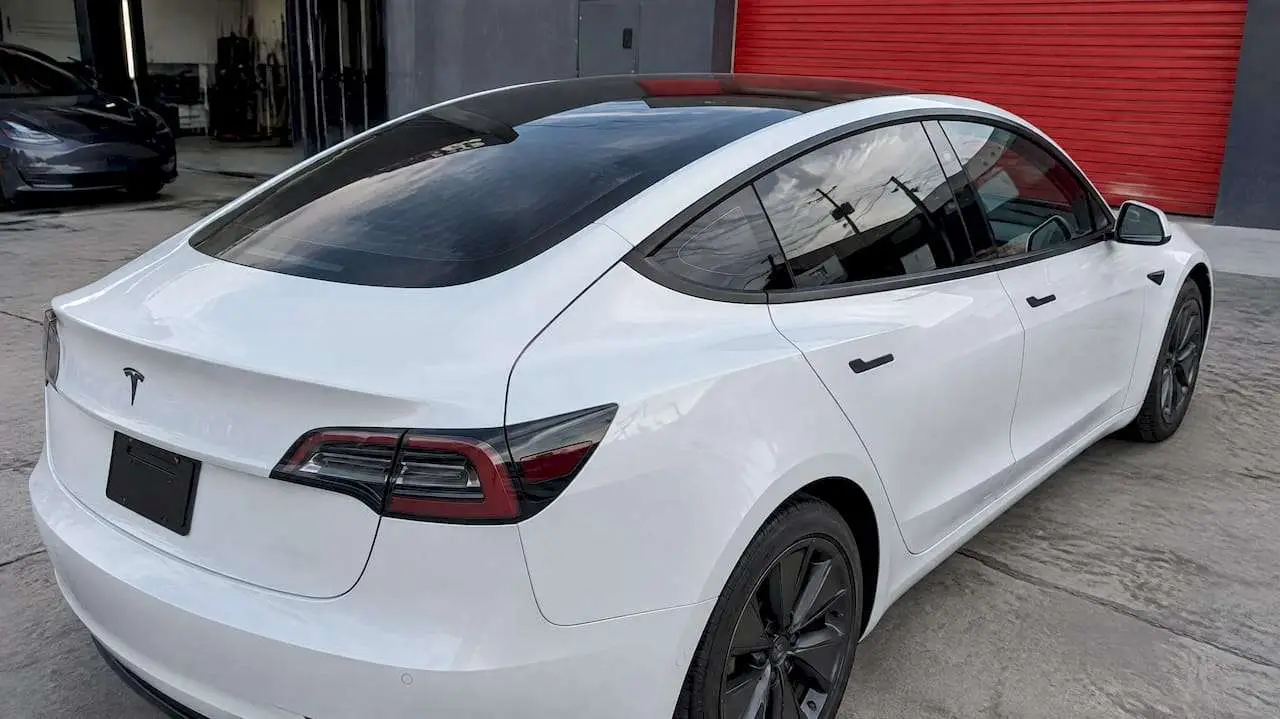
Satin has a low sheen that sits between gloss and matte. It is the fastest-growing premium choice because it hides dust better than matte and pairs well with metallic or matte paint. If you drive a Tesla in white, gray or deep blue and want a clean, modern look, satin is usually the finish that looks most deliberate.
Matte black
Matte is the flattest finish and the most aggressive look. It works best when the whole car already leans dark: black, charcoal or a murdered-out build with blacked-out wheels. On a lighter car it can look mismatched against glossy paint. It also shows dust and fingerprints more readily and takes a little more care to wipe clean.
A simple rule of thumb
Look at the trim your car already has in black. If the mirror housings, door handles or lower valance are gloss black from the factory, match gloss. If your paint has a metallic or satin character, go satin. If the car is dark and you want the stealth look, go matte.
Chrome delete colors beyond black
Some owners want something other than black, and the film range covers it. A few directions we see requested for trim:
- Dark gray or gunmetal. A softer blackout that reads as dark metal in the sun. It is a good pick on silver, white or light-gray cars where pure black feels heavy.
- Brushed finishes. Brushed aluminum, titanium or steel tones keep a metallic feel but drop the mirror shine, which suits owners who like the texture of metal without the glare.
- Carbon fiber. Popular for mirror caps and small accents, rather than long window strips.
- Body color. Matching the trim to the paint creates a seamless look, common on color change builds. If you are already planning a color change, our Full Color Change Wrap starts from $2,800, and trim colors can be planned along with the body.
- Color-shift films. For show cars. Compare these with our color change wrap checklist for flip finishes.
To compare swatches and finishes in more detail, our pages on vinyl wrap finishes and wrap options and color consultation are the place to start.
Which parts of the car get the color
Color is only half of the plan. The other half is which pieces get wrapped. Typical chrome delete targets include:
- Window surrounds and beltline trim
- Grille bars and surrounds
- Badges and emblems
- Roof rails
- Mirror caps and door handle accents
- Fender vents and exhaust-area trim
You can keep a color story consistent across all of them, or mix: for example, gloss black on window trim with carbon fiber on mirror caps. Brand-specific pages show how this works on different models: BMW Shadowline-style blackouts, Audi trim blackouts, Ford truck and SUV trim, Chevy Midnight Edition looks and Honda Civic and Accord trim.
What decides the price: not the color
Gloss, satin and matte black cost the same. Cost guides point out that price follows how much chrome the car has and how it is shaped. Window and beltline trim is the fiddliest part, and grilles are the wildcard: mesh or multi-slat grilles often have to come off the car so every slat can be wrapped.
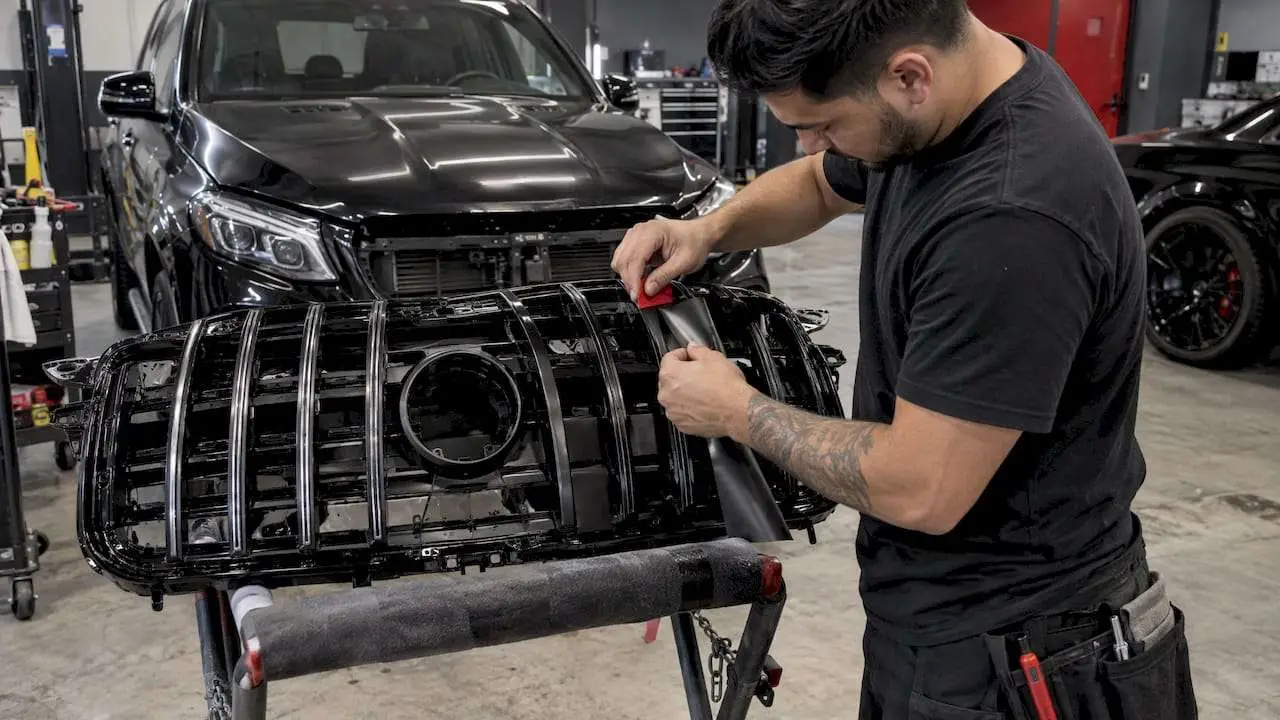
That means a car with long window trim and a complex grille takes more time than one with a few badges, whatever color you choose. We publish pricing for standard packages and quote chrome delete based on your car’s trim. You can send your make and model through our chrome delete service page and get a clear quote, and we typically respond the same day.
How a chrome delete is applied
Knowing the steps explains why finish and film quality matter so much.
- Clean and prepare the surface. Chrome has to be spotless. Any wax, oil or dirt under the film becomes a lifting point later.
- Fit and cut the film. Strips for window trim are laid in long runs. Each piece should sit square and follow the trim lines.
- Apply and wrap edges. Edges are where a chrome delete fails if it is rushed. We focus on wrapped edges and clean alignment, so you see a finished surface rather than a visible seam.
- Post-heat. One kit maker’s instructions call post-heating the edges for 5 to 10 seconds at 4 to 6 inches one of the most important steps to prevent vinyl failure.
- Let it cure. The same instructions say the film should cure for at least 24 hours, with no washing for 3 to 5 days, ideally at 70°F to 85°F with low humidity.
Cold temperatures make adhesive harder to set, which is why installers pay attention to conditions. A guide on applying decals in cold weather shows how temperature affects vinyl adhesion. In Los Angeles, mild weather helps, but it is still the reason film should be installed in a controlled shop rather than on a street.
How long the color lasts, and what protects your paint
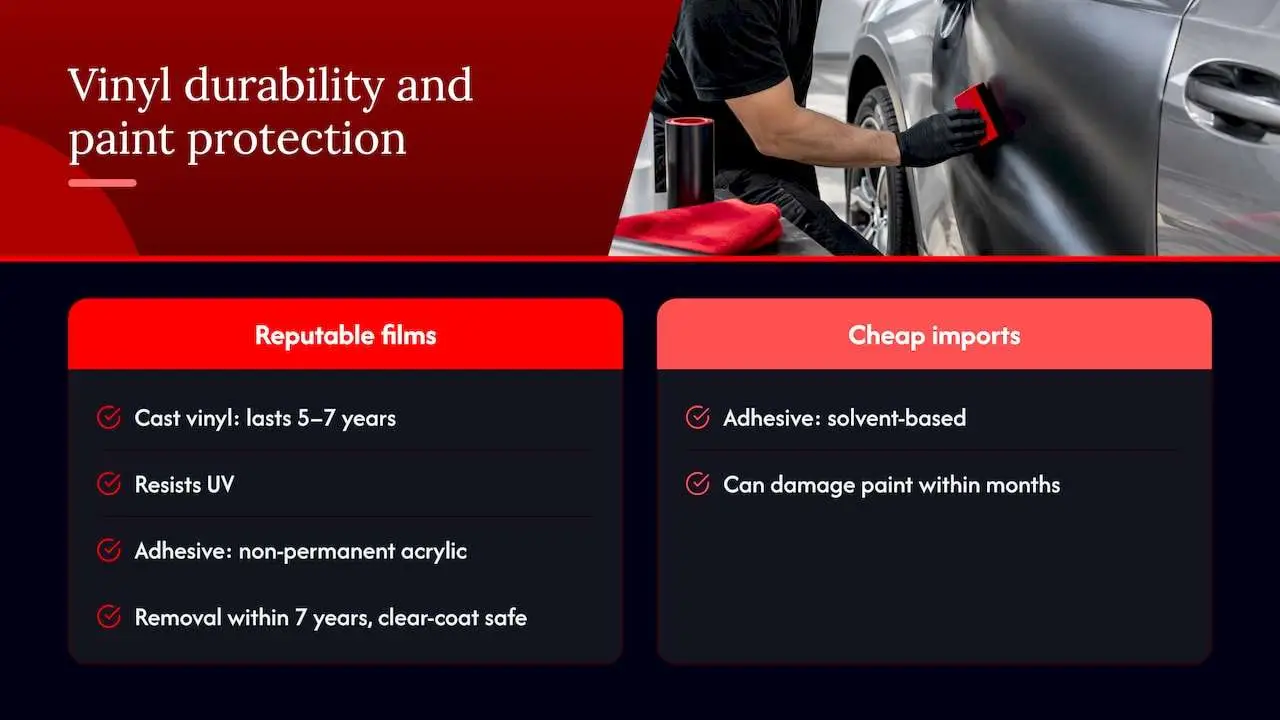
Cast vinyl from a reputable brand lasts 5 to 7 years and resists UV, which matters in Southern California sun. A vinyl manufacturer states that automotive-grade films from 3M, Avery and VViViD use non-permanent acrylic adhesive and are designed to be removed within 7 years without damaging clear coats. The same source warns that cheap imported films can use solvent-based adhesives that damage paint within months. That is why material brand matters more than color.
We work with premium film brands, and our vinyl wrap work uses 3M and Avery Dennison films and Inozetek super gloss wraps. For a resale-minded owner, reversible vinyl is the strongest case: you can enjoy the blackout look, then remove it before selling. If you are weighing that, this guide to selling a car with a custom wrap covers what buyers look at, even though rules differ by place.
Caring for your colored trim
- Wait before washing. Follow the cure window above: no washing for the first 3 to 5 days.
- Hand wash. Use a soft mitt and a pH-neutral car soap. Avoid abrasive pads.
- Match care to finish. Gloss wipes clean fastest. Satin and matte need a gentle wipe with a microfiber towel, and no wax or polish that adds shine in patches.
- Be careful with pressure washers. Keep the nozzle back from edges so it does not lift film.
- Check edges after the first few weeks. A slight lift at a corner is easiest to fix early. If you see one, bring the car back to us.
Add protection while the car is in the shop
A chrome delete often sits beside other work. Many owners pair it with paint protection film on the front end and a ceramic coating on the paint. Our paint protection film packages include Full Front at $2,199 and Full Vehicle from $4,500, using XPEL film. A ceramic coating with System X handles the rest of the surface. Combined, the car keeps its paint and its new trim in one visit.
Ready to pick a color
Tell us your car, your paint color and the look you want. We will suggest a finish, show film samples and quote the work. PPF Pros is a North Hollywood vehicle styling shop, and customers rate us 4.9 stars. Start on our chrome delete service page or see all services.
Our point of view
Most people ask us about color last. They should ask first. Color is what you will see every day, while the price barely changes with it.
Our advice is simple. Pick gloss if you want the trim to look like it came from the factory. Pick satin if you want the car to look premium and tidy. Pick matte only if the rest of the car is already dark. If you want gunmetal, brushed metal or a body match, ask, because that is a design decision and we are happy to talk it through.
The film matters as much as the finish. We install premium material from trusted brands with wrapped edges and clean alignment, because a chrome delete is only as good as its edges. When you want protection and style in one visit, we can add PPF or ceramic coating to the same booking.
Jake
FAQ
Can chrome be a different color than black?
Yes. Chrome trim can be wrapped in dark gray, gunmetal, brushed metal tones, carbon fiber, color-shift films or a body-matched color. Major film ranges include over 100 finish and color combinations, plus custom color matching. Ask us for samples before you decide.
How long will a chrome delete last?
Cast vinyl from a reputable brand lasts roughly 5 to 7 years. Sun exposure, washing habits and film quality all matter. Following the cure and care steps above helps edges stay down.
Does the color affect the price?
No. Gloss, satin and matte black cost the same. The amount of chrome and its shape, especially window trim and grilles, drive the quote. Send us your make and model for a clear price.
Can I remove a chrome delete later?
Quality cast vinyl is designed to be removed. Automotive-grade film adhesive is designed to come off within 7 years without damaging clear coat. That makes it a good choice if you plan to sell the car.
Sources
- Avery Dennison Supreme Wrapping Film product catalog
- Chrome delete guide: methods, finishes and lifespan
- Chrome delete cost guide
- Chrome delete installation instructions
- Vinyl film information and tutorials