Wait until the coating has cured before the first soap wash, then hand wash with a pH-neutral shampoo, a clean mitt and a soft microfiber towel, and keep water from drying on the paint. Most of the damage we see people worry about comes from three things: washing too early, using the wrong soap, and letting hard water dry on the surface. Get those right and a coating stays slick and easy to clean for years.
This guide is for drivers who just had a coating installed, or are about to. If you had yours done at our North Hollywood shop, follow the aftercare sheet you were given first. This page fills in the reasoning behind it.
TL;DR
- Do not soap-wash a fresh coating until it has cured. Cure times differ by product and weather, so go by your installer’s instructions, and expect the safe window to run from several days to a few weeks.
- Keep the car dry and out of rain and sprinklers for the first day or two. If it gets wet early, blot it dry gently with clean microfiber.
- Hand wash with a pH-neutral shampoo, two buckets, a soft mitt, in the shade, top to bottom, and dry right away.
- Skip brush car washes, dish soap, household cleaners and wax-based products.
- Plan a wash roughly every two weeks, and spot-clean bird droppings, bugs and sap quickly.
Table of Contents
- How long to wait before the first wash
- If the car gets wet before the coating cures
- The safe hand-wash method, step by step
- What to wash with, and what to avoid
- How often to wash a ceramic-coated car
- Hard water, spots and drying
- Wax, sealants and maintenance sprays
- Common mistakes
- Washing PPF versus washing a coating
- Our view: wash less aggressively, not less often
- Get the coating installed right, then keep it easy
- FAQ
- Sources
How long to wait before the first wash
A ceramic coating is a liquid that bonds to the paint and hardens. It feels dry within hours, but the chemistry keeps working for days or weeks. Washing before it is ready can leave streaks or weaken the bond.
There is no single number that fits every coating. Published guidance from coating makers runs from about five days to two weeks or more before the first soap wash, and humidity and temperature change the clock. Many shops also tell customers to keep water off the car entirely for the first 24 to 48 hours.
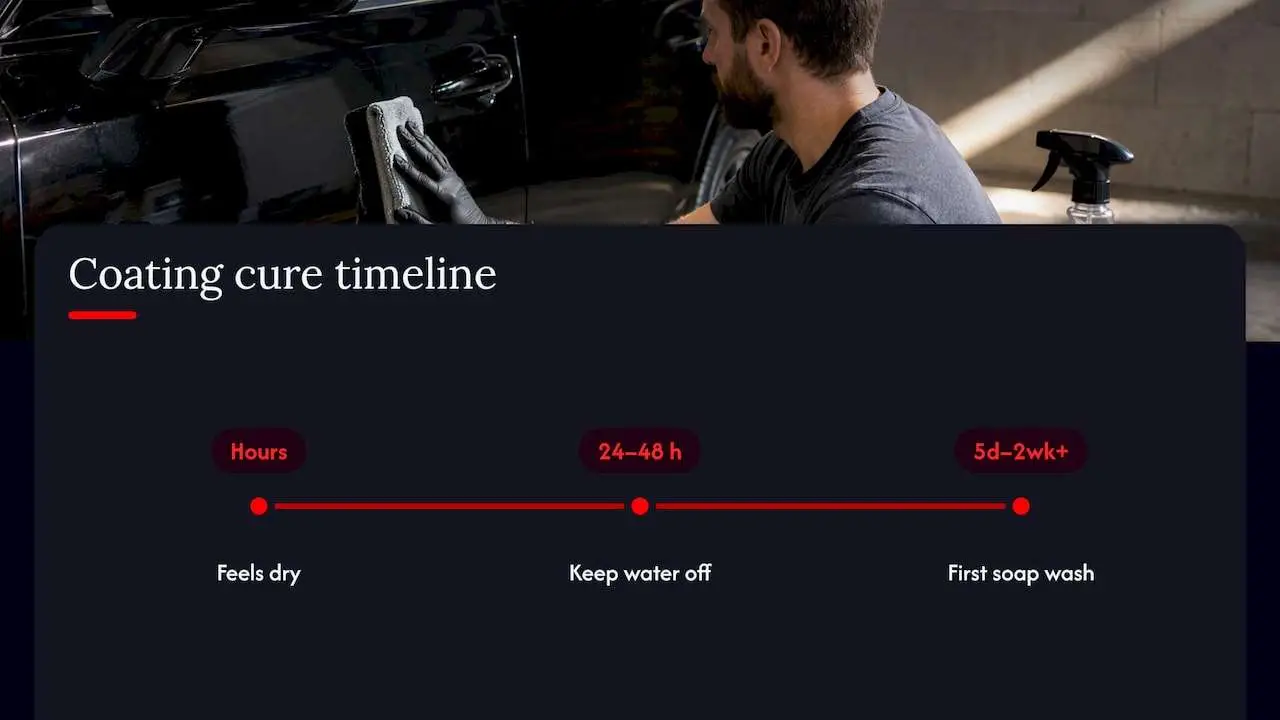
We lay out the reasons in our guide on why ceramic coating cure time often needs 2–4 weeks. The practical rule: use the longer end of the range your installer gives you, and in the meantime do only the gentle things below.
What you can do during the cure
- Park in a garage or covered space when you can, so rain, dew and sprinklers cannot touch the paint.
- Leave the car unwashed. A light layer of dust is harmless and easy to remove later.
- Avoid parking under trees. Sap, pollen and bird droppings are much easier to deal with once the coating is fully set.
- Skip any additional product on top, including sprays and “quick” detailers, unless your installer approves it.
If the car gets wet before the coating cures
It happens: a surprise storm, a sprinkler that comes on at night, a morning of heavy dew. One wetting rarely ruins a coating, but how you respond matters.
- Do not let the droplets evaporate on their own. Minerals stay behind when water dries, and those are what leave spots.
- Blot, do not wipe. Use a clean, dry plush microfiber towel and lift the water off with light pressure. Rubbing a not-yet-hardened surface is how marks happen.
- Wait for the cure to finish, then inspect. Look at the paint in shade and in angled light.
- Leave stubborn spots to a pro. If marks remain after the cure, bring the car in rather than scrubbing at them. Our pro decontamination starts with an inspection and is designed to deal with bonded contamination safely.
The safe hand-wash method, step by step
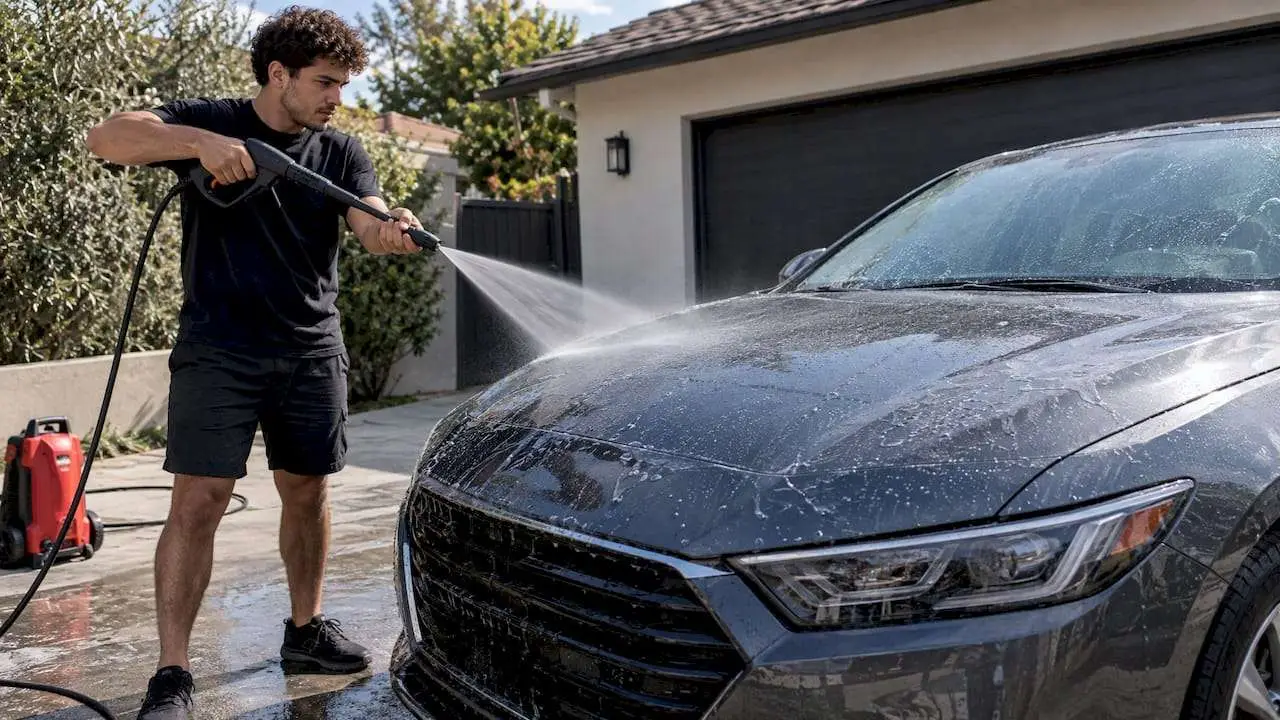
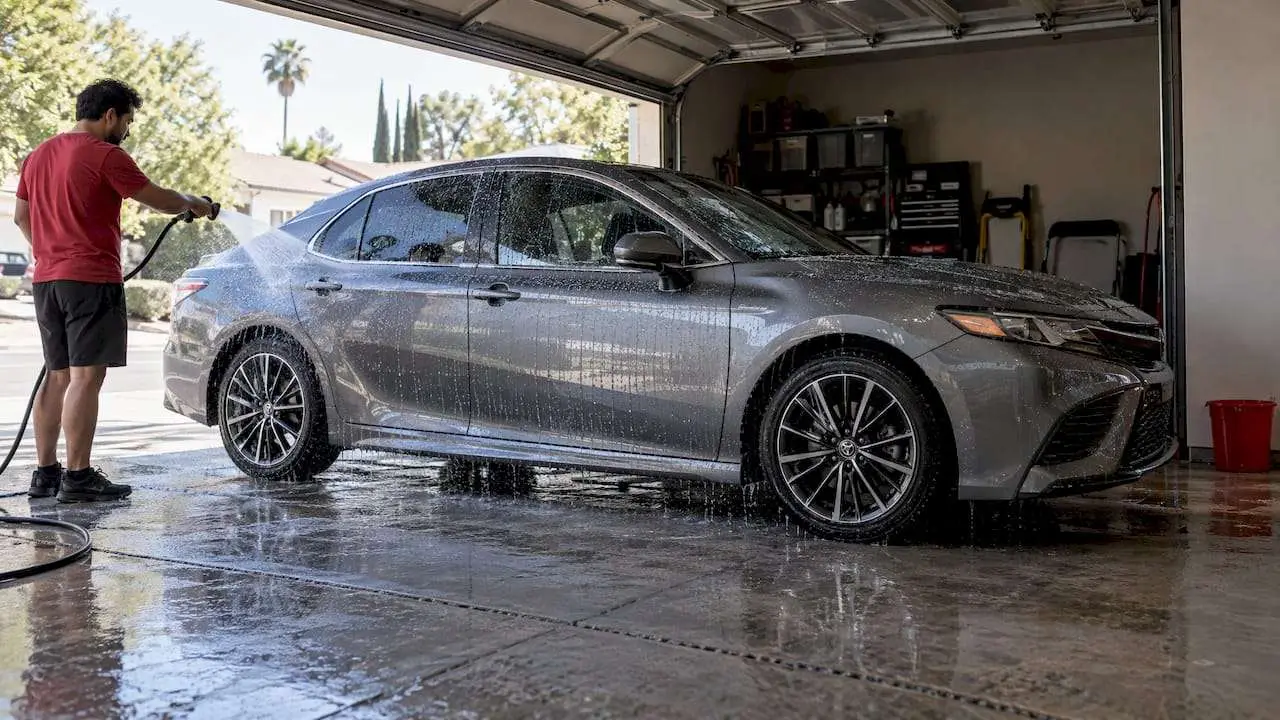
Once the cure is done, this is the routine we recommend. Each step has a reason, and most scratches on coated cars come from skipping one of them. Our own how to wash a car with ceramic coating page covers the same routine in more detail.
1. Pick a cool, shaded spot
Wash in a garage, under cover, or in the early morning or late afternoon. Soap and water dry fast on a hot panel, and that is when spotting starts. If the paint is warm to the touch, wait or rinse it down first.
2. Pre-rinse everything
Rinse the whole car from the top down before a mitt touches it. This floats off loose grit, which is the stuff that actually scratches. In Los Angeles, with dust, freeway grime and brake dust, this step does a lot of the work.
3. Wheels first, with their own tools
Wheels carry the dirtiest material on the car. Use a separate bucket and mitt for them, and never bring those tools near the paint. Doing wheels first means you do not splash brake dust onto panels you have already cleaned.
4. Two buckets, one panel at a time
Fill one bucket with shampoo solution and one with plain rinse water. Dip the mitt in the soap, wash one panel, then rinse the mitt in the plain-water bucket before going back for more soap. A grit guard at the bottom of each bucket helps keep dirt from returning to the mitt. Work from the roof down, and leave the lower doors, bumpers and rocker panels for last, since they are the dirtiest.
Rinse each section before the soap dries, rather than waiting until the end.
5. Rinse thoroughly
Let water sheet off the panels. A coated surface is hydrophobic, so water beads and rolls away, which makes rinsing quick. Check around mirrors, door handles, badges and trim, where soap hides.
6. Dry immediately
This is the step that matters most in a hard-water city. Use a clean, plush microfiber drying towel, or a car dryer or blower followed by a towel. Do not use household bath towels or a chamois, which can drag or leave lint. Do not let the car air-dry.
What to wash with, and what to avoid
Use: a pH-neutral car shampoo made for coated vehicles, soft microfiber mitts, clean drying towels and a gentle water stream.
Avoid:
- Automatic brush or cloth-strip washes. Spinning brushes pick up grit from every car before yours and can leave fine scratches. Coating makers generally warn against them, and some void warranty coverage if you use them.
- Dish soap and household cleaners. They are not made for automotive finishes and can strip or dull the surface layer.
- Soaps with added wax. Wax does not bond to a coating and can leave a film that hides the gloss.
- Harsh high-pH or very acidic cleaners. Stick to pH-neutral products unless a pro is doing a deliberate decontamination.
- Direct sun and hot panels.
If a touchless wash is your only option in a pinch, it is a gentler choice than a brush wash, but a hand wash is the routine that protects your coating best.
How often to wash a ceramic-coated car
A common manufacturer recommendation is about every two weeks, with a full two-bucket hand wash at least every couple of months. Some guides stretch that to every two to four weeks. The reasoning is simple: a coating that is buried under road film cannot repel water or dirt, so it feels like it stopped working. Regular washing keeps it doing its job.
Between washes, deal with these promptly:
- Bird droppings
- Bug splatter
- Tree sap
- Pollen
Left for several days in LA sun, these can etch into paint and coating alike. Keep a bottle of waterless wash and a few clean microfiber towels in the trunk and lift them off as soon as you see them.
Hard water, spots and drying
Water is the one enemy a coating cannot fully shrug off. Los Angeles tap water is on the hard side: one local water-quality summary puts total hardness between roughly 56 and 220 mg/L depending on the service zone. Those dissolved calcium and magnesium minerals stay on the paint when a droplet evaporates, and left alone they can etch.
What helps:
- Wash in the shade and dry right away.
- Do not let sprinklers hit the car. If you park near a lawn, move the car.
- Rinse last with a gentle, open stream so water sheets off instead of beading everywhere.
- Finish with a blower in door jambs, mirrors and trim so water cannot run out later and dry on the panel.
Wax, sealants and maintenance sprays
Do not wax a ceramic coating. Wax is unnecessary on top of one and does not bond to it, and some coating warranties do not allow it. If you want to refresh the slickness, use a coating-compatible maintenance spray after a wash, on a clean, cool, shaded car, every few months. Never apply a spray to a dirty vehicle.
Once a year or so, a decontamination step removes embedded metallic and industrial fallout that regular washing misses. That is better done by someone who can inspect the paint first. Our piece on ceramic coating maintenance and decontamination before recoating explains when it makes sense.
Common mistakes
| Mistake | Why it hurts | Do this instead |
|---|---|---|
| Washing in the first days or weeks | The coating is still hardening and can streak or bond poorly | Follow your installer’s cure window |
| Using a brush car wash | Dirty brushes scratch and can void a warranty | Hand wash, or touchless if you must |
| Letting water air-dry | Minerals leave spots that can etch | Dry with plush microfiber right away |
| Dish soap or strong cleaners | Can strip or dull the surface | pH-neutral coating-safe shampoo |
| Waxing over the coating | Does not bond, hides gloss | Use a compatible maintenance spray |
| Ignoring bird droppings | They etch if left for days | Spot-clean as soon as you see them |
Washing PPF versus washing a coating
If your car has paint protection film too, the timing and technique differ a little. See our guide to washing a car after PPF for the schedule and the mistakes to avoid.
Our view: wash less aggressively, not less often
Most coating problems we hear about are wash problems, not coating problems. People either treat the car like glass for a month and never wash it, or they go the other way and run it through a brush wash because the coating is “tough.” Neither helps.
Our approach is simple. Wait out the cure, then wash on a regular schedule with clean tools and soft towels. That is what keeps a coating looking the way it did the day you picked the car up. It is also why we put precision into the installation: a coating applied to properly prepared paint is easier to maintain and easier to enjoy.
We offer System X 5-year ceramic coating alongside XPEL authorized paint protection film. Many customers pair the two: film on the high-impact areas for rock chips, coating for slickness and easy cleaning. If you are not sure how to look after your car after pickup, ask us. We reply the same day.
Jake
Get the coating installed right, then keep it easy
A coating is only as easy to maintain as the prep and application behind it. At PPF Pros in North Hollywood we install System X 5-year ceramic coating, and we also do XPEL authorized paint protection film, vinyl wraps, chrome deletes and detailing for daily drivers, Teslas and luxury and exotic cars across Los Angeles. See our ceramic coating service page for details, or request a quote and we will tell you what fits your car.
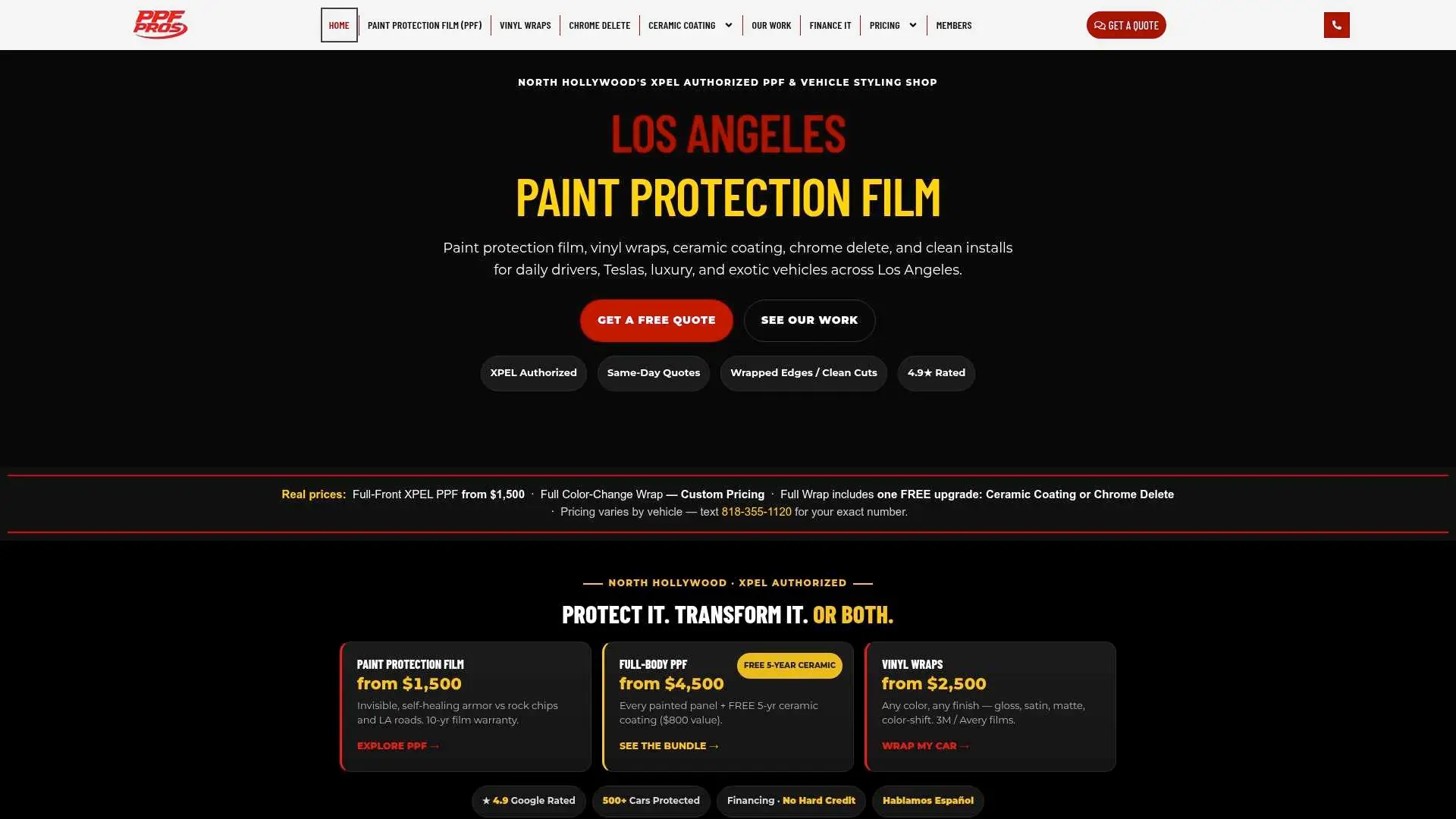
If you also want rock-chip protection, our paint protection film packages start with a Full Front at $2,199 and a Full Vehicle from $4,500.
FAQ
Can I take a ceramic-coated car through a car wash?
The safest answer is to hand wash. Brush and cloth-strip washes can scratch the surface, and some coating warranties exclude damage from them. If you have no alternative, a touchless wash is the gentler option.
Do I still need to wash a ceramic-coated car?
Yes. The coating makes dirt release more easily, but it does not clean itself. A layer of road film blocks the water-repelling effect, so regular washing is what keeps the car looking and behaving like a coated car. Our guide to ceramic coating benefits explains what to expect.
What happens if it rains right after the coating is applied?
One rain event is usually manageable. Blot the water off gently with a clean microfiber towel instead of letting it dry, and do not scrub. After the cure is complete, check the paint in angled light and bring the car in if any marks remain.
Can I use regular car shampoo?
Use a pH-neutral shampoo that does not contain wax. Avoid dish soap, household cleaners and harsh high-pH products, which can dull the surface layer.