Paint protection film (PPF) helps your resale value by keeping the one thing buyers and appraisers judge first, the paint, in factory condition. It is not a sticker price you can add to a listing. It works by removing the chips, scratches and reconditioning deductions that pull trade-in offers down. The owners who get the most from it install the film early, have it installed cleanly, and keep the paperwork for the day they sell.
We install XPEL Authorized PPF in North Hollywood, and the question we hear from Los Angeles owners is rarely “is film good?” It is “will I see this money again when I sell?” This guide answers that with the evidence that exists, a worked example, and a plan for getting the most from it.
TL;DR
- PPF protects resale value by preserving factory paint, and paint condition is one of the first things an appraiser grades.
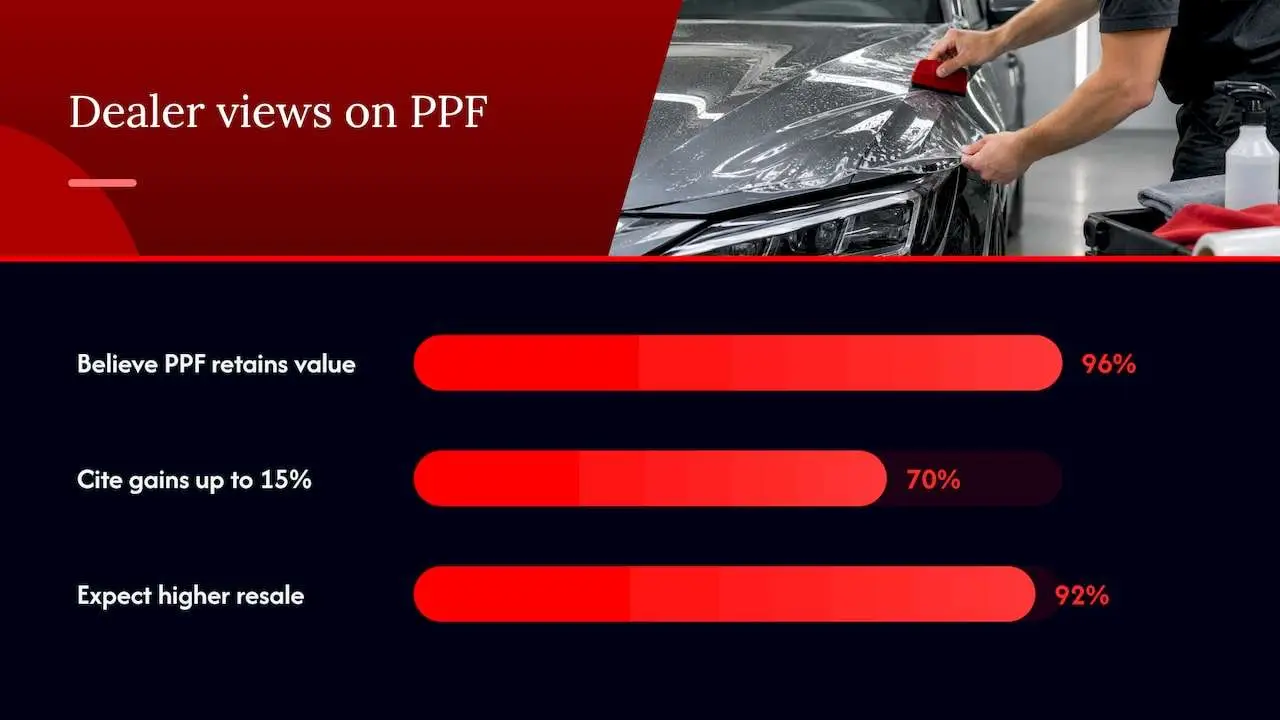
- In a 2025 survey of 300 US dealership decision makers, 96% said PPF on all painted surfaces of a new vehicle helps retain value, and 70% cited gains of up to 15%.
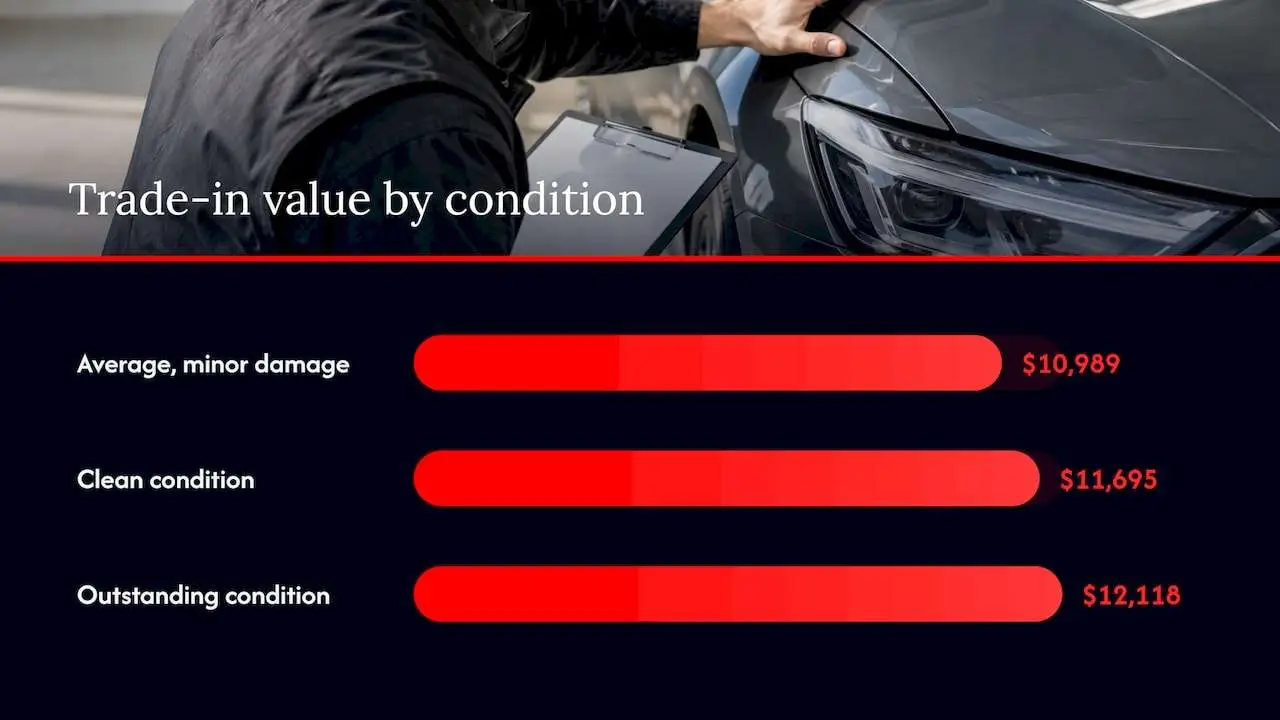
- A trade-in appraisal gap of roughly $700 to $1,100 between minor paint damage and outstanding condition shows how fast paint flaws cost money.
- Early installation, full coverage of high-impact areas and a saved invoice make the film easier to value at sale.
- A Full Front package is $2,199 with us, and a Full Vehicle package starts at $4,500.
Table of Contents
- Does PPF actually raise resale value?
- How appraisers see paint
- What makes PPF count at sale
- Cost against what it protects
- Which cars benefit most
- Film versus a wrap versus ceramic coating
- Selling a car that has PPF
- Our perspective
- Protect your paint at our North Hollywood shop
- FAQ
- Sources
Does PPF actually raise resale value?
The honest framing is this: PPF keeps value that would otherwise be lost. A used car is priced against a clean example of the same model. Every chip on the hood, every scratched bumper and every faded panel is a reason for the buyer or dealer to subtract money. Film stops many of those flaws before they happen, so your car stays closer to the clean comparable.
The strongest recent data comes from the dealer side. The Car Dealers Survey Report, run by a research firm among 300 US light-duty dealership decision makers in June 2025 and released in January 2026, found that 96% believe PPF on all painted surfaces of a new vehicle helps retain more value. Of those surveyed, 70% cited value-retention gains of up to 15%, and 92% said PPF-covered vehicles would carry higher resale value as pre-owned inventory. The margin of error was plus or minus 3 percentage points.
Read those numbers for what they are: the opinions of the people who price used cars every day. They show how the trade values film, and they point the same direction as the mechanics of an appraisal, which we cover next. They are not a promise that every buyer will hand you 15% more. Your outcome depends on the car, the film, the installation and how well you present it.
How appraisers see paint
When a dealer appraises your car, paint is one of the quickest things to read. Under bright light, a walkaround reveals rock chips, swirl marks, bumper scuffs and panels that do not match. Each one turns into a reconditioning estimate, and that estimate comes out of your offer.
The Shop magazine ran a useful example in August 2026 using the Edmunds appraisal tool. A 2018 Jeep Grand Cherokee in average condition with minor paint damage appraised at $10,989 as a trade-in. The same vehicle in clean condition appraised at $11,695, and in outstanding condition at $12,118. That is a $706 to $1,129 gap caused by condition alone, on a vehicle that was not especially expensive.
Now put our pricing next to it. A Full Front package, covering the areas that take the most road abuse, is $2,199. The appraisal gap in that example equals roughly a third to a half of that price, and it comes from one mid-priced SUV. On a luxury or exotic car, where reconditioning bills and buyer expectations are higher, the same logic scales up. Paint correction or a respray on a modern metallic finish is also hard to match to the original, which is why untouched factory paint is what buyers of premium cars prefer to see.
A worked example
This is an illustration, not a quote or a guarantee. Say you buy a new Tesla Model Y and keep it four years.
- Without film, the hood, front bumper and mirrors collect highway chips. At trade-in, the appraiser notes visible paint damage and grades the car down.
- With a Full Front package, those surfaces look the way they did on delivery day. The appraiser has less to subtract.
- The difference in your offer is the value of the film. Use the Edmunds example above as a rough scale for how much condition can move an offer, then compare it with the cost of the package you are considering.
The point is not that the math always nets out exactly. It is that the film attacks the specific deduction that paint damage creates, and it does so for the whole time you own the car, while you enjoy a car that still looks new.
What makes PPF count at sale
Six factors decide how much of the benefit you capture.
Install early
Film protects paint that is still perfect. Applied to a new car, it never has to hide anything. If your car already has chips, the film will protect the surface from further damage, but it will not erase what is there. If the car was repainted, timing matters too: our guide to PPF after a repaint covers how long to wait and what to check. For a new vehicle, our new car protection film guide lays out what to cover before the first drive.
Cover what gets hit
The front end takes the abuse: hood, bumper, fenders, mirrors and headlights. That is why a Full Front package is our most popular starting point for daily drivers, and why Partial Front exists for owners who want the highest-impact zones covered at a lower entry point. Drivers who take the car to the track or spend a lot of time on freeways can step up to a Track Pack, and owners who want every painted panel covered choose Full Vehicle, which starts at $4,500.
Installation quality
A buyer or appraiser who looks closely will notice lifted edges, trapped debris, stretch marks or misaligned seams. Clean work looks like nothing at all, which is the goal. Our installers wrap edges and align panels precisely, because film that looks invisible is film that helps the car sell. If you want to know what a good result looks like against bare paint, our orange peel check shows how to compare a film panel with an unwrapped one.
Film quality
We use XPEL film and are an XPEL Authorized dealer. Premium film is designed to resist yellowing and staining over the years you own the car, and that matters at sale, when the buyer is comparing it with other cars on the lot.
Documentation
Keep the invoice, the film brand and the installation date. When you list the car or negotiate a trade, a written record turns “I think it has some kind of film” into a specific, verifiable feature. It also helps a private buyer understand that the car was cared for, which is exactly the impression you want.
Presentation
A clean, freshly washed car with a record of protection sells itself better than one that needs explanation. Say what is on the car, where, and when it was installed. Show the clean paint under a light.
Cost against what it protects
Before you decide, compare the package price with what paint damage costs you in other ways: the trade-in deduction, a repaint, or the daily annoyance of looking at chips.
| Package | What it covers | Our price |
|---|---|---|
| Partial Front | High-impact front zones | Quote on request |
| Full Front | Front-end panels that take the most chips | $2,199 |
| Track Pack | Extended coverage for hard use | Quote on request |
| Full Vehicle | Every painted panel | From $4,500 |
For a fuller breakdown of what drives the price, see our guide on how much paint protection film usually costs. If you want a more detailed look at the economics at trade-in, our PPF ROI article walks through it.
The repair side of the ledger is easy to underestimate. Repainting a panel, matching a modern metallic finish, and the downtime that goes with it all cost more than most owners expect. Film means you avoid that cycle rather than pay for it later.
Which cars benefit most
Daily drivers
If you commute on the 101, 405 or 10, your hood and bumper are in the line of fire every day. A Full Front package turns the most exposed surfaces into replaceable film rather than permanent paint, which keeps your trade-in or private-sale position strong.
Tesla owners
Teslas are common in LA and used examples compete with each other directly. When two similar cars are listed, the one with clean front-end paint stands out. Tesla front ends are broad, smooth surfaces that show chips clearly, so a Full Front package fits well. Owners who also want a new look can pair film with a wrap; our $2,199 vinyl wrap is available for sedans, coupes and Teslas.
Luxury and exotic owners
Buyers of premium cars pay attention to originality. Factory paint that has never been resprayed is a selling point, and film is how you keep it that way. Full Vehicle coverage is the natural fit when the paint is as valuable as the car’s badge.
Enthusiasts
If you track your car or drive it hard, a Track Pack protects the leading edges while you enjoy the car. If you also want a custom look, color change and finish choices sit alongside protection in our color PPF versus vinyl wrap comparison.
Film versus a wrap versus ceramic coating
These three get confused, and they do different jobs for resale.
- PPF is a clear urethane layer that physically absorbs chips and light scratches. It is the choice when protecting the original paint is the priority.
- Vinyl wrap changes the look of the car. It can cover paint, but its job is styling. If you plan to remove it before selling, see our guide to whether vinyl wrap protects paint and what to expect from wrap removal cost.
- Ceramic coating adds a slick, glossy layer that makes washing easier and helps paint look deep. Our System X coating is a 5-year product, and it pairs naturally with film on the panels where you want both protection and shine.
A full color change wrap starts at $2,800 with us. If your goal is mainly to protect value rather than change color, film is the tool built for that.
Selling a car that has PPF
When the day comes, the way you present the film matters as much as having it.
- Wash and inspect. Clean film looks clear. Dirt and mineral deposits dull any surface, so a good wash before photos shows the paint at its best.
- Gather your paperwork. The installer invoice, film brand and date go into your listing or trade-in folder.
- Describe it plainly. Name the coverage, such as “Full Front XPEL paint protection film, installed in [year].” Specific beats vague.
- Point out the result. Chip-free hood and bumper are the evidence. Let the buyer see them under light.
- Choose the right channel. A private sale lets you explain the film to a buyer who values it. A dealer trade-in is faster, and a clean, well-kept finish still gives the appraiser fewer reasons to deduct.
If you have a wrap on the car and want to return to original paint before selling, the guide to removing a car wrap at 150 to 200°F explains how to do it without damaging the finish.
Our perspective
We look at resale value from the paint up. Every used car is sold against a clean comparable, and paint is the first place a buyer or appraiser finds a reason to say no. Film takes that reason away.
Our job is to make the film disappear. That means wrapped edges, clean alignment and XPEL material, so when you sell, nobody is looking at the film. They are looking at paint that still looks like the day you drove the car home.
The owners who get the most from film are the ones who decide early. A Full Front package at $2,199 protects the panels that collect the most chips, and Full Vehicle coverage from $4,500 covers every painted surface for owners who want the car to stay original. Add a System X ceramic coating, and the car stays glossy and easier to wash while you own it.
The best time to protect resale value is before the first chip. We would rather help you keep a clean car clean than fix it later.
Jake
Protect your paint at our North Hollywood shop
If you are ready to keep your car’s paint in showroom condition, our team installs XPEL Authorized PPF in North Hollywood for daily drivers, Teslas, luxury and exotic cars. Start with a Full Front package at $2,199, or choose Full Vehicle coverage from $4,500. Partial Front and Track Pack are quoted to your car, and we aim to reply to quote requests the same day.
Bring the car in, tell us how long you plan to keep it, and we will recommend the coverage that fits. You can see our full range on our Paint Protection Film Los Angeles page.
FAQ
Does PPF increase resale value?
PPF keeps resale value by protecting the paint from chips and scratches that lower trade-in offers. In a 2025 survey, 96% of dealership decision makers said PPF on a new vehicle’s painted surfaces helps retain value. The size of the benefit depends on your car, the coverage and the installation quality.
How much does PPF cost in Los Angeles?
At our shop, a Full Front package is $2,199 and Full Vehicle coverage starts at $4,500. Partial Front and Track Pack are quoted for your vehicle. Our cost guide explains what moves the price.
Should I install PPF on a new car or wait?
Install it as early as you can. Film protects paint that is still perfect, so a new car gets the most benefit. Our guide to new car protection film explains what to cover first.
What should I keep when I sell a car with PPF?
Keep the installer invoice, the film brand and the installation date. Mention the coverage in your listing or trade-in conversation, and show the clean paint in good light. A written record makes the film easy for a buyer to understand.
Is PPF worth it on a daily driver?
Yes, if you want the front of the car to stay clean through years of commuting. Highway driving puts chips on the hood and bumper, and a Full Front package covers those panels. Condition affects appraisals, as the Edmunds example in The Shop magazine shows with its $706 to $1,129 gap.
Sources
- New Dealership Survey Finds Paint Protection Film Can Add up to 15% to a Vehicle’s Resale Value (Business Wire)
- Building a Case for Offering Paint Protection Film Installations (The Shop)