A ceramic coating is a thin liquid layer that bonds to your paint and makes it easier to keep clean, shinier and more resistant to everyday contamination. It is not armor. Most ceramic coating myths come from treating a surface treatment as impact protection. Once you know which job a coating does and which job paint protection film (PPF) does, you can pick the right one for your car, or combine both, and set realistic expectations.
This guide sorts the common claims into what is true, what is exaggerated and what to do about each, for drivers in Los Angeles and anywhere else.
TL;DR
- A ceramic coating makes paint slicker and easier to clean and adds resistance to contamination. Rock chips and impacts are the job of PPF.
- Coated cars still need regular, gentle washing. Maintenance gets easier, not optional.
- Coatings last roughly two to seven years depending on product, prep and care, so “forever” claims deserve a second look.
- A proper professional application takes hours of prep and at least a day of cure time. A same-day turnaround is a red flag.
- Many owners pair PPF on high-impact areas with a ceramic coating over the top.
Table of Contents
- Myth 1: A ceramic coating makes your car rock-chip proof
- Myth 2: You will never have to wash your car again
- Myth 3: Ceramic coatings are self-cleaning and self-healing
- Myth 4: Coated paint is scratch-proof, and “9H” proves it
- Myth 5: A coating hides existing scratches and swirls
- Myth 6: It lasts forever, and it is a one-time job
- Myth 7: A same-day coating job is fine, and a DIY kit is the same thing
- Myth 8: Graphene coatings are a different, stronger class
- What about PPF myths?
- Ceramic coating vs. PPF at a glance
- Why don’t car manufacturers ceramic coat cars?
- Choosing what fits your car
- Get the right protection on your car in Los Angeles
- Our perspective on coating myths
- FAQ
- Sources
Myth 1: A ceramic coating makes your car rock-chip proof
This is the biggest misconception, and the reason it persists is that coated paint looks and feels so tough. Motor1’s explainer says the main error is believing a coating protects against nearly any damage. In reality it is extremely thin, so it is not built to absorb impacts from rocks, gravel or a shopping cart.
Car and Driver’s tested guide agrees: a coating can add some resistance to minor scratches and chemical etching, but it will not stop deeper scratches, rock chips or impact damage, and it is not a replacement for PPF.
What it does well is the everyday layer. Water beads and rolls off, road grime bonds less readily, and bird droppings and bugs wipe away more easily.
What to do: if your concern is chips on the hood, bumper and mirrors, that is a physical-impact problem. Our page on rock chip protection explains what actually stops paint damage, and our PPF vs. ceramic coating comparison lays out which to choose for which risk.
Myth 2: You will never have to wash your car again
A coating makes washing faster and easier. It does not cancel washing. The Drive describes a true ceramic coating as something that needs maintenance through regular washing, with longevity depending on how well it was applied and how harsh the car’s environment is.
The reason is simple. Contaminants left on the surface too long can embed in the coating and reduce how it performs. The Repairer Driven News report on a collision-repair industry briefing says mineral deposits are the number one problem the speaker sees. Left too long, they can no longer be removed chemically and have to be abraded off, which takes the coating with them. The same briefing mentions “love marks” from quick detailer sprays used without enough lubrication.
What to do:
- Wash on a regular schedule, out of direct sun, with a pH-appropriate car shampoo and clean microfiber.
- Rinse bird droppings, sap and hard-water spots promptly.
- Skip automatic brush washes and harsh alkaline cleaners. Car and Driver notes abrasive washing and harsh cleaners reduce a coating’s performance, and USA Today lists automatic car wash brushes among the things a coating cannot endure.
We walk through the full routine in how to wash a car with a ceramic coating, and our ceramic coating maintenance guide covers professional decontamination when buildup has gone too far.
Myth 3: Ceramic coatings are self-cleaning and self-healing
They are hydrophobic, meaning water beads and sheets off, and that carries some dirt with it. That is a cleaning aid, not a self-cleaning surface. Dust, road film and minerals still settle on the paint and need to be washed away.
Self-healing is a different story. It is a property of certain PPF films, designed to recover from light swirl marks, and it is often wrongly credited to coatings. The distinction is why Motor1’s guides keep the two products in separate boxes: PPF is mainly physical impact protection, while a ceramic coating handles surface protection, chemical resistance, water behavior and ease of cleaning.
Myth 4: Coated paint is scratch-proof, and “9H” proves it
Sellers often cite hardness ratings like 9H. Checkbook, a consumer advocacy group, explains these come from pencil-lead scratch tests in a lab. They say little about how a coated car handles rock chips, key scratches or road debris. Treat a hardness number as a lab measurement, not a promise about real roads.
What matters on a real car is the combination of three things: how well the paint was prepared, what the coating is designed to do, and how you treat it afterward. Washing technique causes most swirl marks, and a coating cannot rescue a poor wash habit.
Myth 5: A coating hides existing scratches and swirls
Coating is not a correction step. USA Today lists removing swirls or scratches among the things a coating cannot do, and warns that coating damaged paint seals the imperfections under the new layer. Motor1 makes the same point: installers often polish the paint first because whatever is on the surface gets locked in.
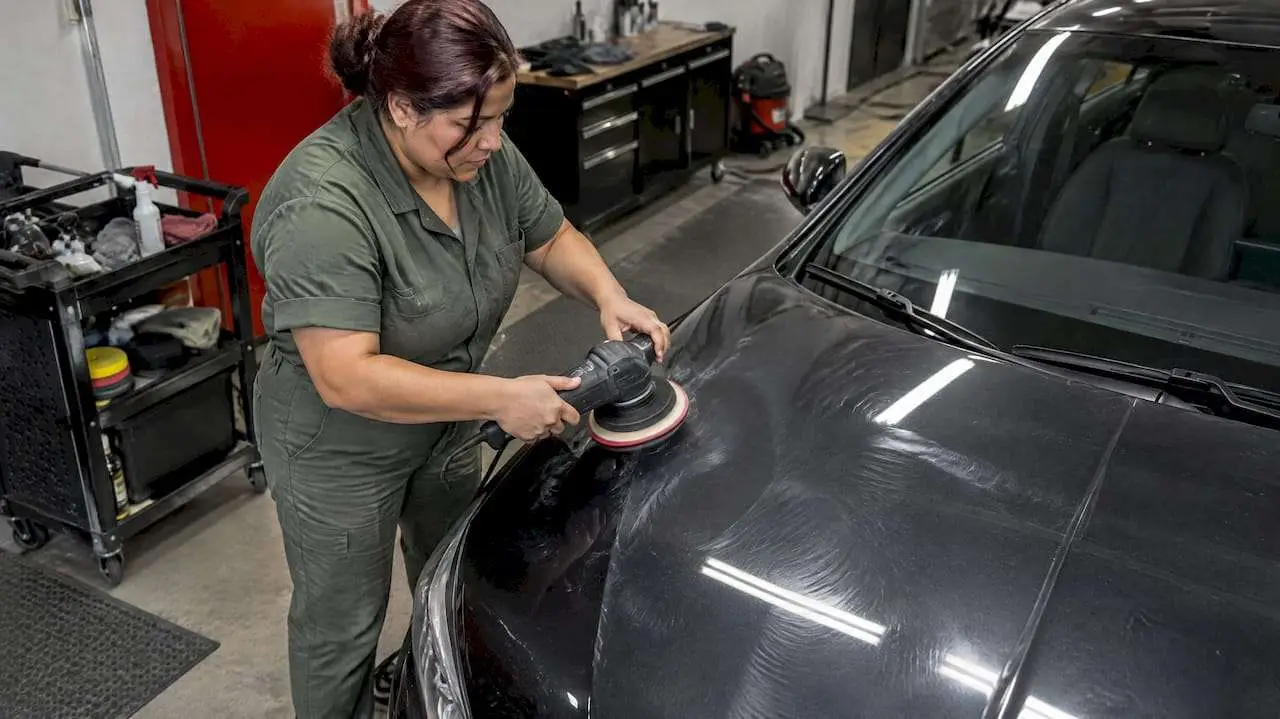
That is why prep is the real work. A bonded layer over flawed paint keeps the flaws on display for years. Our guide on whether you need paint correction before ceramic coating explains how to decide for your car’s condition, whether it is brand new or several years old.
Myth 6: It lasts forever, and it is a one-time job
Coatings are durable, not permanent. USA Today puts the range at two to seven years depending on the type and brand. The spread is wide because longevity depends on the product, the preparation, how the car is washed and where it lives. Sun, road salt, hard water and parking outside all matter.
We break this down in ceramic coating benefits and the 1–2 vs. 3–7 year reality. Our ceramic coating is System X, a 5-year coating, and the best way to get the most from any multi-year coating is consistent maintenance.
Warranties deserve a careful read for the same reason. Terms commonly depend on following the maintenance conditions, and our page on keeping a 5-year ceramic coating warranty valid shows what to keep track of so the coverage you paid for stays in force.
Myth 7: A same-day coating job is fine, and a DIY kit is the same thing
A proper application is slow. Checkbook says a legitimate job takes many hours, involves thorough cleaning and, on a car that is not new, usually paint correction. The coating also needs at least 24 hours to cure before the car can get wet, so a shop that applies it and hands the car back the same day is a red flag. Our own page explains why ceramic coating cure time often runs 2–4 weeks for full hardening, and what to avoid while it does.
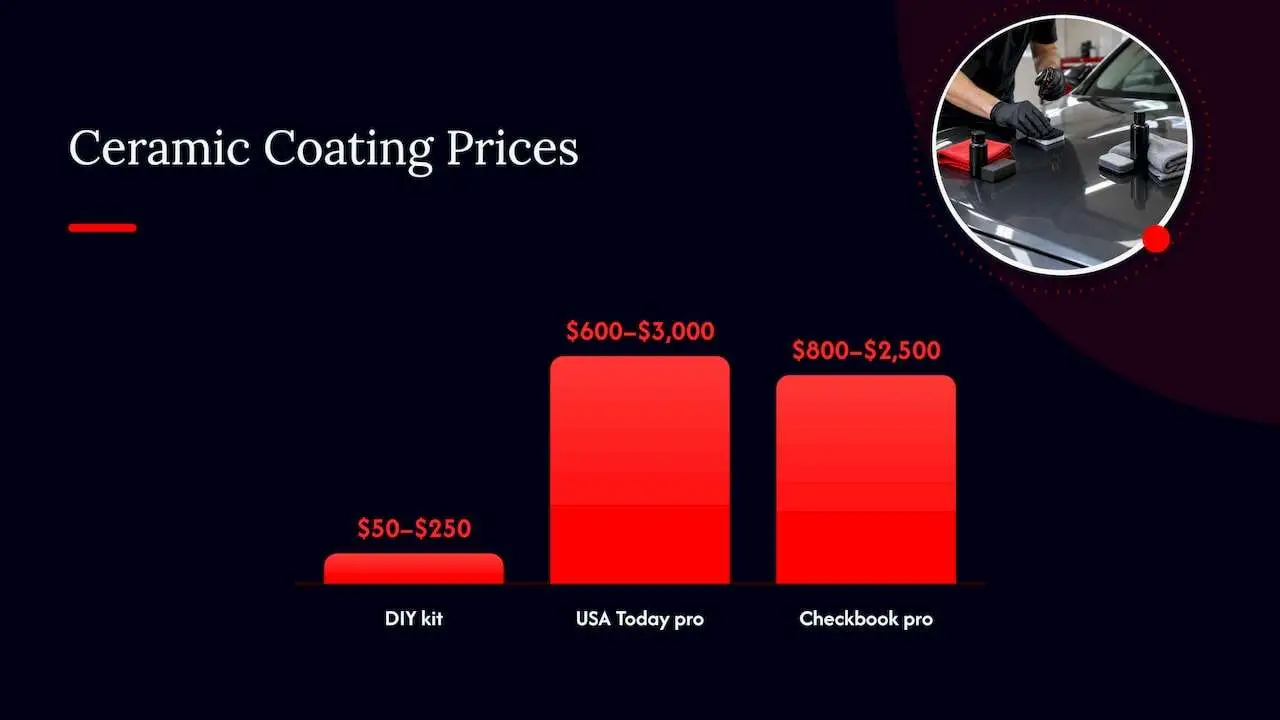
On price, USA Today reports DIY products at $50 to $250 and professional installation at $600 to $3,000 depending on vehicle size. Checkbook puts the usual professional cost at $800 to $2,500. The gap comes down to labor: decontamination, correction, controlled application and curing. It also guards against improper application, which USA Today warns can be disastrous for a car’s appearance. A coating applied unevenly to a whole car is much harder to fix than it was to apply.
Myth 8: Graphene coatings are a different, stronger class
The word sounds advanced, and it is used heavily in marketing. In the same Repairer Driven News report, the speaker calls graphene a misleading marketing buzzword and says any amount present is very minimal and adds no real protection. Checkbook adds that there is no industry standard for coating composition, with SiO2 percentages advertised anywhere from 10% to 85%.
So compare coatings by what counts: the installer’s prep process, the stated durability, the warranty terms and the maintenance plan. A label on the bottle tells you the least.
What about PPF myths?
Paint protection film is a clear, tough urethane layer applied over paint. It is the right tool for impact, and it comes with its own misconceptions. Motor1’s PPF guide covers the main ones:
- “PPF means no washing.” Dirt and mineral deposits still build up on film, so it needs regular washing.
- “Warranty covers everything.” Even a 10-year limited warranty from a major film brand covers specified film defects, not paint damage or every scratch.
- “It has to be full-body.” Coverage runs from partial front (bumper, mirrors, hood edge) to full front to full body. The guide says most drivers will find full-body hard to justify financially, so the right coverage depends on where your car takes hits.
The same guide reports that, per Edmunds, a full installation can cost as much as $8,000, partly because installers may remove exterior trim for clean, wrapped edges. Price depends on coverage and the vehicle, so a quote based on your actual car is the only number that counts.
Ceramic coating vs. PPF at a glance
| Question | Ceramic coating | Paint protection film |
|---|---|---|
| Main job | Surface protection, water beading, easier cleaning | Physical impact protection |
| Rock chips | Not designed to stop them | Designed to absorb minor impacts |
| Existing scratches | Seals them in, so correct first | Also needs clean paint underneath |
| Washing | Easier, still required | Still required |
| Typical lifespan | About two to seven years by product and care | Depends on film and care |
| Best on | Whole car, for gloss and easy upkeep | Hood, bumper, fenders, mirrors, or the full front |
The two are not rivals. Motor1 notes that some owners apply ceramic over PPF to make the film easier to maintain, which gives you impact protection plus a slick, easy-to-clean top layer.
Why don’t car manufacturers ceramic coat cars?
It is a common question, and the reasoning is practical. A ceramic coating is a finishing treatment that goes on after paint has been inspected, decontaminated and often corrected, and then needs time to cure. That is an aftermarket, detail-by-detail process rather than a step on a production line. Factory paint also arrives with the clear coat, which is the layer the coating bonds to and is there to protect. Whether a coating is worth adding is a decision best made for the specific car, how you drive it and where you park it.
Choosing what fits your car
Use the risk you actually face to decide:
- Daily driver on freeways: chips are the main threat, so PPF on the front end is the first priority, with a coating on the rest of the car for easy washing.
- Tesla owner: a large, flat hood and front end take constant road debris. Front coverage plus a coating keeps the paint clean and glossy.
- Luxury or exotic owner focused on resale: consistent paint condition matters most, so combining full-front PPF or full-vehicle coverage with a coating is the thorough route.
- Enthusiast who tracks the car: a track-oriented PPF package handles the heavy debris exposure.
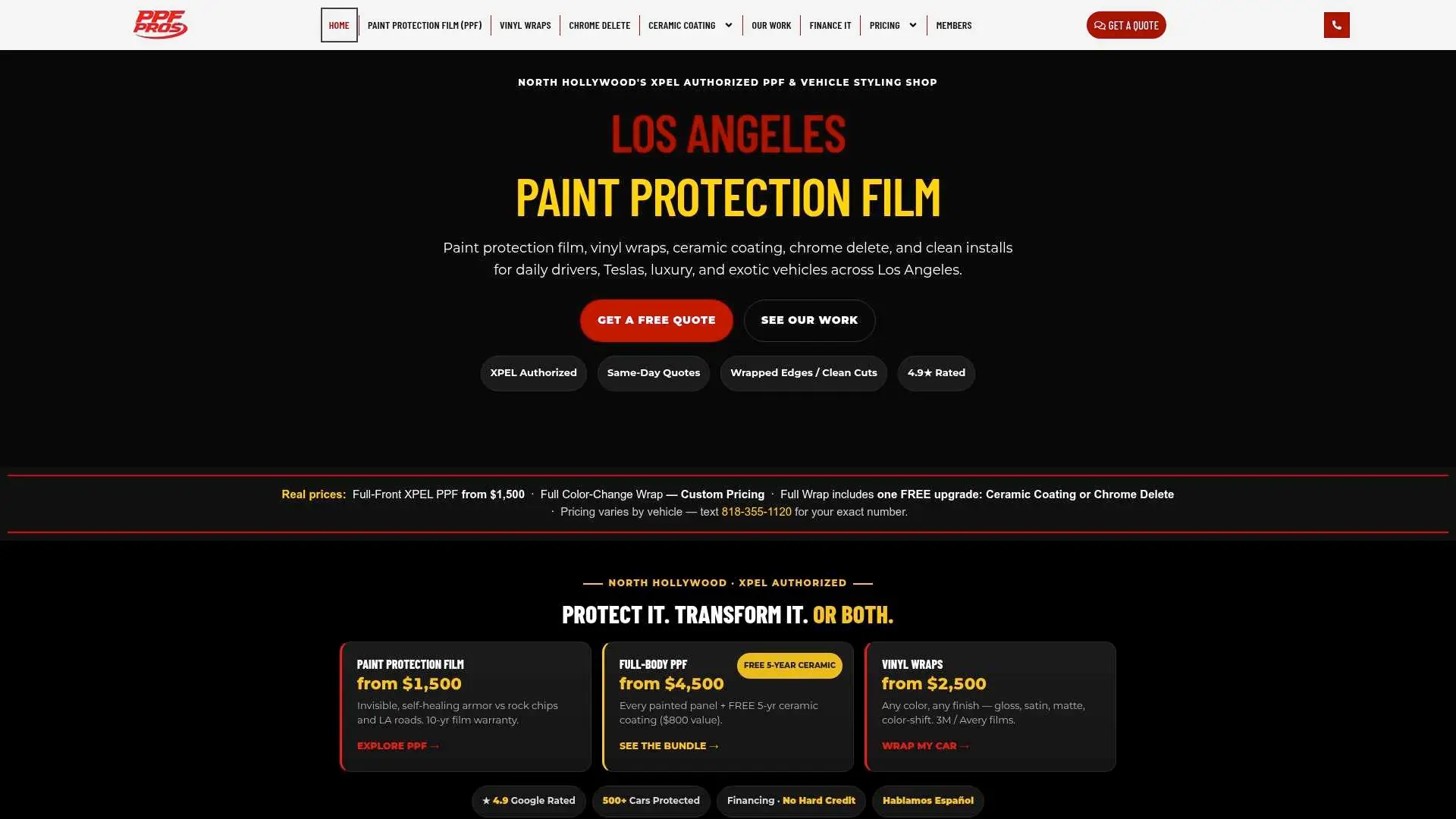
Our PPF pricing is published for standard packages: Full Front is $2,199, and Full Vehicle starts from $4,500.
Get the right protection on your car in Los Angeles
At PPF Pros in North Hollywood, we install XPEL Authorized paint protection film and System X 5-year ceramic coatings, so you can match each product to the job it does best. Choose from partial front, full front, full vehicle or a track pack, and add a ceramic coating for easy upkeep. We respond to quote requests the same day. See our ceramic coating service or our PPF packages, or reach us through ppfprosla.com.
Our perspective on coating myths
We hear the same assumptions at the shop: that a coating will stop chips, that it means never washing, that it lasts forever. Every one of them comes from asking a thin surface layer to do a job it was not designed for.
Our view is simple. A coating is excellent at what it is for: gloss, slickness, easier cleaning and resistance to everyday contamination. Film is excellent at what it is for: taking the hits from road debris. When you give each product its own job, the result is better than either alone.
That is why we offer both, along with precision installation, wrapped edges and clean alignment on film, and System X 5-year coating for the surface. Tell us how you drive and where you park, and we will recommend the coverage that fits.
Jake
FAQ
Does a ceramic coating protect against rock chips?
Not on its own. A coating is extremely thin and is not designed to absorb impacts from rocks or gravel. Paint protection film is the product built for physical impact, and many owners put a coating over it.
Do I still need to wash a ceramic-coated car?
Yes. A coating makes dirt release more easily, but contaminants left on the surface can bond to it and reduce its performance. Regular, gentle hand washing keeps the finish performing and looking its best.
How long does a ceramic coating last?
USA Today puts it at about two to seven years depending on the type and brand. Preparation, washing habits, sun exposure and parking conditions all influence where in that range your car lands.
Is professional installation worth it compared with a DIY kit?
Professional work includes the decontamination, paint correction and controlled curing that make a coating look even and last. USA Today lists professional installation at $600 to $3,000 depending on vehicle size, against $50 to $250 for DIY products, and notes improper application can badly affect a car’s appearance.
Should I choose PPF or ceramic coating?
Choose by risk. If chips and scuffs worry you, start with PPF on the front end. If you want gloss and easy cleaning, add a ceramic coating. Pairing the two covers both jobs.
Sources
- What Is Ceramic Coating, And Is It Worth It? (Motor1)
- Paint Protection Film (PPF): Cost, Benefits, And Is It Worth It? (Motor1)
- Does ceramic coating your car really protect its paint? (USA Today)
- Best Ceramic Coatings for 2026, Tested (Car and Driver)
- What Is Ceramic Coating? (The Drive)
- SCRS corrects common industry misconceptions on ceramic coatings (Repairer Driven News)
- Ceramic Coatings for Your Car (Checkbook)