
A ceramic coating warranty typically covers material defects, adhesion failure, and premature loss of gloss, not physical damage like rock chips, scratches, or water-spot etching. Most warranties require you to register the coating within a set window, usually 30 days, and return for annual inspections at an approved shop. Skip either step, and even a “lifetime” warranty can quietly downgrade to a fraction of what you were promised.
TL;DR:
- Most ceramic coating warranties only cover material defects, adhesion failure, or early gloss loss, and exclude impact damage, scratches, or environmental etching.
- Registration must be completed within 30 days, and annual inspections performed by approved installers are mandatory to keep the warranty valid.
- Durability varies greatly with environment and application type, from five years for professional, garaged cars to less than a year for DIY kits used outside.
- Impact damage from rocks, automatic car washes, and hard water etching are common reasons for warranty claims being denied.
- Proper documentation, timely registration, and scheduled inspections are crucial to ensure coverage and avoid voided warranties.
Table of Contents
- What a Ceramic Coating Warranty Actually Promises
- Fine-Print Traps That Void Coverage
- Registration, Inspections, and Records: Your Compliance Checklist
- What the Marketed Warranty Years Actually Mean
- How Ceramic Coating Claims Actually Get Processed
- How a Reputable Shop Manages Your Coating Warranty
- Three Rules I’d Insist On Before Signing Anything
- Protecting Your Investment: What Ppfprosla Handles for You
- Where to Verify These Warranty Terms Yourself
- Sources
- FAQ
What a Ceramic Coating Warranty Actually Promises
A ceramic coating warranty isn’t insurance against everything that happens to your paint. It’s a manufacturer’s promise about how the product itself performs over time, and that distinction trips up a lot of first-time buyers.
Three warranty formats dominate the market:
- Limited warranties cover specific defects (adhesion failure, discoloration, premature gloss loss) for a stated period, usually 2 to 5 years.
- Term-limited warranties run 2 to 10 years and are the most common structure among professional-grade coatings sold through detail shops.
- “Lifetime” warranties sound absolute but almost always carry conditions. Independent explainers note that lifetime language is frequently converted to a fixed term the moment an inspection is missed, so treat “lifetime” as “conditional lifetime” until you’ve read the fine print.
Remedies also vary more than most buyers expect. Some warranties offer full retreatment at no charge. Others cap the payout at a refund of the coating’s material cost, which leaves you covering labor for the reapplication. A few split the difference: material refunded, labor discounted. Read the remedy section before you read anything else, because it tells you what you’re actually buying if something goes wrong.
Eligibility rules matter just as much as remedies. Common restrictions include:
- Vehicle type limits. Some warranties exclude fleet vehicles, rideshare cars, or vehicles used commercially.
- Geographic restrictions. Coverage is frequently tied to the installing shop’s region or the manufacturer’s authorized network in that country.
- Non-transferability. Sell the car, and the warranty usually dies with the sale unless the document explicitly says otherwise. Buyers of used vehicles rarely inherit coating coverage, even if the paint still looks freshly coated.
None of this makes ceramic coating a bad investment. It means the marketing term on the invoice (“5-Year Ceramic Coating”) describes a best-case outcome, not a guarantee independent of your behavior. If you’re still weighing whether coating makes financial sense for your car at all, our breakdown of whether ceramic coating is worth the cost walks through the math in more depth.
Fine-Print Traps That Void Coverage
Every warranty document has a section titled something like “Exclusions” or “What This Warranty Does Not Cover.” That section does more to determine your real-world protection than the headline term length does, and it’s the part most owners skim past.
Here’s what typically falls outside coverage, based on exclusion language common across manufacturer and installer warranty pages:
- Rock chips and stone impact damage. A ceramic coating adds hardness to the clear coat surface, but it doesn’t stop a highway rock from chipping paint down to metal. Warranty documents consistently exclude impact damage because the coating was never designed to absorb it.
- Scratches from keys, branches, or careless washing. Surface scratches are a mechanical abrasion issue, not a coating defect, so they sit outside the warranty’s scope entirely.
- Automated car wash damage. Brush-style automatic washes are the single most common cause of swirl marks and coating degradation, and most warranties specifically name them as an exclusion.
- Mineral water spotting and etching. Hard water left to dry on a hot hood can etch through a coating’s protective layer. This is treated as environmental damage, not product failure.
- Pre-existing paint defects. Swirl marks, oxidation, or clear coat damage present before installation aren’t magically fixed by the coating, and warranties won’t cover complaints tied to issues that existed beforehand.
- Commercial or fleet use. Higher mileage, exterior storage, and frequent washing push commercial vehicles outside standard warranty terms.
Beyond the exclusion list, watch for conditional clauses buried in the maintenance requirements. Phrases like “valid only if serviced with approved products” or “subject to annual inspection fees” aren’t boilerplate. They’re the mechanism by which a warranty gets reduced or canceled, and they’re often written in a way that assumes you won’t notice until you need to file a claim.
Pro Tip: Before you sign anything, ask the installer to show you the exclusions section and the annual inspection requirement side by side. If the shop can’t produce a written warranty document on request, that’s a bigger red flag than any single clause inside it.
Registration, Inspections, and Records: Your Compliance Checklist
Keeping a ceramic coating warranty valid is less about the product and more about paperwork discipline. Manufacturers build in specific timing requirements, and missing them is the leading reason coverage gets reduced or voided.
Start with registration. Most warranty programs give you a narrow window, commonly 30 days from installation, to register the coating with the manufacturer or through the installing shop. Save the confirmation email or registration card immediately. If your shop handles registration for you, get written confirmation that it was submitted and when.

After that, the recurring obligation is the annual inspection. These typically need to happen within roughly 30 days of the coating’s anniversary date, performed by an approved installer, not just any detail shop. Missing an inspection window is the single most common way a “5-year” warranty quietly becomes a 1-year warranty.
Maintenance rules that protect your coverage:
- Wash every 1 to 2 weeks using a pH-neutral shampoo. Harsh, high-alkaline soaps break down the coating’s chemical bond faster than UV exposure does.
- Avoid brush-style automatic car washes entirely; use touchless or hand-wash methods instead.
- Dry the car promptly after exposure to sprinklers, rain with high mineral content, or coastal salt air. Standing water is how etching starts.
- Book a maintenance booster or top-up coat on the schedule your installer recommends, often every 6 to 12 months depending on the product tier.
- Confirm who is authorized to perform warranty-qualifying service. Many warranties specify that only approved installers can perform inspections and touch-ups without affecting coverage.
One detail owners consistently underestimate: annual inspections and approved maintenance products aren’t a courtesy service. They’re a built-in recurring cost of the warranty itself. Budget for it the same way you’d budget for an oil change interval, not as an optional nicety.
Documentation to keep in one folder, physical or digital:
- Your original registration confirmation, with the date submitted
- Every annual inspection invoice, in order
- Maintenance and product receipts showing pH-neutral shampoos or approved boosters were used
- Dated photos of any issue the moment you notice it, before it worsens
If you’re wondering whether it’s time for a fresh application rather than a touch-up, the signs that a coating needs reapplication are worth reviewing before your next scheduled inspection.
What the Marketed Warranty Years Actually Mean
Marketing numbers and real-world results are two different conversations. A “5-year” coating label describes a lab-tested ceiling under controlled conditions, not a guarantee for your specific driveway, climate, and wash habits.

Independent analysis of ceramic coating durability makes the point bluntly: accelerated lab tests measure scrub cycles and UV exposure in a controlled chamber, and none of that replicates what happens to a car parked outside in Phoenix summers or driven daily through Midwest winters. Prep quality, product solids percentage, cure time, and your actual environment determine the real number far more than the sticker on the invoice.
Here’s how that plays out across application tiers, based on field longevity data:
| Application Tier | Garaged, Careful Wash Habits | Daily Driver, Outdoor Parking |
|---|---|---|
| Professional install, multi-layer | 5 to 7 years | 3 to 5 years |
| Prosumer / mid-tier product | 2 to 4 years | 1 to 3 years |
| DIY consumer kit | 1 to 2 years | Under 1 year |
The gap between the best case and worst case within the same tier comes down to a handful of controllable and uncontrollable variables:
- UV load. Coatings in high-sun regions degrade faster than the same product in a temperate climate.
- Road salt. Winter salt exposure accelerates chemical breakdown, particularly on the lower body panels.
- Tree sap and bird droppings. Both are acidic and, left on the surface, can burn through a coating’s protective layer in days.
- Hard water. Mineral-heavy tap water left to air-dry is one of the fastest ways to etch a coating prematurely.
- Wash method. Brush automatic washes cause more cumulative damage than any single environmental factor on this list.
The practical takeaway: pick the tier that matches your actual life, not your aspirational garage. If your car sits outside in a coastal or salted-road environment, buying the top-tier professional coating and treating the marketed years as a floor rather than a ceiling is the more honest way to plan.
How Ceramic Coating Claims Actually Get Processed
Filing a warranty claim isn’t a phone call and a same-day resolution. It’s closer to an insurance claim process, with a timeline and documentation standard you need to meet before the installer or manufacturer will act.
The typical sequence looks like this:
- Notify within the stated window, commonly 30 days of noticing the issue. Late notification is grounds for denial on its own, regardless of how legitimate the underlying defect is.
- Submit for inspection. An authorized technician, either at your original installer or a manufacturer-approved shop, examines the coating and determines whether the issue qualifies as a covered defect versus excluded damage.
- Wait for a coverage decision. This isn’t instant. Expect the shop or manufacturer to take time reviewing photos, service history, and inspection records before issuing a determination.
- Receive the remedy, if approved. That could mean full retreatment, a partial retreatment, or a refund limited to material cost.
Two limitations catch owners off guard almost every time. First, most warranties cap total liability at the original material cost, not the full service price you paid, and definitely not the value of the vehicle. Second, consequential losses aren’t covered. If your car is out of commission for a retreatment, don’t expect compensation for a rental or lost use. That’s standard across the industry, not a red flag specific to one brand.
A few things improve your odds of a smooth claim:
- Keep contemporaneous photos from the day you noticed the issue, not weeks later once it’s worsened.
- Reference your registration date and inspection history in your first message, don’t wait for them to ask.
- Escalate through the shop first, the manufacturer second, and stay factual rather than frustrated in writing.
- If a shop denies a claim you believe is legitimate, a local consumer-protection office can clarify your rights before you spend money on legal advice.
How a Reputable Shop Manages Your Coating Warranty
Most of what separates a warranty that actually pays out from one that quietly lapses happens before you ever notice a problem. It happens in how the shop handles registration, inspections, and prep work on day one.
At Ppfprosla, warranty-friendly installation starts with paint correction before the coating ever touches the panel. Installers who skip this step are locking in existing defects under a layer of ceramic protection, which creates exactly the kind of pre-existing-condition dispute that gets claims denied later. If your paint has swirl marks, light oxidation, or clear coat damage going in, a shop worth trusting will flag it and correct it first, not coat over it and hope you don’t notice for a year. Our guide on paint correction before ceramic coating covers why that step isn’t optional for a warranty-eligible install.
A shop that takes warranty compliance seriously typically handles:
- Registration on your behalf, submitted within the manufacturer’s window with confirmation you can keep on file
- Scheduled inspection reminders, so the annual requirement doesn’t slip past you unnoticed
- Documented maintenance packages, giving you a paper trail of approved products and service dates
- Pre-application correction, addressing existing paint issues so the coating goes on a surface that actually qualifies for coverage
There’s also a broader question worth asking before you commit to coating alone: does your driving environment call for more than gloss protection? For vehicles that see regular highway miles, gravel roads, or salted winter streets, coating alone won’t stop rock chips or road debris from reaching the clear coat. Pairing paint protection film with a ceramic coating is generally the more cost-effective long-term approach for high-exposure zones like the front bumper, hood, and mirrors, since PPF handles the impact damage a coating warranty will never cover in the first place.
Pro Tip: Ask any shop quoting a ceramic coating install one direct question: “What happens to my warranty if I skip this year’s inspection?” A shop that gives you a clear, specific answer without hesitation is one that actually understands the product they’re selling.
Three Rules I’d Insist On Before Signing Anything
If you take one thing from all of this, make it written proof. Verbal promises about “lifetime coverage” mean nothing if the actual document says otherwise, and shops know most customers never ask to see it before paying.
Insist on registration confirmation in your hand, not just a verbal “we’ll take care of it.” Ask what the annual inspection actually costs, because some shops fold it into the original price and others bill it separately every year, and that difference adds up over a 5-year term. Treat inspections and approved maintenance products as a real, recurring line item in your car care budget, not an inconvenience you’ll deal with later.
And if rock chip resistance is actually what you’re after, be honest with yourself about what a coating warranty will and won’t do. It protects gloss and defends against chemical breakdown. It does nothing for a stone off the tire of the truck ahead of you on the freeway. For that kind of protection, paint protection film paired with a coating solves a problem that coating alone was never built to solve.
The best warranty in the world is worthless if you don’t read what it excludes before you need it.
— Jake
Protecting Your Investment: What Ppfprosla Handles for You
Ppfprosla’s ceramic coating service includes the paint correction and warranty registration groundwork most shops treat as an afterthought, so the coverage you’re paying for actually holds up when you need it.
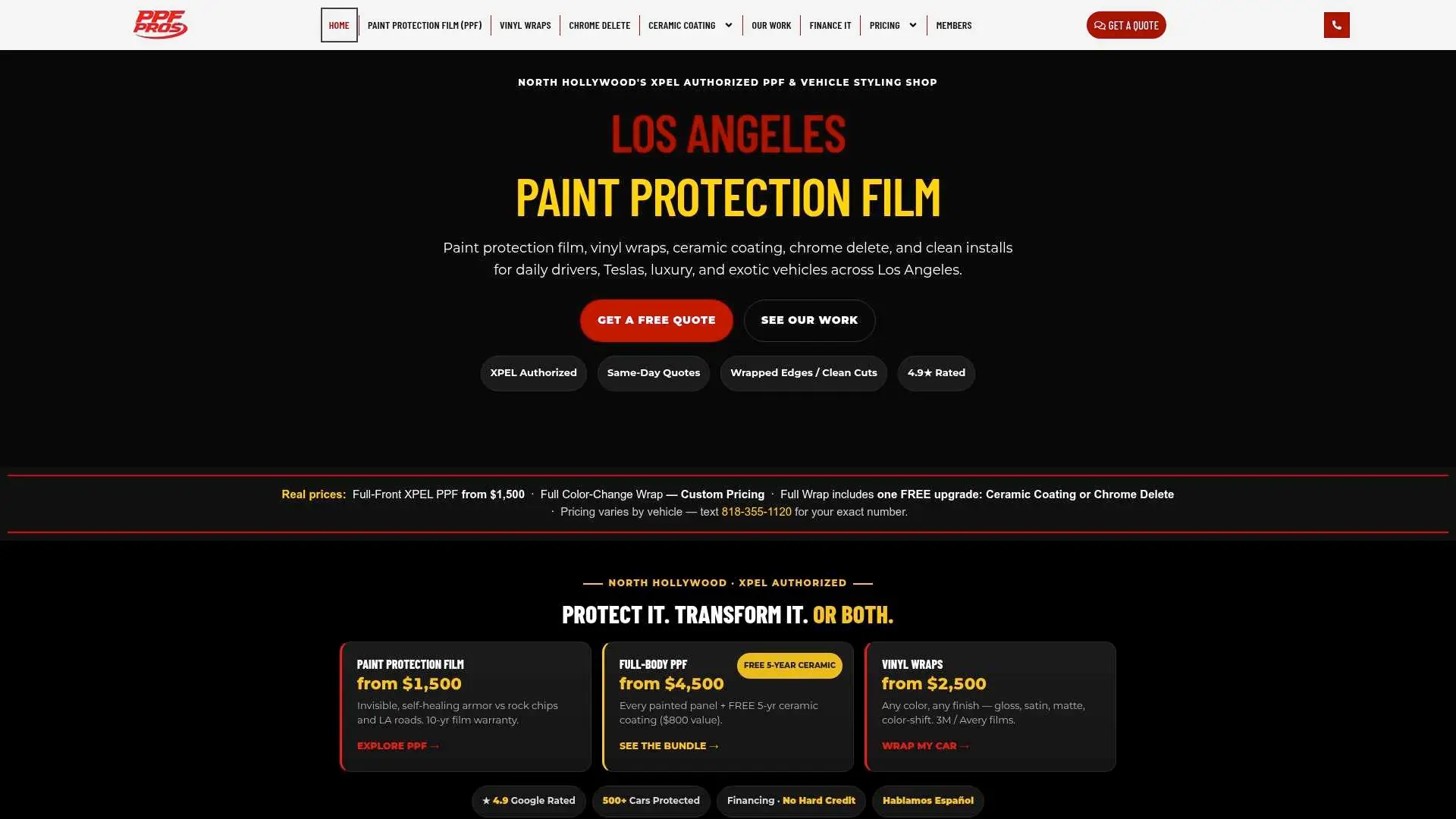
When you book with Ppfprosla, registration gets filed on your behalf and you get scheduling reminders ahead of your annual inspection window instead of discovering a missed deadline the day you file a claim. If your daily driving includes highway miles, gravel roads, or exposure to rock chips, ask about pairing ceramic coating with paint protection film, since full-front PPF coverage starting at $2,199 addresses the impact damage no coating warranty covers.
Before you book with any shop, ask three questions: what the annual inspection actually costs, which products are approved for maintenance without voiding coverage, and whether the warranty transfers if you sell the car. Get straight answers, then request a quote for ceramic coating and see how your paint correction and warranty registration would be handled from day one.
Where to Verify These Warranty Terms Yourself
Reading the actual warranty document, not a summary of it, is the only way to know what you’re signing up for. A few sources are worth bookmarking before your next install:
- Nebula warranty information from LabCoat System shows how registration timing and annual inspection clauses are typically written into a manufacturer warranty document.
- NXTZEN’s protection guarantee is a useful reference for how exclusion lists (rock chips, automatic washes, water etching) are typically worded.
- CarCareTruth’s breakdown of real-world coating lifespan is the clearest independent explainer on why marketed years and field results diverge.
- Jalopnik’s real-world cost and durability analysis is worth reading for a detailer’s candid take on lab claims versus daily driving conditions.
- Diamond Brite’s guide to pH-neutral car shampoo covers the wash chemistry basics that keep a coating warranty-eligible between inspections.
Sources
- How Long Ceramic Coating Actually Lasts · CarCareTruth
- Nebula warranty information – LabCoat System
- Is ceramic coating worth the cost? A detailer’s real-world analysis – Jalopnik
- Protection Guarantee – NXTZEN
- pH neutral car shampoo for ceramic-coated cars
FAQ
What Does a Ceramic Coating Warranty Cover?
A ceramic coating warranty generally covers material defects, adhesion failure, and premature loss of gloss, not physical damage. Exclusions typically include rock chips, scratches, automated car wash damage, and mineral water etching, since those fall under normal wear rather than product failure.
How Long Should a Ceramic Coating Actually Last?
Real-world lifespan depends heavily on application tier and environment. A professional install on a garaged car can hold 5 to 7 years, while DIY kits on daily drivers parked outside often last under a year.
What Destroys a Ceramic Coating Fastest?
Brush-style automatic car washes cause the most cumulative damage, followed by hard water left to dry on the surface and acidic substances like bird droppings or tree sap. Skipping pH-neutral wash products in favor of harsh soaps also accelerates breakdown significantly.
What Voids a Ceramic Coating Warranty?
Missing the registration window, commonly 30 days after installation, or skipping a required annual inspection are the two most common ways coverage gets reduced or canceled. Manufacturers frequently downgrade “lifetime” coverage to a fixed term when an inspection is missed.
Does Ppfprosla Register My Ceramic Coating Warranty for Me?
Yes, warranty registration is handled as part of the ceramic coating service, along with paint correction beforehand to make sure the surface qualifies for coverage. Pricing for ceramic coating isn’t published online, so current quotes are available directly through the shop.