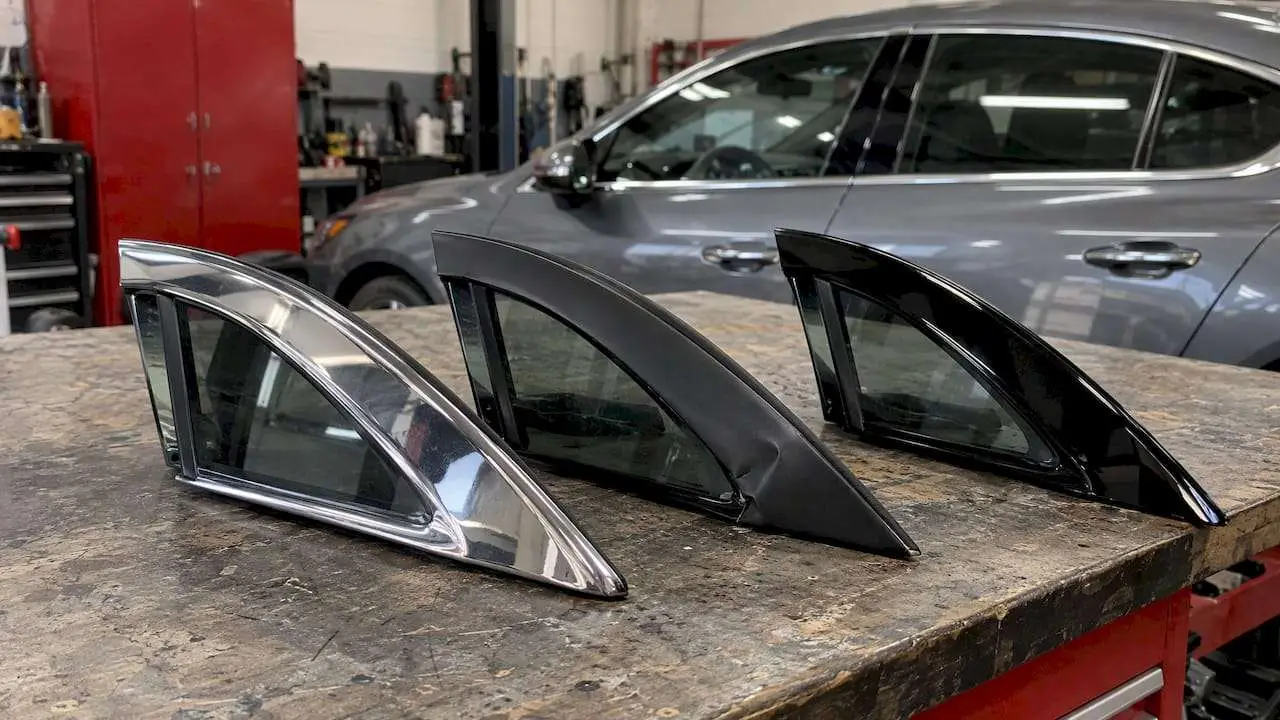
For most owners, a vinyl chrome delete wrap is the better choice than painting chrome trim. A wrap can be taken off later, it leaves the original chrome underneath, and it gets a clean finish on grilles, window surrounds and badges without sanding or spraying. Paint is permanent, which suits a few cases: a car you will keep for years, with trim that is already damaged or replaceable. At PPF Pros in North Hollywood, chrome delete is one of the services we install, so we see this decision from the shop floor. This guide walks through how the two methods differ, where each one fails, and how to choose.
TL;DR
- Wrap: reversible, protects the chrome underneath, and is the right default for leased cars, Teslas and anything you may sell.
- Paint: permanent, but chrome gives paint very little to grip, so the result depends on cleaning, scuffing and the right primer.
- Durability: both methods can fail at the edges or by peeling when preparation is rushed, so installer skill matters more than the material name.
- Price: trim count and how hard the pieces are to reach drive the quote, so ask for a custom quote on your exact car.
- Resale: a clean, consistent blackout reads as modern, and a wrap lets you return to stock if a buyer prefers chrome.
Table of Contents
- What a chrome delete actually is
- Wrap vs paint at a glance
- Why chrome is hard to paint
- Why wrap is the default choice
- Where each method fails
- How long each one lasts
- What affects the price
- Is a chrome delete worth it?
- Which should you choose?
- How to get a clean result either way
- Our view on wrap vs paint
- Book your chrome delete in North Hollywood
- FAQ
- Sources
What a chrome delete actually is
A chrome delete replaces the bright metallic finish on exterior trim with a darker or body-matched one. Typical targets are window surrounds, the grille, door handles, mirror caps, roof rails and badges. The look is usually gloss, satin or matte black, though some owners match the body color.
There are two main ways to do it. You can cover the trim with automotive vinyl, or you can prepare the trim and paint it. A third route, spray-on peelable coating, sits between them, and it is the cheapest and the shortest-lived. If you want the full background first, our page on what a chrome delete is covers the basics.
Wrap vs paint at a glance
| Factor | Vinyl wrap | Paint |
|---|---|---|
| Reversible | Yes, the film comes off | No, it is bonded to the part |
| Effect on original chrome | Covers it and keeps it intact | Permanently changes the surface |
| Prep work | Deep cleaning, careful edge work | Cleaning, scuffing, primer, color, clear coat, curing |
| Typical failure | Edge lifting, fading, cracking on flat areas | Chipping or peeling when adhesion is poor |
| Best for | Leases, Teslas, resale-minded owners, anyone who may change their mind | Long-term keepers with a fixed plan |
| Finish options | Gloss, satin, matte and more | Whatever the paint system allows |
The sections below explain each row.
Why chrome is hard to paint
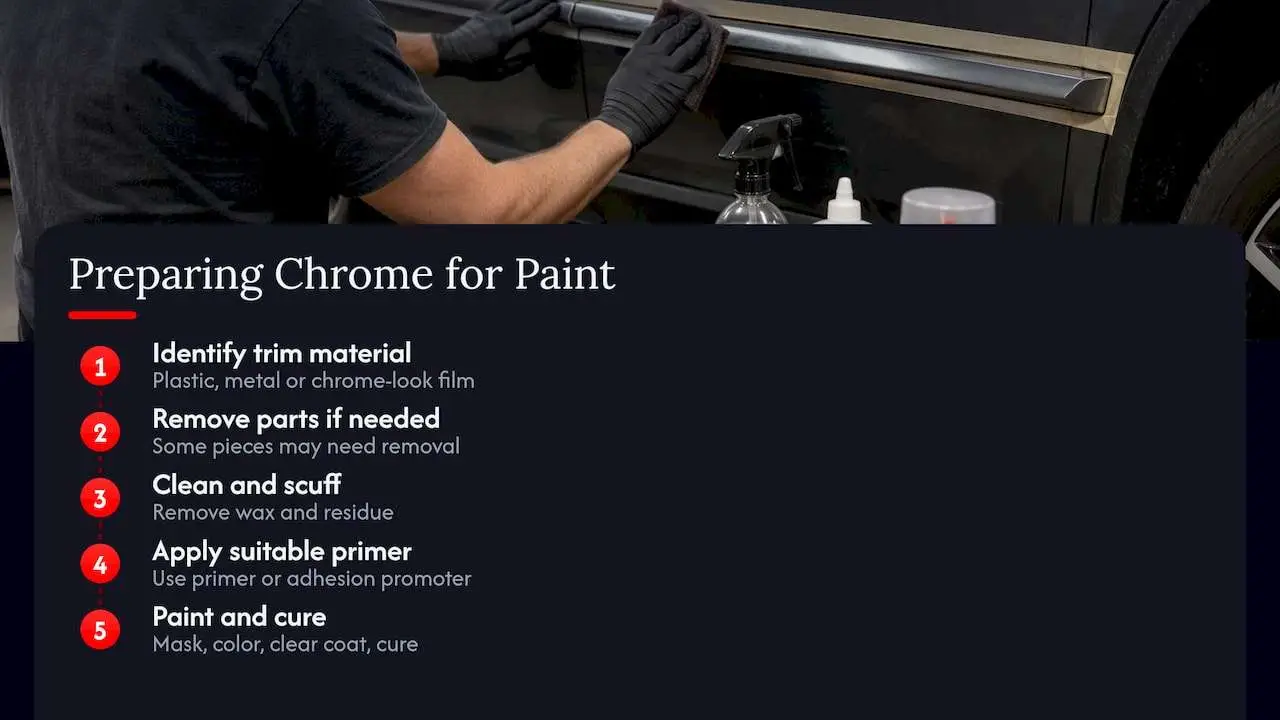
Chrome plating is smooth and hard. Paint has little to grip on a surface like that, so painted chrome trim only lasts if the surface is thoroughly cleaned, scuffed and treated with a primer or adhesion promoter that suits the material underneath. Yirox’s October 2026 chrome delete guide makes this point and adds that paint generally takes more labor than vinyl, because parts may need to come off the car and then go through masking, preparation, primer, color, clear coat and curing.
That is why the common complaint about painted chrome is peeling and flaking. Nothing is wrong with paint as a material. The adhesion step was cut short, or the part was never fully cleaned of wax and residue.
Trim pieces also differ. Some are chrome-plated plastic, some are real metal, and some are chrome-look film. Each needs different prep, and a painter has to identify which one they are dealing with before any coating goes on.
Why wrap is the default choice
It can come off
The biggest difference is reversibility. Vinyl sits on top of the trim. If you sell the car, return a lease, or simply get tired of the look, the film can be removed and the original chrome is still there. Paint cannot offer that. Once the chrome has been scuffed and coated, going back means replacing parts or refinishing them.
That matters for the readers we work with most:
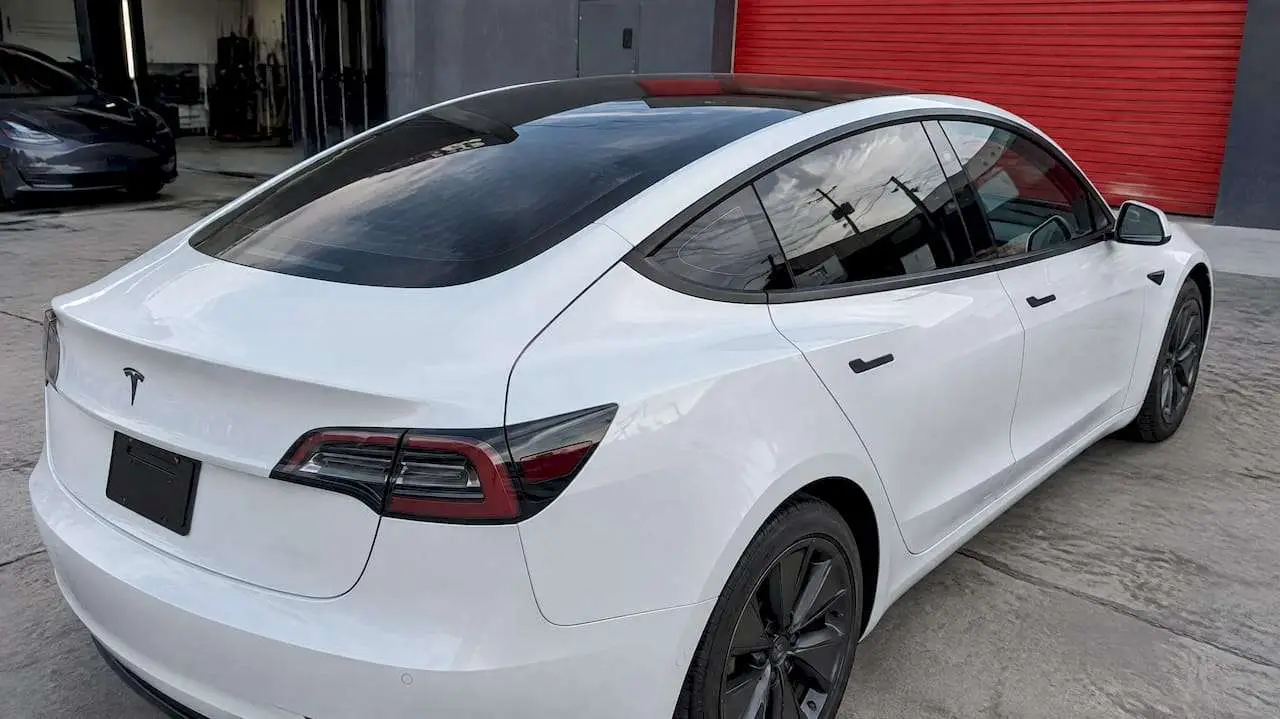
- Tesla owners who want a darker look on window trim and badges without changing anything permanently. Our Tesla chrome delete page covers the Model 3 choices.
- Lease drivers who need the car returned in its original condition.
- Luxury owners who care about resale and want the option of returning the car to its factory look.
It handles complex shapes cleanly in skilled hands
Window surrounds, curved mirror caps and grille bars are fiddly. A good installer wraps the edges, tucks the film and keeps the seams in places where they are hard to see. Clean alignment and wrapped edges are what we focus on at PPF Pros, since an edge is where a wrap shows its quality first.
It comes in more than black
Gloss, satin and matte black are the usual picks for chrome deletes, and vinyl lines also include metallic, carbon-fiber and other textured finishes, as Hexis product information shows. If you are also considering a color change, see our vinyl wrap options and color consultation.
Where each method fails
Neither method is magic. Knowing the failure mode tells you what to ask the installer.
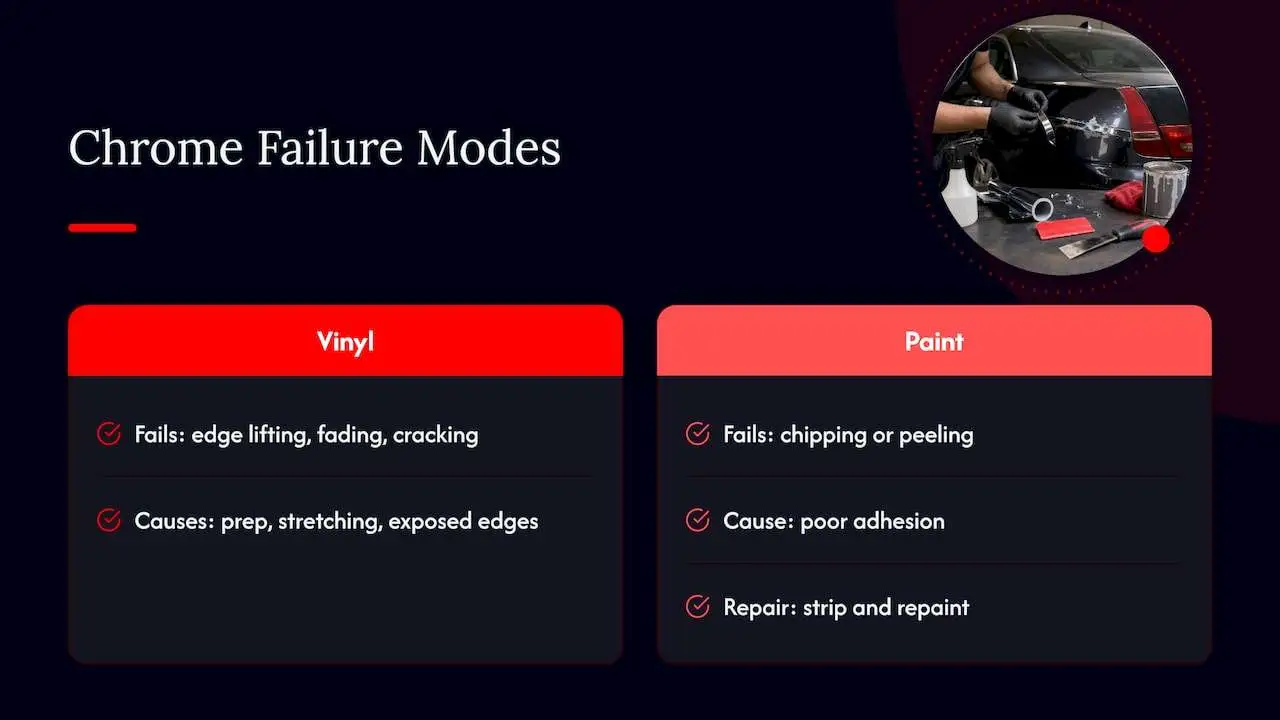
Vinyl typically fails through edge lifting, fading and cracking, mostly on horizontal surfaces that take the most sun, according to Yirox’s guide. Almost all of those problems trace back to preparation and edge work: a trim piece that was not fully degreased, film that was stretched too far, or an edge that was left exposed to the wash brush.
Paint typically fails through chipping or peeling when adhesion was poor. Because paint is bonded to the part rather than sitting on it, a bad paint job can not be peeled off and replaced. It has to be stripped and redone.
In both cases, chrome hides road grime, wax and oily residue that you can not see. Anything left behind weakens the bond. Trim that has been waxed or ceramic coated before needs that layer removed first, because sealants and coatings interfere with adhesion.
How long each one lasts
Lifespan depends on the material, the surface and how the car lives. A horizontal strip baking in Los Angeles sun ages faster than a vertical window pillar. Film makers publish warranty periods that vary by orientation and climate zone. For example, 3M’s 2080 wrap series lists up to 8 years on vertical surfaces and 3 years on horizontal ones in its most favorable zone, as quoted in Yirox’s guide. Those are warranty terms under stated conditions, and they are not a promise of service life, but they show the pattern: vertical trim lasts longer than flat trim.
Our chrome delete lifespan guide explains what extends it. The short list:
- Wash by hand or in a touchless wash, and avoid aggressive brushes near edges.
- Keep the car out of direct sun when you can.
- Avoid pressure washing straight at film edges.
- Skip harsh solvents and abrasive polishes on wrapped trim.
Paint should last as long as the car if the prep was right, but a chip in a thin coating over chrome can spread.
What affects the price
We do not publish a flat chrome delete price, because it depends on the car. The factors that move a quote are:
- How much chrome you have. A sedan with a grille and window trim is a smaller job than an SUV or truck with chrome bumpers, running boards and roof rails.
- How hard the trim is to reach. Window surrounds and beltline trim take the most careful work, and some pieces need to be removed from the car first.
- The finish. Gloss, satin and matte are common choices, and specialty films can change the material cost.
- Whether you bundle. Chrome delete is often done alongside another service on the same visit.
For scale, our published wrap prices are $2,199 for a Full Front and from $2,800 for a Full Color Change Wrap. A chrome delete is a trim-only job and sits far below a full body wrap in scope. For your car, request a chrome delete quote and we will price the exact pieces you want covered.
Painting trim can look cheaper on paper, but the labor of removing parts, masking, priming, spraying and curing is where the hours go, and a failed paint job costs more to undo than a failed wrap.
Is a chrome delete worth it?
For most owners who care how the car looks, yes. Blacked-out trim makes many modern cars look more current and more consistent, especially next to dark wheels or a dark body color. It is also one of the more affordable visual changes you can make, since it works on trim only and not on the whole car.
Resale is the part owners ask about most. A tidy, even blackout can make the car more appealing to buyers who like the style, and a wrap lets you remove it for buyers who prefer chrome. We go deeper in our guide on whether chrome delete boosts resale value. Paint removes that flexibility. If the next owner wants chrome back, you can’t give it to them.
Which should you choose?
Use this quick decision path:
- Is the car leased, or might you sell it in the next few years? Choose wrap.
- Is it a Tesla, a luxury car or an exotic? Choose wrap, so the factory trim stays protected underneath.
- Do you want to change colors later, or match a color change? Choose wrap, and plan it together with any full color change wrap.
- Is the trim already damaged, and are you keeping the car long term? Paint can make sense, but only with a shop that does full surface prep.
- Do you want to compare the broader choice, including whole-body options? Read our vinyl wrap vs paint comparison.
If you drive a particular brand, we have model-specific pages too, including Audi chrome delete and Ford chrome delete.
How to get a clean result either way
Whichever method you choose, the process decides the outcome. Here is what a good job includes and where it goes wrong:
- Decide the scope. List every piece you want blacked out. Mixed finishes, such as gloss window trim with satin badges, look worse than one consistent finish.
- Deep clean the trim. Chrome holds wax, oil and invisible residues, and anything left behind weakens the bond. This is the step most failures start with.
- Remove old coatings. Waxes, sealants and ceramic coatings on the trim interfere with adhesion and need to come off first.
- Prep the surface for the method. Vinyl needs a clean, dry, smooth surface. Paint needs scuffing and the right primer for the substrate.
- Install with attention to edges. For vinyl, that means wrapping edges and keeping seams out of sight. For paint, it means even coverage without runs or dust.
- Cure and care. Give film and paint the recommended time before washing, then follow gentle wash habits.
This is the routine we follow for wraps, with wrapped edges and precise alignment as the standard we hold ourselves to.
Our view on wrap vs paint
We get this question at the shop all the time, and our answer is almost always the same: wrap it.
Paint has its place, but chrome is a hard surface to bond to, and once it is painted there is no going back. A wrap gives you the blackout look and keeps the original trim safe underneath. If your plans change, the film comes off.
What we care about is the edge work. A chrome delete only looks factory when the edges are wrapped cleanly, the seams are tucked away and the alignment is right. That is the part we sweat over, and it is what separates a trim blackout that looks intentional from one that looks like a weekend project.
We also like pairing it with other work. If you are already protecting the front of the car with PPF or planning a color change, adding the chrome delete in the same visit keeps everything consistent.
Jake
Book your chrome delete in North Hollywood
PPF Pros is a vehicle styling shop in North Hollywood that handles paint protection film, vinyl wraps, ceramic coatings and chrome deletes, and we are an XPEL Authorized installer. Tell us your car and the pieces you want blacked out, and we will answer with a clear quote, usually the same day. You can see the service on our chrome delete page or browse everything we offer on our services page.
If you want the trim blackout plus a bigger change, our Full Color Change Wrap starts at $2,800, and our Full Front paint protection package is $2,199.
FAQ
Is a chrome delete wrap better than painting?
For most cars, yes. A wrap is reversible, keeps the original chrome protected underneath and does not need the sanding and priming that paint does. Paint only makes sense for owners who want a permanent change and have a shop that will do full surface prep.
How long does a chrome delete last?
It depends on the material and on how much sun the trim gets. Vertical trim lasts longer than flat trim, and film warranties reflect that, such as 3M’s 2080 series with up to 8 years on vertical surfaces and 3 on horizontal ones in its best zone. Gentle washing and shade help any finish last longer.
What color is a chrome delete?
Black is the usual choice, in gloss, satin or matte. Other finishes and colors exist if you want to match the body or add contrast, and we can go through options with you during a color consultation.
What does a chrome delete cost?
It depends on how many pieces of chrome your car has and how hard they are to reach. Because the job is trim only, it is a fraction of a full wrap, and we price it by quote for your specific vehicle.