A color change wrap is a self-adhesive vinyl film applied over your factory paint to completely alter your vehicle’s appearance without touching the paint underneath. The best versions, especially color-shifting or chameleon finishes, are removable, paint-safe, and dramatic enough to make a daily driver look like a concept car. For most owners, the deciding factor isn’t whether the wrap looks good. It’s whether a professional handles the installation and whether you pair it with protection like PPF or ceramic coating.
TL;DR:
- The most durable and stable chameleon or flip finishes rely on multilayer interference pigments and high-quality automotive vinyl, not printed patterns.
- Proper installation with edge wrapping and manufacturer’s brand films ensures the wrap maintains its color-shift effect and prevents peeling or lifting over time.
- Expect a full vehicle wrap to start around $2,800, with costs varying based on vehicle complexity, special finishes, and custom designs, typically taking one to four days to install.
- Regular maintenance with pH-neutral shampoos, gentle pressure washing, and optional ceramic coating can preserve the wrap’s appearance for several years.
- Combining wraps with paint protection film or ceramic coating can extend longevity and protect underlying paint, but must be layered carefully to avoid affecting finish quality.
Table of Contents
- How Does a Color Change Wrap Actually Shift Color?
- Which Finish Fits Your Car: Gloss, Matte, Satin, Chrome, or Flip?
- How Much Does a Color Change Wrap Cost and How Long Does It Take?
- What Should You Check Before Hiring a Wrap Installer?
- How Do You Keep a Color Change Wrap Looking New?
- Are Color Change Wraps Safe and Environmentally Sound?
- When Should You Wrap Alone vs. Wrap and Protect?
- Ready to Change Your Car’s Color the Right Way?
- Where to Verify the Technical Details
- Sources
- FAQ
How Does a Color Change Wrap Actually Shift Color?
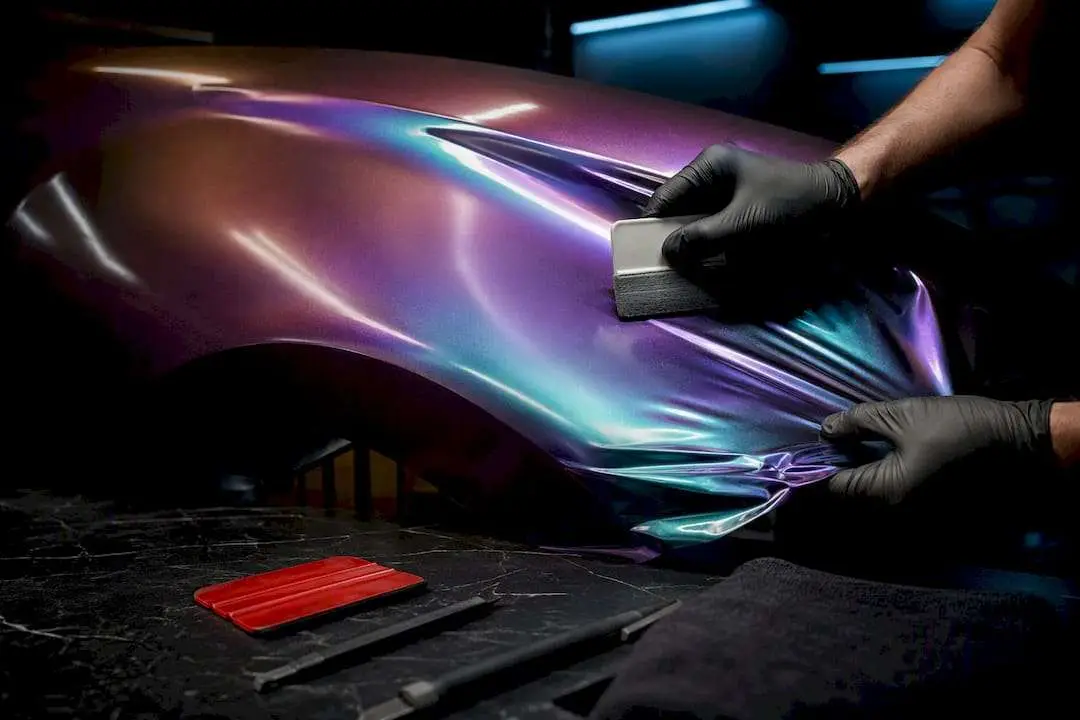
A color change wrap shifts color because the film contains layered or interference pigments that bend light differently depending on your viewing angle. Standard metallic and pearlescent paints reflect light fairly consistently. Chameleon films don’t. Tilt your head, walk around the car, or watch it under changing sunlight, and the same panel can read as purple, green, or gold, sometimes all three within a few seconds.
That effect comes from real material engineering, not a printed pattern:
- Multilayer or interference pigments split and reflect light at different wavelengths depending on the angle.
- Automotive-grade vinyl is formulated to stretch around curves without cracking or losing its color-shift properties.
- UV-stable adhesives keep the film paint-safe, which means a proper install can be removed later without stripping clear coat.
Manufacturer-grade films like 3M’s Protection Wrap Film Color Series are built specifically to balance that stretch with pigment stability, which is why cheap decorative vinyl rarely holds a chameleon effect through a full install on complex body panels.
Which Finish Fits Your Car: Gloss, Matte, Satin, Chrome, or Flip?
Gloss reads closest to factory paint, mirror-like and reflective, and it hides minor surface texture better than any other finish. Matte kills reflection almost entirely, giving a flat, stealth look that shows fingerprints and water spots more easily than gloss does. Satin sits in between: some depth, some shine, and it tends to forgive small imperfections better than either extreme.
Chrome and flip films are the attention-grabbers. Chrome mimics polished metal and demands a flawless underlying surface, since it magnifies every dent and panel gap. Flip or chameleon finishes shift hue with the light, which is the effect most people mean when they search for a color change wrap in the first place.
Quick reference by use case:
- Daily driver: Satin or gloss in a standard color holds up well and hides road grime between washes.
- Show car or weekend build: Chrome or a chameleon flip delivers maximum visual impact where daily wear isn’t a concern.
- Leased vehicle: Gloss or satin in a factory-adjacent shade wraps cleanly and removes without drama at lease-end.
Nearly 30 premium colors, including several flip and chameleon options, are available in 3M’s current lineup alone, which gives shops real room to match a finish to a client’s actual driving habits rather than just their Instagram feed.
How Much Does a Color Change Wrap Cost and How Long Does It Take?
Price depends heavily on scope, vehicle size, and how exotic the finish is. Ppfprosla lists its Full Color Change Wrap starting from $2,800 for a complete vehicle, with the final number shaped by a few recurring factors.
- Vehicle complexity: Cars with tight curves, multiple mirrors, and complicated bumpers take longer to wrap cleanly than a simple sedan body.
- Edge wrapping: Tucking film into door jambs and panel edges instead of just cutting to the seam adds labor but prevents peeling later.
- Specialty films: Chrome and rare chameleon flips generally cost more than solid gloss or satin colors because the material itself is pricier and less forgiving to install.
- Custom printing: A one-off design or pattern, rather than a stock color, adds design and production time before the wrap even reaches the shop, and final material length and pricing shift with the vehicle model.
Timeline-wise, expect one day for washing, decontamination, and prep, then one to four days for installation depending on scope. Budget another 24 to 48 hours afterward for the film to settle and for a final inspection. If you’re layering in PPF, ceramic coating, or planning eventual removal, add those as separate line items when you’re comparing quotes.
What Should You Check Before Hiring a Wrap Installer?
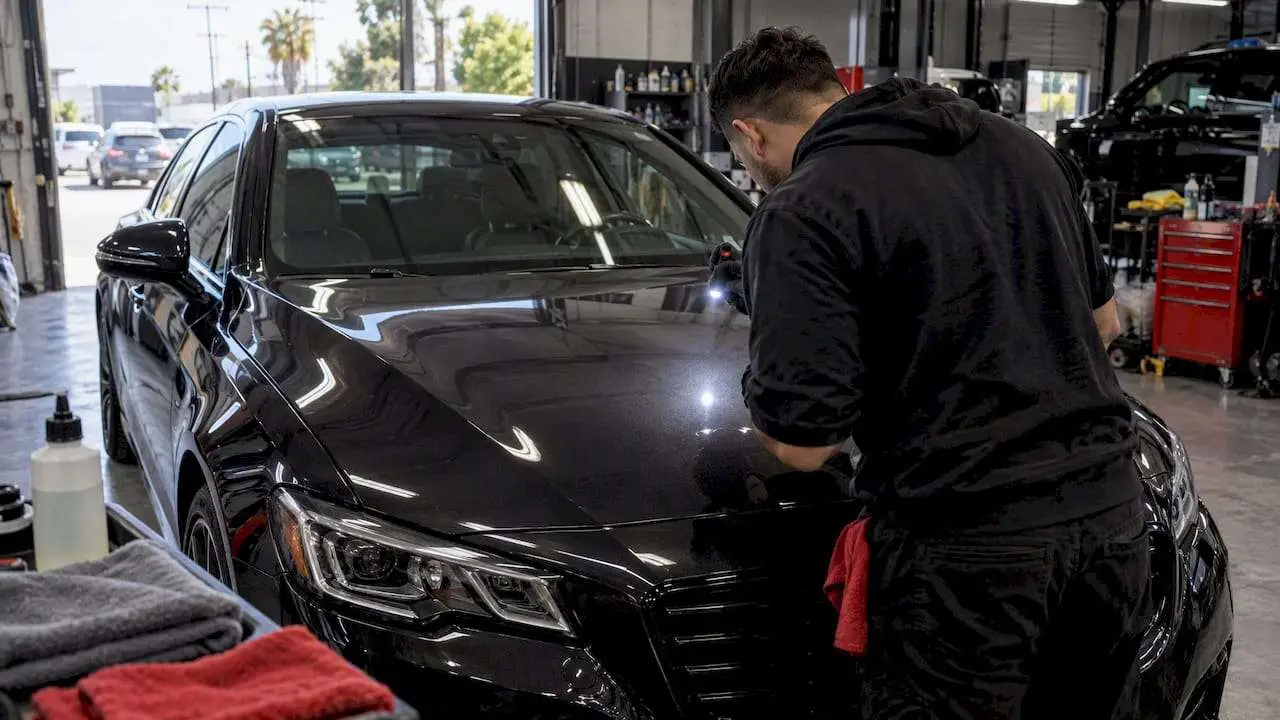
The prep work matters as much as the film itself. A shop worth hiring will run through a full wash, chemical decontamination, and clay bar treatment before a single sheet of vinyl goes on, and many will ask if you want badges or emblems removed first.
Once the film is on, look for these quality signals:
- Wrapped edges instead of vinyl cut flush at panel seams, which resists lifting over time.
- Consistent seam placement with minimal visible overlap.
- Even tension across curved panels, with no stretching marks or silvering at bends.
- A post-install inspection where the installer walks the car with you under good light.
Before you book, ask direct questions: what film brand are they using, what warranty comes with it, do they wrap edges or cut to the line, what’s their removal policy down the road, and can they show you a recent portfolio. A shop that hesitates on any of those answers is telling you something.
Watch for red flags too. An unusually low quote compared to everyone else, no photos of past work, or a verbal-only scope of work with nothing in writing are all reasons to keep looking.
Pro Tip: Ask to see recent, unedited photos of the exact finish on a similar vehicle, not a stock manufacturer image. Chameleon films especially can look different on a Tesla Model 3 than on a boxier SUV, and a shop with real project photos will have no problem showing you.
If you’re set on an unusual flip color or a multitone design, using a wrap visualizer tool before you commit can save you from an expensive surprise once the film is actually on the car.
How Do You Keep a Color Change Wrap Looking New?
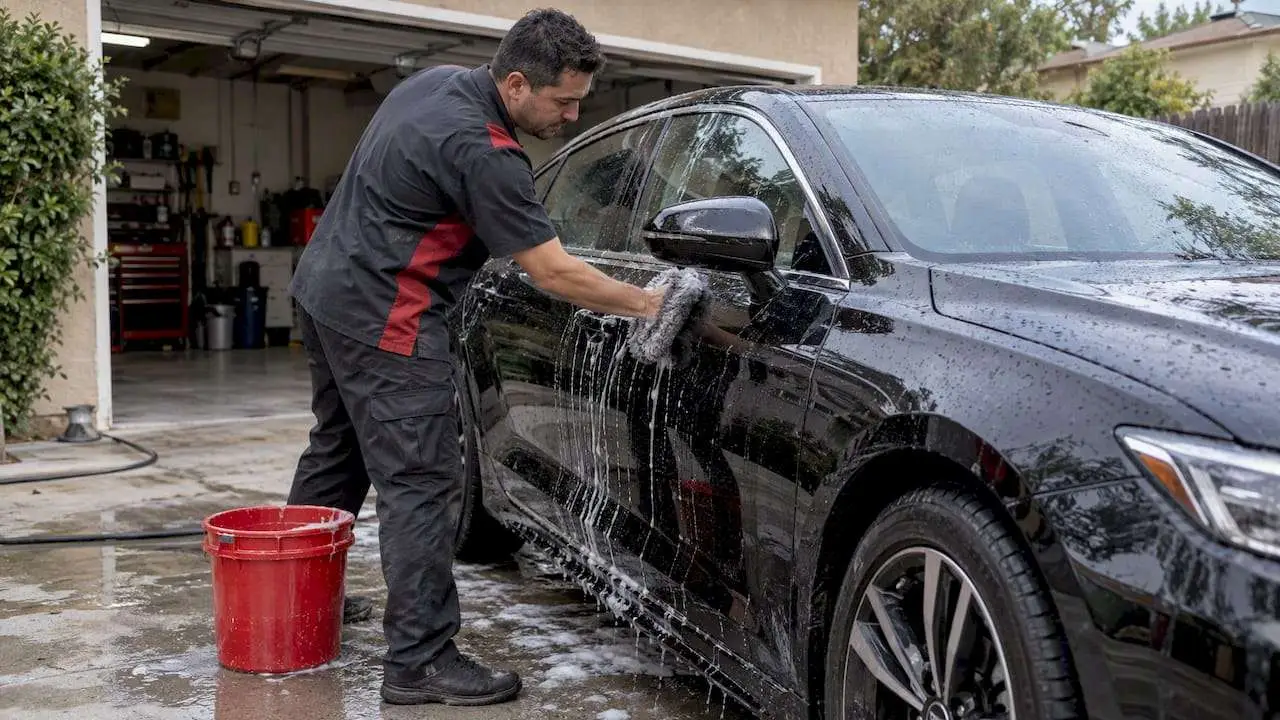
Washing technique affects how long a wrap holds its color and shine more than almost anything else. Stick to pH-neutral car shampoo, use the two-bucket method to avoid dragging grit across the film, and keep pressure washers on a wide, low setting near edges and seams where lifting starts.
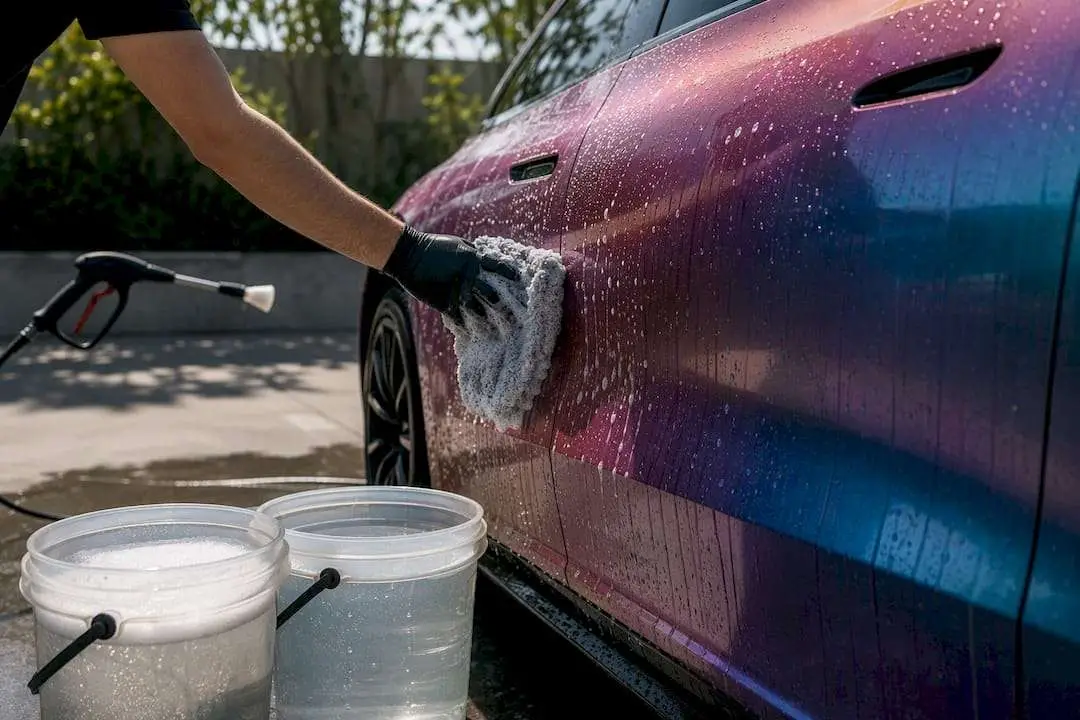
Layering protection on top changes the maintenance equation entirely. Many shops recommend pairing a vinyl wrap with ceramic coating or PPF to add scratch resistance and cut down on how often you need to hand wash. The tradeoff is cost and a slight shift in gloss level, which matters more on matte or satin finishes than on gloss or chrome.
A simple schedule keeps most wraps looking sharp for years rather than months:
- Weekly: Rinse off loose dirt and bird droppings before they bake into the film.
- Monthly: Full hand wash with a wrap-safe shampoo.
- Every 12 to 18 months: Reassess your ceramic topcoat if you added one, since UV exposure and abrasive cleaners are the biggest accelerants of fading and edge lift.
Are Color Change Wraps Safe and Environmentally Sound?
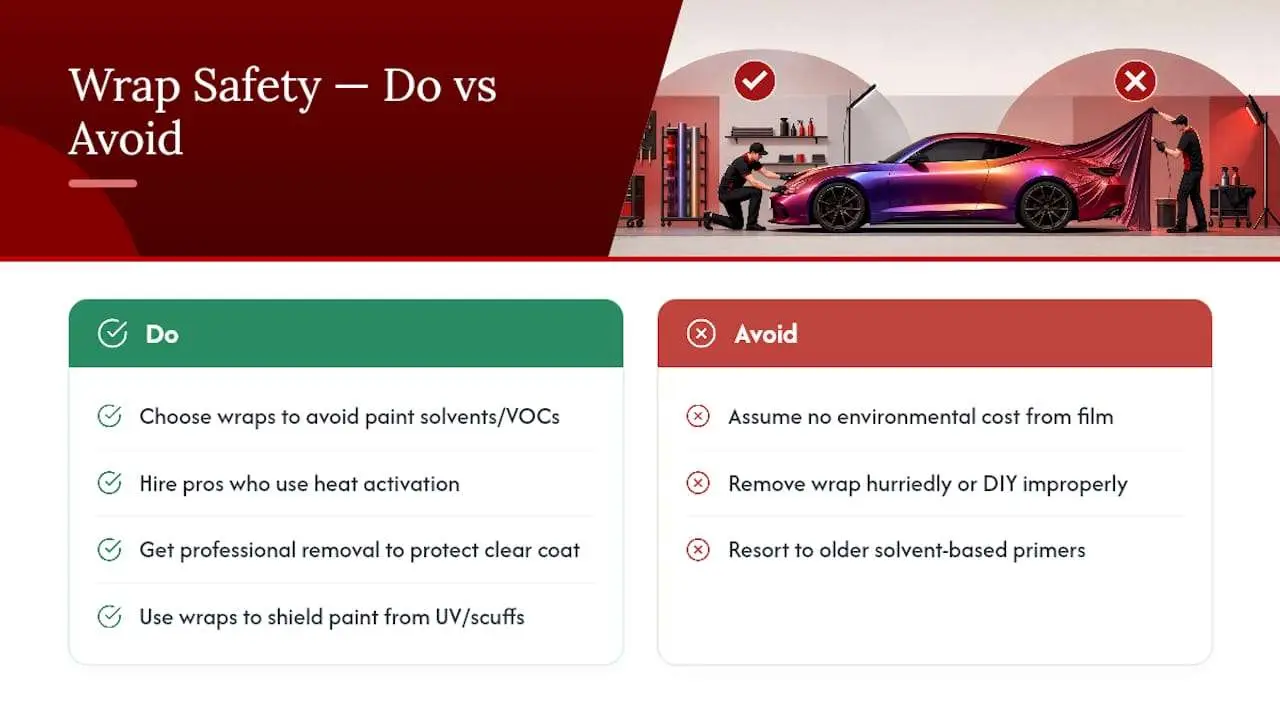
Vinyl wraps carry a smaller environmental footprint than a full repaint in one specific way: they don’t require the solvents, VOC emissions, or booth curing that a professional paint job does. That said, the film itself is a petroleum-based product, and manufacturing and eventual disposal still carry an environmental cost that a DIY search rarely mentions.
Removability is the real safety advantage. Because a proper color change wrap comes off without damaging factory paint underneath, owners can revert to stock or switch colors again later, which reduces waste compared to a botched respray that requires sanding and refinishing to correct. On the installation side, adhesive activation typically involves heat guns rather than harsh chemical primers, which is safer for installers working in an enclosed shop bay than older solvent-based wrap methods.
For the car itself, a quality wrap protects the paint underneath from minor UV fading and light surface scuffs during its life on the vehicle, similar in concept to how PPF works, just without the same impact resistance. When it’s time to remove the wrap, a professional using proper heat and technique leaves the clear coat intact. A rushed or amateur removal, on the other hand, can pull clear coat with it, which turns a cosmetic upgrade into a paint correction job nobody wanted.
When Should You Wrap Alone vs. Wrap and Protect?
We recommend a wrap on its own when a client wants a short-term style change or is testing a bold color before committing long-term. For daily drivers logging serious mileage in Los Angeles traffic and sun, we sequence it differently: full prep, then the wrap, then a PPF overlay on high-impact zones, then ceramic coating to seal everything in. That order gives you the visual transformation without sacrificing the paint underneath. Send us photos of your car and we’ll walk you through which sequence actually fits your situation.
— Jake
Ready to Change Your Car’s Color the Right Way?
This shop in North Hollywood offers professional color change wraps installed by experienced technicians rather than DIY kits. 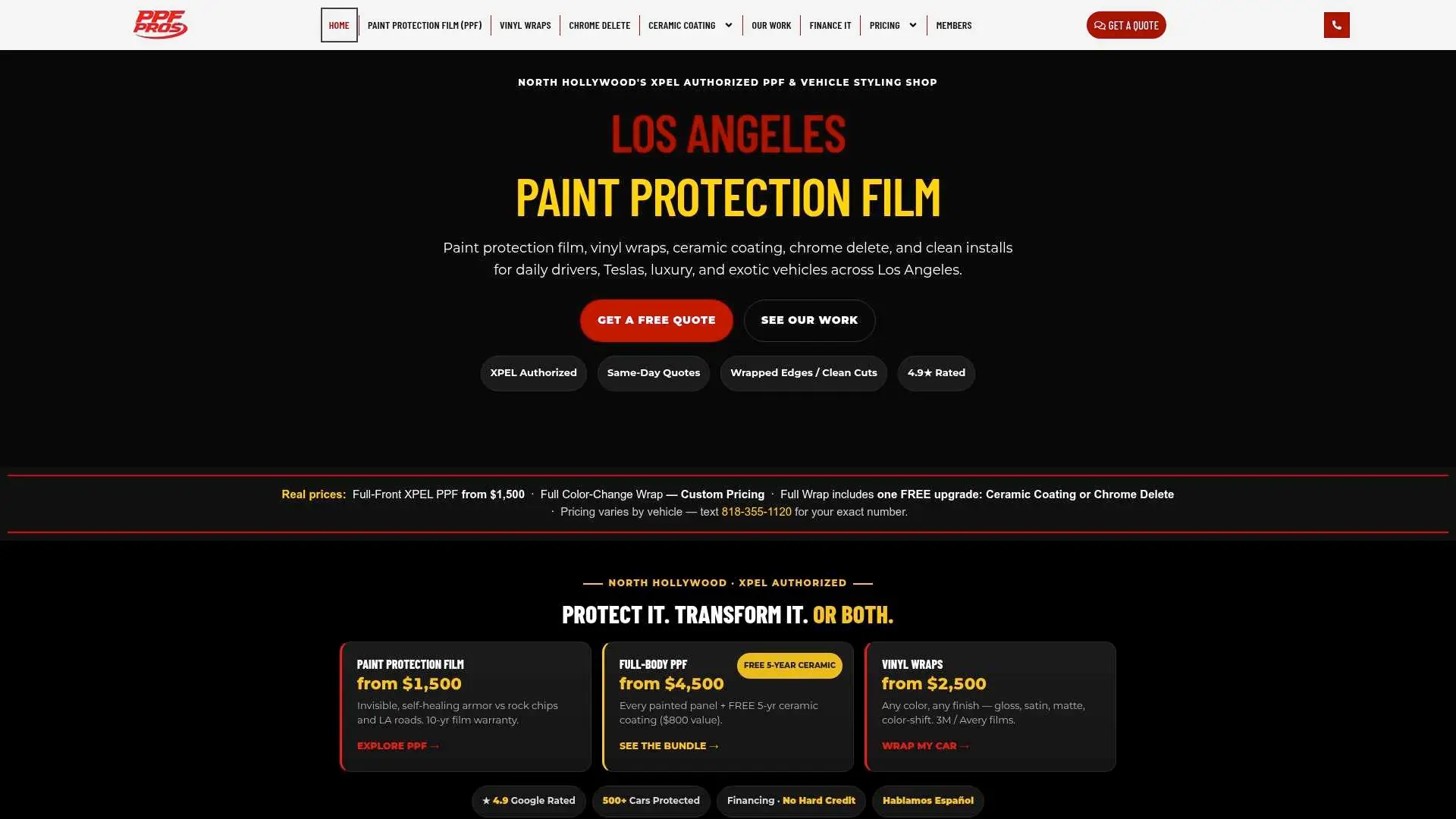
Our team handles Full Color Change Wrap installs starting from $2,800, along with Full Front and Full Vehicle PPF, ceramic coating, and chrome delete work for daily drivers, Teslas, and exotics across Los Angeles. Every wrap job includes premium film, edge wrapping instead of flush cuts, and a final walkaround inspection before your car leaves the bay. We’ll also talk you through pairing your wrap with a PPF overlay or ceramic topcoat if you’re putting real miles on the car, so the finish holds up past the first year.
If you’re ready to see numbers for your specific vehicle, check the color change wrap cost breakdown and request a same-day quote from the shop.
Where to Verify the Technical Details
For manufacturer specs on flip and chameleon film construction, see 3M’s Protection Wrap Film Color Series. For bespoke, model-specific color-infused PPF kits, TWRAPS’ Tesla Model 3 kit shows how precision-cut patterns work.
Sources
- 3M™ Protection Wrap Film Color Series | 3M United States
- What Is a Color Change Wrap and How Does It Work? | Wrap Innovations
FAQ
What Is the Color Changing Wrap Called?
It’s most commonly called a color-shift, chameleon, or flip wrap, all referring to vinyl film with pigments that change hue depending on viewing angle. Industry sources also just call it a color change wrap, which covers both solid colors and shifting finishes.
How Much Does a Color Changing Wrap Cost?
Cost depends on your vehicle and the finish you pick, with factors like edge wrapping, film rarity, and custom printing pushing prices up. At Ppfprosla, a Full Color Change Wrap starts from $2,800 for a complete vehicle.
Is There a Car Wrap That Actually Changes Color?
Yes. Chameleon or flip vinyl films use layered interference pigments that shift color as light hits them from different angles, unlike a solid-color wrap that stays one shade. 3M’s Color Series includes several of these flip finishes among its nearly 30 premium colors.
Which Color Changing Vinyl Wrap Is the Best?
The best choice depends on how you use your car. A daily driver benefits from a durable satin or gloss finish, while a show car or weekend build can handle a higher-maintenance chrome or chameleon flip. Working with an installer who wraps edges properly and uses manufacturer-grade film matters more than any single brand name.
Can You Combine a Color Change Wrap with Paint Protection Film?
Yes, and many shops recommend it for vehicles that see daily use and heavy sun exposure. Layering PPF or ceramic coating over or alongside a wrap adds scratch resistance and cuts down on maintenance, though it can slightly change the gloss level on matte or satin finishes.