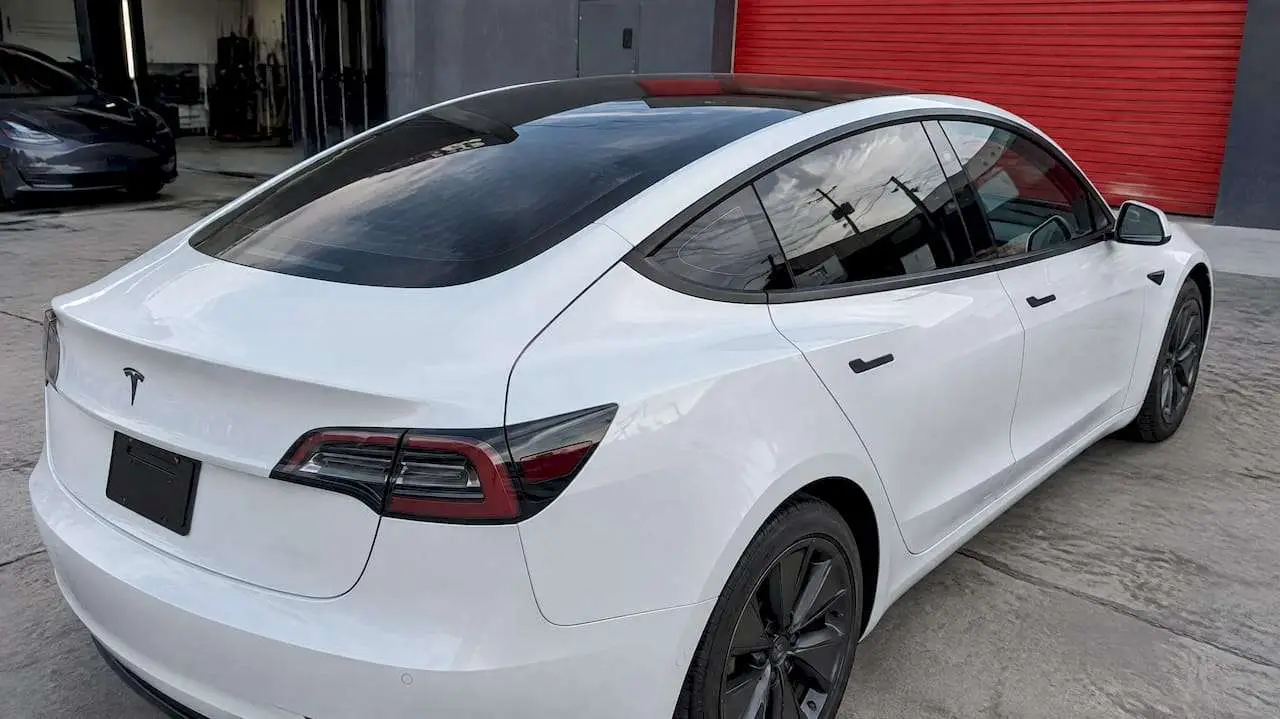
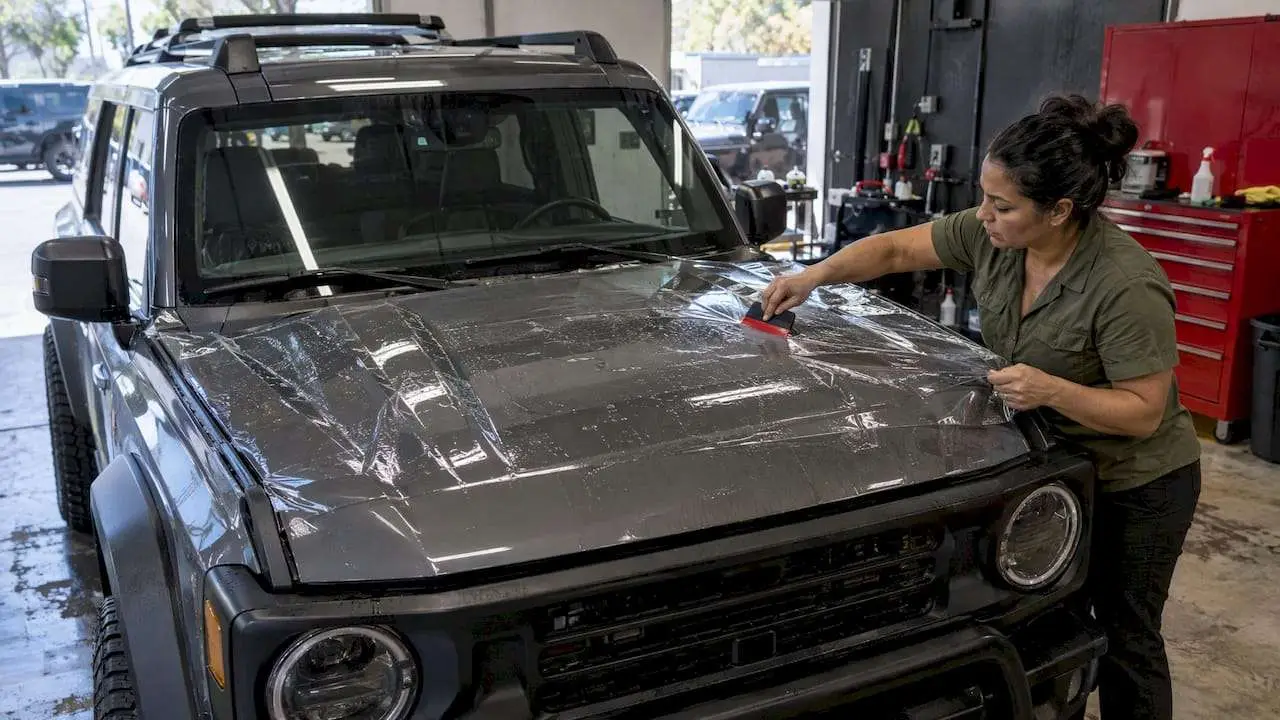
Paint protection film (PPF) is the best way to keep a 4×4’s paint from being sandblasted by gravel, pinstriped by brush and peppered with chips. It is a clear, self-sacrificial urethane layer that takes the wear instead of your clear coat. It is not armor. It will not turn a boulder scrape into nothing. Used on the right panels, installed well and washed properly, it keeps a truck, Jeep or Tesla that sees dirt roads looking far newer for far longer.
This guide covers what off-road PPF does, which panels deserve it, how to pick between partial and full coverage, how to care for it after a trail weekend, and where its limits sit.
TL;DR
- PPF absorbs small stones, gravel spray, sand and light brush contact that would otherwise chip or streak your paint.
- It is not bulletproof: sharp rocks, thick branches and hard impacts can still cut the film or damage the panel below.
- Start with the high-impact zones: front bumper, hood edge, fenders, mirrors, rocker panels and the lower doors behind the wheels.
- In Los Angeles, our Full Front package is $2,199 and Full Vehicle starts from $4,500. Both are installed at our North Hollywood shop.
- Wash by hand about every two weeks, skip tunnel washes, and have an installer look at any damage, however small.
Table of Contents
- What off-road PPF actually is
- What trail driving does to paint
- Which panels to cover on a 4×4
- Partial front, full front or full vehicle
- What PPF will not do
- Installation: why the shop matters
- Caring for film after the trail
- Our perspective
- Protecting your rig in Los Angeles
- FAQ
- Sources
What off-road PPF actually is
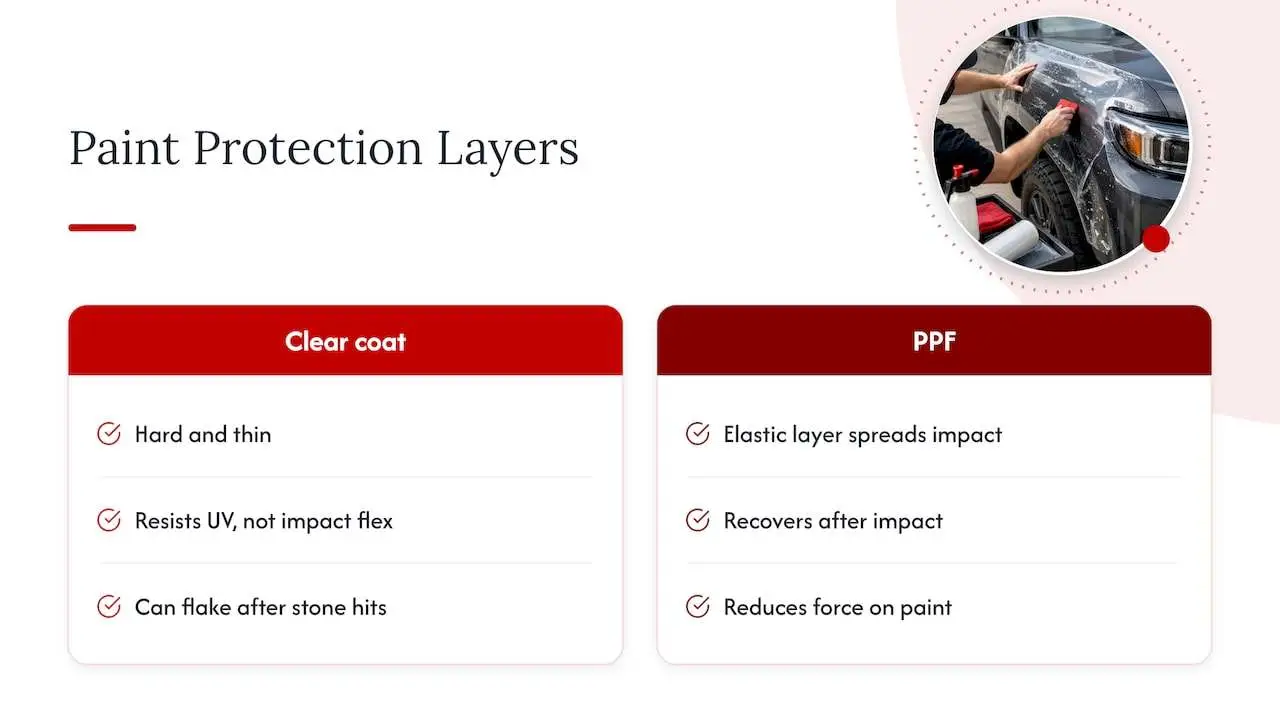
PPF is a transparent, flexible film cut to the shape of your panels and applied over factory paint. Its job is simple: sit between the outside world and your clear coat. Clear coat is hard and thin. It is made to hold gloss and resist UV, not to flex when a stone hits it, so it tends to flake. A film with an elastic layer spreads that impact over a wider area and recovers, so the paint below takes less of the force.
Most modern films also have a self-healing topcoat. Light swirls and fine scuffs soften and disappear with heat, from the sun or from warm water. If you want the mechanics, we wrote up how self-healing PPF works and what to ask your installer about heat. Self-healing is for light marks. A deep gouge or a cut is a different problem, and it needs a pro to assess.
The same film that protects a commuter’s bumper from freeway debris works on a trail rig. The difference is exposure. Off-road, the film works harder, so coverage choices and installation quality matter more.
What trail driving does to paint
Off-road paint damage comes in a few distinct forms, and film handles each differently.
- Rock chips and gravel spray. Your own tires and the vehicle ahead throw stones at the nose, hood, mirrors and the leading edge of the rear fenders. This is where film does its best work.
- Trail pinstriping. Brush, scrub and branches drag along fenders, doors and rockers, leaving fine lines in the clear coat. Owners of trucks that see narrow desert and forest trails know the look. Light contact is what film is good at absorbing.
- Sand and dust abrasion. Constant fine particles dull paint on the lower body and leading edges.
- Heavy contact. Rocks under the rocker, a tree trunk, a boulder against the door. This is where film reaches its limit, as covered below.
The film is built for the first three. For the fourth, a good installer is honest with you up front, and so are we.
Which panels to cover on a 4×4
The logic is to cover what gets hit first and hardest, then add panels as budget allows.
The front end
Bumper, hood, fenders, headlights, grille surround and mirrors take the bulk of stone strikes and branch contact. If you cover nothing else, cover these. On vehicles with large grilles and flared fenders, coverage planning matters. Our Jeep Gladiator coverage guide walks through grilles, fenders and doors on one popular trail platform, and the same thinking applies to most 4x4s.
The lower sides
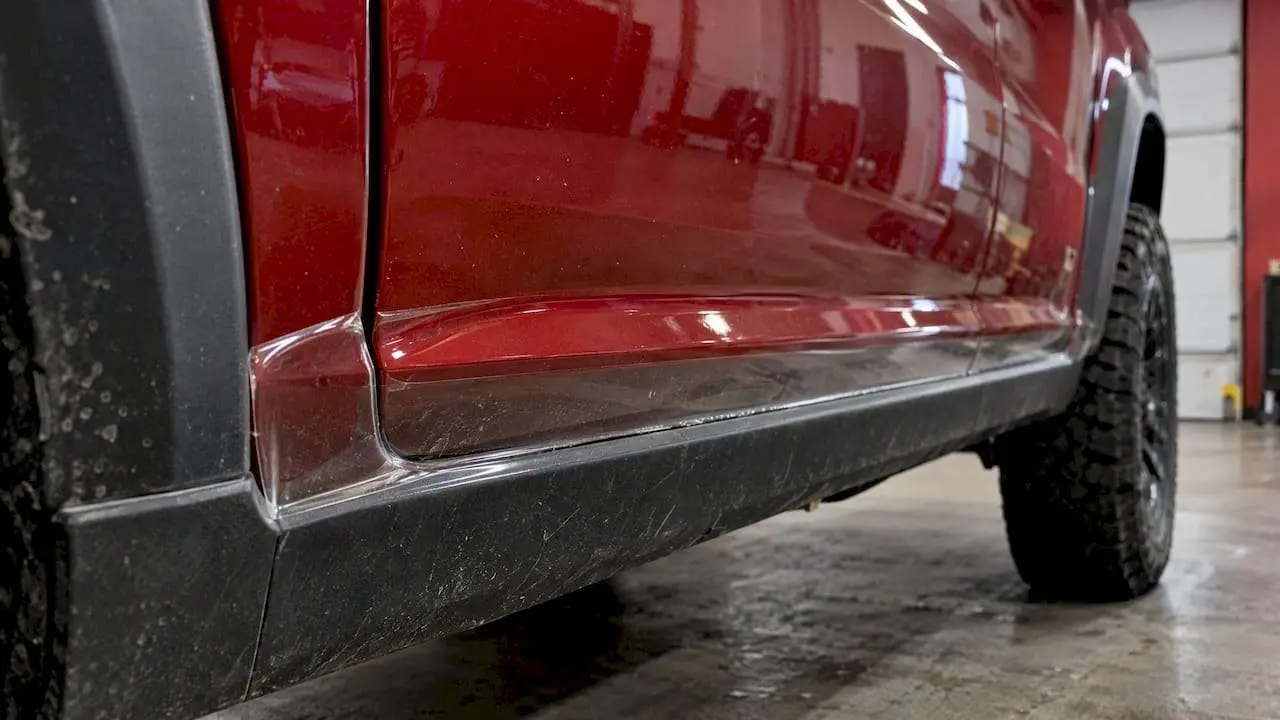
Rocker panels and the lower door skin right behind the front wheels sit in the line of fire from your own tires. They also collect trail pinstriping and sand wear. These are the panels owners most often regret leaving bare.
The extras
Door edges, door cup areas, the tailgate top and the rear bumper step are small additions that cost little and prevent the nicks that show up in everyday use. Door edges chip from simple contact with rocks, trees and other doors, not just trails.
Thickness and edges
If your truck sees gravel every day, a heavier, higher-quality film on the bumper, hood edge and rockers makes sense. Thickness is a number people chase, but the film’s chemistry and the installer’s skill count for more than the mil figure alone. We explain why in PPF thickness: TPU and installer skill. On hard-worked vehicles, plan to have edges checked sooner than you would on a garage-kept car.
Partial front, full front or full vehicle
There is no single right answer. The best coverage is the one that matches how you drive and what you want to keep original. A simple way to decide:
| Coverage | Best for | What it protects |
|---|---|---|
| Partial front | Mostly paved miles, light trail use, tight budget | The leading edges most exposed to stones |
| Full front | Regular gravel, highway miles, weekend trails | Entire bumper, hood, fenders and mirrors |
| Full front plus lower sides | Frequent trails, desert runs, brush | Front end plus rockers and lower doors |
| Full vehicle | New or high-value rigs, owners who want paint kept original | Every painted panel |
| Track Pack | Hard, fast driving on the highest-impact zones | Our reinforced set for high-wear areas |
A few questions help narrow it down:
- How much of your driving is dirt? If it is a weekend a month, a full front is usually the sweet spot. If your commute is a gravel road, add the lower sides.
- Do you plan to keep the vehicle or sell it? Original, unchipped paint supports resale value, and it is easy to show a buyer when it has been under film.
- Is the vehicle new? Film goes on best over fresh, unblemished paint. Putting it on a new truck before the first trip means you never see the first chip.
- How tight are your trails? Narrow, overgrown trails mean side contact. Cover doors and fenders, not just the nose.
We lay these choices out further in our guides on PPF coverage options, partial versus full PPF and what a full front covers.
What PPF will not do
Saying this clearly is part of doing the job well. PPF is a self-sacrificial layer, not an invincible one. As an executive at a major film brand told Graphics-Pro, if a protected surface takes a lot of off-road wear, the wear will show over time, and skillful installers are needed to apply, repair and replace film.
In practice that means:
- Sharp objects can cut it. A pointed rock edge, a stub of a branch or broken glass can slice through film.
- Hard impacts can still dent the panel. Film does not stiffen sheet metal. If something dents the body, the film will not undo it.
- Heavy brush is rough on film. Repeated contact with thick branches wears it faster.
- Chemicals matter. Strong solvents, battery acid and brake fluid can attack film, so wipe spills promptly.
- Film ages. After years of hard sun and heat it absorbs less than it did new, so check it yearly.
One boundary worth knowing: PPF covers paint, not glass. A windshield chip from the same gravel is a separate repair, and a quick read on windshield scratch repair will help you decide what is fixable and what is not.
None of this is a reason to skip film. It is a reason to match coverage to how you drive. If you routinely drag a body panel along rock, no clear film of any brand will keep it pristine, and a good installer will say so before you pay.
Installation: why the shop matters
Off-road film earns its money at the edges. On a rig that gets pressure-washed at a trailhead, dusty and wet most weekends, a lifted edge collects dirt and starts to peel. Wrapped edges and clean alignment are what keep film in place for years.
Preparation is most of the job. Film manufacturers’ own application guidance is clear on the basics: Avery Dennison’s instructional bulletin calls for washing with mild detergent, drying with a lint-free cloth, degreasing with isopropyl alcohol, removing every trace of wax and polish, and clay-barring the clear coat. Film is then applied with a soap-and-water slip solution and a water-and-alcohol tack solution. Skip any of that and adhesion suffers.
That is why we do the work in a controlled shop and not in a driveway. Contamination under the film shows up as bumps and lifting later. Many owners try DIY kits on a small area first and then bring the big panels to a pro. If you are weighing that, our PPF installation process guide explains the steps and the typical one-to-five-day timeline.
One more thing: a decision to add ceramic coating on top of film affects how it behaves. We cover when it helps and what to ask in this guide to ceramic coating on PPF.
Caring for film after the trail
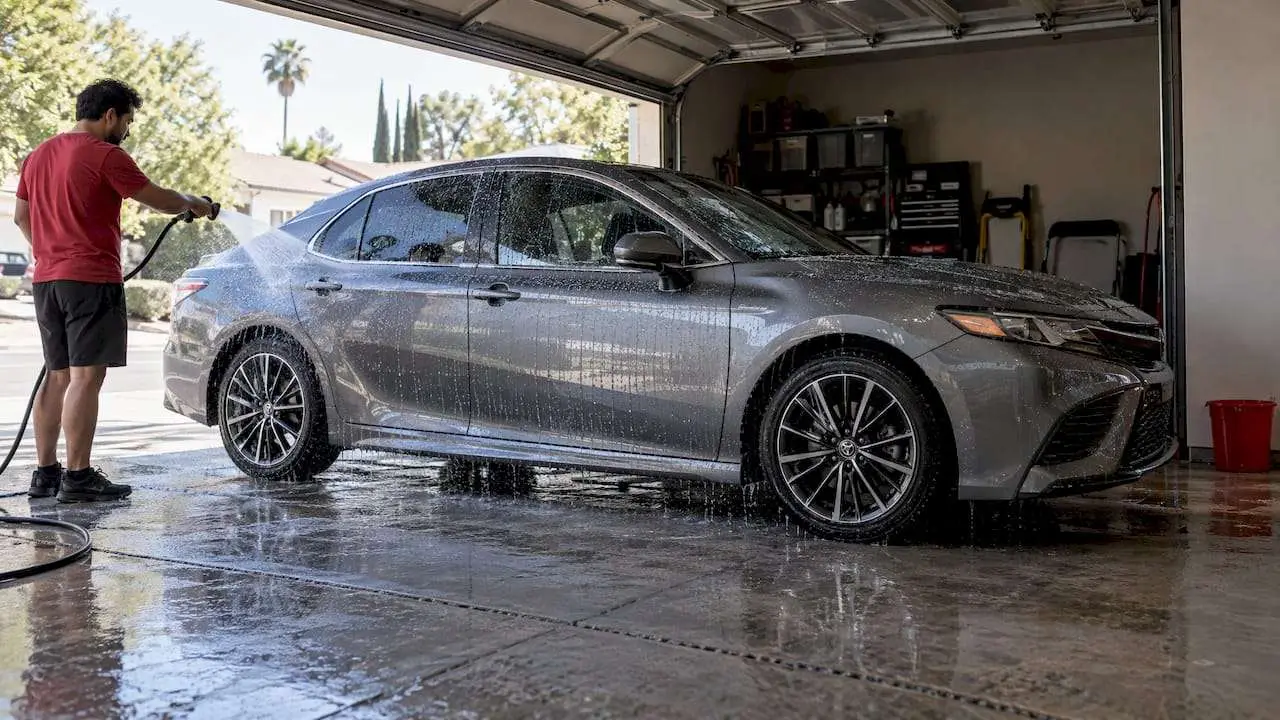
Trail dirt is just dirt, as long as you wash it off properly. The film maker XPEL’s product care instructions give a good baseline:
- Wash roughly every two weeks, or about 600 miles.
- Avoid automatic tunnel car washes.
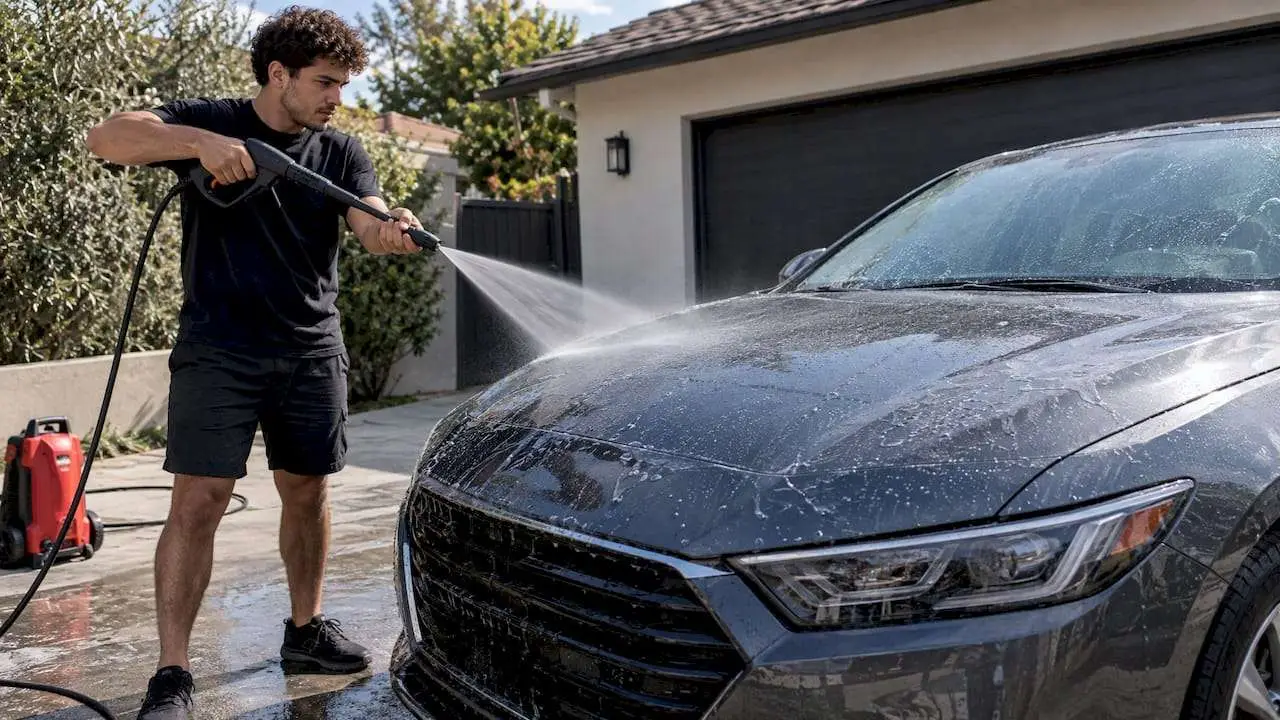
- Keep a pressure washer at least 3 feet from the paint.
- Contact your authorized installer if the film is damaged, however small.
A few practical additions for off-road owners:
- Rinse mud early. Dried mud and bug residue are easier to remove before they bake on.
- Hand wash with a pH-balanced shampoo and a soft mitt. No brushes, no abrasive pads.
- Check edges after hard trips. Look along the bumper, hood edge and rockers for lifted corners or nicks.
- Let light marks heal. Fine scuffs from brush often soften with sun or warmth.
- Book an annual check. Catching a small lift now avoids a panel replacement later.
We go deeper in PPF maintenance for busy owners and in what is safe to use when detailing after PPF.
Our perspective
We see the same pattern every season. A truck owner comes in after the first long gravel trip, looks at the hood and says, “I wish I had done this before.” The damage is already there, and film cannot erase it.
Our approach is to protect before the first chip and to be straight about what film is for. It is built to take the hits that wear paint down: stones, sand, light brush and daily grime. We cover the zones that take them, we wrap the edges and we align the film so it stays put through washes and weekends.
We use XPEL as an authorized installer, because off-road use punishes weak materials and weak installs equally. We also tell owners which coverage fits their driving. For most weekend trail drivers, that is a full front. For frequent dirt, we add the lower sides. For a new rig you want to keep original, full vehicle is the clean answer.
Film does not make a vehicle invincible, and a good installer will never promise that. What it does is keep your paint original for years of use, so the truck still looks like yours when you sell it.
Jake
Protecting your rig in Los Angeles
If you drive trails in the desert, the San Gabriels or the Sierra and want your paint to come home the same color it left, we install XPEL film at our North Hollywood shop. Our Full Front package is $2,199, and Full Vehicle coverage starts from $4,500. Partial Front and Track Pack are also available, with quotes based on your vehicle.
See the options on our paint protection film page, or tell us what you drive and how you use it. We respond the same day with a clear recommendation. You can also reach us from our home page.
FAQ
Does PPF stop trail pinstriping?
Film absorbs light brush contact that would otherwise scratch clear coat, and light marks in the topcoat often heal with warmth. Thick, sharp branches and repeated heavy contact can still mark or cut the film, so cover the panels that brush touches most.
Is PPF worth it on a truck that gets dirty anyway?
Yes, for most owners. Dirt washes off film, while chips and pinstripes do not wash off paint. Film keeps the original finish intact, which helps appearance and resale. It works best with regular hand washing.
Can PPF be removed later?
Film can generally be removed by a professional, but it is not reusable. Once it comes off, any new protection means new film. If a section is damaged, an installer can assess whether to replace one piece or the whole panel.
Should I cover the whole vehicle or just the front?
That depends on where your vehicle is hit. Mostly paved driving with some gravel suits a full front. Frequent trails suggest adding rockers and lower doors. A new vehicle you want kept fully original suits full vehicle coverage.
Sources
- XPEL Product Care Instructions
- Avery Dennison Paint Protection Film Application bulletin
- A deep dive into paint protection film, part 1 (Graphics-Pro)