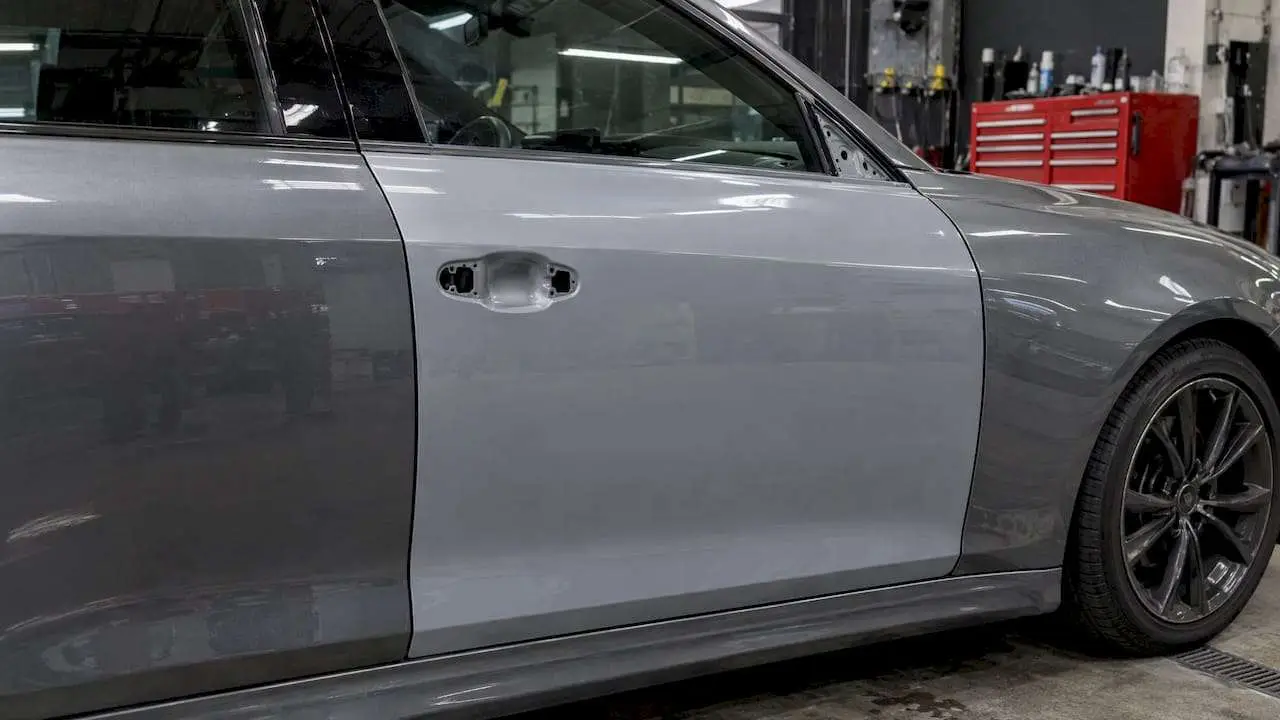
You can put paint protection film over a repaint, but only once the new paint has fully cured, and the calendar alone does not tell you when that is. A common baseline is about 30 days, and some air-dried repairs need 60 to 90. The reliable answer comes from the body shop’s written cure window for the exact paint system on your car. If you are in Los Angeles, send us the repaint date and the shop that did the work, and we will answer the same day.
TL;DR
- Film goes on paint that is fully cured, not merely dry. One film maker’s FAQ gives 30 days as the common wait for new paint to outgas.
- Baked paint and air-dried paint behave differently. Air-dried repair paint needs the paint maker’s cure schedule before film goes on.
- Ask the body shop three things: the paint system, the repaint date, and its written cure recommendation.
- Film applied too early can bubble, shrink or lift because solvents are still leaving the paint.
- Protect the other panels now, and book the repainted ones once the cure window closes.
Table of Contents
- Why fresh paint and paint protection film do not mix right away
- How long to wait before PPF on a repaint
- What to ask the body shop before you book
- What an installer checks on a repaired panel
- What can go wrong when film goes on too soon
- One repainted panel versus a full respray
- Can you polish or buff new paint before film?
- Caring for the repaint while you wait
- What to expect after the film goes on
- A sensible timeline from repaint to film
- Where our install fits in
- Our perspective
- FAQ
- Sources
Why fresh paint and paint protection film do not mix right away
Paint protection film is a clear urethane layer held on by adhesive. That adhesive needs a stable, fully hardened surface. Fresh clear coat can feel hard to the touch while solvents are still working their way out of it. Seal those solvents under film and the adhesive has to hold on a surface that is still changing.
A major film manufacturer’s installation bulletin is specific about the risk. It warns that residual solvents may hurt adhesion and cause excessive shrinkage, bubbling or blistering. It also notes that poorly bonded paint-system components can lift paint when the film is later removed.
That is why “dry” and “cured” are different words in this trade. Dry means you can touch it. Cured means the chemistry has finished and the paint has hardened and bonded.
How long to wait before PPF on a repaint
There is no single number that fits every car. There is a useful range, though, and it helps to know where it comes from.
| Situation | Typical guidance |
|---|---|
| Baked (oven-cured) refinish | Film can usually go on once the paint is fully cured and back at ambient temperature |
| Air-dried or repair paint | Follow the paint maker’s cure schedule before applying film |
| Common baseline when no schedule is given | About 30 days |
| Heavy repairs, cool storage, soft edges, solvent smell | Longer, often 60 to 90 days |
The film maker’s FAQ cited above says that if you choose to install over a freshly painted vehicle, 30 days is the common waiting period for the paint to outgas. A second film manufacturer’s bulletin says that for most baked refinish systems, film may typically be applied after the paint has fully cured and returned to ambient temperature. For air-dried or repair paint, the installer must always consult the paint manufacturer’s recommended cure schedule first.
So the practical rule has two parts. Treat 30 days as a floor when nobody can tell you anything more specific. Treat the body shop’s written recommendation for your paint system as the real answer, whether it is shorter or longer.
What changes the cure time
Cure time depends on the refinish system, the clear coat chemistry, the hardener and reducer, how thick the paint is, the temperature the car has been kept at, and whether the paint was baked or air-dried. Two cars repainted on the same day can be ready weeks apart. A car stored in a cold garage cures slower than one kept warm.
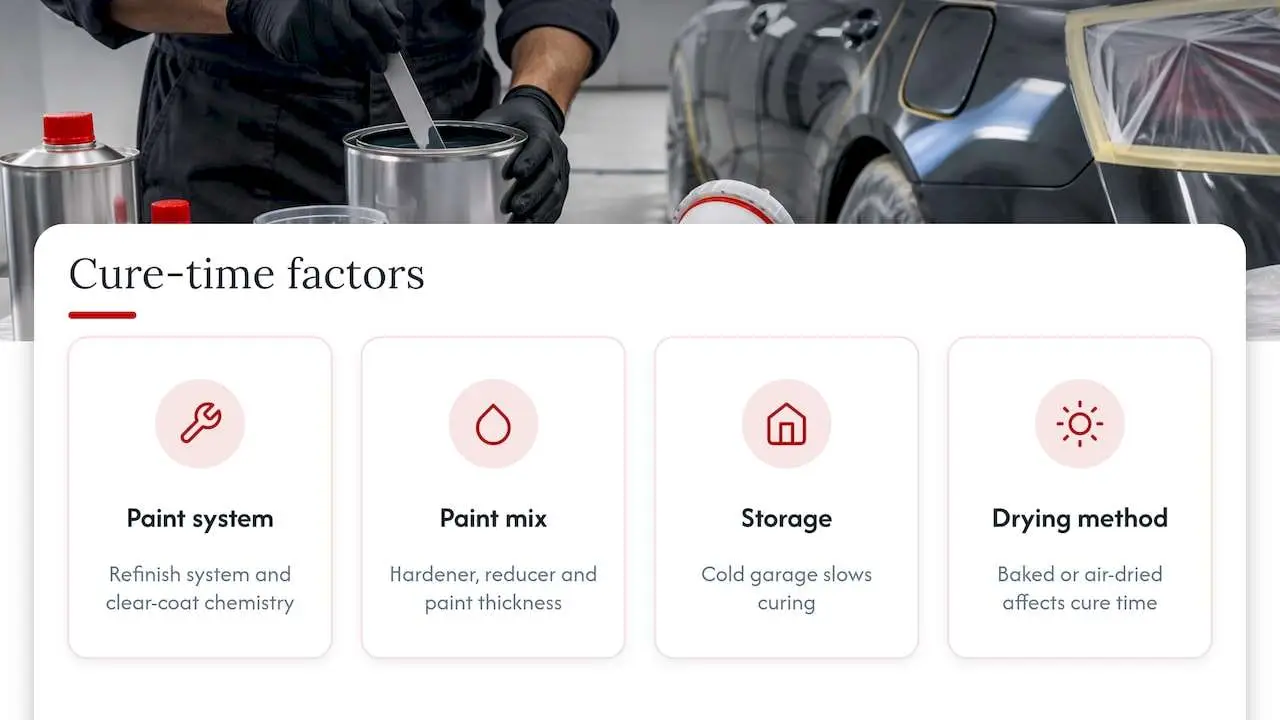
This is also why a forum answer of “90 days, always” or “two weeks, always” is incomplete. Both are guesses about a paint system nobody has identified.
What to ask the body shop before you book
Gather this before you contact an installer. It takes one phone call to the shop that painted the car.
- Which panels were repainted? A bumper and a fender are different from a full respray.
- When was the paint applied? Get the actual date, not “a few weeks ago.”
- Was it baked or air-dried? Many shops bake. Some repairs are air-dried.
- What paint and clear coat system was used? The shop can name the brand and line.
- What is the written cure recommendation? Ask for it in writing, with a date after which film is fine.
- Was anything applied afterward? Polish, wax, sealant or a coating on the new paint all matter.
With those answers, an installer is no longer guessing. Without them, even a careful installer has to assume the longer, safer wait.
What an installer checks on a repaired panel
Once the cure window has passed, the panel still has to be inspected. The film bulletin states the surface must be in good condition and cleaned thoroughly of dirt, grease, wax and polish, finishing with 70% isopropyl alcohol and a clay bar or eraser pad for bonded contaminants. For non-factory paint it adds that surfaces must be fully dry, cured, hardened and free of scratches, defects or contamination.
On a repair, that means looking for:
- Peeling, cracking or blistering paint
- Soft paint or poor clear coat edges
- Visible repair lines or sanding marks
- Dust nibs and texture problems in the clear coat
- Wax, silicone or coating residue left behind
A panel that fails any of these needs correction first. That is a different job from film installation, and it is better to find out before the film goes on than after.
Our inspection-first decontamination wash explains how paint is cleaned and checked before polish, coating or film.
What can go wrong when film goes on too soon
The failures are predictable. Another film provider’s guidance says that installing after repainting but before curing is complete can interfere with adhesion and may contribute to bubbling, cloudiness or other finish issues.
The bulletin cited above describes the same family of problems: poor adhesion, shrinkage, bubbling and blistering from trapped solvents. Edge lift is the one owners notice first, because edges are where adhesion is tested hardest.
The larger cost shows up at removal. The manufacturer’s bulletin states that film is intended and warranted for fully cured factory paint, and that clean removal from non-factory paint is not warranted. A repaint that was not ready can lift when the film comes off. Waiting a few extra weeks costs far less than repainting a panel twice.
One repainted panel versus a full respray
A repaired door and a full-car respray are different situations. A repaired panel can match the rest of the car visually and still have a different thickness, hardness and cure history than the factory finish next to it. Each repainted panel should be judged on its own repair record, not on a rule borrowed from another job.
In practice, a single repaired bumper or fender is often ready sooner than a heavy, multi-panel respray. But the deciding factors are the shop’s paint system and cure instructions, not the size of the repair.
This also means you do not have to leave the whole car bare. If the front bumper was repainted last month but the hood and fenders are original paint, the sound factory panels can be protected now while the repaired section waits. Ask the installer how the coverage can be phased.
Can you polish or buff new paint before film?
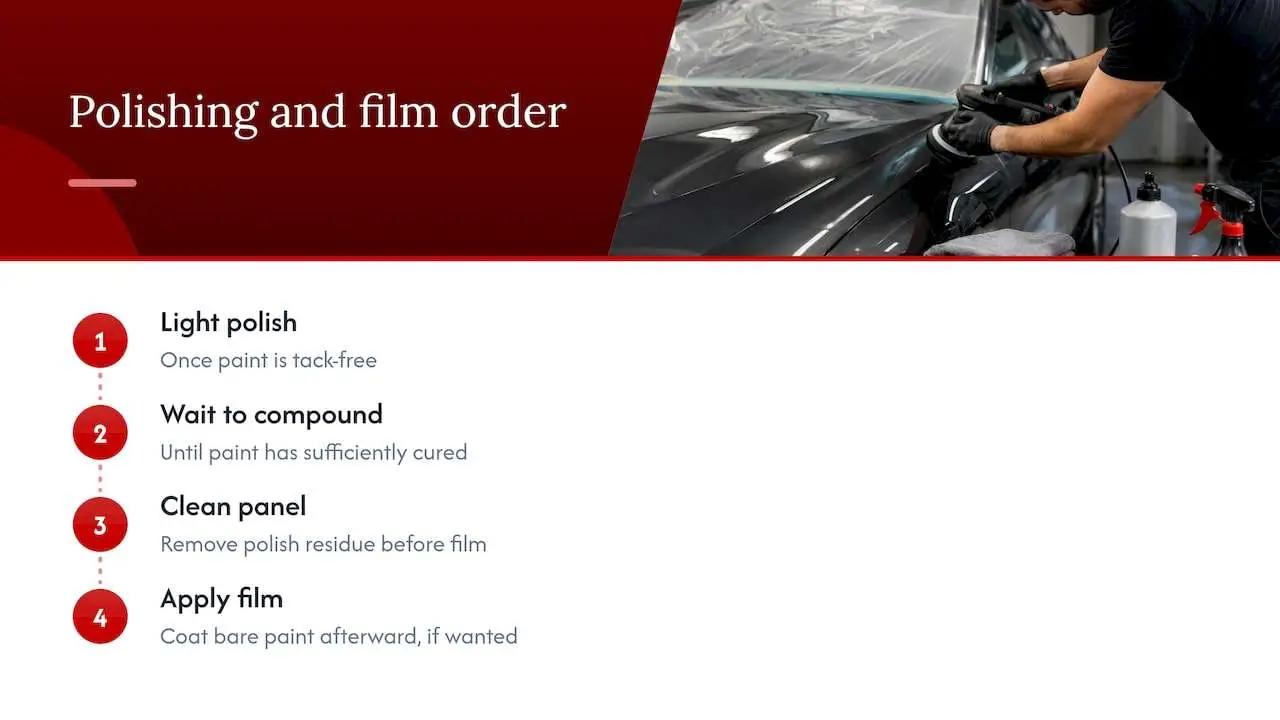
Timing matters here too. One paint-care source notes that on modern clear coat systems, many professionals do light polishing once paint is tack-free but prefer to wait until the paint has sufficiently cured before aggressive compounding. The conservative approach puts paint integrity and the manufacturer’s guidance first.
For film, that means leave aggressive correction until the cure window has closed, then have the panel cleaned and checked. Polish residue, like wax, has to be removed before film goes on. Film manufacturers also say no ceramic coating should be on the paint beforehand: the 3M installation guidelines call for bare, decontaminated paint cleaned with an adhesive cleaner, glass cleaner and clay bar. So the order is film first on the bare panel, and coating on top afterward if you want it. Our guide to ceramic coating on PPF covers the four questions to settle first.
Caring for the repaint while you wait
The waiting period is when new paint is most vulnerable. A few habits keep it in good shape:
- Follow the body shop’s care instructions. They know the paint system, including when waxing, sealing or machine polishing is safe.
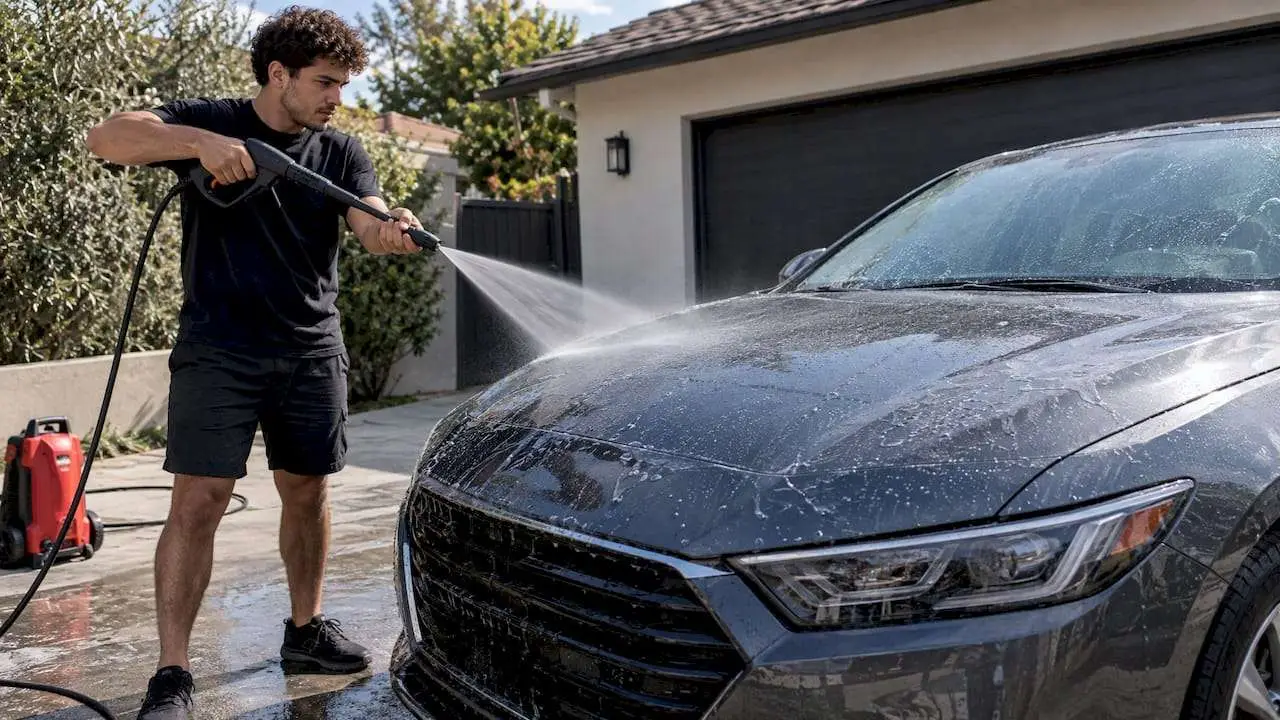
- Wash gently by hand. Avoid automatic brush washes and high-pressure water on fresh edges.
- Remove bird droppings and bug residue quickly with soap and water.
- Park in shade or a garage when you can, and keep fresh paint away from heat, sap and sprinklers.
- Do not apply wax, sealant or coating to the new paint unless the shop says it is time. Film wants a clean, bare surface.
If you are protecting the rest of the car in the meantime, our new car protection film guide shows which areas to cover first.
What to expect after the film goes on
Film has its own cure. Manufacturers give clear post-install rules, and the same rules apply on repainted panels:
- Wait 72 hours before the first wash. Both the Avery Dennison bulletin and the 3M guidelines give 72 hours.
- Keep pressure washers away from edges. The bulletin warns that high-pressure water near film edges can cause lifting. If you use one, 3M specifies a spray nozzle of at least 40 degrees, a maximum of 80 bar, water at or below 140°F (60°C) and a distance of at least 12 inches.
- Expect some haze or small moisture pockets at first. These are normal while the film cures. A film warranty document says full cure can take up to 30 days, with possible haze and condensation in that window.
After that, a simple routine keeps film looking right. Our PPF maintenance guide covers washing and yearly checks, and the detailing after PPF guide lists what is safe and what to skip. If you are wondering about protection products on top, see whether you can wax paint protection film.
A sensible timeline from repaint to film
Here is how the pieces fit together for a typical repair:
- Day of repaint: Collect the paint system, date, bake or air-dry method, and the shop’s written cure recommendation.
- During the cure window: Hand wash gently. No wax, polish or coating unless the shop approves it.
- Close to the end of the window: Send us the details. We can plan the install date around it and, if other panels are original paint, schedule those first.
- Install day: The panel is cleaned, decontaminated and inspected, then the film goes on.
- First 72 hours: No washing. After that, gentle hand washing.
- Weeks one to four: Film finishes curing. Minor haze is normal.
If the shop says 30 days and your installer is free on day 22, take the later date. The film manufacturers’ own advice is not to shorten the wait just to hit an appointment.
Where our install fits in
Our work on repainted cars starts with the details above: which panels, when, and what the body shop says. We install XPEL authorized paint protection film in North Hollywood, with wrapped edges and clean alignment, and our quote process is built around same-day responses.
For Los Angeles drivers, the pricing is published. A Full Front package is $2,199, and a Full Vehicle package starts from $4,500. Partial Front and Track Pack coverage are on the same page. If part of your car was just repainted, tell us when you request the quote and we can fit the repaired panels into the plan once they are ready.
If you want film on the original-paint panels now, send us the car’s year, make and model plus the repaint details through the PPF Pros site, and we will reply the same day.
Our perspective
We get this question from drivers who just paid for a bumper or fender repaint and want it protected before it gets its first rock chip. The instinct is right. The timing is what needs care.
Film is only as secure as the paint under it. A fresh repaint that feels hard can still be releasing solvents, and film cannot fix that after the fact. So we would rather schedule the job for the right week than the first available week.
Our approach is to treat the body shop’s cure window as the deciding fact, then protect everything that is ready now. Original-paint panels do not need to wait, and the repaired ones can follow. That way the car is protected sooner, the edges are wrapped and aligned cleanly, and nothing is sealed over paint that is still changing.
When you book, bring the repaint date and the shop’s name. It makes the plan simpler and the install better.
Jake
FAQ
Can you put PPF over fresh paint?
Yes, once the paint has fully cured, not before. Film makers commonly point to about 30 days as the baseline for new paint to outgas, and air-dried repair paint follows the paint maker’s schedule. Your body shop’s written cure recommendation is the answer that counts.
How long after a repaint can I install PPF?
The common baseline is 30 days, and heavier repairs or cooler storage can push it to 60 to 90 days. Baked finishes can be ready sooner than air-dried ones. Ask the shop for the paint system and the date after which film is safe.
Is the wait the same for ceramic coating?
Coating on bare paint generally needs the same cure first, and some guidance asks for longer. Film goes on bare paint, and ceramic coating can go over the film afterward. We can plan the order for you when you book.
What happens if PPF goes on before the paint is cured?
Trapped solvents can weaken adhesion and cause bubbling, shrinkage, blistering or cloudiness. Poorly bonded paint can also lift when the film is removed later. A short delay avoids all of it.
Do I have to wait to protect the rest of the car?
No. Panels with sound original paint can be protected now, and the repainted panels can be scheduled after their cure window. A Full Front or Partial Front package can be planned around that.
Sources
- Paint Protection Film Frequently Asked Questions, film manufacturer FAQ
- IB4.40 Dry Apply PPF Guidelines, installation bulletin
- IB4.30 Paint Protection Film Application, installation bulletin
- PPF installation guidelines, Revision C, March 2024
- Film limited warranty coverage, 2022
- Can PPF Be Installed Over Repainted Car Panels?
- Polish or Compound After Car Paint