
Paint protection film reaches its initial bond within 24 to 72 hours, and most installers clear hand washing after 72 hours. Plan to wait about a week before waxing, and give ceramic coatings up to two weeks depending on the film and your climate. Drive gently and avoid car washes until your installer confirms it’s safe.
TL;DR:
- Most paint protection films reach enough adhesion within 72 hours to safely wash the car, but full bond stability takes up to two weeks, especially for ceramic coatings.
- Warm weather and UV exposure accelerate curing, while cold, humid conditions delay the process, influencing when you can wax or coat the film.
- Owners should avoid automatic car washes and rough roads in the first three days, and carefully monitor for bubbles or edge lifting, contacting installers if issues persist.
- Applying wax or ceramic coatings before a full two-week cure risks trapping moisture and causing adhesion problems, so strict timing based on manufacturer instructions is essential.
- A professional installer’s guidance on film type and precise curing timeline ensures optimal protection and helps prevent costly re-dos or warranty issues.
Table of Contents
- 1. What the cure timeline actually looks like
- 2. Factors that speed up or slow down curing
- 3. What to do (and avoid) in the first week
- 4. When it’s safe to wax, seal, or ceramic coat
- 5. Reading the difference between normal settling and a real problem
- 6. What professional installers actually check during cure
- 7. A conservative timeline you can screenshot
- 8. Get your PPF installed and cured right the first time
- Sources
- FAQ
1. What the cure timeline actually looks like
“Curing” is not one event. It’s a sequence of adhesive milestones, and each one unlocks a different activity. Understanding the difference between initial bond, functional cure, and full cure keeps you from either babying the film too long or stressing it too soon.
The initial bond happens in the first 24 to 72 hours after installation. During this window, the adhesive is still forming its grip on your paint, so the film can shift slightly under pressure or heat. This is the phase where you drive normally but avoid rough roads, gravel lots, and anything that sprays grit at the edges.
The 72-hour mark is the threshold most manufacturers use for washing. 3M’s paint protection film guidance recommends waiting 72 hours before washing and one week before waxing, giving the adhesive enough build to resist water intrusion at the edges. XPEL’s FAQ page sets the same 72-hour benchmark for washing, and adds that small application bubbles typically dissipate within days to weeks as the adhesive continues to cure underneath the film.
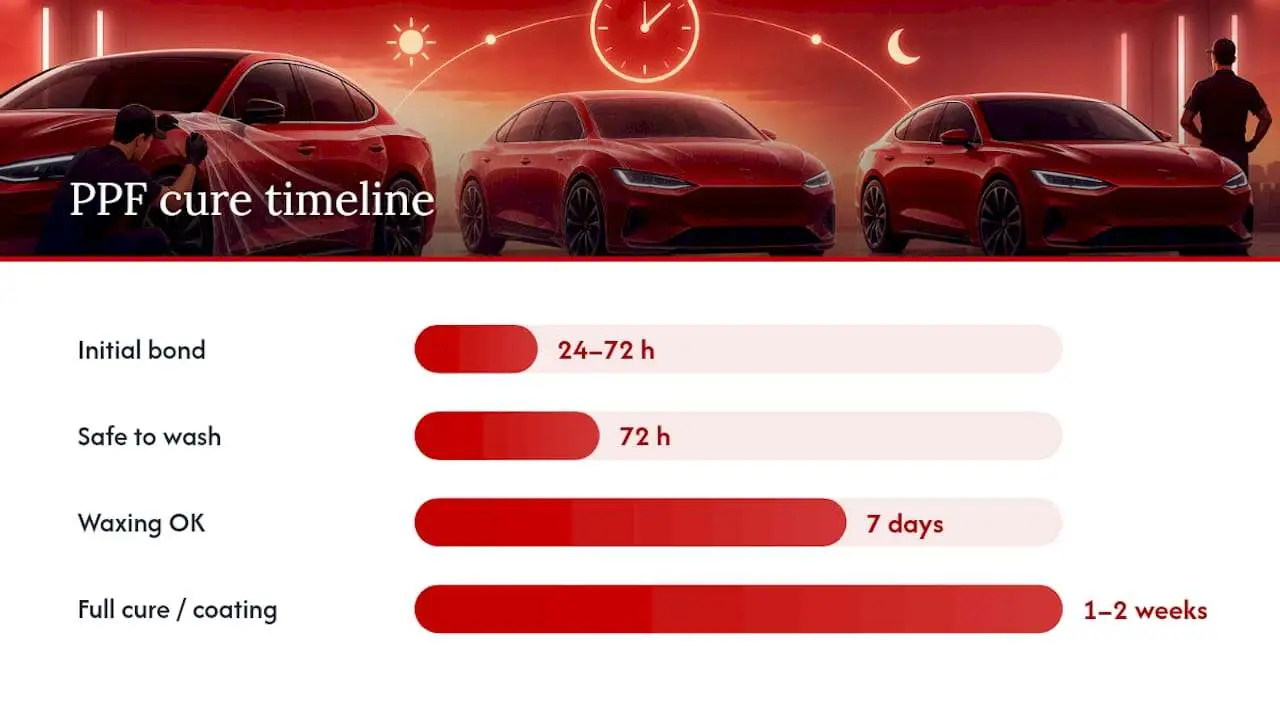
Full cure, meaning the point where the adhesive has reached its final stable bond, takes longer. Installer guidance on ceramic coating timing after PPF reports cure windows ranging from a few hours under ideal heat and UV exposure to a full one to two weeks depending on the film and conditions. That range matters because it’s the number that governs when a coating or sealant is safe to add.
A simple way to track it:
- 24 to 72 hours: initial bond forms; drive normally, avoid harsh conditions, no washing yet.
- 72 hours: most films are safe for a hand wash or touchless wash.
- 7 days: commonly cleared for waxing per 3M’s guidance.
- 1 to 2 weeks: full adhesive stability, the safer window for ceramic coatings.
2. Factors that speed up or slow down curing
Cure time isn’t fixed. It moves based on conditions you can partly control and some you can’t.
Heat and UV exposure accelerate the process. 3M’s installation guideline notes that heat and UV exposure speed up adhesive activation, which is why a car parked in direct sun during a warm week tends to cure faster than one sitting in a cold garage. Cold and humid conditions do the opposite, stretching out every milestone in the timeline above.
Film chemistry plays a role too. Different PPF products use different adhesive systems, so a film from one manufacturer may reach functional cure faster than another under the same weather. This is one reason a shop won’t give you a single number without knowing which film went on your car.
Paint condition matters just as much as the film itself. Avery Dennison’s application guidelines caution that a freshly painted surface must be fully cured per the paint manufacturer’s own instructions before film goes on, since residual solvents can outgas and cause bubbling or adhesion problems underneath the film. If your car had recent bodywork, mention it before booking your install.
Installer technique is the variable most owners never think about. Proper edge sealing, correct slip-solution drying, and post-heating of stretched sections all affect how evenly and quickly the film settles.
Pro Tip: Ask your installer what film brand and adhesive system they used. That single detail changes your realistic wash and wax dates more than the weather does.
3. What to do (and avoid) in the first week
The first few days set the tone for how the film settles. A short list of habits protects the bond without requiring much effort.
- Skip highways with loose gravel or construction debris for the first 24 to 72 hours, since flying grit can lift a still-soft edge.
- Park under cover when you can during that same window. Direct sun helps curing but extreme heat swings paired with dust are a rougher combination.
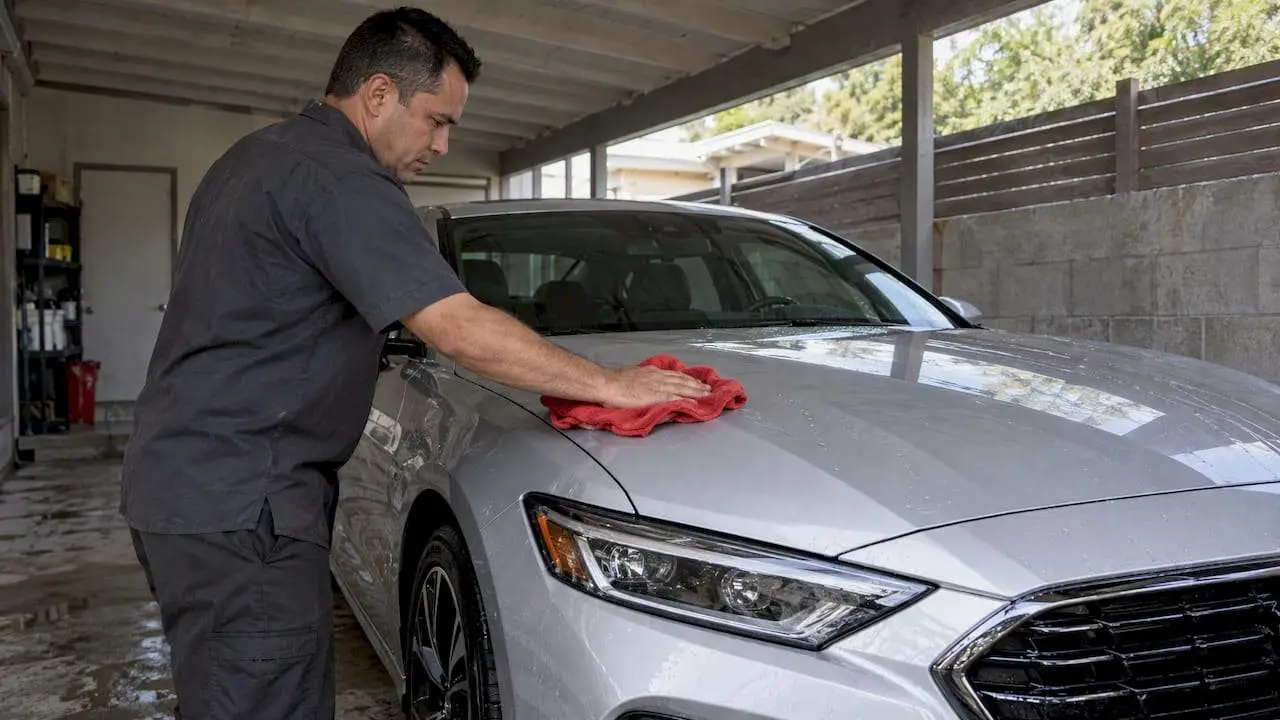
- Hold off on washing until 72 hours have passed, then stick to hand washing or a touchless wash. 3M’s vehicle maintenance guidance specifically warns against automatic brush car washes during this early phase, since the brushes and high pressure near edges can cause lifting or dulling.
- Photograph the film right after install, especially the edges and any small bubbles, so you have a baseline.
- Take a second round of photos around the 72-hour mark to compare. If bubbles have shrunk or the edges look the same, you’re on track.
- Call your installer if you notice a bubble growing, an edge peeling back, or any discoloration. That’s not a wait-and-see situation.
4. When it’s safe to wax, seal, or ceramic coat
Adding a chemical layer too early is the most common mistake owners make after a fresh install. The film needs its full window before a wax, sealant, or coating goes on top.
3M’s FAQ recommends waiting a full week before waxing, giving the adhesive time to build strength before it’s sealed under another product. Ceramic coatings ask for more patience. Industry practice generally points to a one to two week window, and some 3M ceramic boost products carry guidance suggesting a wait of several months, so the product instructions for your specific coating always take precedence.
The risk of jumping the gun isn’t cosmetic, it’s structural. Sealing in moisture or trapping outgassing under a coating can interfere with the film’s final bond, leading to bubbles or a hazy finish that wasn’t there at install. Detailing guidance on surface prep before coatings makes the same point from the coating side: prepping and timing matter as much as the product you choose.
The easiest fix is to handle timing at the booking stage:
- Ask your PPF installer for their specific wax and coating timeline for the film you’re getting.
- Confirm the coating manufacturer’s own minimum wait time, since it may be longer than the film’s.
- Schedule the coating appointment for the later of the two dates, not the earlier one.
5. Reading the difference between normal settling and a real problem
Small imperfections right after install are common and usually resolve on their own. Knowing which ones to ignore and which ones need a phone call saves you an unnecessary trip or, worse, a missed warranty window.
Tiny application bubbles are normal in the first few days. XPEL’s guidance notes these typically flatten out over days to weeks as the adhesive finishes curing and any trapped air or moisture works its way out through the film.
- Small, scattered bubbles that shrink over several days: normal, keep monitoring.
- Edge lifting, large blisters, or visible contamination under the film: not normal, contact your installer.
- Bubbles that appear weeks after install with no clear cause: worth a follow-up call regardless of size.
Never try to fix a bubble or lifted edge with a heat gun at home. 3M’s guidance warns that improvised heat application can damage the film’s finish or cause uneven bonding, and it can also void your installer’s warranty. If you do need to file a claim, bring clear photos, the install date, and a note on the weather conditions at the time, since installers use that context to judge whether an issue is adhesive-related or environmental.
6. What professional installers actually check during cure
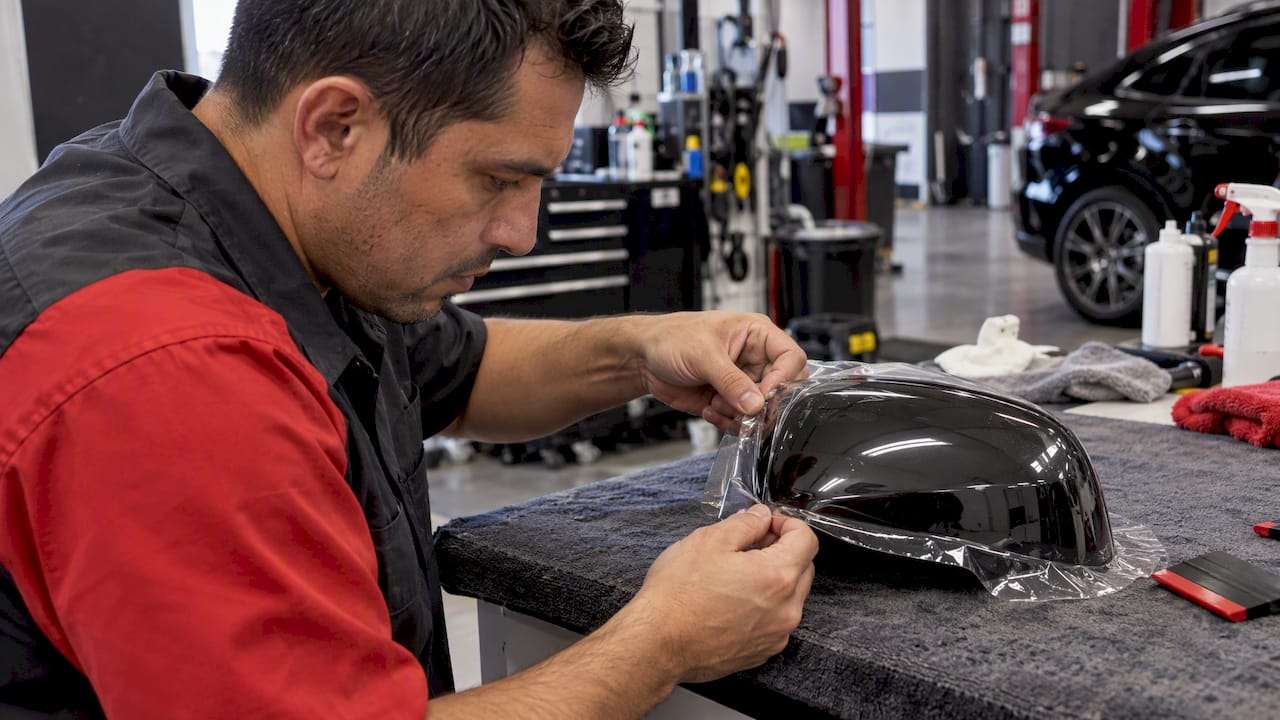
Authorized installers follow a process that goes beyond applying the film and sending you home. Film selection suited to your panel shapes, careful edge finishing, and post-heating of stretched sections where the film wraps around curves all affect how cleanly the piece settles over the following days. A shop that documents the install with photos and gives you a written aftercare sheet is doing the part of the job that protects both your car and your warranty.

When you’re evaluating a shop, ask directly: which film brand and model are they installing, what’s their specific wash and wax timeline, what does the warranty cover, and do they offer a follow-up check. PPF Pros is an XPEL authorized installer with published service packages and a 4.9-star rating, and answering these questions clearly before the job starts is a reasonable bar for any shop you’re considering.
7. A conservative timeline you can screenshot
Stick to this if you want a simple, safe default: drive gently and skip washing for 0 to 72 hours, hand wash only through day 7, hold wax until day 7, and wait a full 1 to 2 weeks before any ceramic coating. In cold or humid weather, lean toward the longer end of every window.
— Jake
8. Get your PPF installed and cured right the first time
Guessing at cure windows gets a lot easier when the installer tells you exactly what film went on your car and exactly when it’s safe to wash, wax, or coat. PPF Pros installs XPEL authorized paint protection film in North Hollywood and gives every customer a clear aftercare timeline at the time of booking, not after you’ve already called with a question.
Whether you’re after a Full Front install, a Full Vehicle package, or want to bundle PPF with a Ceramic Coating once your film has fully cured, the shop’s team can confirm the exact timeline for your vehicle before you book.
- Ask about the Full Front package for daily drivers who want front-end coverage without a full wrap.
- Ask about combined PPF and ceramic coating scheduling if you want both done with one coordinated timeline.
- Ask about Track Pack or Partial Front coverage for owners who want protection on specific high-impact panels.
Request a quote or book an inspection through PPF Pros and get a straight answer on timing before the work starts.
Sources
FAQ
What is the downside of PPF?
Paint protection film requires patience during the cure window, and rushing a wash, wax, or coating before the adhesive settles can cause bubbling or lifted edges. It also needs a professional reinstall or repair if it’s cut, torn, or lifts at the edges over time, which is a cost to plan for beyond the initial install.
How soon can I wash my car after PPF?
Most manufacturers, including 3M and XPEL, recommend waiting 72 hours before washing. After that, stick to hand washing or a touchless wash and avoid automatic brush car washes while the film finishes curing.
Do they do paint correction before PPF?
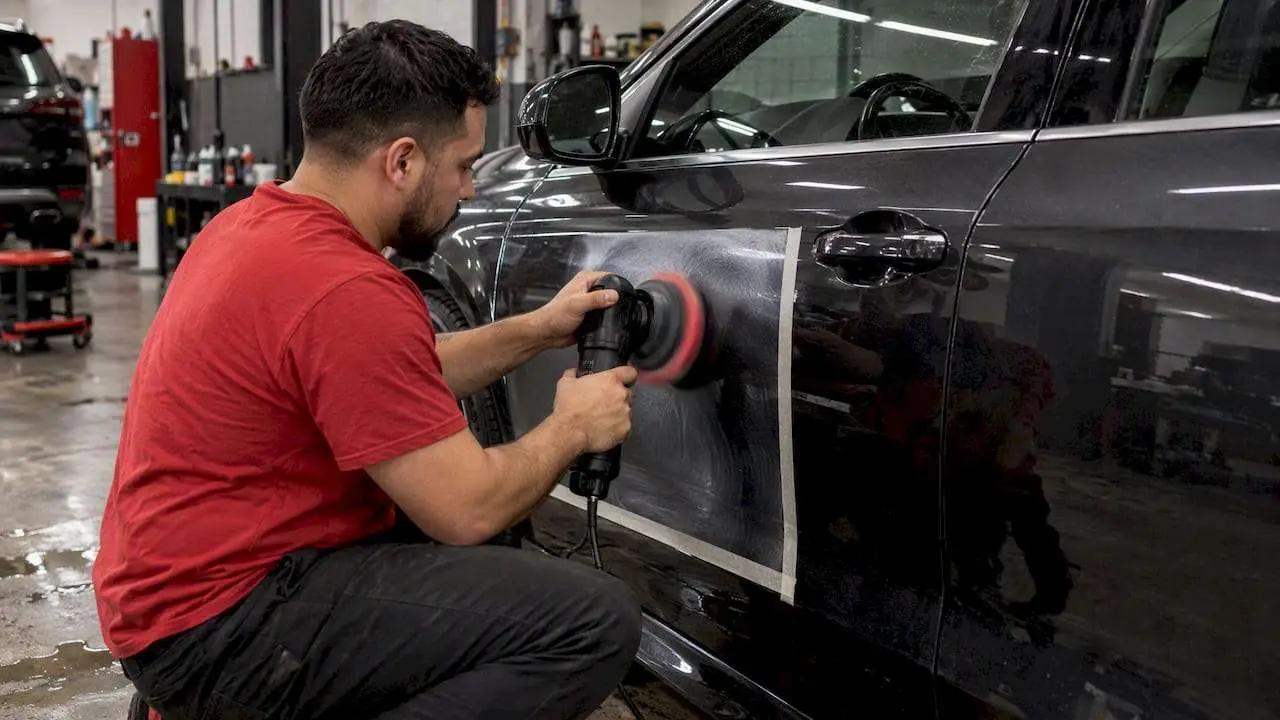
Many shops recommend addressing swirl marks, light scratches, or oxidation before installing film, since the film seals in whatever condition the paint is in underneath it. Ask your installer whether a paint correction step is included or offered as an add-on before your appointment.
How long does it take for PPF to self heal?
Self-healing film uses heat, often from sunlight or warm water, to smooth out light swirls and scratches, and the effect can show within minutes to hours depending on the temperature and the depth of the mark. This self-healing behavior is separate from the adhesive cure time discussed for a fresh install, which follows the 72-hour to 1 to 2 week timeline described by 3M.