
A PPF track package protects the panels that take the most abuse: the front bumper, hood, fenders, mirrors, and rocker areas, without wrapping the whole car. It suits owners who drive aggressively or track their car but don’t want to pay for full-body film. The trade-off is a visible edge line where coverage stops and fewer options if you want to extend protection later.
TL;DR:
- A track pack covers only the most vulnerable panels, such as the hood, bumper, fenders, mirrors, and A-pillars, keeping costs lower than full-vehicle wraps.
- Confirm with your installer whether headlights, fog lights, and mirror caps are included, and ensure panel cutlines match your vehicle’s body for seamless future upgrades.
- Edges of the film are visible at stop points, and mismatched extensions later can create visible seams that affect resale and appearance.
- Self-healing, hydrophobic, and gloss film options like Scotchgard Pro Series and XPEL Ultimate Plus are recommended for durability and ease of maintenance in track conditions.
- A typical track pack installation takes one to two days, costs vary by vehicle size and film choice, and proper documentation safeguards your resale value and warranty claims.
Table of Contents
- What a track pack covers: panels, variations, and add-ons
- Trade-offs: edges, upgrades, and resale value
- Film materials and features worth asking about
- Installation timeline and what to expect at pickup
- Cost expectations and what drives the price
- Maintenance and warranty basics
- Who we are and how we handle track pack installs
- Why the panel list matters more than the price tag
- Book a custom quote: what to send and how we respond
- FAQ
- Sources
What a track pack covers: panels, variations, and add-ons
A track pack is built around the zones that catch rock chips, bugs, and road debris first. Most shops follow a similar panel list, though exact cutlines vary by vehicle and installer.
- Full hood and full front bumper, the two panels that absorb the most direct impact at speed.
- Front fenders, typically the leading few inches to a foot, depending on the car’s body lines.
- Headlights and fog lights, since lens pitting is common and hard to buff out.
- Side mirror caps, often skipped on budget quotes but worth confirming.
- A-pillars up to the roofline, which protect against highway debris at eye level.
- Rocker panels or splash guards, especially relevant for lowered cars or frequent track use.
- Partial rear corners or quarter panels, added on some packages for cars that see track days with tire debris.
Coverage shifts depending on body style. A truck or SUV with a tall front end may need a different bumper wrap pattern than a low coupe, and some sedans add rear quarter panels because of how debris kicks up behind other cars on track. Before signing off on a quote, confirm three things with your installer: the exact trim points on each panel (does the fender wrap end at the wheel arch or go further), whether headlights and fog lights are included or priced separately, and whether mirror caps are part of the base package. Shops that specify this clearly in writing tend to be the same ones that deliver clean, consistent results.
Trade-offs: edges, upgrades, and resale value
A track pack gives you real protection where it matters most, but it comes with compromises worth weighing against full-front or full-vehicle film.
- Targeted coverage defends the panels most likely to chip or scratch, at a lower cost than wrapping the entire car.
- A visible edge line appears where the film stops, which some owners notice more on solid or metallic paint than on pearl or matte finishes.
- Paint under unwrapped panels ages and fades differently over time, so extending coverage years later can create a visible mismatch at the seam, a pattern that installer discussion threads commonly describe when film grade or timing differs from the original install.
- Upgrading from a track pack to full-front or full-vehicle coverage later works best when the same film brand and installer handle both jobs, since matching adhesive and film generation reduces seam visibility.
Pro Tip: Ask your installer to note the exact film brand, model, and panel cutlines on your invoice. If you extend coverage later, that record helps match film and avoid a visible seam.
Resale buyers rarely penalize a track pack specifically, but a poorly matched extension or peeling edge will raise questions during a pre-purchase inspection. Getting the documentation right at install time protects both your paint and your resale story.
Film materials and features worth asking about
Not all PPF is built the same, and the differences show up most on a track pack, where edges and high-flex zones see more stress.
- Self-healing topcoats use heat (sun or warm water) to smooth out light swirls and scratches, though they won’t fix a deep gouge from a rock strike.
- Hydrophobic top layers shed water and grime faster, which matters on track cars that collect brake dust and rubber residue.
- Gloss film blends into factory clear coat on most cars, while matte film requires matching the vehicle’s existing finish and generally needs more careful cleaning to avoid staining.
- Wider film rolls and repositionable adhesive reduce the number of seams needed on large panels like hoods and bumpers, which lowers the chance of lifting at the edges.
3M markets its Scotchgard Pro Series as a self-healing, high-clarity film designed to resist chips, scratches, and staining, a feature set that explains why self-healing topcoats come up so often in installer conversations about track-focused protection.
Three film lines show up repeatedly in track pack quotes: 3M’s Scotchgard Pro Series, which emphasizes clarity and self-healing performance; 3M Pro Series 200, which advertises installer-friendly adhesive and wider widths for seamless hood coverage in both matte and gloss finishes; and XPEL Ultimate Plus, frequently shown in manufacturer examples installed as track packs on performance-focused vehicles.
Installation timeline and what to expect at pickup
A track pack install moves faster than a full-vehicle wrap, but the schedule still depends on prep work.
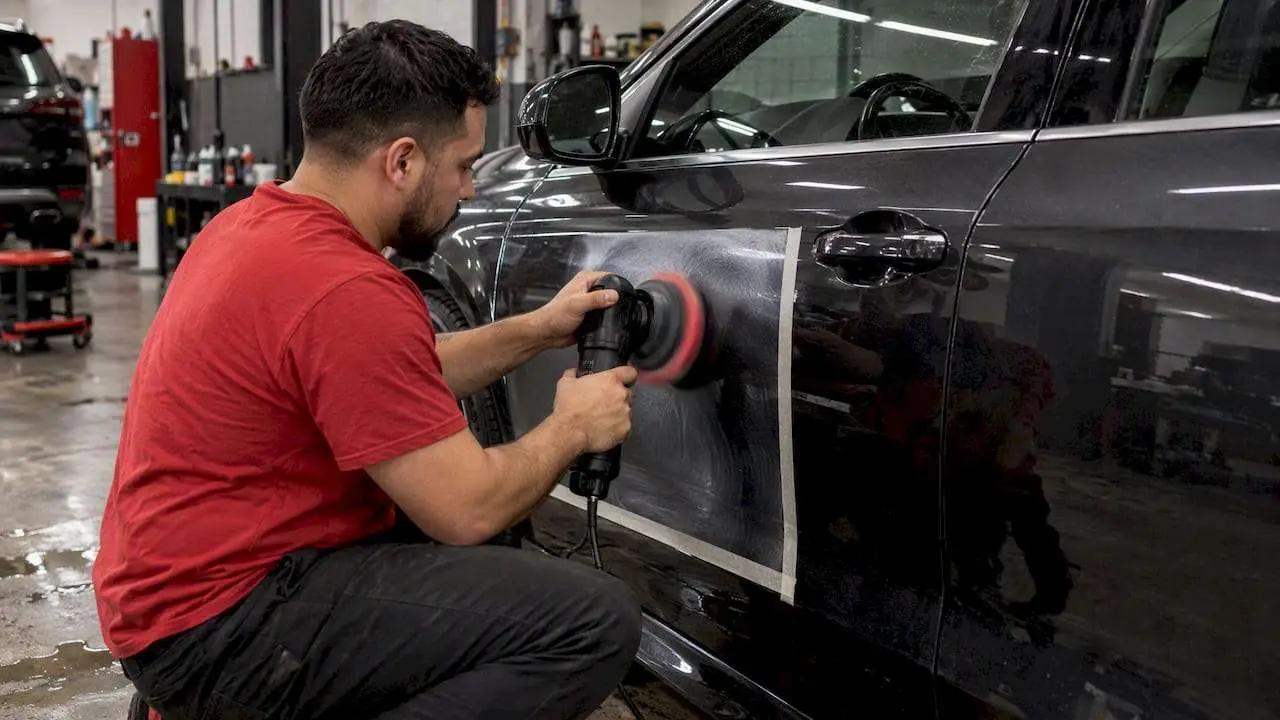
- Paint correction or decontamination, when needed, typically adds a half day before film goes on.
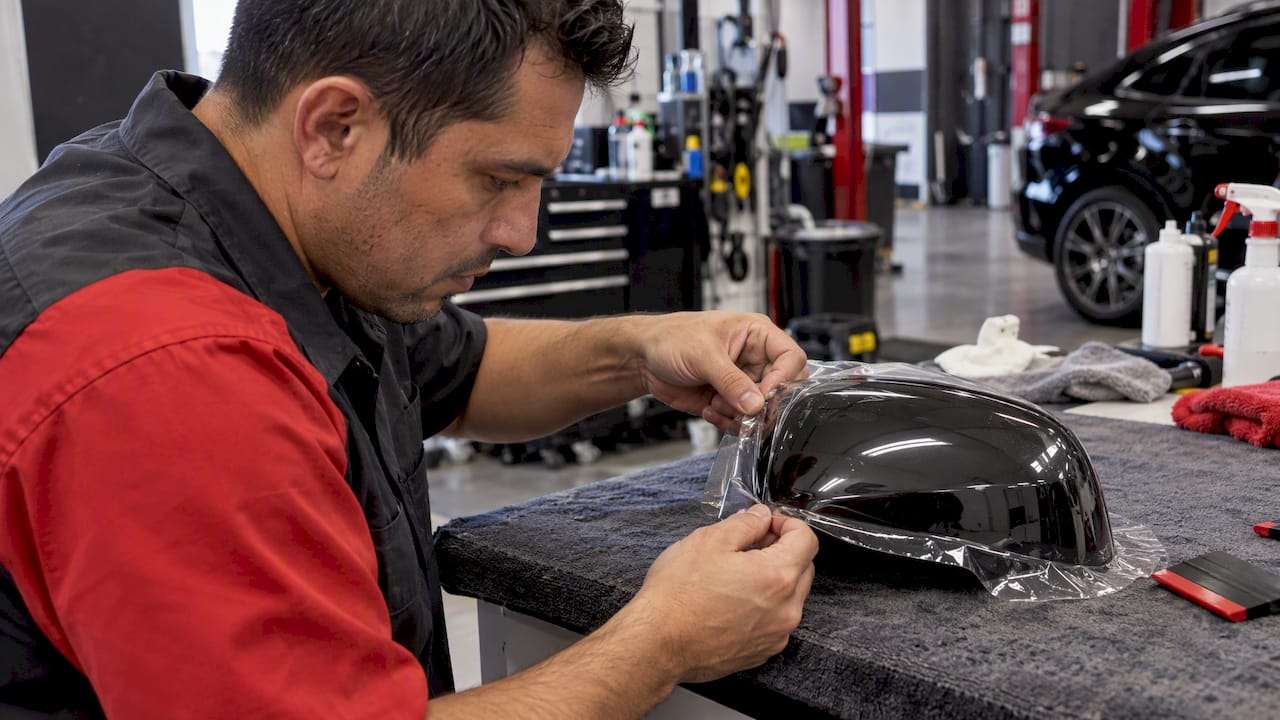
- Panel installation itself usually runs four to seven hours for a typical track pack, depending on the number of panels and complexity of the bumper.
- Total elapsed time, including any paint correction and curing, often spans one to two days.
- Final inspection and pickup walkthrough, where the installer reviews the work with you.
Before dropping off your car, wash it, remove personal items, photograph any existing chips or scratches, and have your VIN ready so the shop can pull exact panel templates. After pickup, avoid automatic car washes for about a week and skip high-pressure washers directly on film edges for a similar window, since fresh adhesive needs time to fully cure. At pickup, check edge adhesion along the hood and bumper, confirm sensor and cutout fit around cameras or parking sensors, and look for consistent panel alignment with no bubbling.
Cost expectations and what drives the price
Track pack pricing varies more than full-vehicle quotes because panel selection isn’t standardized across shops. The biggest cost drivers are vehicle size, the film brand and line chosen, whether paint correction is included, and whether you bundle a ceramic coating or upgrade to a longer warranty term. For comparison, a full front PPF package runs $2,199 one-off, and a track pack typically prices below that since it covers fewer panels, though the exact figure depends on your vehicle and chosen film.
Some shops present financing as a monthly payment example rather than a single upfront number. When you see that, ask for the total cost, term length, and whether any interest applies, since a low monthly figure can obscure a higher total price.
- Confirm every panel included by name, not just “front end” or “track pack.”
- Get the film brand and specific model line in writing, not just “premium film.”
- Ask whether paint correction or decontamination is included or billed separately.
- Request the warranty term and what it covers before comparing two quotes side by side.
Maintenance and warranty basics
Most PPF warranties cover manufacturing defects like discoloration or edge lifting from a bad install, not damage from curbs, road debris, or improper washing. Expect coverage lengths and specifics to vary by brand and installer, so ask for the written terms rather than assuming.
- Hand wash with a pH-neutral soap and a soft mitt, and avoid abrasive polishes that can dull the topcoat.
- Let self-healing properties handle light swirls through heat exposure, but treat any deep scratch or tear as a repair issue, not something that heals on its own.
- Watch for edge lift or yellowing at seams, both common early warning signs worth a call to your installer before they spread.
- Review detailed installer care instructions from LEGEND for step-by-step guidance on avoiding overstretching and edge lift during and after install.
Pro Tip: Keep your install invoice and film documentation somewhere easy to find. If an edge lifts or stains, having the exact film model on hand speeds up the warranty claim.
Who we are and how we handle track pack installs
We run PPF Pros, a vehicle styling shop in North Hollywood specializing in paint protection film, vinyl wraps, ceramic coatings, and chrome deletes. Our core offering is XPEL Authorized PPF, installed to guard against rock chips, UV exposure, and daily wear so your car holds its appearance and resale value. We carry a 4.9-star rating built on a large number of vehicles protected over the years.
On track pack installs specifically, we document the exact film brand and model on every invoice, which keeps future upgrades to full-front or full-vehicle coverage clean and seam-free. We also pair track packs with our ceramic coating bundle for owners who want added gloss and easier maintenance between track days.
Why the panel list matters more than the price tag
Most buyers shop a track pack by price first, and that’s backward. The panel list is the actual product: two quotes with the same dollar figure can cover meaningfully different territory if one skips headlights or mirror caps and the other doesn’t.
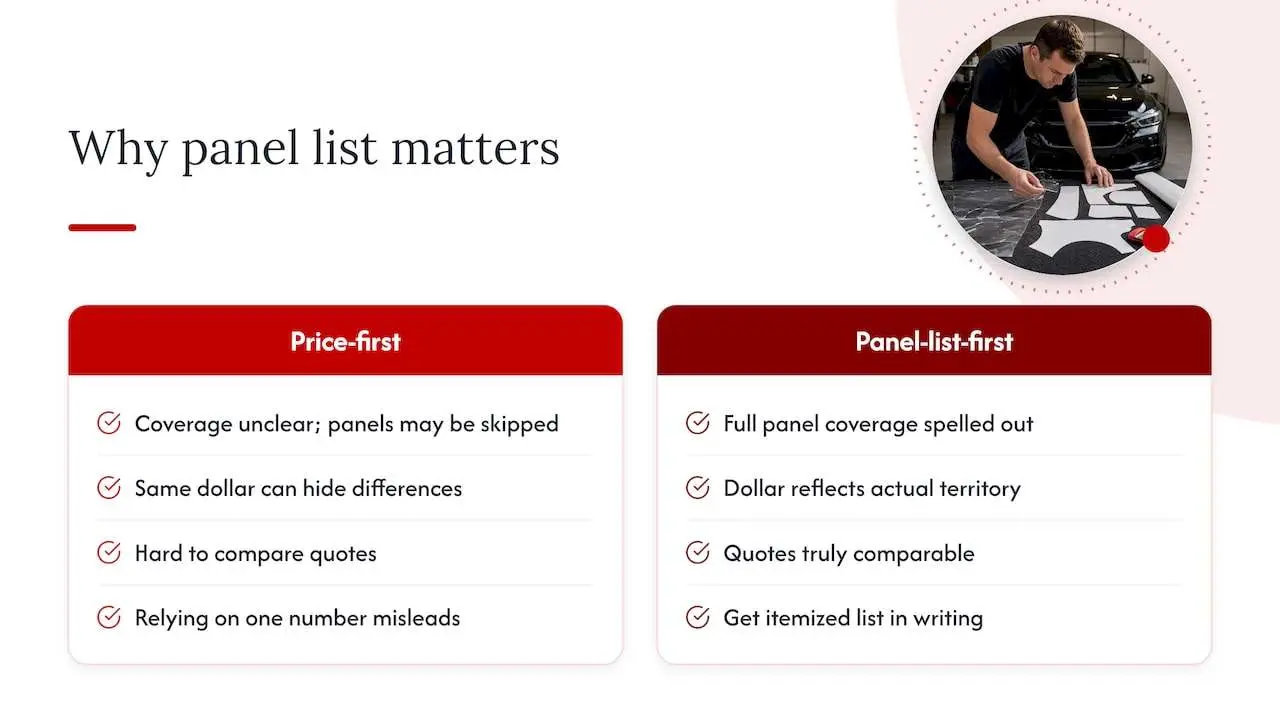
The conventional advice to “get multiple quotes and compare” undersells how often those quotes aren’t actually comparable. A $1,800 quote missing A-pillars isn’t cheaper than a $2,100 quote that includes them, it’s a different product wearing the same label. Readers should prioritize getting an itemized panel list in writing before comparing a single number.
The other overrated factor is film brand loyalty. Self-healing and clarity claims matter, but installer skill in squeegee technique and edge sealing affects long-term performance as much as which brand name is on the roll. A great install with a solid film line beats a mediocre install with a premium one.
— Jake
Book a custom quote: what to send and how we respond
Send us your VIN, a few photos of your car, the panels you want covered, and your preferred film brand if you have one. We turn most quotes around quickly and walk you through panel options, film choices, and scheduling once you’re ready to book.
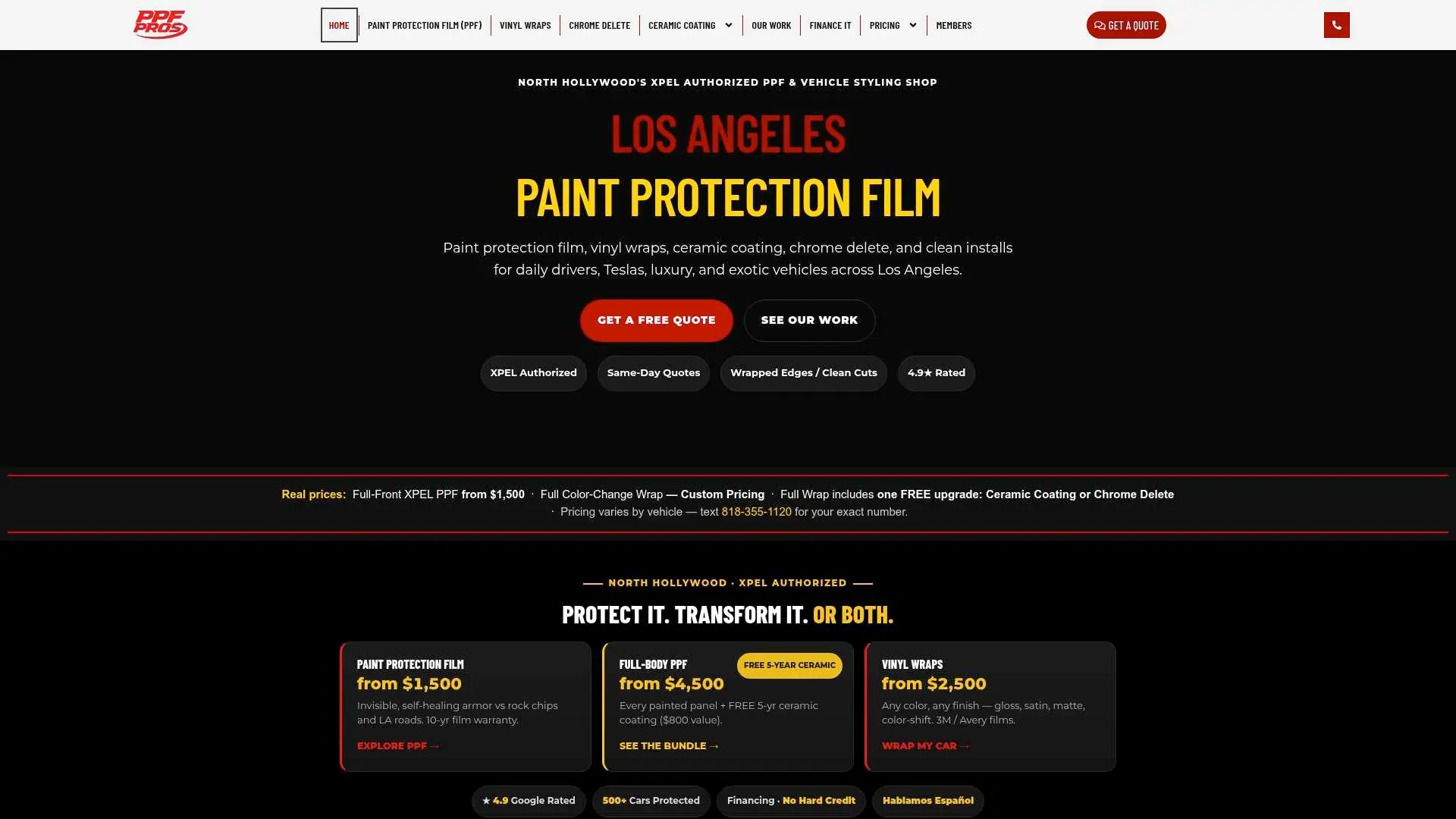
If you’re also considering a ceramic coating or paint correction alongside your track pack, mention it in your request. We bundle services often, and it’s easier to price everything together up front. Explore our paint protection film and track pack options and get your quote started today.
FAQ
What is a PPF track package?
A PPF track package is a film coverage option that protects the highest-impact panels on a car, typically the hood, front bumper, fenders, mirrors, and A-pillars, without wrapping the entire vehicle. It costs less than full-front or full-vehicle coverage while still defending the zones most exposed to rock chips and road debris.
How long does it take to get PPF installed?
A typical track pack install takes several hours for the film work itself, with total turnaround often spanning a couple of days once paint correction and curing time are factored in. Full-vehicle wraps take longer since every panel on the car is covered.
How much should a full PPF wrap cost?
A full front PPF package costs $2,199 one-off, while a full vehicle package starts from 4500 USD one-off according to PPF Pros’ published pricing. A track pack generally prices below the full front package since it covers fewer panels, with the exact figure depending on vehicle size and film brand chosen.
Is a PPF wrap worth it?
For owners who drive aggressively, track their car, or commute on highways with heavy debris, PPF protects paint from chips and scratches that are expensive to fix later and that hurt resale value. Whether full coverage or a track pack makes sense depends on your budget and how much of the car you want shielded, but either option reduces long-term paint damage compared to no protection at all.