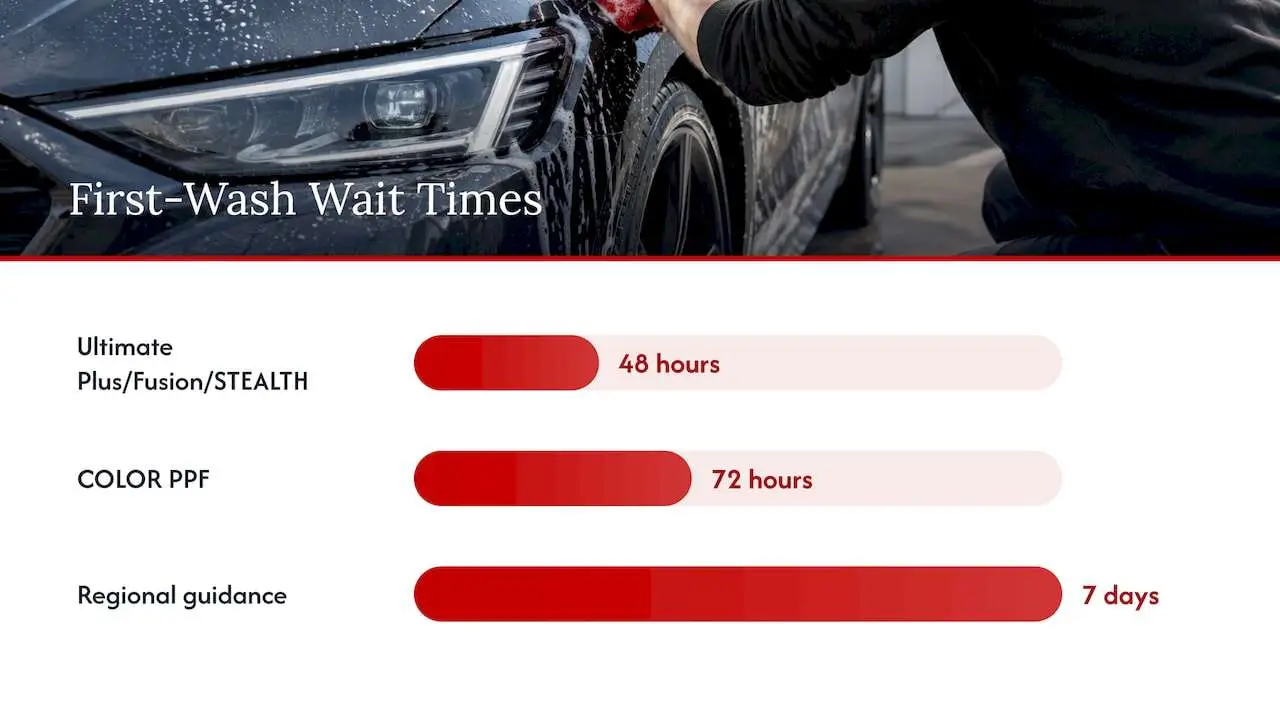
At PPF PROS, wait seven days before washing your car after a PPF installation and follow your written pickup instructions. XPEL’s U.S. care instructions list minimums of 48 hours for ULTIMATE PLUS, ULTIMATE FUSION and STEALTH, and 72 hours for COLOR PPF. After the first wash window, hand wash with pH-neutral soap and keep high-pressure spray away from film edges.
TL;DR
- Wait seven days after a PPF PROS installation before the first wash. Check the written pickup instructions for your film and any coating.
- Hand wash with pH-neutral soap, one panel at a time, out of direct sunlight and on a cool surface. Dry with a blower or plush microfiber.
- Skip tunnel washes. Keep a pressure washer at least 3 feet from the paint and never aim it at the film edges.
- Wash roughly every 2 weeks or 600 miles, and remove bugs and sap quickly.
- Light scratches in the film can self-heal with warm water or time in the sun.
Table of Contents
- How long to wait before the first wash
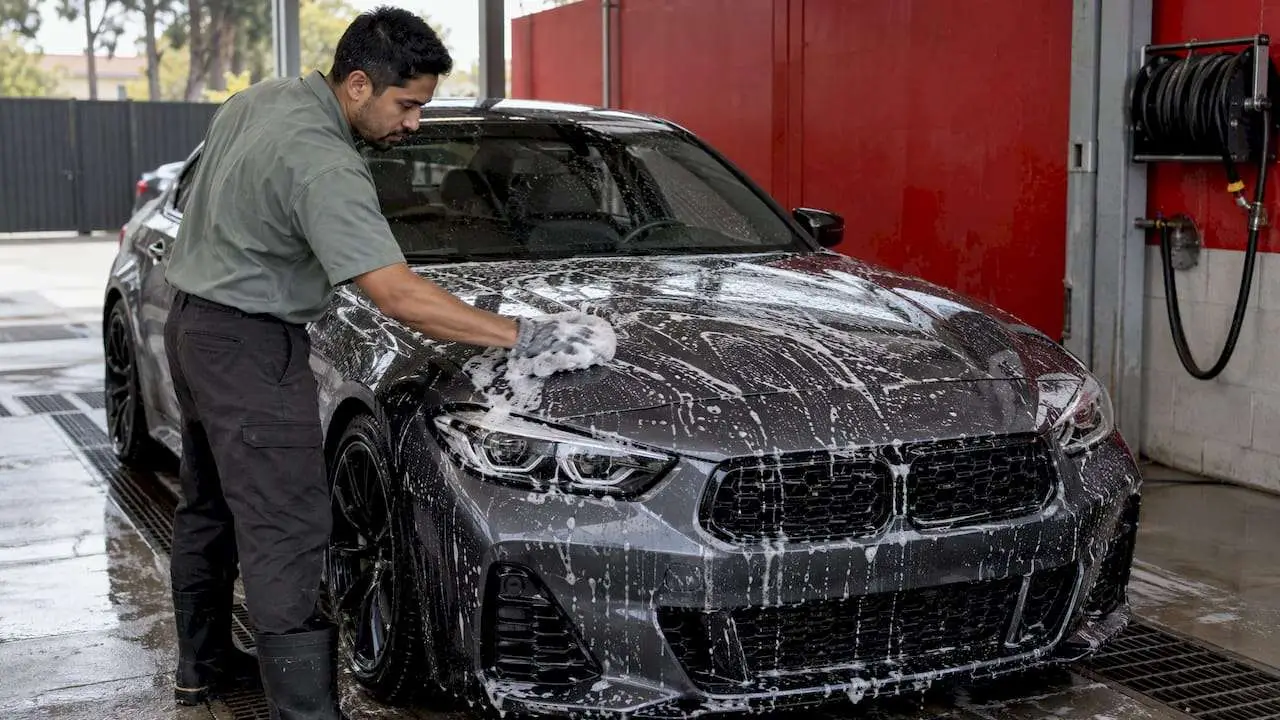
- The safe way to hand wash a car with PPF
- Pressure washers and film edges
- Can you take a car with PPF through a car wash?
- How often to wash
- Removing bugs, sap and stubborn spots
- Scratches, swirls and self-healing
- Mistakes that shorten the life of the film
- Perspective
- Protect the car first, then keep it clean
- FAQ
- Sources
How long to wait before the first wash
The film is held on by adhesive, and that adhesive needs time to settle and push out the last of the moisture used during installation. Washing too early is how edges start to lift.
Use the first-wash date in your pickup instructions. Our standard guidance is seven days. Film-specific manufacturer minimums apply as well. See XPEL’s U.S. care instructions.
So what should you actually do? A practical way to think about it:
| Situation | What to do |
|---|---|
| Gloss or STEALTH film, warm weather | For PPF PROS installs, wait seven days. XPEL minimum: 48 hours. |
| COLOR PPF | For PPF PROS installs, wait seven days. XPEL minimum: 72 hours. |
| Cool or damp weather, or the car sat outside after install | Lean toward the longer end. Adhesive cures slower in the cold. |
| Installer gave you a specific date | Follow that date over any general rule. |
During the wait, you can drive the car normally. Park it somewhere sheltered if you can, and do not pick at any small water bubbles or haze you see. Minor moisture pockets are common in the first days and typically clear as the film cures. If something looks wrong after a week, contact the shop that installed it rather than trying to fix it yourself.
The same “respect the cure time” logic applies to other work on the car. If you also had glass replaced, this overview of car wash timing after windshield replacement shows why you should follow the installer’s window rather than guess.
We cover the same curing period for wraps in our guide to vinyl wrap maintenance, and the habits carry over.
The safe way to hand wash a car with PPF
Hand washing is the method film makers recommend, and it is not complicated. XPEL describes it as a traditional hand wash out of direct sunlight once the vehicle has cooled. Here is the routine we would give a customer.
What you need
- Two buckets, one for soapy water and one for rinsing your mitt. Add a grit guard if you have one.
- A pH-neutral car shampoo. Avoid anything labeled as a degreaser, a strong cleaner or an all-purpose cleaner.
- A soft microfiber or lambswool wash mitt. No brushes, no sponges that trap grit, no terry cloth.
- A hose with a normal nozzle, or a pressure washer you can hold at a distance.
- A leaf blower or electric car dryer, plus clean, plush microfiber drying towels.
Step by step
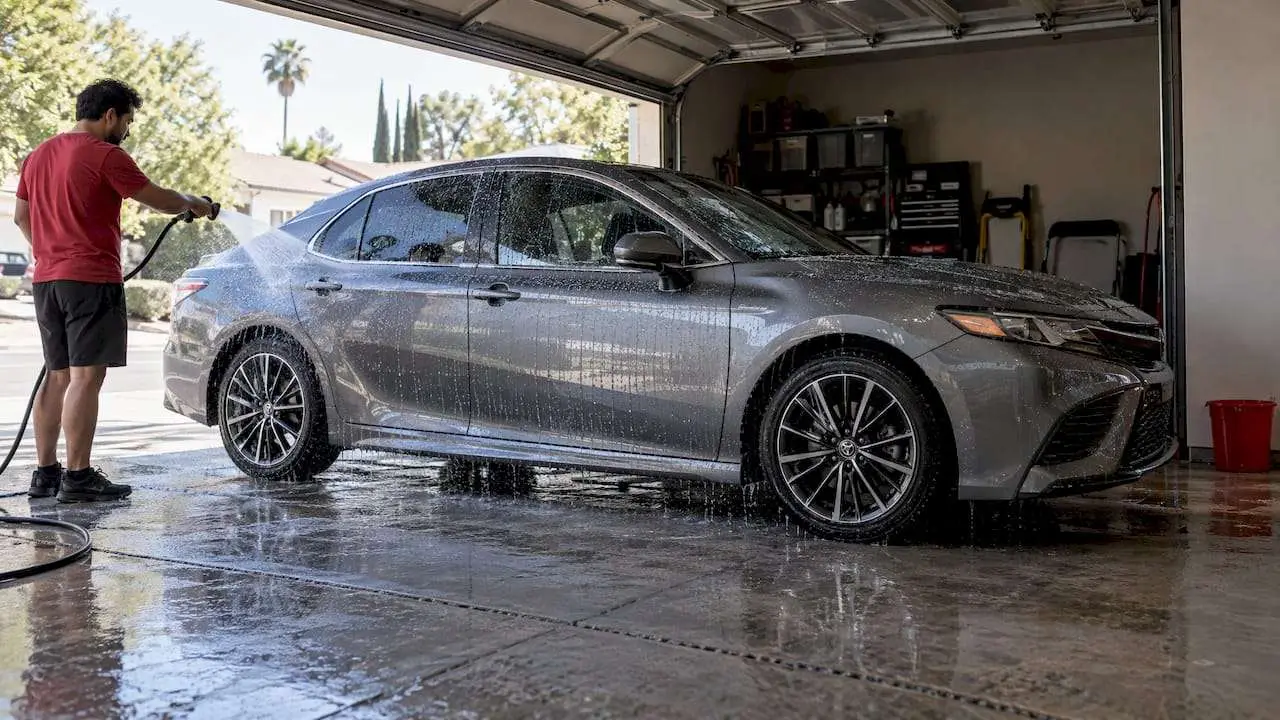
- Pick the right time and place. Shade, early morning or late afternoon. Do not wash a hot panel. Soap dries into spots on hot paint, and heat makes the whole job harder.
- Rinse first. Let water carry off loose dust and grit. This is the step that prevents most wash scratches.
- Foam or pre-soak if you can. Loosening grime before you touch the car means less friction on the film.
- Wash top to bottom, one panel at a time. Roof, glass, hood, trunk, upper doors, then lower panels. Dunk the mitt in the rinse bucket before returning to the soap.
- Rinse thoroughly. Leftover soap in the seams and edges dries into a film that attracts dust.
- Dry right away. XPEL recommends drying after each wash with an electric blower or plush microfiber towel. Blow water out of mirrors, door handles and panel gaps first, then blot the flat surfaces. Do not drag a towel with pressure.
Anyone who also has a ceramic coating on top of the film can use the same method. Our walkthrough on how to wash a car with ceramic coating covers the coating-specific details.
Pressure washers and film edges
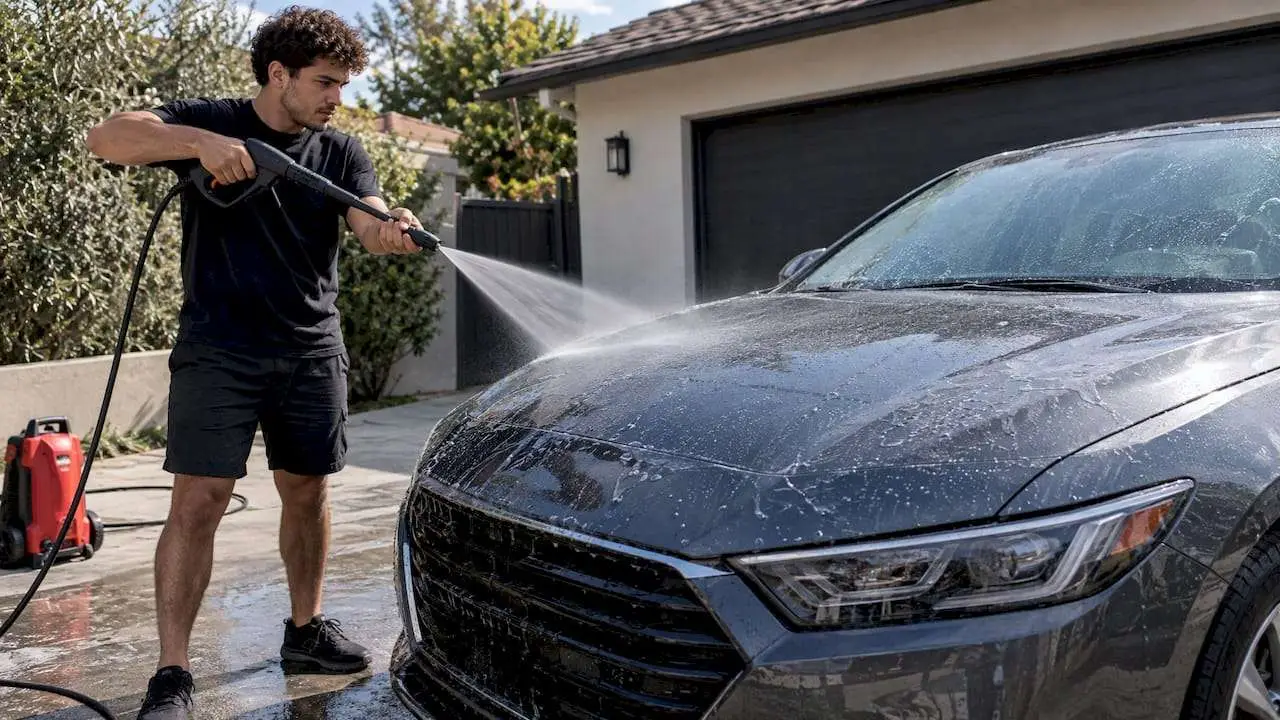
A pressure washer is fine for rinsing if you respect the distance. XPEL’s guidance is to keep the pressure washer 3 feet away from the paintwork. The risk is at the edges. Water forced under a film edge can lift it, and edges sit around fenders, bumpers, mirrors, door jambs and the hood line.
A few rules that keep edges safe:
- Spray across an edge, not straight into it.
- Use a wide fan tip, never a narrow jet.
- Stay well past 3 feet on edges, and keep the nozzle moving.
- Take extra care during the first weeks after install, when the adhesive is still settling.
If you see an edge lifting, do not pick at it and do not seal it with household glue. Take the car back to the installer. A lifted corner that is caught early is usually a quick fix.
Can you take a car with PPF through a car wash?
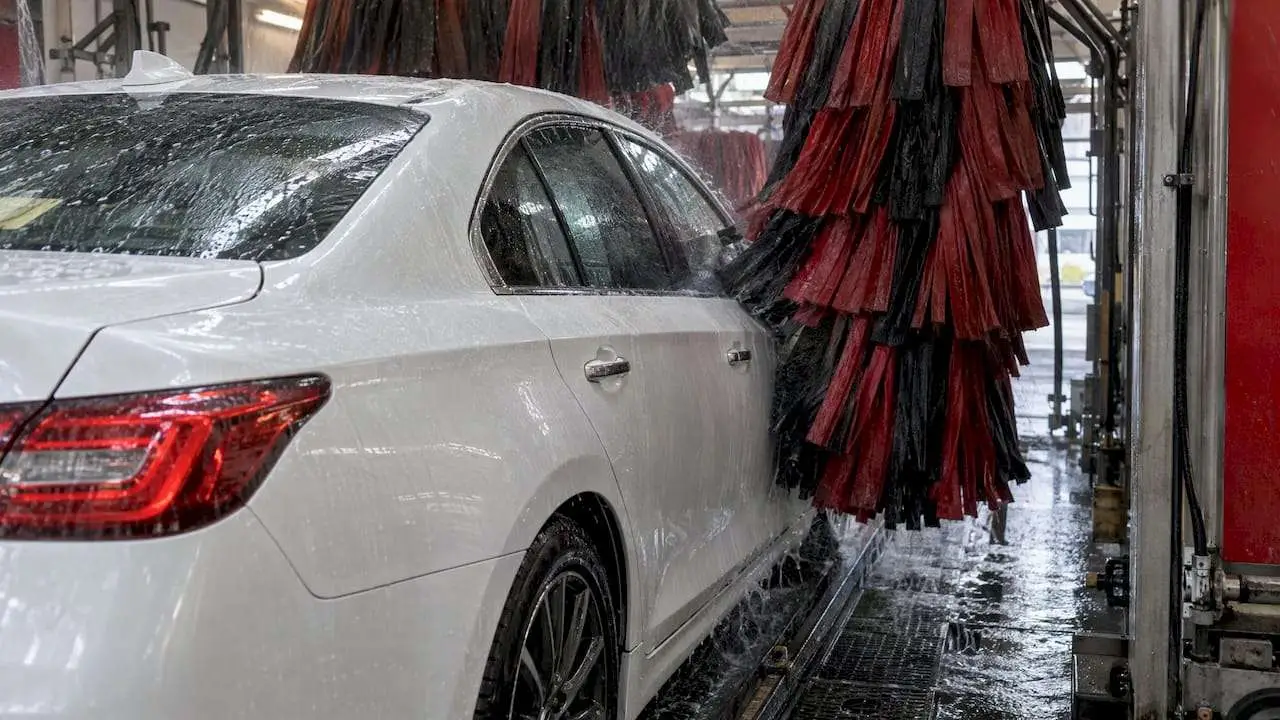
Tunnel washes are the one thing to avoid completely. XPEL states plainly that automatic tunnel car washes will severely scratch and damage the finish. XPEL’s regional care guide adds that the rotating brushes create friction on the film surface and can lift the edges, and that harsh chemicals and abrasive products do the film no favors either.
What about touchless? It removes the brushes, which is the biggest risk, but touchless systems often rely on stronger chemicals and high-pressure jets that may be aimed at your edges. If you are in a pinch and cannot hand wash, a touchless wash is gentler than a tunnel, but it is not what we would use as a routine. The film is built to last years when you give it a gentle wash every couple of weeks, so a home hand wash or a visit to a shop that detailers by hand is the better habit.
If you do not have the space or time for a hand wash, our shop also offers auto detailing so you can hand the job to someone who knows how to wash film.
How often to wash
For COLOR PPF, XPEL recommends washing every 2 weeks or approximately 600 miles, and its regional guide also suggests a regular wash every two weeks. That is a sound schedule for most gloss film as well.
Leaving dirt on the film is not harmless. Dust, pollen, road grime and bird droppings build up in edges and can bake on in summer sun. In Los Angeles, with long dry stretches, strong sun and plenty of dust, a regular rinse and wash does more good than an occasional heavy cleaning. If you drive through a lot of dust, wash a bit more often.
XPEL also suggests applying XPEL Ceramic Boost after each wash for COLOR PPF. If you want a quick overview of a regular schedule, our page on PPF maintenance for busy owners lays out a simple routine of washing every two weeks and checking the film yearly.
Removing bugs, sap and stubborn spots
Speed matters more than force. XPEL says to remove insect and other stains as soon as possible with XPEL Film Cleaner, and that stubborn stains can be removed with 99% isopropyl alcohol, keeping those chemicals off the vehicle’s paint.
A calm approach to a stuck-on spot:
- Soak the area with a wet, soapy microfiber for a minute or two so the residue softens.
- Lift it gently with the cloth. Do not scrub or use a fingernail.
- If it does not release, use a film-safe cleaner on a clean cloth, applied to the spot only.
- Rinse and dry.
Avoid abrasive compounds, polishes, and strong solvents such as acetone or thinner. XPEL’s regional guide specifically warns against abrasives, compounds, polishes, strong solvents and waxes with petroleum-based solvents.
For a heavily contaminated car, such as one that has sat for months or has overspray, a proper decontamination step is better than harder scrubbing. We describe how this works in our decontamination wash guide.
Scratches, swirls and self-healing
Most people worry about scratches. Good PPF has a top coat that recovers from light marks. XPEL says light scratches will self-heal in 20 to 30 minutes at room temperature, and in colder weather, or to speed it up, you can pour warm water at 120°F (49°C) over the area.
That is one more reason to wash gently. The film handles the occasional light mark from a towel or a stray branch, but there is no reason to test it with brushes or rough towels.
Mistakes that shorten the life of the film
- Washing too soon. Counting the first wash as a way to “get the install clean” is the most common cause of early edge lift.
- Washing in direct sun. Soap and water dry on hot film and leave spots.
- Using dish soap or strong cleaners. Use a pH-neutral car shampoo instead.
- Pointing a pressure washer at edges. Keep your distance and spray across the edge.
- Letting bugs and droppings bake on. Deal with them within a day or two.
- Skipping the dry. Air drying leaves mineral spots, especially in hard-water areas.
- Picking at lifted corners. Call the installer.
You can also make washing easier with a few habits beyond the wash itself. XPEL’s regional guide notes that the most effective single step is using indoor or underground parking as the default, which reduces exposure to UV, rain and tree sap. If you want to know how the film handles sun in particular, we answer that in does paint protection film protect from the sun.
Perspective
Most of the aftercare questions we hear come down to one thing: people are nervous about touching a car they just paid to protect. The nervousness is understandable, but the routine is simple. Wait the full cure time, wash by hand with a gentle soap, dry it properly, and do not blast the edges.
We design our installs around clean, wrapped edges and tight alignment, because that is where a film lives or dies over the years. Good edges, a good wash habit and a shaded place to park will do more for your car than any product you can buy afterward.
When a customer picks up a car from us, we tell them the exact wash window for the film we installed. We use XPEL, so we know the instructions for each product, and we are happy to talk through your first wash before you do it. If you would rather not do it yourself, bring the car back and we will wash it for you.
Jake
Protect the car first, then keep it clean
Planning a PPF installation in North Hollywood? See our current PPF coverage and prices. We confirm the care instructions for the film on your car at pickup.
If you are deciding what to cover, our Full Front package is the usual starting point for daily drivers. For a new car, this guide to what to cover before the first drive helps you plan. Ready to book or get a custom quote? Start at ppfprosla.com.
FAQ
Can you wash a car right after PPF installation?
For a PPF PROS installation, wait seven days before the first wash and follow the written pickup instructions for your film and any coating.
What soap should you use on PPF?
Use a pH-neutral car shampoo and a soft microfiber or lambswool mitt. Avoid degreasers, strong household cleaners, abrasive polishes and wax products with petroleum-based solvents, as these can harm the film.
Can you drive through a car wash with PPF?
We advise against tunnel washes. XPEL says they can severely scratch the finish, and brushes can lift edges. A hand wash is the safest choice. A touchless wash is gentler than a tunnel, but it is not ideal as a regular habit.
How do you clean the edges of paint protection film?
Wash them with the same soft mitt and shampoo, moving along the edge rather than lifting into it. Rinse gently and dry with a blower. Never aim a pressure washer straight at an edge, and do not pick at a corner that looks lifted. Take it back to your installer.
How often should you wash a car with PPF?
About every 2 weeks or 600 miles is XPEL’s guidance for COLOR PPF, and it works well for gloss film too. Wash sooner if bugs, sap or bird droppings land on the film.
Sources
- XPEL Product Care Instructions, XPEL Help Center
- PPF Maintenance: Washing and Care Guide After Installation, XPEL Korea