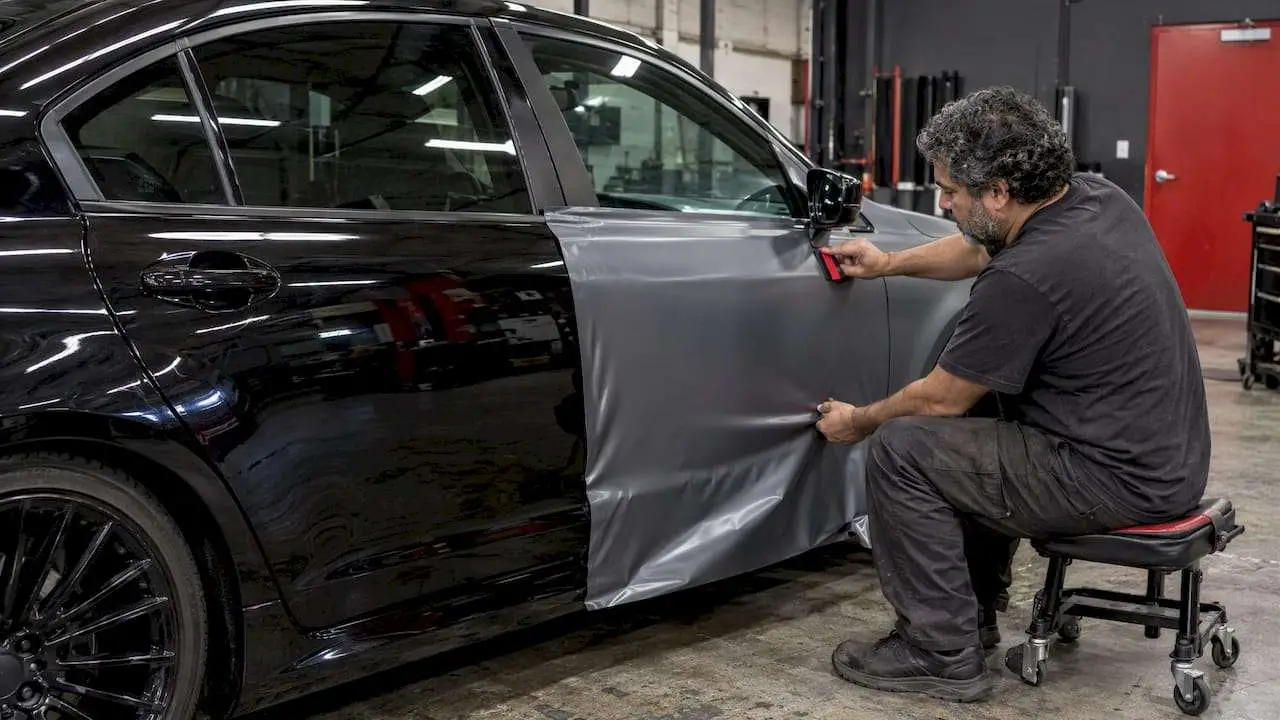
Yes, you can put a vinyl wrap over paint protection film (PPF), and it is a common way to change a car’s color without touching the paint. The catch is that the wrap copies whatever is underneath it. If the film is clean, flat and fully bonded, the wrap goes on well. If the film is lifted, yellowed or contaminated, the wrap will show it and may fail with it. At PPF Pros in North Hollywood we install both PPF and color change wraps, so this is a decision we help Los Angeles drivers make before any film touches the car.
TL;DR
- Wrapping over PPF works when the film is in sound condition: no lifted edges, no bubbles, no yellowing, no contamination.
- Old or damaged film should come off first, because the wrap follows and magnifies the surface underneath it.
- Film over a vinyl wrap, repainted panels or aftermarket paint is generally outside PPF manufacturer warranties, so check the paperwork before you stack layers.
- Rust, peeling clear coat and failing paint should be repaired before any film or wrap goes on. Vinyl does not hide them.
- Decide the order by what you want: protection first, color second, or one film that does both.
Table of Contents
- What “wrap over PPF” actually means
- When wrapping over PPF is a good idea
- When you should remove the PPF first
- How to wrap over PPF: the steps and where they go wrong
- The warranty question
- What about PPF over a wrap?
- Rust, peeling clear coat and bad paint
- Wrap over PPF, PPF alone, or wrap alone?
- What it costs at our shop
- Start with the right layer
- FAQ
- Sources
What “wrap over PPF” actually means
PPF is a clear, thick urethane film applied to paint to absorb rock chips, scuffs and light scratches. A vinyl wrap is a thinner color film that changes how the car looks. People searching this topic usually mean one of two things: a clear film on the paint with a color wrap on top, or the reverse, a wrap with clear film over it.
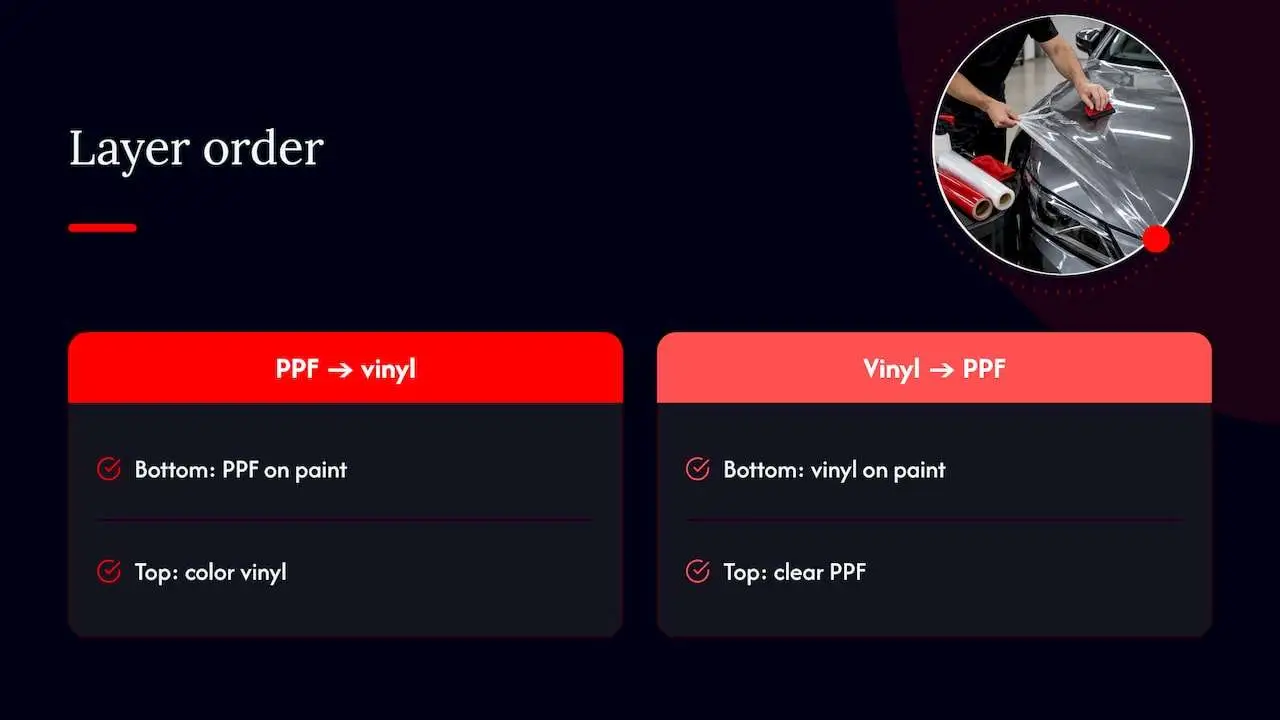
The first stack is the one most owners ask about. They have protected a Tesla, a Porsche or a daily driver with PPF, then decide they want a different color a year or two later. They do not want to strip the film off just to wrap.
The short version is that it can be done, and the PPF underneath helps in one specific way: it is already a smooth, sealed layer the vinyl can stick to. AutoDetailPedia notes that wrapping over PPF differs from wrapping bare paint for exactly this reason, and that the installer must be certain the film has no lifted edges or contamination.
When wrapping over PPF is a good idea
The stack makes sense in a few situations.
You already have PPF and want a new color. If the film is only a year or two old and in good shape, leaving it on means you do not pay to remove it, and the paint under it stays untouched.
You want to switch colors later without stressing the paint. Because the film is the surface the wrap bonds to, the wrap’s adhesive never touches your clear coat. When the wrap comes off, the PPF is what faces the adhesive.
You drive a high-value car. On a luxury or exotic vehicle, owners often care about resale. Keeping factory paint sealed beneath film, with a color layer above it, keeps the original finish intact for the next owner.
If you want a closer look at how wraps and paint relate, our guide on whether vinyl wrap protects paint covers what a wrap does and does not stop.
When you should remove the PPF first
A second film is only as good as the first. Removing the old film first is the better call when:
- The film is yellowed or hazy. Old film that has aged is a poor base and AutoDetailPedia recommends removing it before wrapping.
- Edges are lifting at door cuts, hood lines or mirrors. Vinyl laid across a lifted edge will lift with it.
- You see bubbles, peeling or trapped dirt under the film. Any of these can stop the wrap from adhering properly, according to the guidance cited in the same source.
- The film was installed over a problem surface, such as a repaint of unknown quality.
A practical rule from one wrap film publisher: if you would not be comfortable leaving the underlying film exposed in its present condition, do not add a second film on top of it. The top layer follows the surface and magnifies it. That is the same test we would use at the shop: look at the film as if it were the finished surface.
How to wrap over PPF: the steps and where they go wrong
1. Inspect the film panel by panel
Bring the car out under bright, angled light. Look along every edge and seam, and around handles, badges and sensors. You are looking for lift lines, dirt trapped at the edge, hazing and any area where the film no longer sits tight to the curve.
Where it goes wrong: a small lifted edge looks harmless in a garage and becomes a visible ridge or a bubble line once color vinyl is stretched across it.
2. Clean and decontaminate the surface
The film must be free of wax, polish, oils and coatings. Avery Dennison’s installation bulletin for its wrap film says the surface must be thoroughly cleaned of dirt, grime, grease, oil, wax, polish, and co-polymer or ceramic coatings. Avery Dennison’s bulletin IB 1.20 also recommends a final alcohol-based wipe-down for the surface, and AutoDetailPedia suggests isopropyl alcohol with a dedicated panel wipe for the film.
Where it goes wrong: this is where a hydrophobic topper or ceramic coating on the film causes trouble. Wraps need a clean, uncoated surface to bond. If the film has been coated, it may need the coating removed first.
3. Check the film’s edges and trim them if needed
Where PPF has been wrapped around an edge, vinyl needs to cross that edge without a visible step. A good installer checks every wrapped edge, and relieves any that stand proud.
Where it goes wrong: a thick film edge shows through a thin color vinyl as a faint outline.
4. Choose the wrap film for the stack
Standard color change vinyl is thin, about 3 to 4 mil, and it will not hide anything beneath it. Gardenspace points out that vinyl of that thickness cannot hide deep scratches, which is also true of texture in the film below. A smooth, well-bonded PPF layer is a good base for a finish such as gloss, satin or a flip color. Our color change wrap page shows the finishes available.
5. Install with controlled heat and keep the film bonded
Heat is how vinyl conforms to curves, and PPF below it will also respond to heat. Installers need to avoid overheating a panel to the point where the film beneath shifts or the vinyl overstretches on edges.
Where it goes wrong: rushed heat work causes lifted corners within weeks, and on a stacked job two layers can fail at once.
6. Plan for removal at the start
Removal is the other half of the decision. Wraps are meant to come off, and when you wrap over PPF, the film is what the wrap adhesive faces. Proper removal uses controlled heat and a gentle, low peel angle with a plastic scraper rather than metal. Our guide to removing a car wrap at the right temperature explains the process and the point at which to hand it to a professional.
The warranty question
This is the part owners skip and regret. PPF warranties cover defects such as yellowing, cracking and peeling, but they have exclusions. A review of PPF warranty terms by LegalClarity reports that film applied over repainted panels, aftermarket paint, vinyl wraps, headlights, chrome or carbon fiber trim is not covered by most manufacturers, and that XPEL voids its warranty when a non-XPEL ceramic coating is applied on top of the film.
What that means in plain terms:
- Check the terms of your film’s warranty before adding any layer to it.
- Ask your installer to document the condition of the film before a wrap goes over it.
- Keep every receipt and the warranty paperwork together.
Our XPEL warranty page explains what we offer on PPF and ceramic coating. For the wrap side, see why wrap warranties need paperwork, and if you are thinking about coating the finished wrap, read the guide on ceramic coating on wraps before you spend anything.
What about PPF over a wrap?
The reverse stack is also searched often, and it is the one to think hardest about. Film over a vinyl wrap is not what PPF warranties are written for, as the LegalClarity review above shows, and film laid over vinyl also inherits every flaw in the wrap: a lifted seam, a stretched corner, a knife-cut line.
If your goal is color plus protection, there are cleaner routes:
- PPF underneath, wrap on top, with the film in good condition, as described above.
- Color-infused PPF, a single film that carries color and protection together.
- Clear PPF on the high-impact zones of the car and a wrap everywhere else, which is the idea behind a front-end package.
Our article on the alternative to a PPF wrap compares these options in more detail.
Rust, peeling clear coat and bad paint
People searching about wrapping over PPF often have a second question: what about the paint itself? The answer is consistent across manufacturers. Vinyl needs a stable surface.
Rust. Rust has to be treated and sealed before anything goes on. RC Wrap, a wrap film maker, states in its installation Q&A that the surface should be clean, smooth, stable and non-porous, and that application over rust, body filler, or cracked or peeling paint is not recommended because it compromises adhesion and finish.
Peeling or failing clear coat. Vinyl bonds to whatever is under it. If that is flaking clear coat, the vinyl bonds to flakes and pulls them off later. According to Gardenspace, partial failure means feather-sanding the edges and priming exposed base coat, or the damage will telegraph through the vinyl. The same source says a fresh clear coat should cure for 30 to 60 days before vinyl goes on so solvents can outgas.
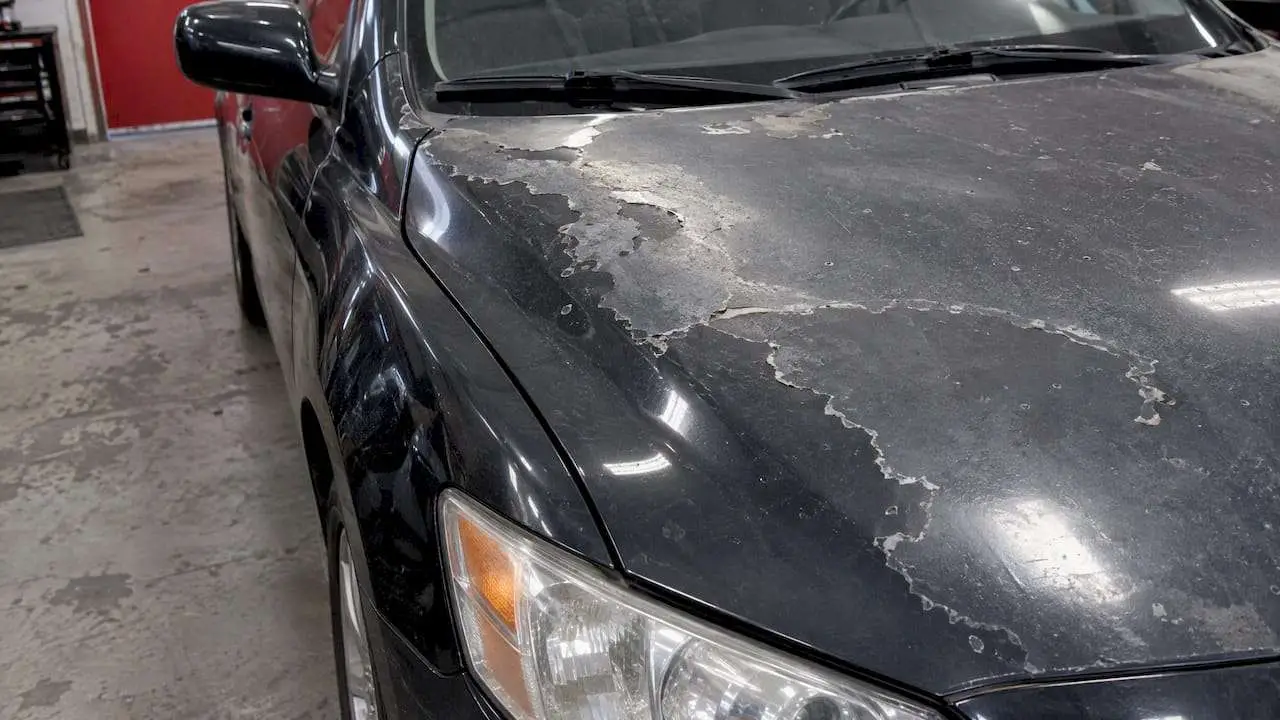
Widespread failure. If peeling is across the hood, roof or whole car, the fix is a repaint, not a film. A body shop that handles paint refinishing and panel repair is the right stop before any wrap or PPF goes on.
Scratches and dents. Light scratches can be polished level. Deep ones must be sanded or filled and finished, since thin vinyl does not hide them.
Factory coatings. Some new vehicles, vans especially, may carry co-polymer paint protection coatings that prevent pressure-sensitive films from achieving a working bond. Avery Dennison’s bulletin advises checking with the vehicle manufacturer and pre-cleaning before a wrap.
There is a legal and warranty angle here too. Repainted panels and aftermarket paint can fall outside a film’s warranty, which is a good reason to repair paint once, properly, and document it.
Wrap over PPF, PPF alone, or wrap alone?
| Goal | Best fit | Why |
|---|---|---|
| Protect paint from rock chips and wear | PPF | Thick, self-healing film made to absorb impacts |
| Change color with a long-lasting protected base | PPF, then wrap on top, if film is sound | Wrap bonds to a sealed layer and paint stays covered |
| Change color and protect with one film | Color-infused PPF | One layer, one warranty to track |
| Change color only, paint in good condition | Wrap | Lower cost, reversible |
| Paint is failing or rusty | Repair first | Neither film nor vinyl fixes failing paint |
What it costs at our shop
Published prices at PPF Pros as of our site’s 2026 listing: a Full Front PPF package is $2,199, a Full Vehicle PPF package starts at $4,500, and a Full Color Change Wrap starts at $2,800. Partial Front, Track Pack, ceramic coating, chrome delete and detailing are quoted by vehicle. A stacked job, wrap over existing film, is quoted after we see the film’s condition.
What we tell owners who ask about stacking
Most people who ask us about wrapping over PPF are really asking whether they can have both protection and a new look without regretting it later. Our answer is yes, with a condition: the film underneath has to earn its place.
We look at the film the way we would look at paint. If it is clean, tight and clear, the wrap has a good base. If it is hazy or lifting, we would rather start fresh than build a color layer on a weak one.
For most daily drivers and Teslas, we point owners to an XPEL-authorized PPF package on the front end, where rock chips land, and a wrap on the rest if they want a new color. For luxury and exotic owners focused on resale, full PPF keeps the factory paint sealed.
Edges, alignment and clean wrapped corners are where we put our attention, because they are what you see and what lasts.
Jake
Start with the right layer
If you are in Los Angeles and not sure whether your existing film can take a wrap, or whether to start with PPF at all, we will look at the car with you and quote the work. We respond to quote requests the same day.
See our paint protection film services or our color change wraps, or start at PPF Pros to request a quote.
FAQ
Can you wrap over PPF?
Yes. Vinyl can go over PPF that is smooth, clean and fully bonded, with no lifted edges or bubbles. If the film is old, yellowed or contaminated, remove it first so the wrap has a sound base.
Can you wrap over rust or peeling clear coat?
No. Rust has to be treated and sealed, and peeling clear coat has to be sanded, primed or repainted. Vinyl bonds to the failing layer and takes it along when it lifts or comes off.
Can you wrap over bad paint?
Only if the damage is shallow and the surface is stable. Light scratches can be polished level. Deep scratches, body filler and cracked or flaking paint should be repaired first, because standard color vinyl is too thin to hide them.
Can you put PPF over a vinyl wrap?
It can be done, but most PPF manufacturers do not cover film applied over wraps, and the film shows every flaw in the wrap. Putting PPF down first and the wrap on top, or using a color-infused film, is a cleaner route.
Sources
- AutoDetailPedia: Can You Wrap a Car Over Scratches, Dents, or Paint Damage?
- Avery Dennison IB 1.20: UWF Easy Apply application bulletin
- LegalClarity: What Does PPF Warranty Cover?
- Gardenspace: Can You Wrap Over Clear Coat?