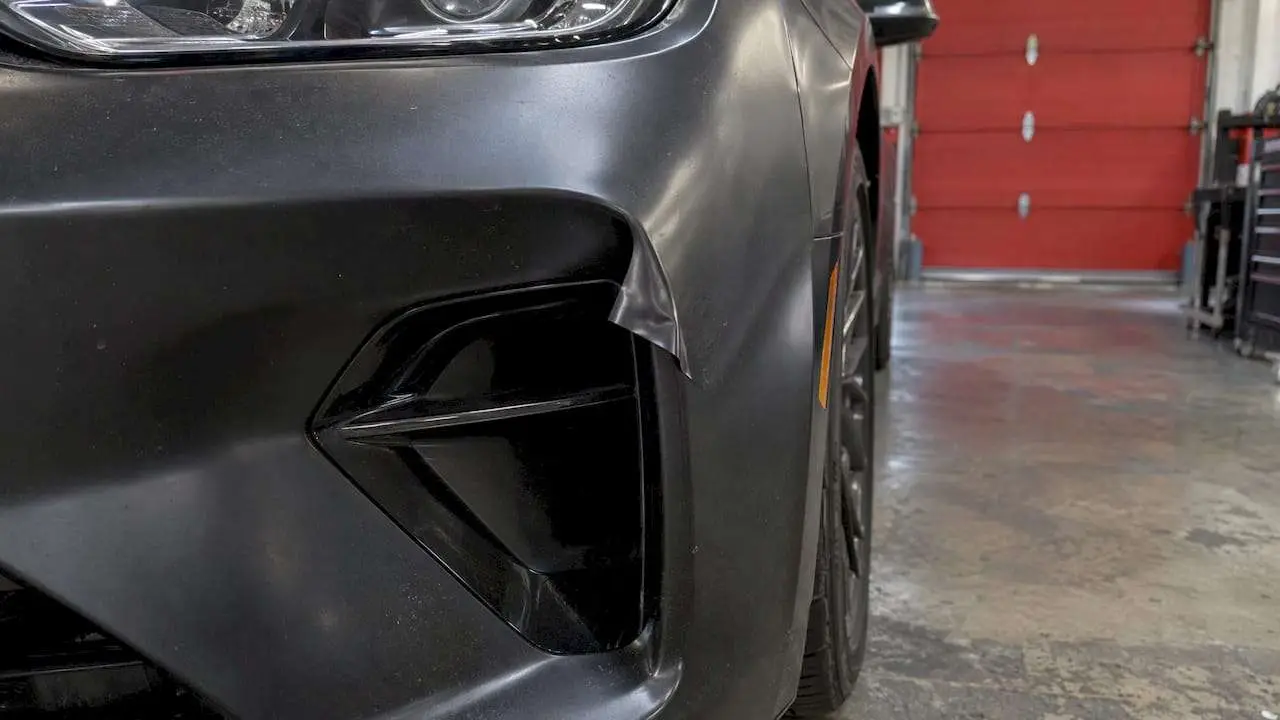
A wrap that peels or lifts almost always fails for one of three reasons: the edge was finished badly, the surface underneath was not sound, or the film was stressed by heat, cold or harsh washing. A fresh lift on a clean edge can sometimes be saved. Film that has shrunk, cracked or turned brittle needs new vinyl on that panel. At PPF Pros in North Hollywood we install wraps with wrapped edges and clean alignment, and we can tell you in one look which situation you have.
TL;DR
- Peeling starts at edges, seams, recesses and stretched areas, where the film is under the most tension.
- Common causes: poor edge finishing, dirty or weak paint underneath, cold application, missing post-heating, and aggressive washing.
- A recent lift on a clean edge may be re-stuck. Shrunk, cracked or brittle film means rewrapping the panel.
- Never use glue, super glue or double-sided tape on a lifting edge, and keep pressure washers away from it.
- If the paint came off with the vinyl, the paint needs repair before any new film goes on.
Table of Contents
- What peeling and lifting actually mean
- The causes, in order of how often they matter
- Repair or rewrap: how to tell
- What to do right now if your wrap is lifting
- When the whole wrap has to come off
- How to keep a new wrap from peeling
- Our view on peeling wraps
- Get a lifting wrap sorted in Los Angeles
- FAQ
- Sources
What peeling and lifting actually mean
Vinyl wrap is a printed or colored film with a pressure-sensitive adhesive on the back. It stays on because the adhesive bonds to clean paint and because the film is not trying to return to its original flat shape. Peeling or lifting means one of those two things has stopped working.
“Lifting” usually describes the early stage: an edge, corner or seam rises a millimeter or two and you can see a thin gap or a white line of adhesive. “Peeling” is the later stage, where the film has pulled back far enough to catch on a hand, a wash mitt or the wind. The cause is the same. The difference is how much film has let go, and that decides whether a repair is realistic.
Where it shows up tells you a lot:
- Edges and door jambs: usually finishing or tension problems.
- Deep recesses, bumper curves and mirror caps: film that was stretched too far and is pulling back.
- Seams and overlaps: direction of the overlap, or a seam placed where water and wind hit it.
- Roof and hood: sun and heat cycles on aging film.
- Random patches in the middle of a panel: contamination or weak paint beneath.
The causes, in order of how often they matter
1. Edges that were not finished properly
Edges are where a wrap lives or dies. Film manufacturers publish installation bulletins for the people who apply their products, and one of them recommends wrapping edges with a 5 to 8 mm allowance to help prevent lifting. That means the film folds around the panel edge instead of ending right on it, so there is no exposed cut edge for water, dirt and fingernails to get under.
The same bulletin tells installers to wait 15 to 20 minutes for initial adhesion, then re-squeegee all edges, overlaps and seams with firm pressure and a new felt buffer. Skip that step, or rush it, and an edge can look perfect on delivery day and start rising a few weeks later.
Seam placement matters too. One manufacturer’s installation guide says to install vertical overlaps from rear to front and horizontal overlaps from the bottom up, so the seam edges face away from the elements. A seam facing forward at highway speed or upward into rain is a seam that will lift. We cover where seams belong and how to keep them down in our guide to wrap seams and edges.
2. Cold, dirty or damp surfaces at install
Adhesive needs a clean, dry, reasonably warm surface. The manufacturer’s bulletin notes that lower temperatures restrict good adhesion and raise the risk of failure from low adhesion. Wax, polish residue, road film or a trace of silicone left under the vinyl creates a weak spot that may hold for weeks and then give way. A wrap installed in a controlled shop is applied to a surface that has been properly decontaminated and prepped, which is one reason edge and corner lifting is usually a preparation story rather than a bad-luck story.
3. Too much stretch and no post-heat
Vinyl is stretched to follow bumpers, mirrors and deep curves. Stretched film has a memory: it wants to return to flat. Post-heating, which means heating the film to the manufacturer’s specified temperature after it is placed so it “sets” in its new shape, is meant to settle that memory. Without it, the first hot summer weeks can wake the film up and it pulls itself out of recesses and off edges. This is why peeling often appears in the same few spots: the deepest curves.
The bulletin’s prevention checklist is blunt: apply to a clean, dry surface, minimize stretch, press edges down firmly, wrap the edges and follow the post-inspection heating instructions. It reads like a list of what separates careful installation from fast installation.
4. Harsh washing
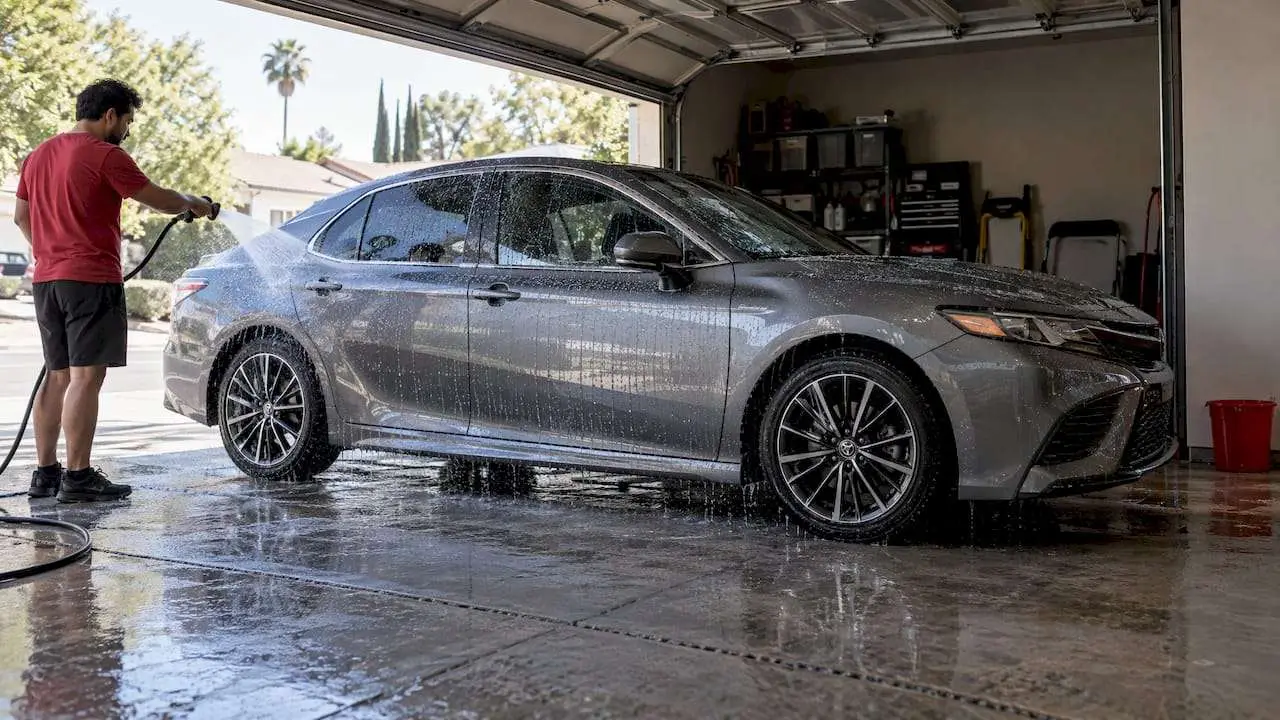
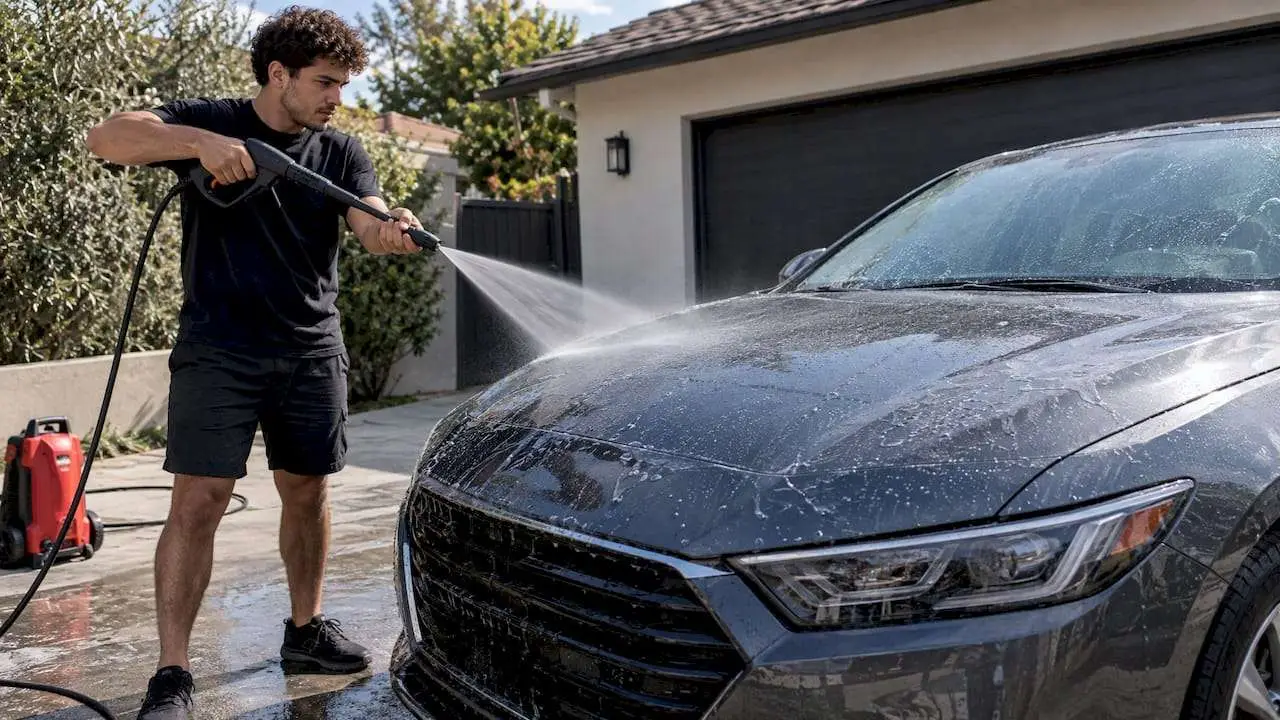
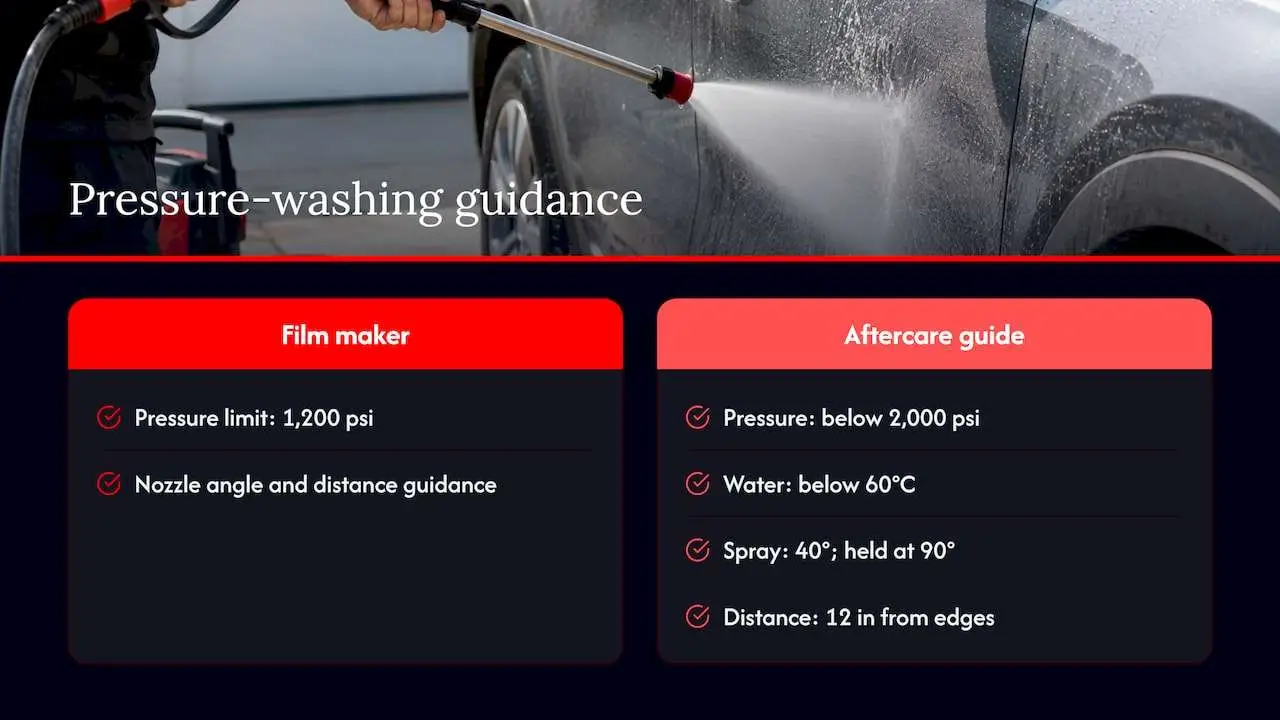
This is the cause owners can control. Pressure washing at close range can push water under a lifted edge and make it worse. One film maker states that excessive pressure can force water under the film, weaken its bond and cause it to lift or curl, and gives a limit of 1,200 psi plus nozzle angle and distance guidelines for its own film.
Another manufacturer’s aftercare guide says that power washes, steam cleaning and chemical washing can accelerate damage by leaching essential components out of the film. The same guide says hand washing is safer and brushless automatic washes are allowed. If you do use a pressure washer, it gives these limits: below 140 bar (2,000 psi) and 60°C (140°F), with a 40-degree wide-angle spray held at 90° to the wrap and at least 12 inches from the edges of the car.
The first days after install matter most. Our guide to wrap maintenance and the 72-hour wait before washing walks through the timing and method, and for one popular brand there is a dedicated page on how to wash and maintain a BMW vinyl wrap.
5. Paint that was never sound
Vinyl is only as secure as the surface under it. If the wrap peels and you see flakes of clear coat or paint stuck to the adhesive, the film did its job and the paint let go. This is common on repainted panels, older cars with sun-damaged clear coat, and spots that had been touched up. Re-sticking vinyl to paint that is already detaching will not hold. The paint has to be repaired first. A body shop explains how clear coat repair works and when a respray is needed, which helps you judge how bad the damage underneath really is before any new film goes on.
6. Age
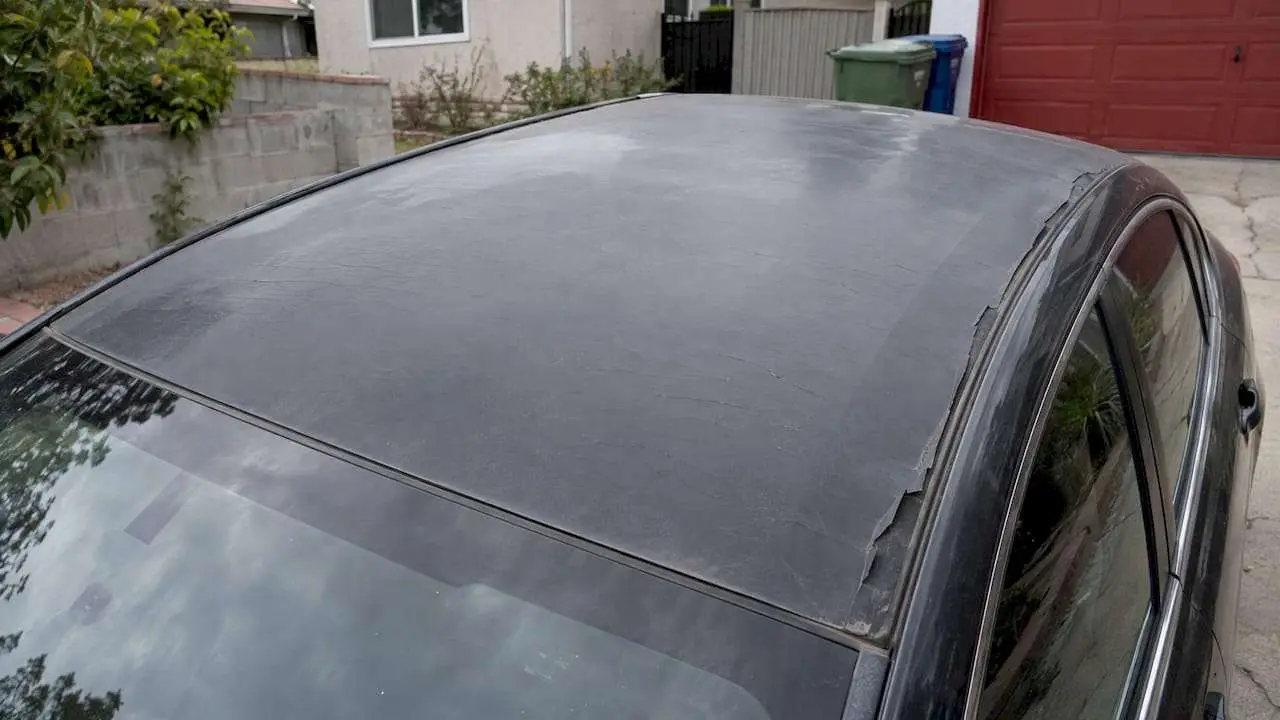
Wrap film is not permanent. After years of sun, heat cycles and washing, the vinyl dries out, shrinks back from edges and cracks. At that point peeling is not a defect in one spot but the film reaching the end of its life. This is common on roofs, hoods and trunk lids, which take the most sun.
Repair or rewrap: how to tell
Look at three things before deciding.
| What you see | What it usually means | Usual outcome |
|---|---|---|
| One edge or corner lifted a few millimeters, film still soft, adhesive clean | Edge finishing or a recent stress point | Can often be re-heated and pressed back down |
| Same edge lifts again after being fixed | Tension in the film is stronger than the bond | Replace the film on that panel |
| Film is shrunk, cracked or stiff | Aged film | Rewrap the affected panels |
| Paint flakes stuck to the adhesive | Weak or repainted paint underneath | Repair the paint, then rewrap the panel |
| Bubbles or lifting in the middle of a panel | Contamination or trapped air at install | Local repair if small, panel replacement if it spreads |
The logic behind the table is simple. A recent lift on a clean edge with flexible film can often be fixed. Film that has shrunk, cracked or turned brittle cannot be stuck down in a lasting way, and repeated reheating of the same edge tends to fail again. In those cases a fresh piece of film on the panel is faster and more reliable than a third repair attempt. Wraps are built panel by panel, so replacing one panel does not mean redoing the whole car.
What to do right now if your wrap is lifting
The goal is to stop it getting worse until it is looked at.
- Leave the edge alone. Picking at it, pressing it with dirty fingers or running a wash mitt over it spreads the lift and leaves oil and dirt on the adhesive.
- Do not glue it. Super glue, contact cement and double-sided tape all bond permanently, discolor the paint or film and make a proper repair far harder. They can also damage the paint when the wrap eventually comes off.
- Stop pressure washing. Hand wash gently and keep any spray away from the lifted area.
- Park out of intense sun and heat where you can, especially if the lift is on the roof or hood.
- Take photos from a few angles in daylight. They help when you ask for a quote and let you track whether the lift is growing.
- Have the panel inspected promptly. A small lift caught early is the cheapest kind to fix. Water and dirt under the edge make it larger every week.
If you are in Los Angeles, send us photos and we reply the same day with what we see and what it takes to fix. If the film is salvageable we say so. If the panel needs new film, we say that too.
When the whole wrap has to come off
Sometimes peeling is widespread: multiple panels lifting, cracked film on the roof and hood, faded color. A full rewrap is the clean answer, and removal has to be done carefully, because pulling aged vinyl cold can take adhesive residue or even paint with it. Controlled heat is what keeps paint safe, and we explain the temperature range and when to leave it to a pro in our guide to removing a car wrap without damaging paint.
This is also a good moment to rethink the car. If the paint underneath is in good shape, you can choose a new color or finish. Our overview of vinyl wrap finishes covers gloss, satin, matte, chrome and more. If you are comparing a rewrap with a respray, our page on vinyl wrap versus paint helps you decide.
How to keep a new wrap from peeling
Whether it is a first wrap or a replacement, these habits do most of the work.
- Choose installation quality over the lowest quote. Edge wrapping, re-squeegeeing and post-heating take time. They are the steps that decide whether a wrap lasts.
- Fix paint problems first. Chips, flaking clear coat and old poor repaints should be dealt with before any film goes on.
- Let the adhesive cure. Keep the car out of heavy washing for the first days. We recommend a 72-hour wait before the first wash.
- Wash by hand when you can. If you use a pressure washer, stay inside the limits above and keep the nozzle well back from edges, seams and corners.
- Avoid harsh chemicals and steam. They are the quiet cause of dried-out, brittle film.
- Check coatings against the film’s data sheet. If you plan to add a ceramic coating over vinyl, read why the technical data sheet matters so you do not put the film’s warranty at risk.
- Inspect edges monthly. A quick look at door edges, bumper corners and mirror caps catches a lift when it is still small.
Our view on peeling wraps
Almost every peeling wrap we are asked about comes back to the same three things: how the edges were finished, what the surface looked like before the film went on, and how the car was washed afterward. Film quality matters, but a premium film with rushed edges will still lift.
That is why we put our effort where the failure starts. We wrap edges, align panels cleanly and use premium materials from trusted brands. When a customer brings in a lifting wrap, we look at the cause before we talk about the fix, because fixing a symptom on a panel with weak paint or aged film only buys a few weeks.
Our approach is plain: tell you quickly what you have, what it costs, and whether it is a repair or a new panel. You get a clear answer from the shop that does the work, usually the same day you reach out.
Jake
Get a lifting wrap sorted in Los Angeles
If your wrap is lifting, we can inspect it, explain the cause and tell you whether to repair or replace. If a full rewrap makes more sense, our full color change wrap starts from $2,800, with custom quotes for specialty finishes.
We are a North Hollywood shop serving daily drivers, Teslas and luxury cars across Los Angeles. Send us photos of the lifted area through our site and we will get back to you the same day.
FAQ
Can I fix a peeling vinyl wrap myself?
A small, recent lift on a clean edge can sometimes be re-pressed, but it only holds if the adhesive is clean and the film is still flexible. Glue, tape and super glue make things worse, so avoid them. For anything that has lifted more than once, or involves cracked film, it is better to have it inspected.
Why is my wrap lifting only in summer?
Heat wakes up the memory in stretched film. If a panel was stretched over a deep curve and not properly post-heated, summer sun can pull it back out of recesses and off edges. It is one of the most common patterns we see in lifting wraps, and it points to installation rather than anything you did.
Can a wrapped car go through a car wash?
Hand washing is safest. One manufacturer’s aftercare guide says brushless automatic washes are allowed, while brush washes and high-pressure wands held close to edges are a risk for lifting. Wait through the first days after install before any wash.
Can you wrap over peeling clear coat?
No. Film cannot hold on paint that is already coming off, and it will pull more paint away when it lifts. The clear coat needs to be repaired and the surface made smooth and sound first, and then the panel can be wrapped.
Is it cheaper to wrap or repaint a car?
It depends on the finish and the condition of the paint. A wrap also changes color without touching the original paint, provided that paint is sound. Our page on vinyl wrap versus paint lays out how to decide.
Sources
- Avery Dennison Instructional Bulletin IB 1.20, application of UWF series films
- Arlon Fusion Wrap installation guide
- 3M Protection Wrap Film vehicle maintenance FAQ
- KPMF vinyl wrapping system aftercare guide
- Clear coat repair: causes, process and when to respray